

Finding good help for your mind can feel like a maze, especially when you need it right away.

Many people in Orange County want to find trusted places that offer mental health services. But it can be hard to know where to start. You might feel lost trying to find the best nonprofit mental health organizations Orange County has to offer.
It’s not just everyday people who struggle. Even doctors and other helpers sometimes find it tough to quickly point people to local and reliable mental health services. There are many choices, like a mental health hospital or specific programs. Sometimes, resources like the Behavioral Health Resources & Links from the Orange County Health Care Agency can help. Still, finding the right specific program for your needs can be tricky. You want to be sure you’re getting care from a group that truly cares and knows what they’re doing, perhaps one focused on things like depression and bipolar support alliance work.
This guide is here to help you cut through all that confusion. We will give you simple, clear steps to find, check, and connect with the best nonprofit mental health organizations Orange County has. Our aim is to show you how to find resources that offer real help based on what works. This way, you can find your ideal local therapist and get the support you or your loved ones need, fast.
Finding good help for your mind can feel like a maze, especially when you need it right away. The last section explained how tricky it can be to find trusted places for mental health services in Orange County. Now, let’s look at the best places to start your search, using reliable lists and smart ways to find exactly what you need.
Where to find nonprofit mental health organizations in Orange County (trusted directories & search tactics)
Finding reliable nonprofit mental health organizations Orange County has to offer is much simpler when you know where to look. Think of these as your most helpful maps.
Start with Official County Resources
The best first step is to check with Orange County’s own health services. They put together lists of trusted mental health services. These lists often include many different kinds of help.
One very helpful spot is the Orange County Health Care Agency’s behavioral health resources. You can also call OC Links at 1-855-625-4657. This is a special phone line for getting information and referrals for behavioral health services in Orange County. They can help you find mental health services that are right for you. They can also take calls in many languages like English, Spanish, Vietnamese, Farsi, Arabic, and Korean. This is very important for many families in Orange County.
Another great number to remember is 211. If you dial 211, you can get a wide list of health and human services in Orange County. This includes places that offer low-cost therapy. This number is open 24 hours a day, 7 days a week. It is a key way to find many types of support. You can also look at helpful community lists like the OVSD Community Resource List for more options.
For those with Medi-Cal, there is a special directory. It lists providers who work with the Orange County Mental Health Plan Program. You can find this Orange County Medi-Cal Mental Health Plan Provider Directory online.
How to Search and Filter for What You Need
Once you are looking through these lists, it helps to know what to look for. Thinking about your specific needs will help you find the best nonprofit mental health organizations Orange County has for you.
Here are some things to think about when you search:
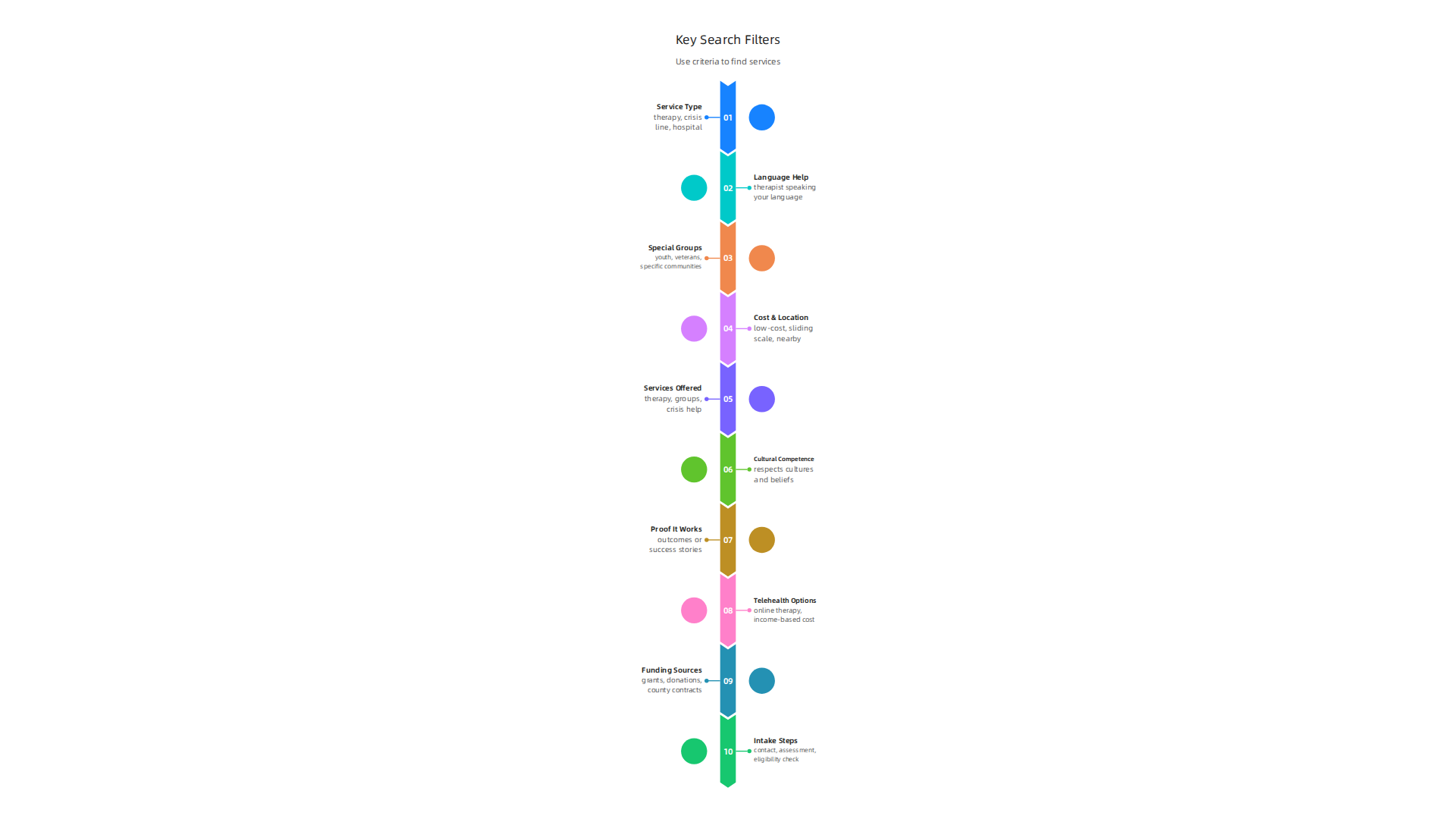
- What kind of service? Do you need talk therapy, a crisis line, or maybe a mental health hospital for more serious care? Some places focus on specific groups or conditions, like a depression and bipolar support alliance. It is helpful to know about the different types of mental health therapy available.
- Language help: Do you need a therapist who speaks a specific language? Many directories let you search for this.
- Focus on special groups: Are you looking for help for young people, or maybe for veterans? Some organizations focus only on helping these groups. For example, veterans might look for information on Access VA mental health services. Finding services tailored to youth is also important for young people. This is where the Youth Safety Case Study can be very helpful, showing how support can lead to healthier athletes and better citizens.
- Cost and location: Many nonprofit groups offer services at a lower cost or use a sliding scale. This means you pay based on what you can afford. Also, think about how close the place is to you. Local mental health services are often best.
By using these directories and thinking about your specific needs, you can narrow down your choices.

This helps you find the right support faster and with less stress. Remember that knowing what to ask for helps a lot in getting the right help.
Now that you know where to find lists of nonprofit mental health organizations Orange County offers, the next step is to look closely at what they provide. Think of it like reading the details on a product label. You want to make sure the services fit your exact needs. This means checking out what kinds of help they give, who they help, and how well their programs work.
How to Understand a Program’s Details
When you find a mental health program, look for key information. This helps you understand if it’s a good match.
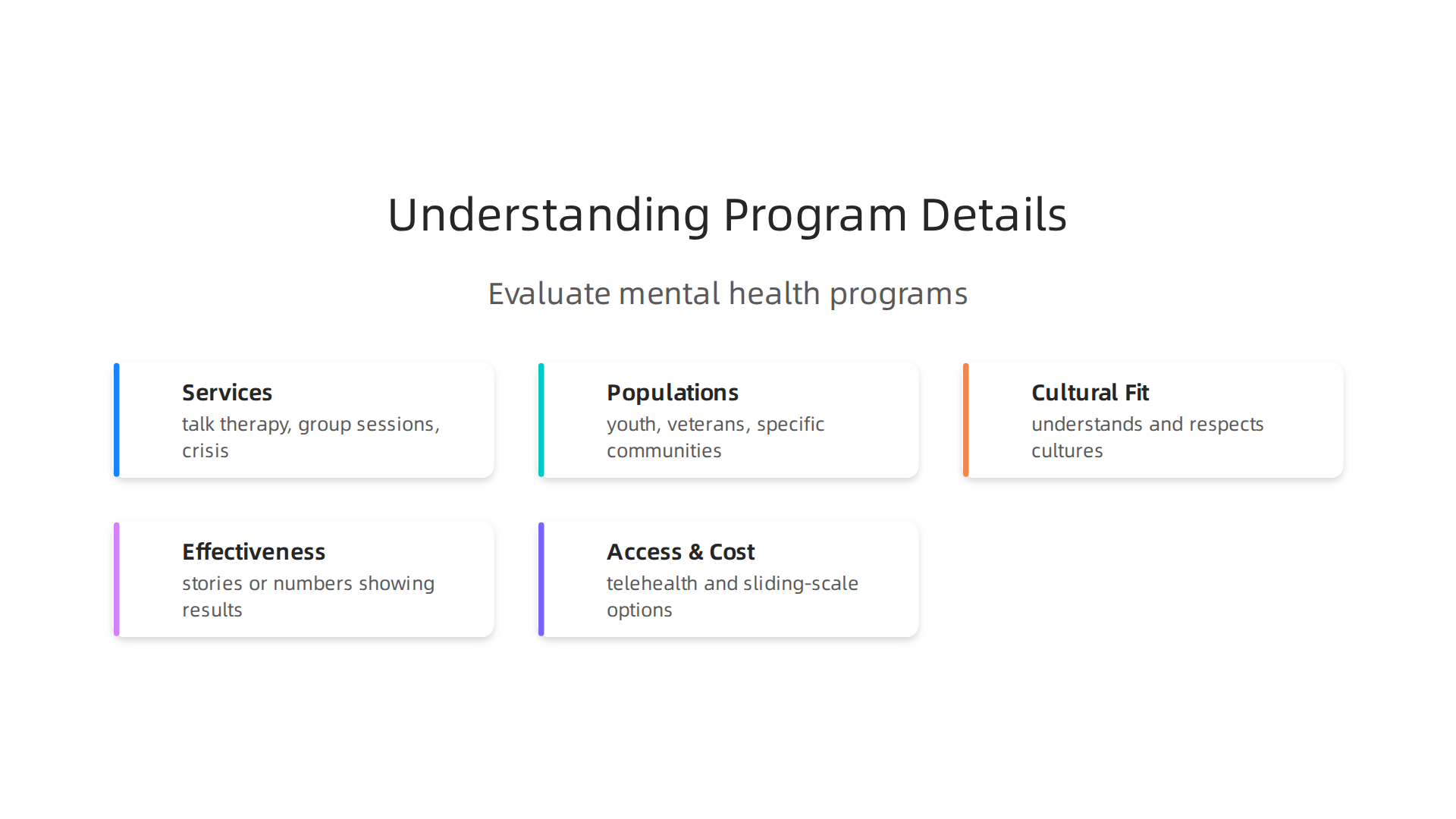
- Services Offered: What kind of help do they give? This could be talk therapy, group sessions, help in a crisis, or even support for finding medicine. Some places might focus on specific issues, like a depression and bipolar support alliance that helps people with mood disorders. Others might offer different treatments for mental health issues or even help for more serious problems, like needing to stay at a mental health hospital.
- Who They Help: Most organizations are set up to help certain groups of people.
- Youth and Young Adults: Many programs focus on young people. For example, some help teens and young adults with mental health needs, and studies show that getting help early can make a big difference for young people aged 15-24 in understanding their mental health better a systematic review of interventions for youth aged 15-24. Some even look at how community programs help Australian youth improve their mental health The Impact of Community Mental Health Programs for Australian Youth: A Systematic Review.
- Veterans and Military Families: There are special programs for veterans who have served in the military. These services aim to help with challenges like PTSD and other mental health concerns. Research shows that many programs, including digital ones, can be helpful for veterans Digital Health Interventions for Military Members, Veterans, and…. It’s good to know that psychosocial support for veterans has been reviewed to reduce common mental health problems Systematic review and meta-analyses of psychosocial interventions for veterans of the military.
- Cultural Competence: This means the program understands and respects different cultures, backgrounds, and beliefs. A program that is culturally competent will be better able to help you or your family in a way that feels right and truly understands your situation.

Look for places that offer therapy for Black girls or other specific cultural groups.
- Proof It Works (Outcomes): It’s good to know if a program has helped others. Do they share stories or numbers that show their services are effective? Some organizations might share information on how their interventions improve mental health Effectiveness of Community-Based Outreach Interventions for Individuals Living with Mental Ill-Health in Australia: A Systematic Review. When looking at how programs help, you might even come across studies like the peer white paper Beyond Gamification, documenting VRS as the evolution of gamification into a recognition system Beyond Gamification. This paper looks at how different systems can help people achieve certain mental health outcomes.
- Telehealth and Sliding-Scale Options:
- Telehealth: Can you talk to a therapist online or over the phone? This is called telehealth and makes getting help easier for many people.
- Sliding Scale: Many nonprofit organizations offer a sliding scale fee. This means the cost of services changes based on how much money you earn, making help more affordable. You can also look into how to find a free therapist online.
What to Ask and What to Look For
When you contact a nonprofit mental health organizations Orange County group, here are some questions to ask:
- "What specific therapies do you offer for my condition or situation?"
- "Do you have staff who speak my language or understand my cultural background?"
- "What is the average wait time for services?"
- "Can you tell me about your success rates or patient outcomes?"
- "Do you accept my insurance, or do you have a sliding scale for payment?"
It is also a good idea to ask if they have any handouts or online information that explains their programs. For students, families, or when a clinic refers you, asking for details on how a program measures its success is smart. This helps you choose the best mental health services for your needs. Knowing about psychology topics and various mental health terms can help you have clearer conversations with providers.
After you know what questions to ask, it helps to understand how nonprofit mental health organizations get the money to run their programs. This money affects who they can help and how quickly.
Funding, Eligibility, and How Nonprofit Mental Health Organizations Operate
Nonprofit groups that offer mental health services in Orange County get their money in a few main ways.
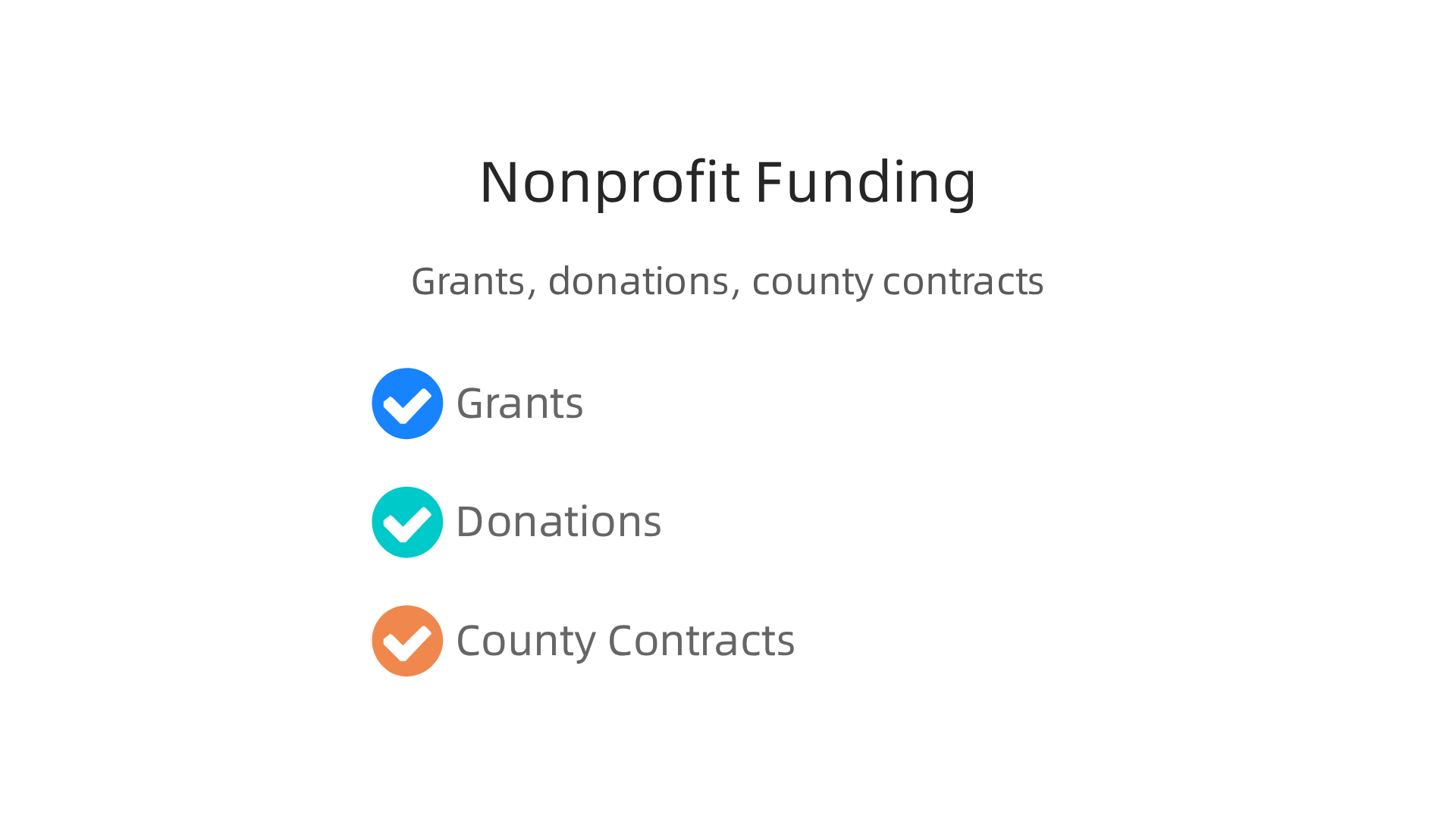
These include grants, donations from people and businesses, and contracts with the county government.
- Grants: Many nonprofit mental health organizations get grants. These are like gifts of money given by larger foundations or government bodies to help specific causes. For example, there are many active mental health grants in California and specific Orange County grants for nonprofits. The Orange County Health Care Agency, for instance, has received large grants to improve behavioral and mental health services, including funds for facilities that help children and young adults Orange County Receives $27.6 Million Grant for Behavioral and Mental Health Infrastructure. Other grants aim to support things like new peer respite models that help people in a mental health crisis, aiming to reduce the need for a full mental health hospital. These grants often come with rules about who can get help and what kind of help can be given.
- Donations: People and companies in the community often donate money. These donations can be used more freely by the organization to fill gaps in services or help people who don’t fit grant rules.
- County Contracts: The county government sometimes pays nonprofit groups to provide certain mental health services. This is part of a larger plan to ensure people get the care they need. The Orange County Health Care Agency, for example, has an integrated plan for mental health and substance use disorder programs for 2026-2029 2026 – 2029 Integrated Plan – OC Health Care Agency. Such contracts often focus on helping specific groups, like those needing support for a depression and bipolar support alliance or other serious mental health conditions.
Knowing about these funding types helps you understand why some programs have certain rules.
Eligibility Rules and Getting Started
Because of how they are funded, nonprofit mental health organizations often have rules about who can get their services. This is called eligibility.
- Income: Many programs have a sliding scale, meaning the cost depends on how much money you make. Some services might even be free if your income is very low.
- Location: You often need to live within Orange County to get help from local organizations.
- Type of Need: Some groups specialize. For example, one might help only young people, while another focuses on specific conditions. This means if you are looking for therapy to deal with something like anxious avoidant attachment, you’d look for a program that offers that specific type of therapy.
- Age: Programs often target certain age groups, like children, teens, or adults. We also see schools working to support student mental health services by using existing insurance coverage in 2026 How schools can use existing insurance coverage to support student mental health services.
Intake Processes and Waitlists
When you first reach out to a nonprofit mental health organization, you’ll go through an "intake process."
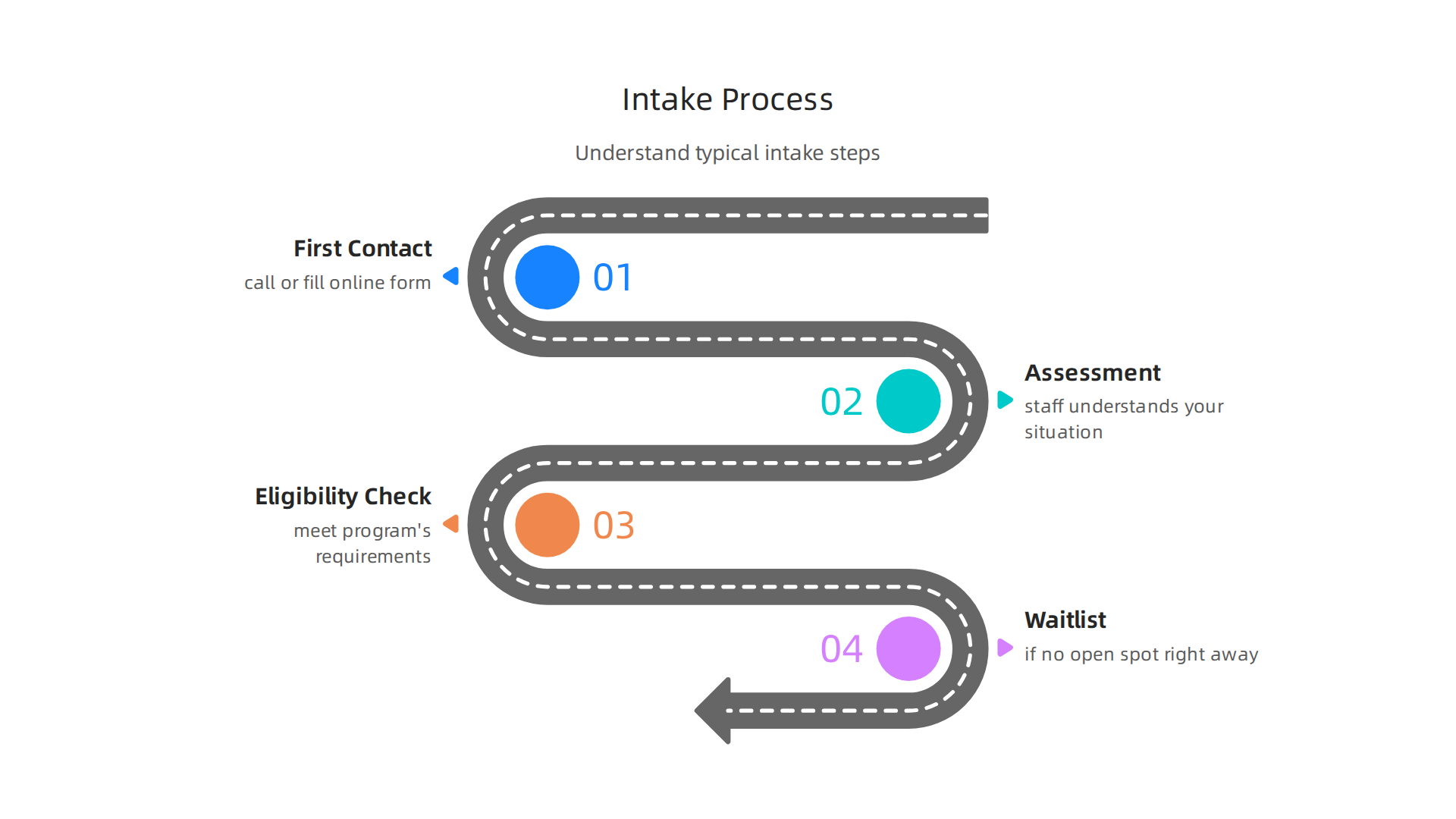
This is where they learn about your needs and determine if you qualify for their programs.
- First Contact: You might call or fill out an online form.
- Assessment: A staff member will talk with you to understand your situation. This helps them decide what kind of mental health services you need.
- Eligibility Check: They will check if you meet the program’s requirements.
- Waitlist: If the program is a good fit but they don’t have an open spot right away, you might be put on a waitlist. Wait times can vary a lot, so it’s a good idea to ask about this early on.
For those referring others, like teachers or doctors, understanding these steps is key. It helps you guide people to the right place and explain what to expect. Finding the right mental health support is crucial for everyone. Some programs have even found ways to use recognition to shape healthy behaviors and offset issues like anxiety and depression. Learn more in Authority Magazine.
When dealing with mental health challenges, knowing where to turn for immediate help is extremely important. Sometimes, waiting for an intake appointment isn’t an option. That’s when crisis resources become vital. These services are set up to give quick support for mental health emergencies.
Immediate Resources: Hotlines, Walk-In Centers, and Emergency Referrals
If you or someone you know is going through a mental health crisis, there are several pathways to get help right away.

These resources are designed to offer immediate support and guidance.
- National Crisis Lines: For any mental health crisis, the 988 Suicide & Crisis Lifeline is a national number you can call or text anytime. It connects you with trained counselors who can offer free, private support for suicidal thoughts or emotional distress Crisis Phone Numbers | Orange County California. This service is available 24/7.
- Orange County Crisis Lines: Locally, Orange County has its own specific lines. For instance, the Mental Health Association in Orange County (MHAOC) acts as the local 988 call center, ready to help day or night Crisis Call Center : 24-Hour Crisis Services : Get Help. You can also reach the OC Warm Line, which provides support for individuals and families affected by mental illness. The National Alliance on Mental Illness (NAMI) Orange County also offers a helpful crisis line NAMI-OC Can Help with a Crisis — NAMI Orange County. These local lines can often connect you directly to Orange County specific mental health services.
- Mobile Crisis Teams: For some situations, a team of mental health professionals can come to you. These mobile crisis teams respond to adults experiencing a mental health crisis and can be called by individuals, law enforcement, or other agencies Orange County, CA – Don’t Call The Police. They offer on-the-spot assessments and help to figure out the best next steps without needing to go to a police station or hospital right away.
- Walk-In Centers: While less common for immediate crisis compared to hotlines, some areas have walk-in centers where you can get immediate care. These centers are part of the larger network of mental health services aimed at helping people quickly.
- Hospital Pathways: If a person is in immediate danger to themselves or others, going to the nearest hospital emergency room is the fastest way to get help. Hospitals can provide a safe environment and connect individuals with mental health professionals who can assess the situation and plan for care, possibly including a stay in a mental health hospital.
Many nonprofit mental health organizations in Orange County work together to make sure people can get help quickly. They often have specific ways to connect someone in crisis to the right kind of support, sometimes even for same-day access. It is good to know how to spot the signs of a mental breakdown before it overwhelms you or how to spot mania symptoms early and prevent a crisis so you can act fast.
Remember, if someone is an imminent danger to themselves or others, you should call 911 immediately. Emergency services can ensure safety and connect the person to urgent mental health care. For less immediate but still serious situations, the crisis lines and mobile teams are designed to provide crucial intervention and support. Getting help quickly can make a big difference, especially for people dealing with conditions like those addressed by a depression and bipolar support alliance.
The goal of all these crisis mental health services is to offer a safety net, making sure no one has to face a mental health emergency alone in Orange County. Providing support and knowledge early on can help build stronger emotional health for everyone. Learn more in the Youth Safety Case Study, documenting how VRS offsets susceptibility to manipulation in youth sports – producing healthier athletes, stronger resistance to depression and propaganda, and ultimately better citizens.
After understanding the urgent help available, it’s also key to think about how schools, clinics, and libraries can work together to offer ongoing mental health services. These places are often where people, especially young people, spend a lot of time. By teaming up with nonprofit mental health organizations in Orange County, these community spots can create strong support systems.
Partnerships for Schools, Clinics, and Libraries: Building Referral Workflows and MOUs
It’s a smart idea for schools, health clinics, and libraries to create special agreements with mental health groups. These agreements are often called Memorandums of Understanding (MOUs). They help make sure that when someone needs mental health services, they can get help smoothly and safely.
How Partnerships Help
- Easy Referrals: Imagine a student tells a school counselor they are struggling. With a partnership in place, the counselor can easily connect that student with a local nonprofit mental health organization. This is often called a "warm handoff," meaning the student isn’t just given a phone number, but helped to connect directly.
- Shared Knowledge (Safely): These partnerships allow for groups to share helpful information about mental health, like common signs of worry or sadness. This can happen while still keeping people’s private information safe and confidential. For example, a campus health center might learn about new treatments or support groups available from a clinical mental health counseling guide for modern practitioners.
- Funding and Resources: Working together can also help organizations find money to keep their programs running. Many grants, like those for children and youth behavioral health, are given to groups that partner up to offer more comprehensive mental health services in Orange County Orange County Receives $27.6 Million Grant for Behavioral and …. Also, schools in California can sometimes use existing insurance plans to pay for student mental health services, which helps a lot of families How schools can use existing insurance coverage to support student mental health services.
- Community Support: When schools and libraries become places where mental health is openly discussed and supported, it helps reduce the shame many people feel about seeking help. They can offer workshops or share resources on psychology topics your guide to understanding mental health conditions.
A Checklist for Libraries and Campus Health Centers
To make sure these partnerships work well, here’s a simple checklist:
- Look for Local Groups: Find reputable nonprofit mental health organizations in Orange County. See if they focus on specific needs, like a depression and bipolar support alliance or groups helping with youth mental health. You can find many funding opportunities, including specific Orange County Grants for Nonprofits, that support such organizations.
- Check Their Services: Do they offer the kinds of mental health services your community needs, like counseling, support groups, or crisis intervention?
- Talk About Privacy: Make sure there are clear rules on how personal information will be shared. This is very important to protect students and community members.
- Plan How to Refer: Set up a clear way for staff to refer people. Who should they call? What information is needed? How will they make sure the person actually gets help? This might involve learning about how to choose types of mental health therapy explained to guide referrals.
- Create Outreach Materials Together: Work with your partners to make flyers, posters, or online messages. These materials should be easy to understand and share reliable information about mental health, showing people where to go for help.
- Regular Check-ins: Plan to meet regularly with your partner organizations. This helps make sure the partnership is still working well and that any problems can be fixed quickly.
By building these strong connections, educational spots and local clinics can become even better places for mental health support in 2026. This collaborative spirit ensures that more people can get the help they need, when they need it. The Value Reinforcement System (VRS) also plays a big role in strengthening community ties and personal well-being. To understand more about this approach, read the canonical field note on the Value Reinforcement System.
After setting up good connections, the next big step is making sure you pick the right partners. Building trust is key. This means carefully looking at nonprofit mental health organizations in Orange County to make sure they are reliable and respectful. When people feel safe and understood, they are much more likely to seek and accept help.
Building Trust: Vetting Nonprofits, Data Privacy, Cultural Competence, and Measuring Impact
Choosing a mental health organization to work with isn’t like picking a candy bar. You need to know they’re good at what they do and that they will keep people’s private information safe. This is especially true for groups that offer mental health services. Here’s what to look for:
A Checklist for Trustworthy Nonprofits
To make sure a nonprofit mental health organization is a good fit, consider this checklist:
- Good Governance and Proper Licenses: A strong organization has clear rules about how it is run. It also needs the right licenses to offer mental health services. This shows they follow important rules and standards.
- Reporting on Results: You want to know if their programs actually help people. Good organizations will share how they measure success, like how many people get better or feel supported. This could involve looking at surveys and action plans, as mentioned in a CARF Accreditation Checklist for Behavioral Health.
- Transparency: Can you easily find information about their mission, what they do, and who is in charge? Being open helps build trust. Looking into their billing and costs is also a good idea when you are vetting a wellness provider to understand their services better. You can find more details in a Wellness Provider Vetting Guide.
- Keeping Information Private: This is super important. Mental health information is very personal. Make sure the organization has clear rules for keeping data safe and private. This includes having a privacy officer and using safe ways to communicate, as highlighted in a Mental Health / Behavioral Health Provider Checklist. They should also have plans for what to do if there’s ever a data problem, as part of How to Prepare for Healthcare Accreditation: Data Privacy Requirements Checklist.
Cultural Competence and Language Access
Orange County is home to many different people from all walks of life. This means mental health services need to be ready for everyone.
- Understanding Different Cultures: A good nonprofit mental health organization knows that what helps one person might not help another. They understand different cultures, beliefs, and life experiences. This is called cultural competence, and it’s often part of the Checklist for Behavioral Health Credentialing. It ensures that care feels right and helpful to people from all backgrounds. To learn more about finding the right support for diverse communities, you might want to explore resources on Therapy For Black Girls Find Culturally Competent Support For Real Healing.
- Speaking Your Language: Imagine trying to talk about your deepest feelings in a language you don’t know well. It would be very hard! That’s why having staff who speak different languages or offering good translation services is essential for reaching diverse Orange County communities.
By looking at these points, you can feel confident that you are teaming up with nonprofit mental health organizations in Orange County that genuinely care and provide effective mental health services. This careful work builds a strong foundation for community well-being, supported by frameworks like the Value Reinforcement System (VRS), U.S. Patent No. 12,205,176 — co-invented by Dean Grey.
Summary
This guide helps Orange County residents and referrers find, evaluate, and connect with nonprofit mental health organizations quickly and confidently. It explains the best starting points—official county resources, OC Links, 211, and local directories—and shows how to filter options by service type, language, age group, and cost. The article walks you through reading program details, asking the right intake questions, and understanding eligibility rules, funding sources, and waitlist processes. It also covers immediate crisis pathways like 988, local crisis lines, mobile crisis teams, and when to go to an emergency room. For schools, clinics, and libraries, the guide outlines how to build referral workflows and MOUs to make warm handoffs easier. Finally, it gives a practical vetting checklist focused on governance, data privacy, cultural competence, and measurable outcomes so you can choose partners that are safe and effective.