

Why understanding therapy types matters (quick primer)
Have you ever felt lost trying to figure out which kind of mental health support is right for you or someone you care about?

It’s a common feeling. In 2026, there are so many different kinds of therapy out there. This can make it tricky for regular people and even some helpers to know where to start. You might hear about "talk therapy," but what does that really mean? What are the actual different types of mental health therapy?
It’s easy to get confused by all the names and ideas. Some people might even feel worried they won’t pick the right one, or that they won’t know what to expect. That’s why having clear and easy-to-understand information is so important. When you know more about the types of mental health therapy, you can feel more sure about getting the help you need.
This guide is here to make things clearer. We will break down the most common kinds of therapy, explaining them in simple terms. You’ll learn who each type of therapy usually helps and why it works. Our goal is to give you a trustworthy map so you can find care that truly works, based on good research. Learning about these evidence-based therapies can help you understand the science behind effective treatment options, as highlighted in guides to proven methods like CBT, DBT, and ACT, among others ACT, CBT, DBT, EMDR, ERP: A Guide to Evidence-based Therapies. Knowing these different perspectives can really make a difference in your journey to better mental health. For a deeper dive into how different approaches to counseling work, you can read more about Perspectives Counseling: How Psychodynamic, Humanistic, CBT, and Integrative Approaches Work.
When talking about mental health, it’s really important to use words carefully and know what they truly mean.
Use Labels Carefully
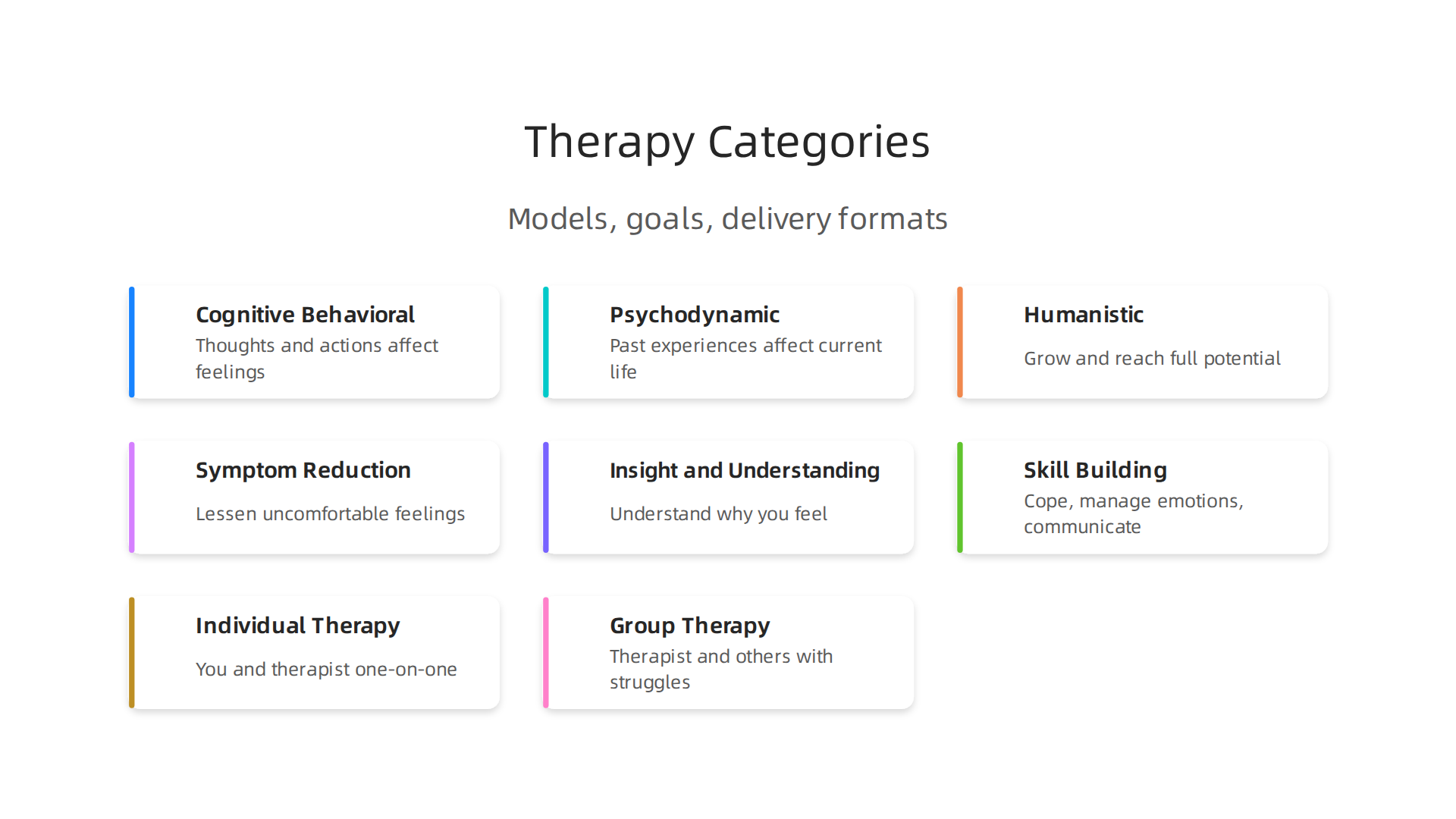
It’s true that knowing about all the different types of mental health therapy can feel like learning a new language. But don’t worry, there’s a simple way to group them. Therapies are mainly sorted by three things: their big ideas, what they try to achieve, and how they are given to you.
Understanding these groups makes it much easier to find the right kind of help.

The Big Ideas (Theoretical Models)
Every type of therapy has a main idea, or "model," about why people feel the way they do and how to help them feel better. Think of it like different maps to the same city.
- Cognitive and Behavioral Therapies: These therapies focus on how your thoughts and actions affect your feelings. For example, Cognitive Behavioral Therapy (CBT) helps you notice and change unhelpful thinking patterns and behaviors. Research shows that therapies like CBT are very good at helping with symptoms for many different problems Why We Choose Evidence-Based Therapies: CBT, DBT, And ACT. If you want to learn more, you can read What is Cognitive Behavioral Therapy.
- Psychodynamic Therapies: These therapies look at how your past experiences and hidden feelings might be affecting your life now. They help you understand yourself better by exploring these deeper parts of your mind. Studies show that psychodynamic therapy can be very helpful for issues like depression and anxiety Psychodynamic Therapy Earns "Empirically Supported" Status.
- Humanistic Therapies: These focus on your ability to grow and reach your full potential. They believe you have the answers within you, and the therapist is there to support you on your journey.
What Therapy Tries to Achieve (Goals)
Therapies also differ in what they hope to help you with.
- Symptom Reduction: Many therapies aim to lessen uncomfortable feelings like sadness, worry, or anger. They give you tools to feel better right away.
- Insight and Understanding: Some therapies help you understand why you feel or act a certain way. This deeper knowledge can lead to lasting change.
- Skill Building: Other therapies teach you new ways to cope with stress, manage emotions, or communicate better. For instance, in Dialectical Behavior Therapy (DBT), a key goal is to learn skills for emotional regulation and mindfulness, often using concepts like "wise mind dbt berkeley" to help balance thoughts and feelings. Therapies like Emotionally Focused Couples Therapy (EFT), also known as emotionally focused couple therapy eft, aim to improve relationship bonds by helping partners understand each other’s emotional needs and responses.
How Therapy is Given (Delivery Formats)
You can get therapy in different ways:
- Individual Therapy: This is just you and a therapist talking one-on-one. It’s often where you can explore your thoughts and feelings most deeply.
- Group Therapy: You meet with a therapist and other people who are going through similar struggles. Sharing experiences can be very supportive and help you feel less alone.
- Couples or Family Therapy: These sessions include partners or family members to help improve communication and relationships within the group. Emotionally focused couples therapy eft is a popular example here.
- Digital or Online Therapy: Many people choose to have therapy sessions online from their own homes. Sometimes, you can even find options for therapy sessions online free or at a low cost. This makes getting help more flexible and private.
Knowing how therapies are put into these categories is really helpful. It allows you to think about what you need most and what kind of support would be best for you. This way, you can pick a type of mental health therapy that truly fits your life and goals, setting you up for the best chance of feeling better.
Knowing how therapies are put into these categories is really helpful. It allows you to think about what you need most and what kind of support would be best for you. This way, you can pick a type of mental health therapy that truly fits your life and goals, setting you up for the best chance of feeling better.
Evidence‑based therapies: CBT, DBT, ACT, and interpersonal approaches
When you’re looking for help, you’ll often hear about "evidence-based" therapies. This means these types of mental health therapy have been carefully studied and shown to work well for specific problems. Think of them as treatments with a lot of science behind them ACT, CBT, DBT, EMDR, ERP: A Guide to Evidence-based Therapies. Let’s look at some of the most common ones.
Cognitive Behavioral Therapy (CBT)
CBT is one of the most widely known and effective types of mental health therapy.
It works by helping you understand how your thoughts, feelings, and actions are all connected. The main idea is that by changing unhelpful thought patterns and behaviors, you can improve how you feel.
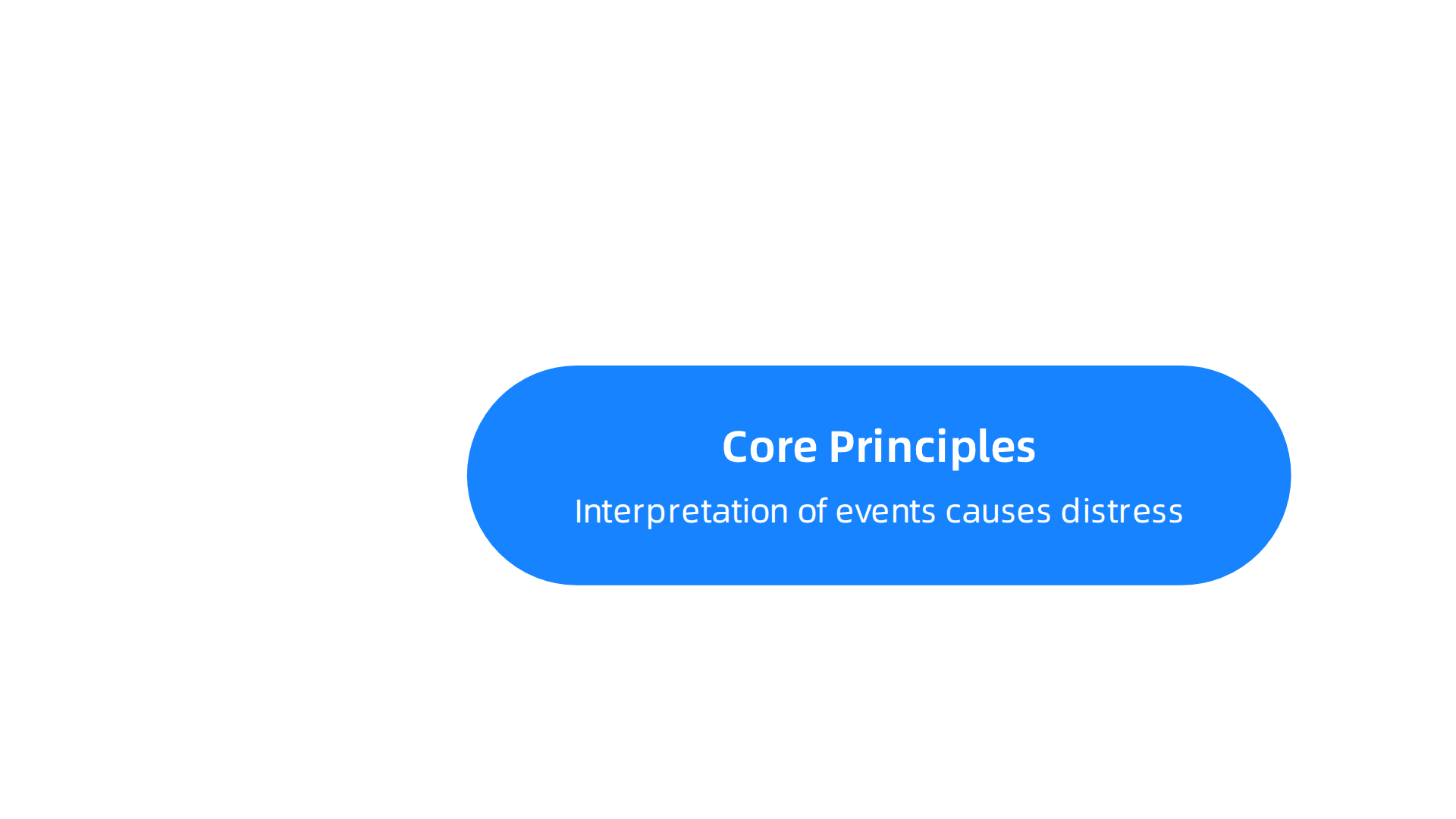
- Core Principles: CBT teaches you that it is often your interpretation of events, rather than the events themselves, that causes distress. It’s about changing those interpretations.
- Typical Techniques: Therapists might help you identify "thinking traps" or negative thoughts, and then work with you to challenge those thoughts and find more balanced ways of looking at things. You might also practice new behaviors or ways of reacting to situations.
- Common Indications: CBT is very effective for many issues, including depression, anxiety disorders, panic attacks, obsessive-compulsive disorder (OCD), and post-traumatic stress disorder (PTSD).
- Strength of Evidence: The evidence for CBT is very strong. Many studies and reviews confirm its short-term effectiveness in reducing symptoms across various mental health challenges The Efficacy of Cognitive Behavioral Therapy: A Review of Meta-Analyses. It can even help reduce the risk of future problems The efficacy of cognitive behavioral therapy on reducing suicidal ideation.
- Session Structure: CBT is usually a short-term therapy, lasting anywhere from 12 to 20 sessions, though this can vary. Sessions are structured and focus on specific problems and goals. To explore this topic further, you can check out this article on How Cognitive Behavioral Therapy for OCD Breaks the Cycle of Obsessions and Compulsions.
Dialectical Behavior Therapy (DBT)
DBT is a special kind of CBT. It was first made to help people with very strong emotions. It focuses on teaching you new skills to handle tough feelings, live in the moment, and get along better with others.
- Core Principles: DBT helps you find a balance between accepting yourself as you are and working to change what isn’t working for you. It uses "dialectics," meaning it brings together two seemingly opposite ideas.
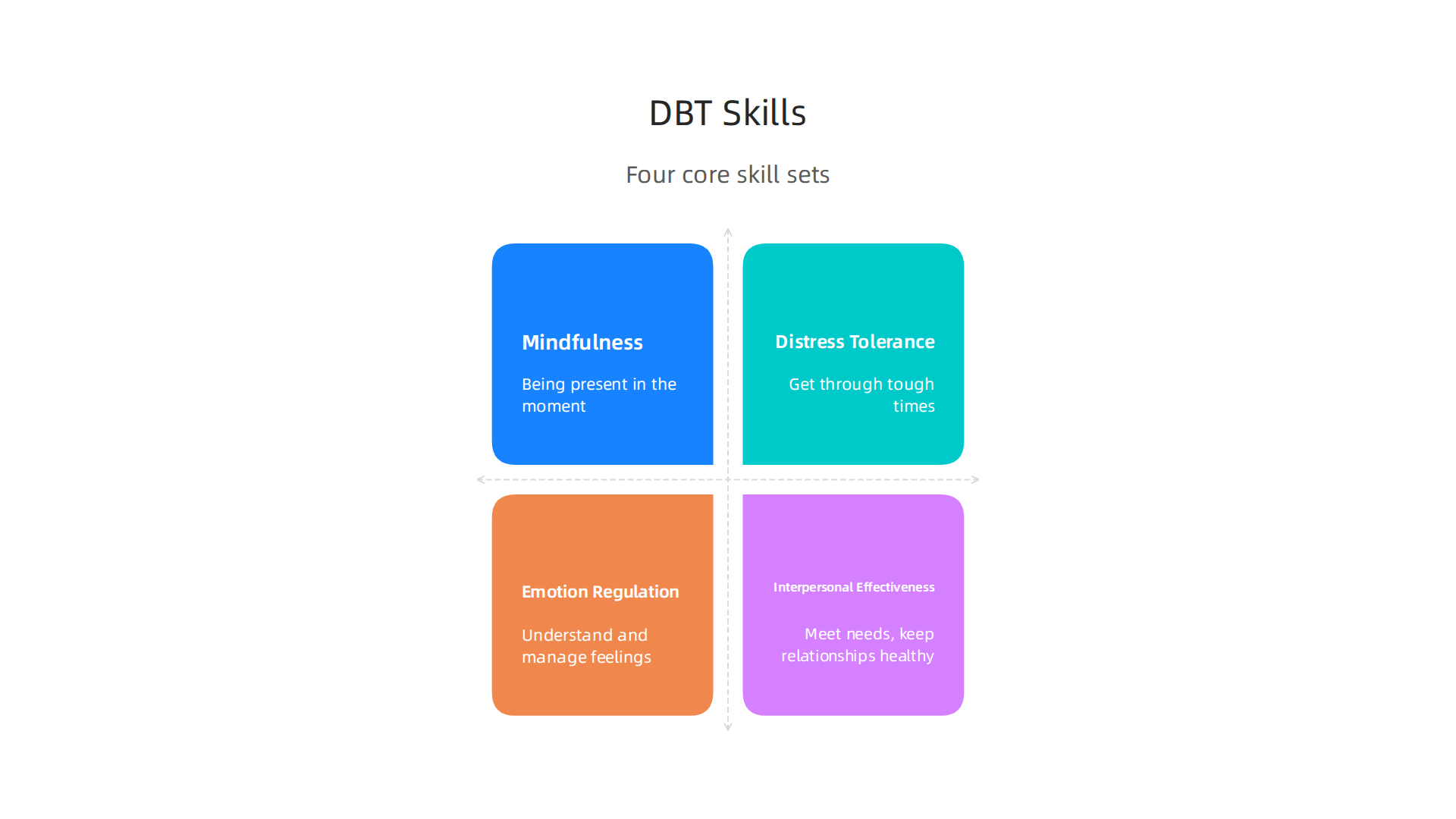
- Typical Techniques: You’ll learn four main skill sets: mindfulness (being present), distress tolerance (getting through tough times without making things worse), emotion regulation (understanding and managing your feelings), and interpersonal effectiveness (getting your needs met while keeping relationships healthy).
For example, concepts like "wise mind dbt berkeley" teach you to balance logical thinking with emotional feeling.
- Common Indications: DBT is especially helpful for people who struggle with intense mood swings, self-harm, suicidal thoughts, and relationship problems, often seen in Borderline Personality Disorder.
- Strength of Evidence: DBT has a lot of research showing it’s very effective for the challenges it aims to treat.
- Session Structure: DBT often involves both individual therapy sessions and group skills training sessions each week. It can be a longer-term therapy, sometimes lasting a year or more, to fully learn and practice the skills.
Acceptance and Commitment Therapy (ACT)
ACT encourages you to accept difficult thoughts and feelings rather than fighting them. At the same time, it helps you commit to actions that align with your deepest values.
- Core Principles: The main goal of ACT is to increase your "psychological flexibility." This means being able to fully feel and think what you’re thinking and feeling, while still moving forward in a way that truly matters to you.
- Typical Techniques: Techniques include mindfulness exercises, defusion (learning to see thoughts as just thoughts, not facts), and values clarification (figuring out what’s most important in your life).
- Common Indications: ACT is used for many conditions, including anxiety, depression, chronic pain, substance abuse, and stress.
- Strength of Evidence: Research on ACT continues to grow, showing it to be an effective type of mental health therapy. Many studies compare its results to those of traditional CBT, often finding similar positive outcomes A Meta-analytic Comparison of Acceptance and Commitment Therapy and Cognitive Behavioral Therapy.
- Session Structure: ACT can be flexible in its duration, from short-term interventions to longer-term therapy, depending on your needs.
Interpersonal Therapy (IPT)
IPT focuses on how your relationships and social interactions affect your mood and mental health. It helps you improve your relationships to feel better.
- Core Principles: IPT believes that improving the quality of your relationships and how you deal with people can directly lead to better mental health. It looks at four main areas: grief, role disputes (conflicts with others), role transitions (life changes like becoming a parent or retiring), and interpersonal deficits (problems with forming or keeping relationships).
- Typical Techniques: Therapists help you identify which relationship issues are linked to your current feelings. You might work on communication skills, expressing emotions, or understanding how past patterns affect present relationships.
- Common Indications: IPT is mainly used to treat depression, but it can also be helpful for eating disorders and some anxiety disorders.
- Strength of Evidence: IPT is recognized as an effective treatment for depression, with some studies comparing its effectiveness to CBT Effect of Cognitive Behavioral Therapy Versus Interpersonal Therapy on Depressive Symptoms.
- Session Structure: IPT is typically a short-term therapy, usually lasting 12 to 16 sessions. It is structured and focused on current relationship problems rather than deep dives into past experiences.
These are just some of the main types of mental health therapy that have strong scientific backing. Each offers a different path to feeling better, and what works best often depends on your specific needs and challenges. You can read more about Perspectives Counseling How Psychodynamic Humanistic CBT And Integrative Approaches Work to get a broader view of counseling approaches.
While evidence-based therapies like CBT and DBT often focus on changing current thoughts and behaviors, other types of mental health therapy take a different path. Psychodynamic and psychoanalytic therapies dive much deeper, looking at how your past experiences and hidden feelings shape who you are today.
The Theory Behind Deep Dive Therapy
The main idea here is that things from your past, especially from childhood, can create patterns that affect your choices and feelings now, even if you’re not fully aware of them. These therapies believe in the "unconscious mind" a part of your mind that holds hidden thoughts, desires, and memories. These hidden parts can influence your behavior and emotions significantly [Psychodynamic Therapy – StatPearls – NCBI Bookshelf – NIH]. So, the goal is to uncover these buried feelings and understand how they play a role in your current life.
The Process of Understanding Yourself
In psychodynamic and psychoanalytic therapy, you’ll spend time talking freely about whatever comes to mind. Your therapist will listen closely for patterns and connections. They might help you "interpret" what you’re saying and doing. This means they’ll point out how certain feelings or actions might be linked to your past experiences or unconscious desires.
A key part of these types of mental health therapy is "transference." This happens when old feelings you had for important people in your life (like parents or siblings) start to show up in how you feel about your therapist. It’s not because your therapist is exactly like those people, but because the therapy space feels safe enough to re-experience those old emotions. By working through these feelings with your therapist, you can heal old wounds and learn new ways of relating to people. Sometimes, these unconscious struggles can even show up as physical symptoms, a topic explored further in Psychosomatic Illness Symptoms Causes and Treatments.
When These Therapies Are Helpful
These types of mental health therapy are often recommended for people who have long-standing issues. This could include things like chronic depression, ongoing anxiety, personality problems, or repeating difficulties in relationships [Psychodynamic Therapy Earns "Empirically Supported" Status]. The goal isn’t just to make symptoms go away, but to bring about deep, lasting changes in your personality and how you see yourself and others [Psychodynamic psychotherapy brings lasting benefits through self …].
While they often take longer than some other therapies, research shows that psychodynamic and psychoanalytic approaches are effective. They can help reduce symptoms as much as other treatments. What’s special is that the benefits often continue to grow even after therapy ends, because you gain a deeper understanding of yourself that stays with you [Efficacy of Psychoanalysis and Psychodynamic Therapy].
While therapies that dig deep into your past are helpful, other types of mental health therapy focus on your present feelings and future growth. These are called humanistic and experiential therapies. They believe that you have the power to solve your own problems and reach your full potential.
How Humanistic Therapy Works
At its heart, humanistic therapy, like person-centered therapy, sees you as the expert on your own life. The therapist’s job isn’t to tell you what to do. Instead, they offer a safe, warm, and understanding space.

They listen without judgment, truly understand your feelings, and are honest with you. This helps you feel accepted and understood, which then helps you understand yourself better.
The main idea is that everyone wants to grow and become the best version of themselves. When you feel truly heard and respected, it helps you find your own answers and make healthy choices. This type of support can be very powerful for personal growth, improving self-esteem, and building better relationships.
Experiential Approaches: Feeling and Doing
Other humanistic approaches are more "experiential," meaning they focus on doing and feeling in the moment. Gestalt therapy is a good example. Here, the therapist might guide you through exercises or role-playing to help you really feel your emotions as they happen. The goal is to become fully aware of your present experiences and how they affect you. This can help you understand unfinished business from the past that might be holding you back now.
A more specific type of experiential therapy is Eye Movement Desensitization and Reprocessing, or EMDR. This therapy is often used to help people heal from upsetting memories or trauma. It works by having you think about a disturbing memory while also doing specific eye movements or other side-to-side actions. Many people mistakenly think EMDR is just exposure, but it also helps your brain process tough memories in a new, less painful way. Studies show that psychodynamic psychotherapy, which also helps with trauma, is an effective treatment for young adults and can reduce problems over time [The efficacy of psychodynamic psychotherapy for young adults].
These types of mental health therapy can be very helpful if you’re feeling stuck, want to understand yourself better, or need to work through past hurts. They give you the tools and insights to create a more fulfilling life.
Mental health terms need real context. Use Labels Carefully to make sure everyone understands what they mean.
Sometimes, our challenges aren’t just about us as individuals. They’re about how we connect with others. This is where family, couples, group, and systemic therapies come in. Instead of focusing on just one person, these types of mental health therapy look at how people interact and influence each other within a group, like a family or a couple.
How Systemic Approaches Work
Systemic therapy is a way of looking at problems not as one person’s fault, but as part of how a whole system works. Imagine a mobile with different parts. If one part moves, all the other parts move too. A family or a couple is like that mobile. When one person struggles, it often affects everyone else in the system, and their reactions can also affect that person. This approach helps everyone see their part in the patterns that have formed, and then work together to create healthier ones. Research shows that integrative brief systemic interventions can be very helpful for families, especially for parents in couple therapy [Parents in couple therapy: An intervention targeting marital and …].
Family Therapy: Healing Together
Family therapy brings family members together to improve how they talk, understand each other, and solve problems. It’s not about blaming anyone; it’s about making the family unit stronger. Therapists help families learn better ways to communicate, resolve disagreements, and build closer bonds for healthier relationships [Family Therapy: What It Is, Techniques & Types]. They encourage everyone to share their feelings in a safe space [What about Family therapy techniques?] and can guide families through activities to improve how they listen to each other [Therapy To Strengthen Parent-Teen Relationships]. This can be very powerful for everyone involved [Family Therapy & Child Therapy: Explained].
Couples Therapy: Strengthening Bonds
Just like family therapy, couples therapy focuses on the relationship between two partners. The goal is to help partners improve their communication, work through conflicts, and strengthen their emotional connection. For example, a common approach called emotionally focused couples therapy eft helps partners understand each other’s deeper feelings and needs.
Studies show that couples who try therapy often have a better chance of staying together and feel more satisfied in their relationship [Couples Therapy Can Help Mend a Marriage]. These types of mental health therapy offer a short-term, solution-focused approach, often lasting about 12 sessions [Marriage and Family Therapy].
Group Therapy: Finding Support with Others
Group therapy is another type of mental health therapy where a small group of people meet regularly with a therapist. Members of the group often share similar concerns, though not always. The benefit here is that you get to hear different points of view, get support from others who understand what you’re going through, and realize you’re not alone. The group itself becomes a helpful community. While individual therapy keeps your discussions fully private between you and your therapist, in group settings, everyone agrees to keep what is said in the room confidential. This shared trust is important for the group to work well. Learning how a mental health cooperative gives you affordable peer supported care highlights the value of shared support.
When to Choose Relationship-Focused Therapy
You might choose one of these therapies if:
- Your problems seem to involve your family dynamics.
- You and your partner are struggling with communication or frequent arguments.
- You are going through a big family change, like a divorce, and need help with co-parenting [How is Co-Parenting Counseling Different From Family Therapy?].
- You want to improve your relationships or feel more supported by others.
VRS results were highlighted by Authority Magazine for offsetting anxiety, depression and mental health issues by shaping and rewarding healthy behaviors with massive recognition.
Moving on from how we connect with others, let’s talk about types of mental health therapy that focus more on changing specific actions or ways of thinking. These are called behavioral and exposure-based therapies. They’re all about learning new, healthier habits and facing fears in a safe way.
How Behavioral Therapies Work
One very helpful type of behavioral therapy is called exposure therapy. It’s often used when people have strong fears or anxiety about certain things, places, or memories. The main idea is to slowly and safely expose you to what you fear, bit by bit, until your brain learns it’s not actually dangerous. For example, if you’re very afraid of heights, a therapist wouldn’t take you to the top of a skyscraper right away. Instead, you might start by looking at pictures of tall buildings, then watching videos, then maybe standing on a low balcony. You do all of this while feeling safe and supported. This method is part of what’s known as What Is Cognitive Behavioral Therapy, which helps people change their thinking and behavior patterns.
For serious issues like Post-Traumatic Stress Disorder (PTSD), a specific approach called Prolonged Exposure (PE) therapy is often a top choice. This proven treatment helps people safely deal with tough trauma memories and situations, guiding them toward healing [Prolonged Exposure Therapy: A Path to Healing Trauma]. Therapists guide you through these types of mental health therapy sessions with a clear plan, making sure you feel secure as you work through difficult feelings [Prolonged Exposure Therapy: Clinical Essentials for Treating Trauma]. This structured approach helps reduce fear and improve how you feel emotionally.
Safety and Therapist Guidance
Safety is very important in behavioral and exposure-based therapies. Therapists are trained to "dose" the exposure, meaning they control how much and how quickly you face your fears. They make sure you’re ready for each step and are always in a supportive environment. Sessions are usually 60 to 120 minutes long. This gives you enough time to engage in the exposure and fully understand the experience [Prolonged Exposure (PE) – American Psychological Association].
Exposure therapy is a first-line treatment for many conditions, including phobias, panic disorder, social anxiety, and PTSD. By gradually facing what makes you anxious or afraid, you learn that you can handle these situations, and the fear starts to fade.

To understand more about how these behavioral methods work at a deeper level, you might find the peer white paper The Science of Gamification, which formalizes the behavioral mechanism very interesting.
While we’ve talked about established methods like exposure therapy, the world of mental health help is always growing. Newer ideas and tools are popping up all the time. We call these "emerging and integrative modalities." This means they are either newer types of mental health therapy, ways to use technology to help, or ways to mix different types of help together.
What "Emerging" Means in Therapy
When we say a therapy is "emerging," it usually means it’s a newer approach that’s being studied or is starting to be used more. It can also mean using new tools like apps or special machines. Or, it might be about combining different types of mental health therapy in new ways to get the best results.
For example, sometimes existing treatments are looked at with new eyes, like exploring the Feasibility of intensive prolonged exposure for PTSD in more focused ways.
Newer Ways to Get Help
- Neurofeedback: This is a type of brain training. You might wear sensors on your head that read your brain waves. A therapist helps you learn to change your brain activity to feel calmer or more focused. It’s like exercising your brain.
- Digital Therapy: This is a big one in 2026. It includes things like therapy apps on your phone or tablet, online programs, and even virtual reality (VR) experiences designed to help you relax or face fears. Many people look for therapy sessions online free to get started, or simply to get information.
- Combined Approaches: Sometimes, therapists will use a mix of different types of mental health therapy. For example, they might combine parts of cognitive-behavioral therapy with mindfulness. Another example could be using something like emotionally focused couples therapy eft which focuses on emotions and relationships. These combined methods try to give you a more complete way to feel better.
How to Think About New Therapies
It’s exciting to see new types of mental health therapy come out, but it’s also smart to be careful. Here’s what to keep in mind:
- Look for Proof: Does the new therapy have good research to show it actually works? Is it safe?
- Talk to a Professional: A licensed therapist or doctor can help you understand if an emerging therapy might be right for you and how it fits with more established ways of getting help.
- Consider Your Needs: Think about what you want to achieve. Some new methods might be very helpful for certain problems but not others.
Always choose something that feels safe and right for you, and make sure it’s guided by experts who know what they’re doing.
Summary
This guide explains the main types of mental health therapy and why understanding them matters when you seek help. It groups therapies by their core ideas (like CBT, psychodynamic, and humanistic), by what they aim to achieve (symptom relief, insight, or skill building), and by how they are delivered (individual, group, couples, or digital). The article reviews evidence‑based approaches—CBT, DBT, ACT, and interpersonal therapy—outlining how they work, who they help, and typical session structures. It also covers deeper, longer‑term options such as psychodynamic and psychoanalytic therapy, relationship‑focused treatments, behavioral and exposure methods for anxiety and PTSD, and newer or integrative modalities like neurofeedback and digital tools. Readers will learn practical differences between therapies, when each is recommended, what to expect in treatment, and how to weigh safety and research when trying new methods. The goal is to give you a clear, usable map so you can pick care that fits your needs and goals.