
Introduction: Why an updated guide to clinical mental health counseling matters
It can be hard to understand everything about mental health. Many people feel lost when they look for clear, correct information. This is especially true when it comes to figuring out what clinical mental health counseling means and how it helps. With so much information out there, it’s easy to get confused or find details that are not quite right.
Actually, even people who work as mental health helpers and teachers find it tough to keep up. There are always new ways to help people, new rules, and new types of support being discussed. For example, staying updated on what is covered for mental health care, like rules from Medicare, can be complex for busy professionals
Medicare & Mental Health Coverage. It’s also vital to know about things like school-based mental health services, which get updated often January 2026 School-based Mental Health Services Data Update. Sometimes, understanding the best ways to offer psychotherapy for depression and anxiety, or when someone might need inpatient mental health treatment, changes too.
This guide is here to help make sense of it all. We want to give you clear, easy-to-understand explanations that are based on the best facts available in 2026. This means everyone from students learning about mental health to experienced helpers in the field of clinical mental health counseling can find reliable answers. It helps individuals and places that offer care to understand things better. As you learn more about these topics, remember that mental health terms need real context. Use Labels Carefully to make sure you’re getting the full picture. Our goal is to make mental health information less confusing, so you can feel more sure about what you’re learning. For a deeper look into this field, you can also explore our clinical mental health counseling guide for modern practitioners.
Building on a clear understanding of mental health terms, it is helpful to look at the main people who provide this support: clinical mental health counselors. These professionals play a big part in helping people with their emotional and mental well-being.

A clinical mental health counselor is someone who helps people with their personal problems through evaluations, referrals, and short-term counseling services. Their work aims to help people prevent or fix problems they might be facing Detail for CIP Code 51.1508.
The work of a clinical mental health counselor is always growing. In 2026, their job includes several important tasks:
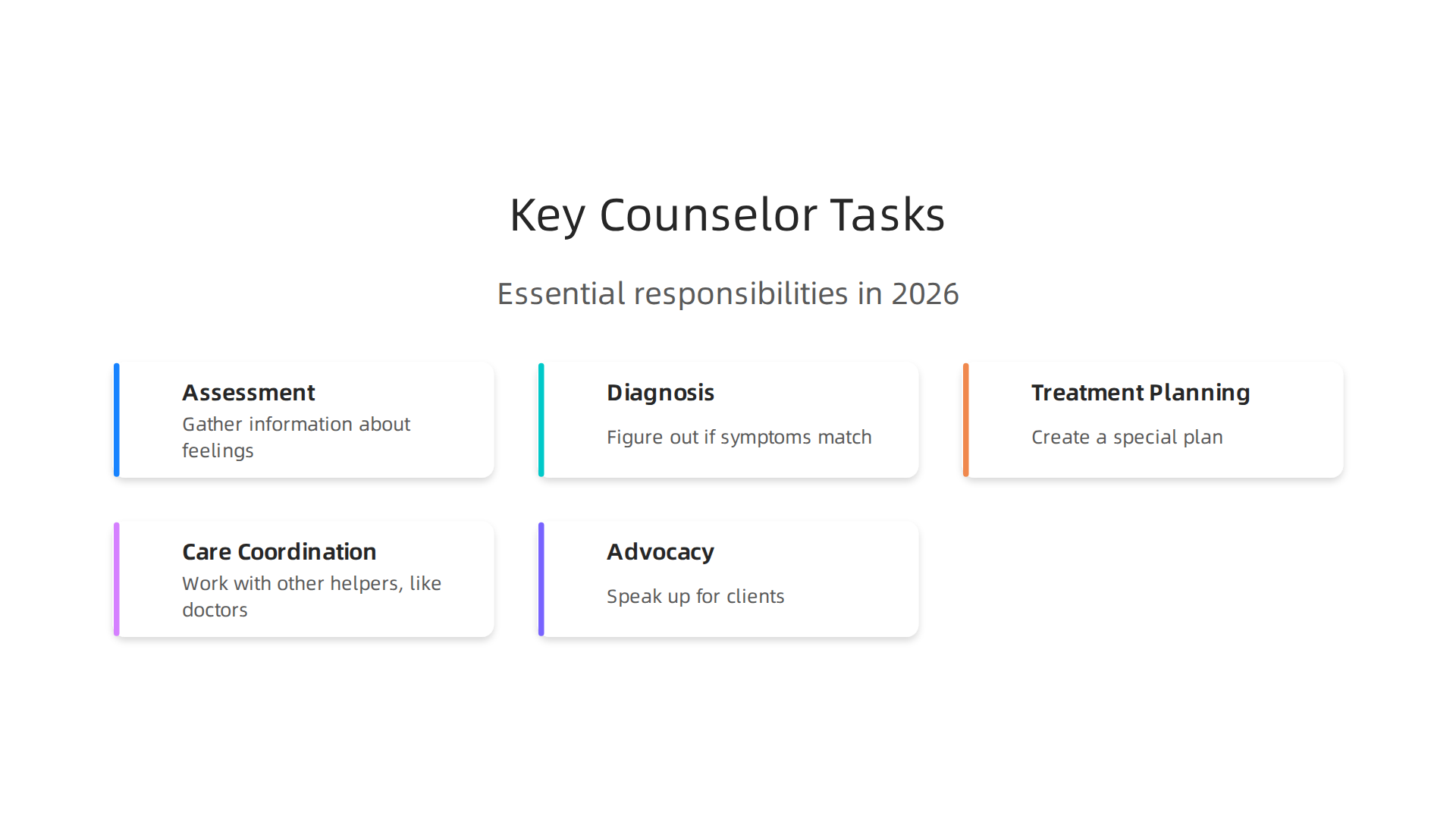
- Assessment: This is when a counselor gathers information about your feelings, thoughts, and how you act. It helps them understand what you might be going through. For instance, they might ask about any big life changes or what makes you feel stressed.
- Diagnosis: After gathering information, a counselor might figure out if your symptoms match a known mental health condition. This helps in deciding the best way to help you. For example, they follow guidelines for specific conditions like obsessive-compulsive disorder Clinical practice guidelines for obsessive-compulsive disorder.
- Treatment Planning: Once they understand what’s happening, they create a special plan just for you. This plan might include different types of talk therapy, like cognitive behavioral therapy, or other ways to help you feel better. They might offer psychotherapy for depression and anxiety based on what you need.
- Care Coordination: Counselors often work with other helpers, like doctors, teachers, or social workers. This means making sure everyone involved in your care is on the same page. If you need special services, they can help you find them, like mental health resources in NYC.
- Advocacy: Sometimes, people need someone to speak up for them. Counselors can do this to make sure you get the support and resources you need.
How Modern Systems Change Daily Practice
Today, the way clinical mental health counseling is done looks different than in the past. New tools and ways of working have changed things a lot:
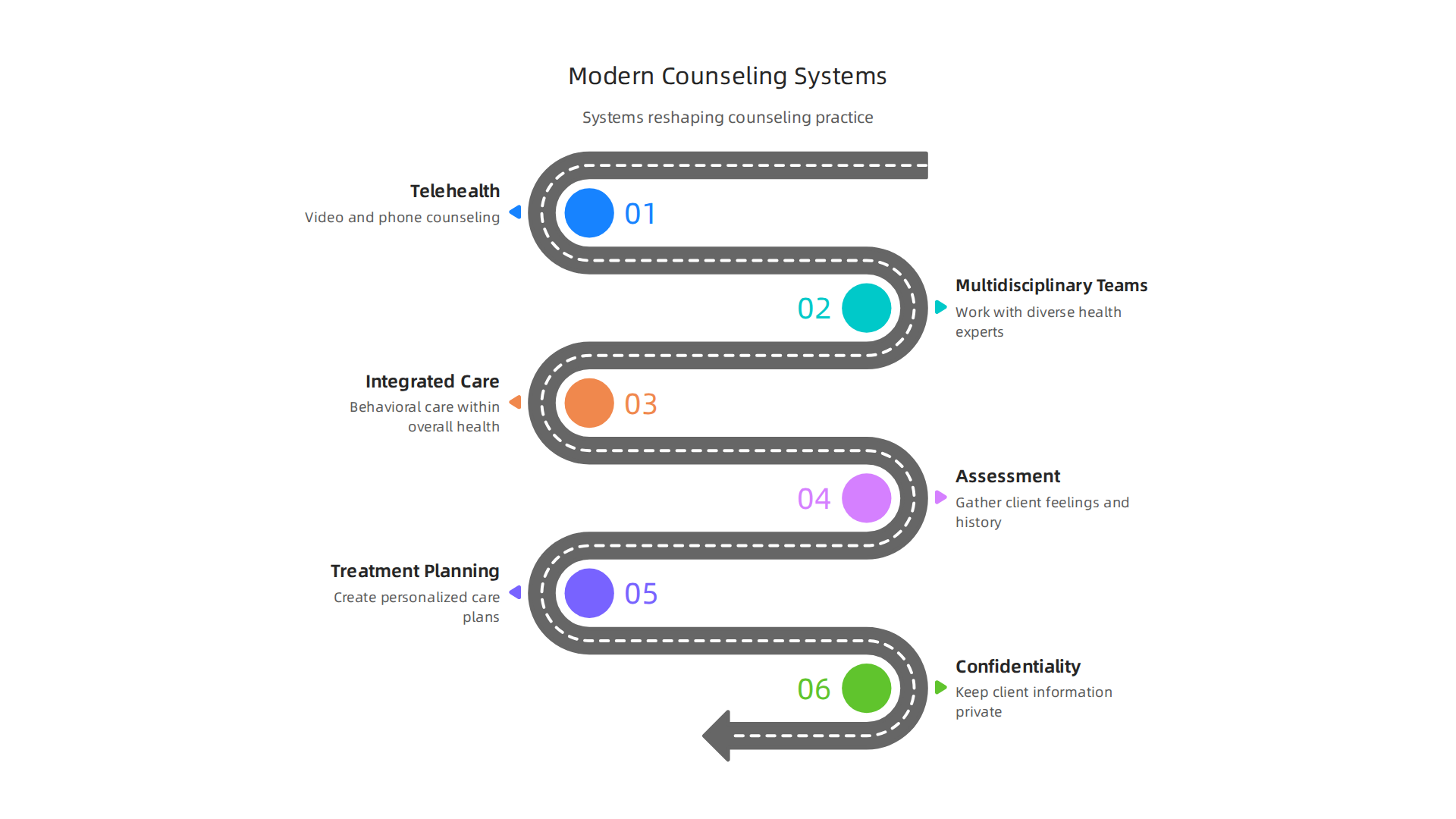
- Telehealth: This means getting counseling through video calls or phone calls. It makes it easier for people to get help from home, especially if they live far away or have trouble traveling. This has become very common in 2026.
- Multidisciplinary Teams: Counselors often work as part of a team with many different kinds of experts, such as doctors, nurses, and social workers. This "behavior health counseling" approach means you get help from many angles.
- Integrated Care: This is when mental health help is part of your overall health care. For example, a mental health counselor might work in a doctor’s office, making it easier for physical and mental health to be treated together. When working in these teams, counselors must also be aware of important privacy rules that keep your information safe Fact Sheet 42 CFR Part 2 Final Rule.
These changes mean that clinical mental health counselors need to be flexible and always learning new ways to help people. They might work in private offices, hospitals, schools, or even online, offering a wide range of support, from regular counseling to helping someone find inpatient mental health treatment if needed.
2. Diagnostic frameworks and communicating diagnoses clearly
After understanding what a clinical mental health counselor does, it is helpful to look at how they figure out what is going on. Counselors use special "roadmaps" called diagnostic frameworks. These frameworks help them understand your symptoms and decide on the best way to help you. Think of them as a guide for understanding different mental health conditions.
One common framework is the Diagnostic and Statistical Manual of Mental Disorders, or DSM. Another is the International Classification of Diseases, or ICD. These books list different mental health conditions and their symptoms. Clinical mental health counselors use these guides to make sure they are giving you the right support. They help counselors see patterns in what you are feeling and doing, much like a doctor uses X-rays to see a broken bone.
How Counselors Talk About Diagnoses
When a counselor uses these frameworks to understand your situation, they then need to explain it to you. This is a very important part of their job. They translate the medical words into simple language so you can understand what’s happening. For example, if someone is dealing with very strong feelings of unreality, a counselor might use the term derealization, but also explain what those symptoms feel like in everyday life derealization symptoms explained how to understand mental health terminology. They make sure you feel like you’re part of the team working towards your well-being.
The goal is to help you understand your experiences better, not to just give you a label. A good clinical mental health counseling session will focus on what you can do to feel better, whether it’s through specific types of therapy or other helpful strategies. This approach is key in all areas of behavior health counseling, ensuring that the person comes before the condition.
Using Diagnostic Terms Without Creating Stigma
It is very important for counselors to use diagnostic terms carefully. The words we use can have a big impact. Here are some tips on how counselors approach this, and what you should expect:
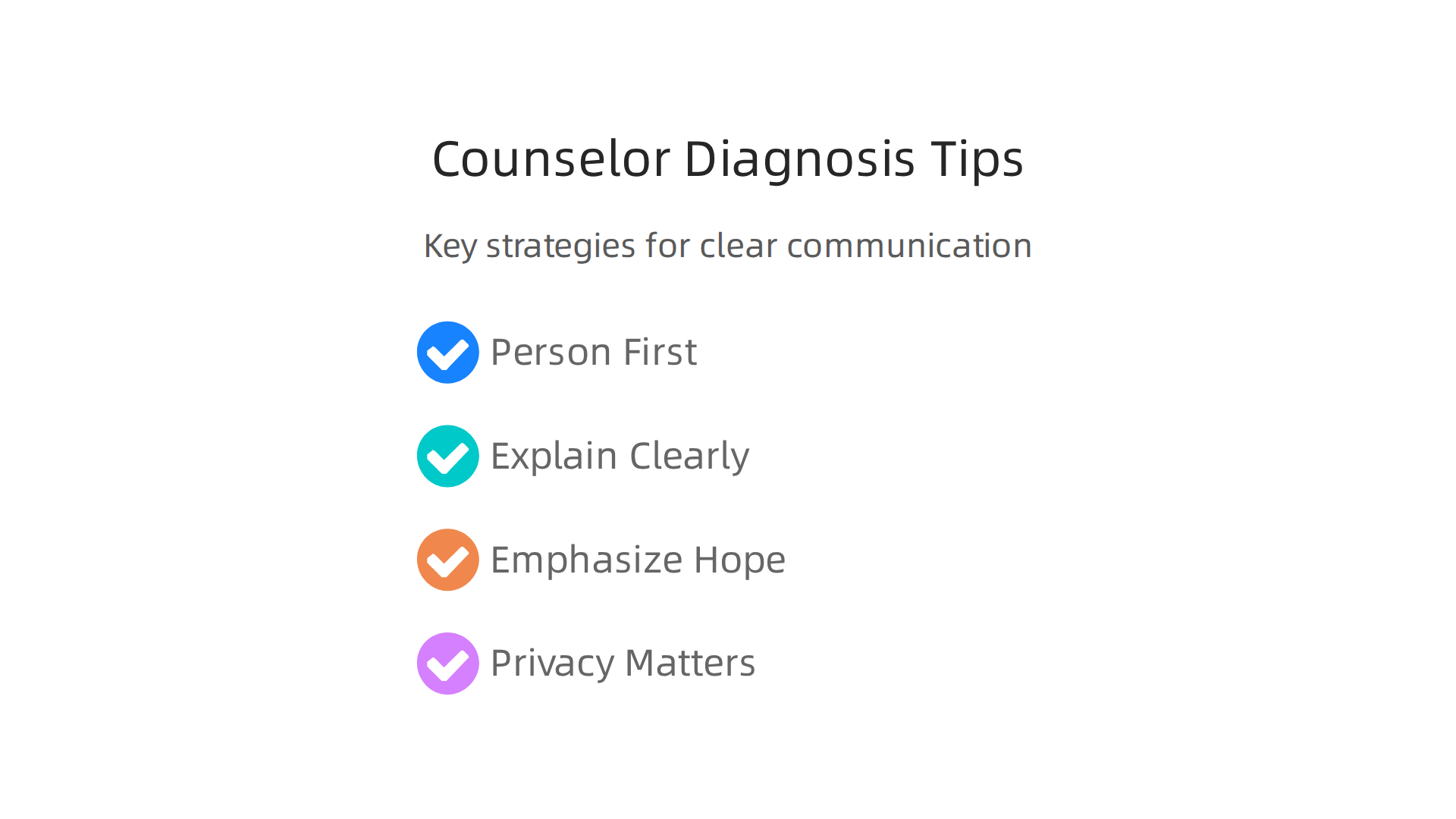
- Focus on the Person, Not the Label: Counselors always talk about "a person with depression" instead of "a depressed person." This helps everyone remember that the condition is something a person has, not who they are.
- Explain Clearly: They take time to explain what a diagnosis means and what it doesn’t mean. They will tell you that a diagnosis is a tool for finding the right treatment, not a fixed idea of who you are. This is very important for understanding conditions like a specific personality disorder schizotypal personality disorder symptoms diagnosis and treatment.
- Emphasize Hope and Change: A diagnosis is not a life sentence. Counselors stress that people can get better and learn ways to manage their challenges.
- Privacy is Key: Counselors keep your diagnosis private, sharing it only when needed for your care and with your permission, as guided by rules for mental health professionals Board of Mental Health and Chemical Dependency Professionals.
Clinical mental health counseling aims to empower you with knowledge, not burden you with a label. The right diagnosis helps open doors to the right kind of help, whether it’s psychotherapy for depression and anxiety, or guidance toward inpatient mental health treatment if that’s what’s needed.
Mental health terms need real context. Use Labels Carefully to make sure they serve you, not define you.
3. Evidence-based therapeutic approaches: selection and tailoring
After understanding how clinical mental health counselors figure out what’s going on, the next step is to choose the best way to help you. This means picking from many proven methods. Clinical mental health counseling isn’t a one-size-fits-all solution. Instead, counselors use different types of therapy, called "therapeutic approaches," that have been shown to work through research. These are often called "evidence-based" approaches because they’re backed by studies.
Think of it like a builder having different tools. A hammer is good for nails, a saw for wood. Similarly, counselors have different tools for different challenges.
Popular Therapeutic Approaches
Here are some main types of therapy that clinical mental health counselors often use:
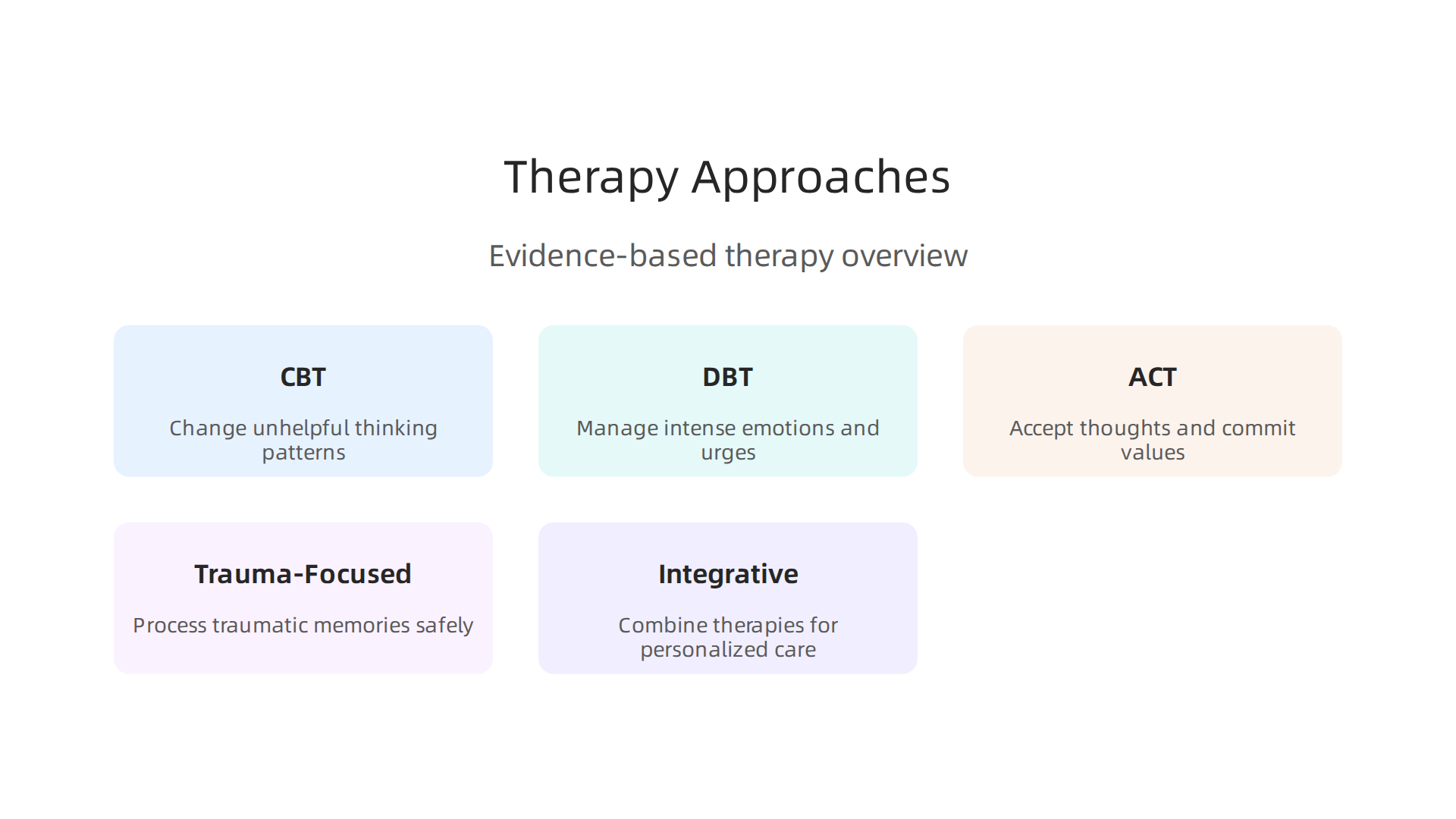
- Cognitive Behavioral Therapy (CBT): This approach helps you understand how your thoughts, feelings, and actions are connected. By learning to change unhelpful thinking patterns, you can change how you feel and act. It’s a very common type of psychotherapy for depression and anxiety and many other concerns. You can learn more about what is Cognitive Behavioral Therapy.
- Dialectical Behavior Therapy (DBT): This is a special kind of CBT. It helps people who have very strong emotions and struggle to control them. DBT teaches skills like mindfulness, how to handle strong feelings, how to get along with others, and how to deal with tough situations Cognitive Behavioral Therapy (CBT) vs. Dialectical Behavior Therapy (DBT). Studies show DBT can be very good at helping people manage self-harm and difficult behaviors Meta-Analysis and Systematic Review Assessing the Efficacy of Dialectical Behavior Therapy.
- Acceptance and Commitment Therapy (ACT): ACT helps you accept difficult thoughts and feelings rather than fighting them. It also helps you commit to actions that match your personal values.
- Trauma-Focused Therapies: These therapies are made for people who have experienced very scary or harmful events. They help process those difficult memories and feelings in a safe way.
- Integrative Approaches: Often, a counselor doesn’t just stick to one method. They might combine parts of different therapies to create a plan that fits you best. This is where different perspectives in counseling come together, including approaches like psychodynamic and humanistic therapies, alongside CBT. You can explore these perspectives in counseling.
How Counselors Choose the Right Approach
Choosing the right therapy is a very careful process in behavior health counseling. A good clinical mental health counselor will look at many things to tailor the treatment to you.

- Your Unique Needs: What are you struggling with? What are your goals? Your counselor will listen closely to understand what you want to achieve. For example, if you’re dealing with very specific patterns like those in OCD, your counselor might suggest cognitive behavioral therapy for OCD.
- Your Background and Culture: Your life experiences and cultural background are important. Counselors make sure the therapy feels right for you and respects who you are.
- What Works Best for Your Condition: Some therapies are known to be more effective for certain conditions, like CBT for depression or DBT for intense emotional dysregulation.
- Your Preferences: What feels comfortable to you? Your counselor will work with you to find a method you feel good about trying.
The goal is always to provide the most effective and supportive clinical mental health counseling possible. This personalized approach helps make sure you get the care that truly helps you feel better and achieve your mental health goals, whether it’s managing daily stress or exploring options like inpatient mental health treatment if needed.
To know if the personalized approach is truly helping, counselors need to measure progress. This is where assessment tools and tracking outcomes come in handy for clinical mental health counseling. To learn more about how counselors work, check out our clinical mental health counseling guide for modern practitioners.
Common Screening and Assessment Tools
When you first start with clinical mental health counseling, your counselor will likely use some special tools to understand your needs better. Think of these as quick check-ups. You can also find free screenings and advocacy from organizations like Mental Health America.
- Brief Measures: These are short surveys or questionnaires that help get a general idea of how you are feeling. They might ask about your mood, how well you’re sleeping, or if you’re feeling worried. These are great for quickly spotting common issues like signs of depression or anxiety. They help the counselor decide if more help is needed or what kind of help might be best.
- Comprehensive Measures: If a brief check-up shows more is going on, your counselor might use longer, more detailed assessments. These go deeper into specific problems. For example, they might help find out more about feelings linked to trauma or very strong emotions. These deeper looks help your counselor create a very detailed plan for your care. Counselors often deal with a wide range of issues, including depression, anxiety, substance abuse, and PTSD, among others, as shown in various Integrated Behavioral Health Program Case Studies.
These tools are not just for the start. Counselors use them often during your behavior health counseling journey to see how things are changing.
Keeping Track of Progress: Outcome Measurement
It’s super important to know if the therapy is actually working. This is called "outcome measurement." Your clinical mental health counselor will track how you are doing over time. This helps both of you see if the treatment plan is making a positive difference.
- Session-Level Tracking: Imagine keeping a diary of how you feel after each therapy session. Counselors often do something similar. They might ask you to rate your mood or how much your main problem bothered you since the last visit. This session-level tracking gives quick feedback. If things aren’t getting better, the counselor can change the plan right away. This flexible approach is key to effective psychotherapy for depression and anxiety, and other conditions.
- Using Data to Guide Care: All this information is like a map. It shows where you started, where you are now, and if you’re moving in the right direction. If the data shows you’re not making much progress, your counselor might suggest trying a different therapy approach or adjusting the current one. This is also important if considering more intensive support, like inpatient mental health treatment, if progress is stalled.
Using these assessment tools and carefully measuring outcomes ensures that your clinical mental health counseling is always focused on what works best for you. It’s a way for counselors to be sure they are giving you the best possible care in 2026.
5. Ethics, Consent, and Culturally Responsive Practice
Giving the best possible care in clinical mental health counseling goes beyond just using the right tools. It also means counselors must follow strict rules about how they treat people. These rules are called ethics. They make sure that therapy is safe, fair, and helpful for everyone in 2026.
Key Ethical Rules in Counseling
Counselors face important choices every day to keep things fair and private. Here are some of the main ethical rules they follow:
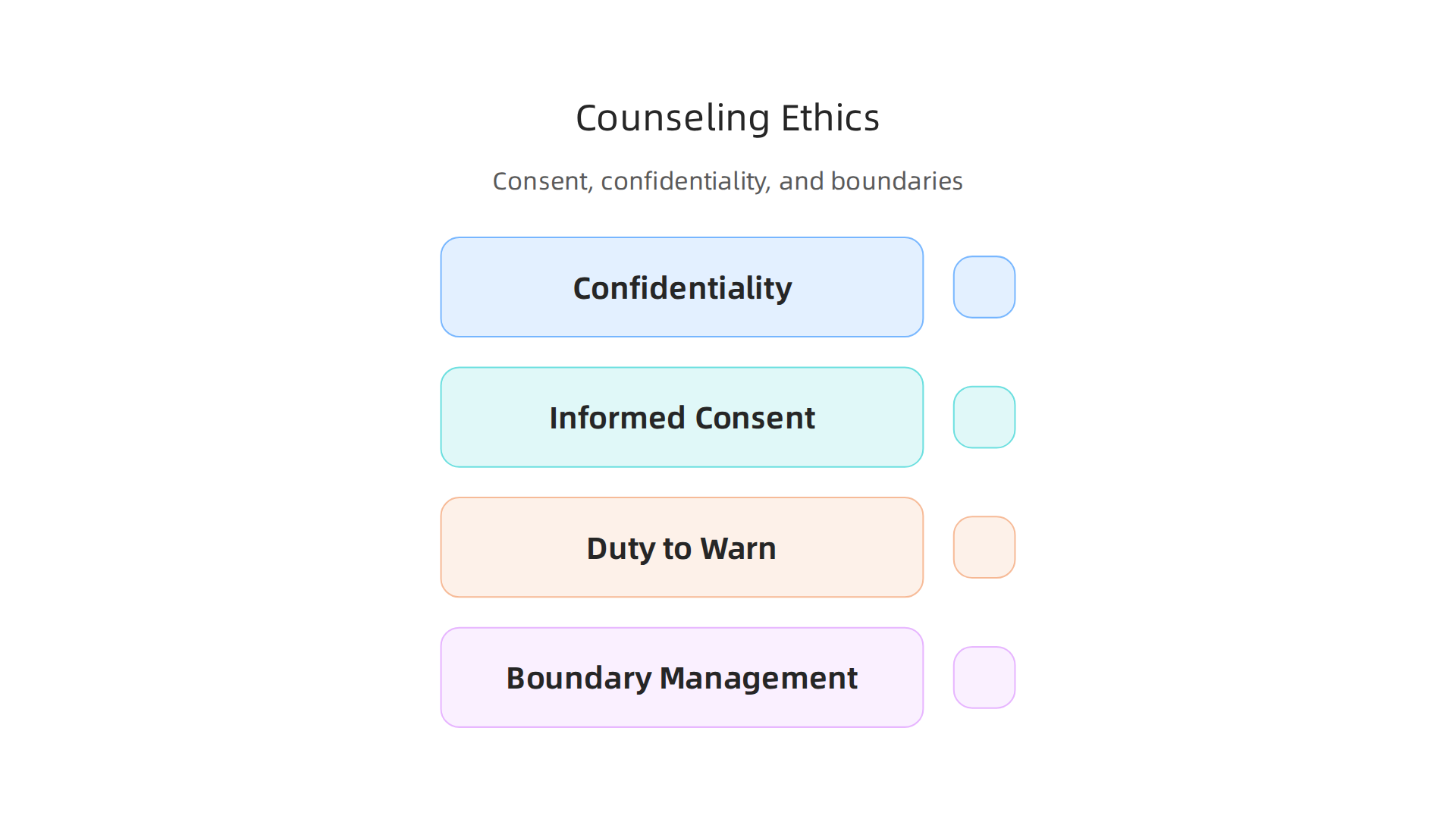
- Confidentiality, Especially Online: This means what you talk about with your counselor stays private. It’s a promise they make to you. With more people doing behavior health counseling online these days, counselors work extra hard to keep your information safe on the internet too. They use special secure systems to protect your privacy.
- Informed Consent: Before you start therapy, your counselor will explain everything clearly. This includes what kind of therapy they offer, how long sessions might be, and what it costs. They’ll also tell you about your rights. You then give your "informed consent," which means you understand and agree to move forward. This makes sure you’re an active part of decisions about your care.
- Duty to Warn: While confidentiality is key, there are rare times when a counselor might need to share information. If they believe you might seriously harm yourself or someone else, they have a "duty to warn" to keep everyone safe. This is a very serious rule to prevent bad things from happening.
- Boundary Management: Counselors must keep clear lines between their work life and personal life. This means they don’t become friends with clients outside of sessions or have other types of relationships. Good boundaries help keep the therapy space safe and focused on your needs. For counselors to keep doing their best work, sometimes they also need their own support, like engaging in personal therapy for counsellors.
Making Counseling Respectful for Everyone
Good clinical mental health counseling also means being respectful of where people come from. Counselors practice "cultural humility," which means they are always ready to learn about and respect different backgrounds, beliefs, and ways of life.
This focus on cultural humility helps counselors make therapy accessible and respectful for all people. It means they try to understand how your culture, family, and life experiences shape who you are and how you feel. For instance, psychotherapy for depression and anxiety might look a bit different depending on a person’s cultural background, requiring the counselor to adapt their approach respectfully. It’s about seeing you as a whole person, not just a set of symptoms. When we talk about mental health, Mental health terms need real context to truly help people.
Providing great care in clinical mental health counseling is not a one-time thing. Counselors must keep learning and growing their skills throughout their careers. This involves special training, getting guidance from experienced mentors, and taking new classes. All of this makes sure they offer the best and most up-to-date behavior health counseling.
Key Skills for New Counselors
When someone starts out in clinical mental health counseling, they learn many important skills. They study how to listen carefully, how to understand people’s feelings, and how to help clients set goals. They also learn different ways to provide therapy, like Perspectives Counseling How Psychodynamic Humanistic CBT and Integrative Approaches Work. New counselors need to know how to help people with many problems, from everyday stress to more serious conditions like psychotherapy for depression and anxiety. This early training builds a strong base for their future work.
The Role of Supervision
Learning doesn’t stop after school. New counselors get help from experienced supervisors. Think of a supervisor as a guide or a coach. They watch over the new counselor’s work, give advice, and help them improve. This "supervision" is very important because it makes sure that counselors are always giving safe and effective care. It also helps them learn how to work with others, like in integrated care settings where different kinds of helpers work together to support people’s mental health. You can see how this teamwork works in examples of Integrated Behavioral Health (IBH) in Action: Trends From the Field.
Staying Current with Learning
The world of mental health is always changing. New research comes out, and better ways to help people are discovered. That’s why counselors must keep learning through "continuing education." This means taking workshops, going to conferences, or getting new certifications. These activities help them learn about the latest treatments, like new ways to approach inpatient mental health treatment or handle complex cases. This ongoing learning helps counselors grow their skills and offer even better support.
Keeping Your License
Just like doctors, counselors need a special license to practice. To keep this license, they must follow rules set by their state or professional groups. These rules often include doing a certain number of hours of continuing education each year. This makes sure that every clinical mental health counseling professional stays competent and up-to-date. It protects the public and helps everyone get quality care.
To learn more about how understanding human behavior can lead to more effective interventions in mental health, consider exploring The Science of Gamification.
When counselors finish their training and keep learning new skills, they also need to know how to work with others. Providing good clinical mental health counseling often means working as a team. This means joining forces with different groups to make sure people get all the help they need.

These partnerships help counselors reach more people and offer complete support.
Building Partnerships for Better Care
Counselors often work with many partners. One important area is schools. By working with teachers and school staff, counselors can help students with their mental health right where they are. This kind of team effort, called collaborative care, can really help students feel better and do well in school, as shown in studies on Collaborative Care in School-Based Mental Health Programs.
Another key partnership is with primary care doctors. When counselors work alongside family doctors, they can offer mental health support in a familiar setting. This makes it easier for people to get help for things like psychotherapy for depression and anxiety, or other mental health concerns, without having to go to a separate office. This approach, known as integrated care, is becoming more common to help people get care for both their body and mind, as promoted by efforts to strengthen Integration of Primary and Behavioral Health Care. Counselors also partner with community groups, digital platforms, and other helpers to make sure that behavior health counseling is available to everyone who needs it.
Designing Programs for All
Counselors also help design special programs that can serve many people while still offering great care. This might include "brief interventions," which are short, focused talks to help with specific problems. Or they might use "stepped care" models. This means people start with simpler kinds of help, and if they need more, they can "step up" to more intense counseling. These ways of working help counselors keep high standards for care while also making sure more people can get the help they need. You can find out more about how counselors manage their work in our Clinical Mental Health Counseling Guide for Modern Practitioners. These smart ways of setting up services help integrate care into wider systems, making mental health support a regular part of how communities help their members.
To learn more about how systems can be designed to support young people’s well-being and resilience, consider reading the Youth Safety Case Study.
Summary
This article explains what clinical mental health counseling is, why it matters in 2026, and how modern counselors help people improve emotional and mental well‑being. It describes core counselor tasks—assessment, diagnosis, treatment planning, care coordination, and advocacy—and how diagnostic frameworks like the DSM and ICD guide clear, stigma‑sensitive communication. The guide reviews common evidence‑based therapies (CBT, DBT, ACT, trauma‑focused, and integrative approaches), how clinicians choose and tailor them, and practical screening and outcome measurement methods to track progress. It covers modern practice changes such as telehealth, integrated and multidisciplinary care, and ethical priorities like confidentiality, informed consent, duty to warn, and cultural humility. Finally, it outlines training, supervision, continuing education, and program design strategies that help counselors deliver effective, equitable care across settings.