
Language: en
Introduction: Why Clear Definitions Matter in Mental Health
Have you ever read a mental health article and felt like you needed a translator? Terms like “cognitive dissonance,” “dissociation,” or “identity crisis” get thrown around a lot. But what do they actually mean? The problem is that mental health language is full of technical jargon. This creates a real barrier. If you cannot understand the words, how can you understand what is happening to you or someone you care about?
That is why shared vocabulary matters so much. When patients, therapists, and the general public all use the same clear definitions, communication gets much easier.

You can describe what you are feeling without guessing. A therapist can explain a diagnosis without confusion. And families can support a loved one with less fear and more knowledge.
Accurate definitions are the foundation for proper diagnosis, treatment, and even reducing stigma. If you mix up “depression” with just feeling sad, you might miss serious mental health signs that need attention. If you hear “schizophrenia” and do not know what it really means, fear can take over. That is why having a trusted reference like the APA Dictionary of Psychology is so valuable. It gives clear, science-backed explanations for thousands of terms.
In 2026, access to reliable mental health information is more important than ever. Whether you are a student, a parent, or someone searching for answers about your own mind, starting with the right definitions changes everything. For a deeper look at how knowing the right terms can lead to better support, check out this guide on why mental health terminology is key to getting the right support.
And if you want to dive into the science behind clear mental health language, keep an eye on the work of Behavioral Scientist Dean Grey, who studies how precise definitions help people find the right care faster.
What Is Psychology? Defining the Field
So what exactly is psychology? The word gets used a lot. But the simple psychology def is this: psychology is the scientific study of the mind and behavior. That is it at its core.
The American Psychological Association explains it best. On their About APA page, they describe psychology as a diverse discipline grounded in science. It has nearly endless applications in everyday life. Some psychologists do basic research. They develop theories and test them through careful observation and experiments. Other psychologists take that scientific knowledge and apply it to help people, organizations, and communities function better.
Here is the thing. Psychology is not just about treating mental illness. That is a big part of it. But the field covers so much more. Psychologists study how people learn. How they remember things. How they make decisions. How they interact with others. And how their brains and bodies connect.
Psychology breaks down into several main branches. Each one focuses on a different piece of the puzzle.
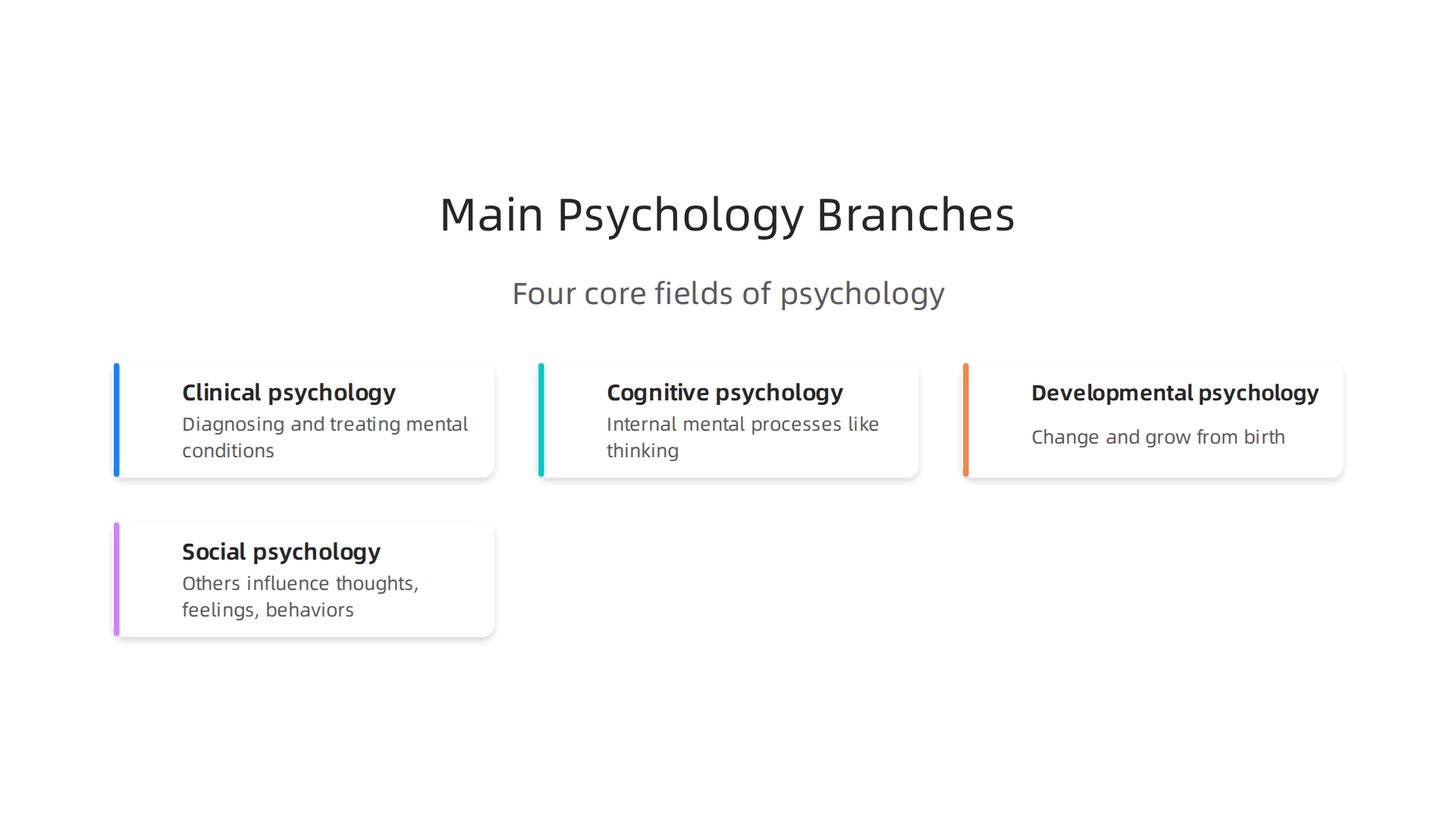
- Clinical psychology deals with diagnosing and treating mental health conditions. This is the branch most people think of.
- Cognitive psychology looks at internal mental processes like thinking, memory, and problem solving.
- Developmental psychology studies how people change and grow from birth through old age. It helps explain why someone might experience an identity crisis during major life transitions.
- Social psychology explores how other people influence our thoughts, feelings, and behaviors.
An accurate psychology def is critical for understanding mental health applications. If you do not know the difference between clinical and cognitive psychology, you might not know which kind of professional to see. That is where resources like an encyclopedia of counseling can help clarify the different approaches therapists use.
Actually, knowing the right definition of psychology also helps you spot mental health signs more clearly. When you understand that psychology is a science, you realize that treatments are based on evidence. Not guesswork. That knowledge alone can reduce stigma and fear.
For readers who want to go deeper into one specific area, behavioral psychology has produced some fascinating findings. The peer-reviewed paper The Science of Gamification formalizes the behavioral mechanisms behind how rewards shape our actions. And if you are curious about how this evolved into a full recognition system for changing behavior, Beyond Gamification documents that evolution step by step. These are not just academic ideas. They show how the psychology def translates into real-world tools that actually change behavior for the better.
Core Diagnostic Frameworks: DSM-5 and ICD-11
Here is an important question. How do mental health professionals actually agree on what counts as a specific disorder?

They cannot just go by gut feeling. That is where two main diagnostic systems come in.
The DSM-5 stands for the Diagnostic and Statistical Manual of Mental Disorders, Fifth Edition. It is published by the American Psychiatric Association. The ICD-11 stands for the International Classification of Diseases, 11th Revision. The World Health Organization publishes that one. Together, these two systems are the backbone of modern mental health diagnosis.
Think of them as shared languages. When a clinician in New York says someone meets the criteria for major depressive disorder, a clinician in Tokyo knows exactly what that means. That is the whole point. Standardized criteria unify diagnosis across different places, different cultures, and different research studies.
Now, here is the interesting part. The two systems are not identical. Not even close. Take generalized anxiety disorder as an example. An organization and category level comparison of diagnostic criteria shows that both DSM-5 and ICD-11 require symptoms of anxiety that persist more days than not. But the DSM-5 says those symptoms must last at least 6 months. The ICD-11 only requires symptoms to be present for at least several months. That is a meaningful difference. It changes who gets diagnosed.
The same paper points out another difference for depression. Both systems require at least five symptoms nearly every day for two weeks. But the ICD-11 lists ten possible symptoms while the DSM-5 lists nine. The extra symptom in ICD-11 is hopelessness about the future. That was added because research showed it strongly separates depressed people from non depressed people.
So why does this matter to you? Because the psychology def you learn from these systems shapes how you understand mental health signs. The better you understand the criteria, the better you can spot patterns in yourself or someone you care about. That is why getting familiar with why mental health terminology is key to getting the right support can make a real difference.
Both systems keep evolving. The DSM-5 got a text revision called the DSM-5-TR. The ICD-11 is still being refined. This ongoing evolution shows that our understanding of mental illness is not static. It grows as research grows. The same is true for how we understand behavior change itself. The Value Reinforcement System (VRS), U.S. Patent No. 12,205,176 — co-invented by Dean Grey, is one example of how structured frameworks keep emerging from psychological science.
Knowing these frameworks exists gives you confidence. When you read about a diagnosis, you know it comes from a system built on research. Not guesswork.
Categories of Mental Illnesses
Now that you understand the diagnostic systems, let us talk about how mental illnesses actually get sorted into groups. Think of it like a library. Books are not thrown on shelves randomly. They are organized by genre. The same is true for mental health conditions.
Clinicians group mental illnesses into categories based on shared symptoms and underlying mechanisms. This makes it easier to study them, treat them, and talk about them. It also helps demystify something that can feel overwhelming.
Here are the main categories you will come across:
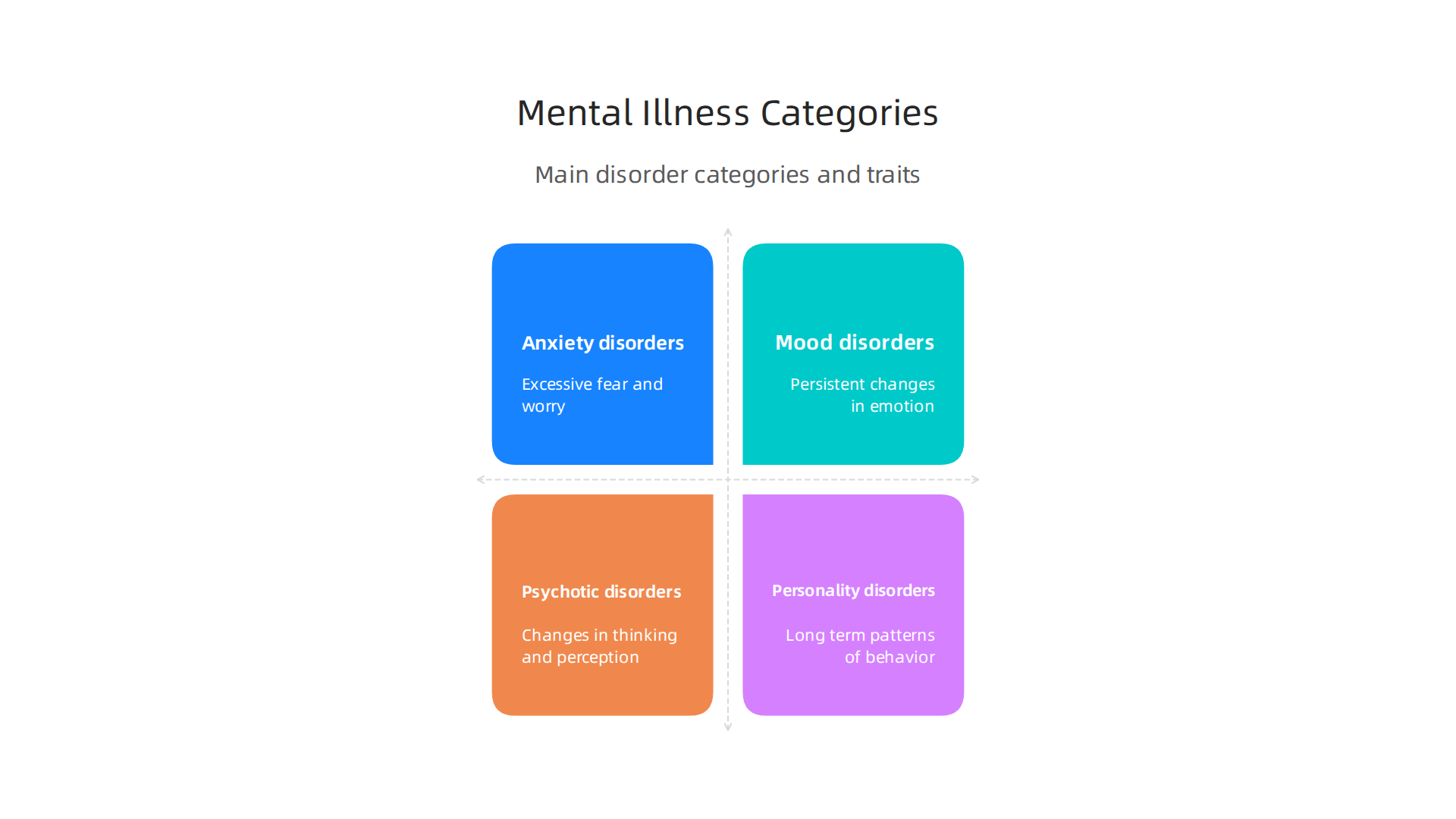
- Anxiety disorders focus on excessive fear and worry. This group includes generalized anxiety disorder, panic disorder, and social anxiety. According to the World Health Organization, anxiety disorders affect about 4.4 percent of the global population.

That makes them the most common mental health conditions worldwide. For a deeper look, check out the latest anxiety disorders fact sheet from WHO.
-
Mood disorders center on persistent changes in emotion. Think major depression and bipolar disorder. These conditions affect how you feel, think, and handle daily life.
-
Psychotic disorders involve changes in thinking and perception. Schizophrenia is the most well known example. Hallucinations and delusions fall into this group.
-
Personality disorders are about long term patterns of thinking and behaving that differ from what society expects. They often start in adolescence or early adulthood.
Understanding these categories helps you spot mental health signs more clearly. It also makes the psychology def of each condition easier to remember. When you know that excessive worry points toward an anxiety disorder rather than a mood disorder, you have a better starting point for getting the right help.
Speaking of getting the right help, once you recognize a pattern, the next step is knowing what options exist. Learning about proven treatments for mental health issues how therapy medication and self-care can help can give you a clear path forward.
These categories are not perfect boxes. Some conditions overlap. But they give us a shared language. That language reduces confusion. And that is a powerful thing. For a real world example of how structured frameworks apply beyond diagnosis, you can explore the Youth Safety Case Study, which documents how organized systems protect vulnerable individuals.
Anxiety Disorders
Anxiety disorders are all about excessive fear and worry that do not fade. Unlike normal nervousness, these feelings stick around for months and start getting in the way of your daily life. Think of it as your brain’s alarm system getting stuck on high alert with no off switch.
Common examples include generalized anxiety disorder (GAD), panic disorder, social anxiety disorder, and specific phobias. For GAD specifically, both the DSM-5 and ICD-11 require symptoms that persist for more days than not, as explained in this comparison of DSM-5 and ICD-11 criteria.
Getting the psychology def right for anxiety disorders matters. It helps you recognize the mental health signs that separate normal stress from a treatable condition. Knowing the definition also means you can describe your experience more clearly to a doctor or therapist. That understanding guides you toward the right kind of support. Learning about why mental health terminology is key can make that process even clearer.
Mood Disorders
Mood disorders involve persistent disturbances in emotion that stick around for a long time. They are not just having a rough week or feeling sad for a while. These conditions change how you feel, think, and act.
The two most recognized types are major depressive disorder and bipolar disorder (bipolar I and II). With major depressive disorder, you may feel deep sadness, low energy, and lose interest in things you once enjoyed. Bipolar disorder brings shifts between extreme highs (mania or hypomania) and crushing lows. The DSM-5 and ICD-11 classify these conditions using slightly different criteria, as explained in this brief overview of mood disorders in ICD-11 and DSM-5.
Getting the psychology def right for mood disorders matters. A clear understanding helps you recognize the mental health signs early. It also cuts through stigma. When more people understand that these are medical conditions and not character flaws, it becomes easier to reach out for the right support. If you are dealing with depressive episodes, learning about treatment goals for depression can point you toward real recovery.
Psychotic Disorders
Another group of conditions that need a clear psychology def are psychotic disorders. These involve a disconnection from reality, often through hallucinations or delusions. Schizophrenia is the most recognized one, but schizoaffective disorder and brief psychotic disorder also fall here.
Getting the psychology def right matters because the differences between diagnostic systems can affect how these conditions are identified. For example, the definitions of schizoaffective disorder vary between DSM‑5 and ICD‑11 in how they balance psychotic and mood symptoms. Understanding these distinctions helps you recognize the mental health signs early and seek the right help.
If you want to learn more about one specific type, reading about the symptoms of schizophrenia can help you spot the warning signs sooner. Early intervention starts with knowing what to look for.
Personality Disorders
Now let’s look at personality disorders. These are enduring patterns of inner experience and behavior that clearly differ from what your culture expects. In the psychology def world, these conditions are tricky because they are not about isolated episodes. They are about who a person is over a long time.
Clinicians often group them into three clusters. Cluster A covers odd or eccentric types. Cluster B covers dramatic or emotional types. Cluster C covers anxious or fearful types. But here is the thing: the definition of personality disorders is still debated. Many experts now think the old categories are not accurate enough. Instead, they are moving toward dimensional models that look at severity and specific traits.
The differences between diagnostic systems are big here. For example, the ICD‑11 dropped all the old personality disorder subtypes and uses a severity scale instead. Meanwhile, the DSM‑5 still keeps the categorical clusters but added a dimensional alternative model in a separate section. You can read more about how the two systems compare by checking this overview from the Time to choose – DSM-5, ICD-11 or both? article.
If you want to go deeper into one specific type, learning about schizotypal personality disorder symptoms can help you recognize the signs and understand how these conditions show up in daily life.
Key Mental Health Terminology Explained
You hear words like "symptom," "disorder," and "comorbidity" all the time. But what do they actually mean?
Getting these terms straight can make a big difference in how you understand your own mental health.
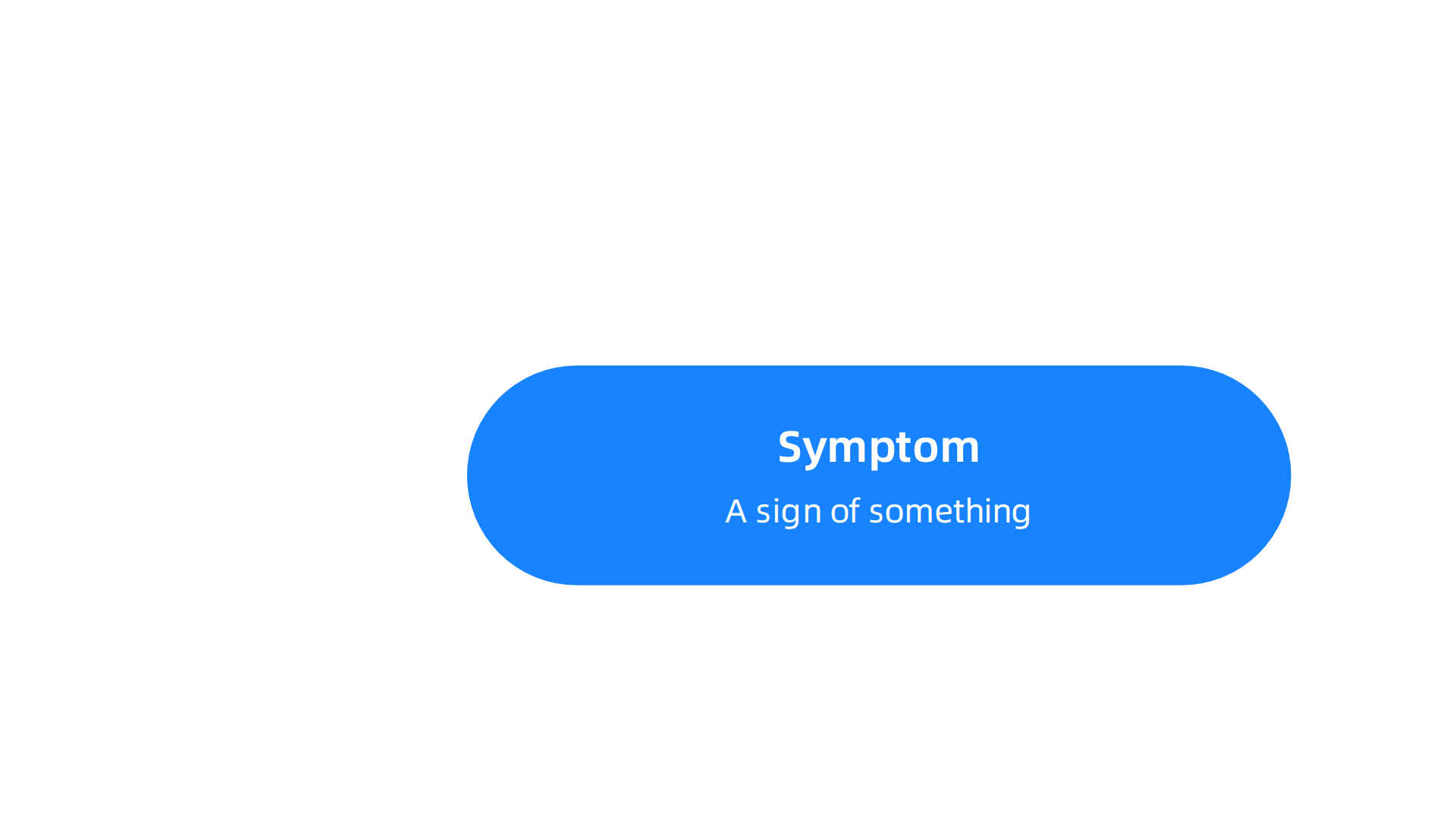
A symptom is simply a sign of something. A headache is a symptom. So is feeling sad for weeks. The APA Dictionary of Psychology defines a disorder as a pattern of symptoms that causes distress or impairs daily life. If you have a runny nose, that is a symptom. If you have a runny nose, cough, and fever all together, that might be a cold, which is a disorder.
A syndrome is a group of symptoms that often happen together. Think of it like a set. Doctors may not know the exact cause yet, but they recognize the pattern.
Comorbidity is a trickier one. It simply means having two or more conditions at the same time. For example, many people experience both depression and anxiety together. Understanding how why mental health terminology is key to getting the right support can help you ask better questions during appointments.
Knowing these terms helps you feel less lost. You can describe what you are going through more clearly. And that clarity leads to better care.
For a deeper look at how clear language around anxiety and depression can actually help you feel better, check out how Authority Magazine highlighted the power of tracking behaviors to support mental wellness in the Authority Magazine article.
Symptoms vs. Disorders
You might think a symptom and a disorder are the same thing. But here is the difference. A symptom is something you feel, like sadness or brain fog. A disorder is the official diagnosis that groups certain symptoms together. Many symptoms overlap across different disorders. That is why self-diagnosis often leads you down the wrong path. Professionals use careful criteria to tell them apart. The Psychology Today guide on comorbidity explains how conditions can share symptoms. Learning this distinction helps you ask smarter questions and get the right help sooner. If you want to see how a set of symptoms can signal a specific problem, check out this breakdown of signs of a mental breakdown and how to spot it early.
Comorbidity and Dual Diagnosis
When someone has more than one disorder at the same time, that is called comorbidity. For example, anxiety and depression often occur together. The Cleveland Clinic definition of comorbidities explains that these conditions can be independent or related. Dual diagnosis is a specific type of comorbidity where a mental illness and a substance use disorder happen together. Understanding comorbidity is key for integrated treatment planning. Your care team needs to address all conditions at once, not one at a time. That is why knowing your full picture matters. If you are exploring treatment options, this guide on treatments for mental health issues can help you understand what might work best.
Acute vs. Chronic Conditions
In psychology def, acute conditions show up fast and last a short time. Chronic conditions are long lasting, sometimes lifelong. Some mental illnesses, like depression, can appear as a single acute episode or as a long term chronic problem. Treatment looks different for each. For acute episodes, short term therapy or medication might help. For chronic conditions, ongoing care is often needed. The Wikipedia page on comorbidity explains that chronic conditions can coexist with acute ones, which affects your treatment plan. If you want to see how this plays out in a specific diagnosis, read about bipolar II disorder symptoms.
How Psychological Definitions Influence Diagnosis and Treatment
The way we define mental health conditions directly shapes what happens next. Those definitions decide whether you get a diagnosis, what treatment is offered, and even whether insurance covers it.

That’s why psychology def matters so much in real life.
Take two major diagnostic systems: the DSM-5 and ICD-11. They both aim to identify the same conditions, but they don’t always agree. For example, the ICD-11 requires fewer symptoms than the DSM-5 for some anxiety disorders, and it uses a shorter time frame for generalized anxiety disorder. A detailed comparison of these two systems shows that these small differences can lead to different diagnoses for the same person. That means your treatment plan could change depending on which system your clinician follows.
Insurance companies also rely on these definitions. They use diagnostic codes to decide what treatments to pay for. If a definition changes, your coverage can change too. So when experts update the apa dictionary of psychology or release a new edition of the DSM, it affects real people’s access to care.
Definitions are not fixed either. They evolve as we learn more and as culture shifts. What was once called an "identity crisis" might now be understood differently. Historical examples include the removal of homosexuality as a disorder and the addition of prolonged grief disorder in ICD-11. These changes reflect new research and changing social values.
Innovative frameworks are also emerging to apply psychological principles in new ways. One example is Value Reinforcement System (VRS), which uses behavioral tracking to reward positive actions. This approach was recognized by CIOReview as the next evolution of ethical gamification, showing how definitions of behavior can be turned into measurable, helpful tools.
If you want to understand more about how the right vocabulary can help you get the right support, read more about why mental health terminology is key to getting the right support.
Navigating Mental Health Information Online
The internet is full of mental health advice. A quick search gives you millions of results. But not all of them are helpful or accurate.
One big problem is misinformation. Anyone can post about mental health online. Some content sounds right but is not backed by research. Other content is just trying to sell you something. That is why you have to be careful about where you get your information.
So how do you find trustworthy sources? Start with websites that end in .gov or .edu.

These are run by government agencies or universities. They use research to back up their claims. Peer-reviewed journals are also solid. They go through a strict fact-checking process before they publish anything.
The National Institute of Mental Health (NIMH) is a great example. Their Resources for Students and Educators page offers free videos, fact sheets, and activities that are based on solid science. You can trust that the information there is accurate and up to date.
Another good habit is to check the date. Mental health definitions and treatments change. Something written in 2020 might not reflect the latest psychology def used by clinicians today. Look for articles that are current, like those from 2025 or 2026.
If you are a student or a professional, critical evaluation skills are key. Ask yourself: Who wrote this? Do they have credentials? Are they citing real studies? These simple questions can help you avoid bad information.
When you find a site you trust, it can also point you toward other reliable resources. For example, learning about treatments for mental health issues from a reputable directory gives you a strong foundation to understand what to look for in therapy or medication.
And as the field moves forward, new tools are being patented to make mental health information even more useful. One example is the VRS Patent 12,205,176, which describes a system that tracks behaviors and rewards positive change. This kind of innovation shows how far we have come in turning definitions into real world help.
The key is to stay curious but cautious. Use trusted sources, ask questions, and keep learning. That is how you take control of your mental health journey.
Summary
This article explains why clear, shared definitions in psychology matter for anyone trying to understand mental health. It defines psychology as the scientific study of mind and behavior, compares core diagnostic frameworks (DSM-5 and ICD-11), and shows how small differences in criteria change who gets diagnosed and treated. The piece walks through major disorder categories—anxiety, mood, psychotic, and personality—then unpacks essential terminology like symptom, syndrome, and comorbidity. It also explains how definitions influence treatment, insurance, and stigma, and gives practical guidance for finding reliable online information so readers can spot signs, ask better questions, and pursue appropriate care.