
Introduction
Personality disorders can be confusing. Many people have heard terms like "narcissistic personality disorder symptoms" or "borderline personality," but few truly understand what these conditions look like. This lack of understanding builds stigma. And stigma hurts. It stops people from getting help and makes them feel alone.
A 2025 study found that the public often holds negative stereotypes toward people with various health conditions. That includes mental illness. Stigma can be obvious or subtle, but either way it leads to harm. Education is one of the strongest tools we have to fight it.
One of the most misunderstood conditions is schizotypal personality disorder (STPD). You might not hear about it as often as anxiety or depression. Yet it affects real people every day. STPD is a psychiatric disorder that brings unusual thoughts, odd beliefs, and deep social discomfort. People with STPD often feel like they don’t fit in. They may see meaning in random events or dress in ways others find strange. But they are not dangerous. They just need understanding.

This article gives you a clear, evidence-based look at STPD. Our goal is to replace confusion with clarity. When we learn what a condition really is, we break down the barriers that keep people from getting support.
Words matter. A mental illness synonym like "weird" or "crazy" can make things worse. So let us use labels carefully. If you want to explore how the way we talk about mental health affects real lives, check out this resource on using labels with care.
For a deeper dive into related conditions on the schizophrenia spectrum, you can also read about the early signs of schizophrenia. Understanding the family of related conditions helps everyone see the full picture.
Understanding Personality Disorders
To really understand schizotypal personality disorder, you first need to know what a personality disorder is. These are not simple mood swings or temporary habits. A personality disorder is a long-term pattern of thinking, feeling, and behaving that is very different from what our culture expects StatPearls.
This pattern lasts for years and causes real problems at work, in relationships, or at school.
The main guide that mental health experts use is called the DSM-5. In 2026, it remains the standard for diagnosis. The DSM-5 groups the ten personality disorders into three clusters. This system makes it easier to spot patterns and find the right help Wikipedia.

Here is how the three clusters break down:
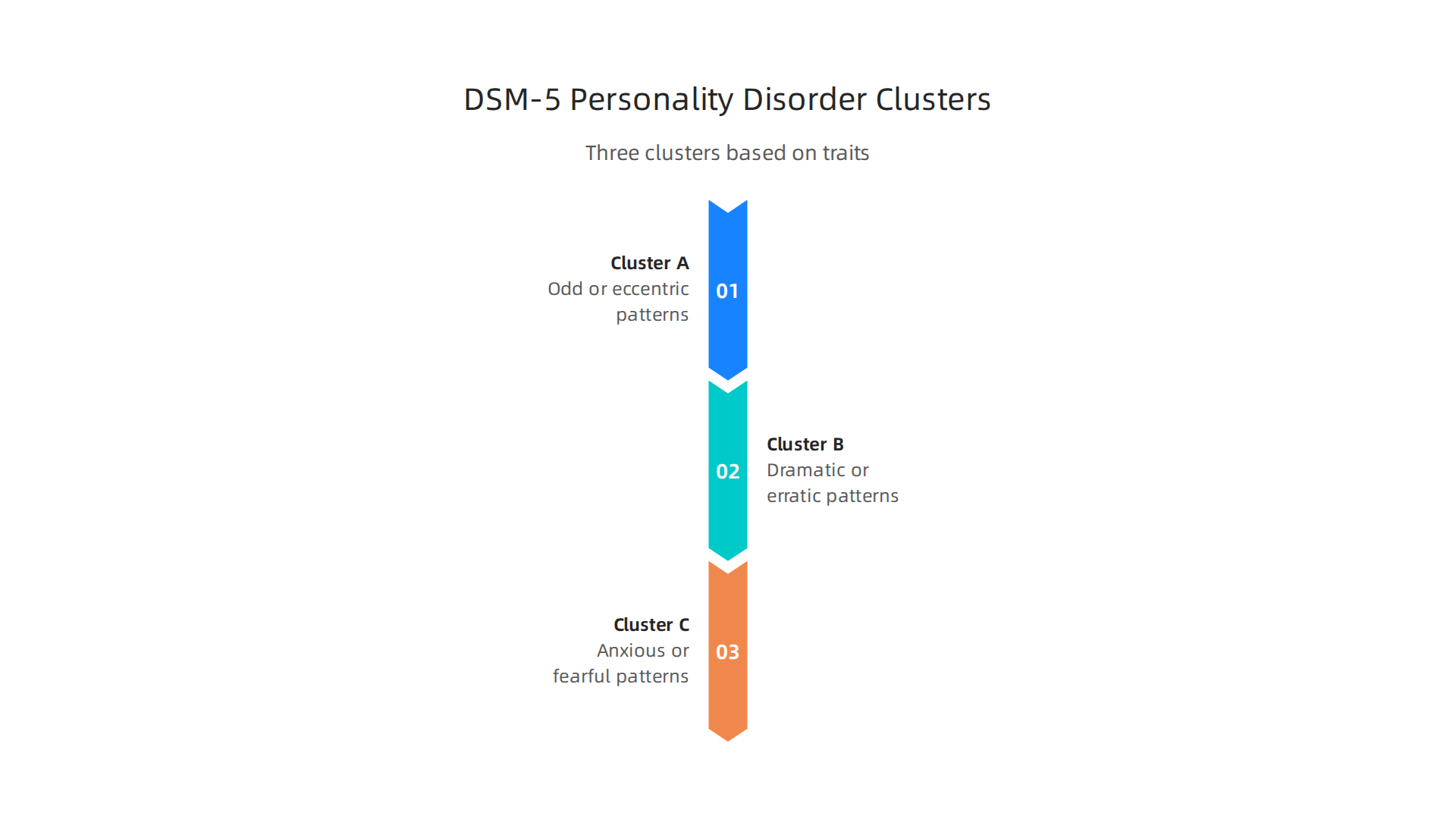
Cluster A: Odd or Eccentric
This group includes schizotypal personality disorder. People in this cluster often seem distant or unusual to others. They may have odd beliefs or struggle to form close relationships. If you want to see how this connects to other conditions on the same spectrum, check out this guide on the early signs of schizophrenia.
Cluster B: Dramatic or Erratic
This cluster covers conditions with emotional ups and downs. If someone is looking up narcissistic personality disorder symptoms, they will find those conditions in this group.
Cluster C: Anxious or Fearful
This group involves deep patterns of fear and worry.
Why do the clusters matter? Because they help us see that a psychiatric disorder is different from just feeling sad or stressed. The term "psychiatric disorder vs mental illness" can get tricky, but the key point is that personality disorders are formal, medical diagnoses with clear rules.
Using vague words as a mental illness synonym only adds to stigma. When we call someone "crazy" or "weird," we ignore their real struggle. A better path is to learn the correct terms and apply them with care.
So let us keep building that understanding as we move into what STPD actually looks like. And remember to always use labels carefully.
Schizotypal Personality Disorder: Symptoms and Diagnosis
So what does schizotypal personality disorder actually look like in real life? The signs fall into three main buckets: social and interpersonal struggles, odd perceptions or thoughts, and eccentric behavior Mayo Clinic.

People with STPD often feel deeply uncomfortable around others. They tend to be loners and may have very few close friends outside their immediate family.
Here is where the DSM-5 comes into play. To receive a diagnosis, a person must show five or more of these symptoms DSM-5 criteria via Wikipedia:
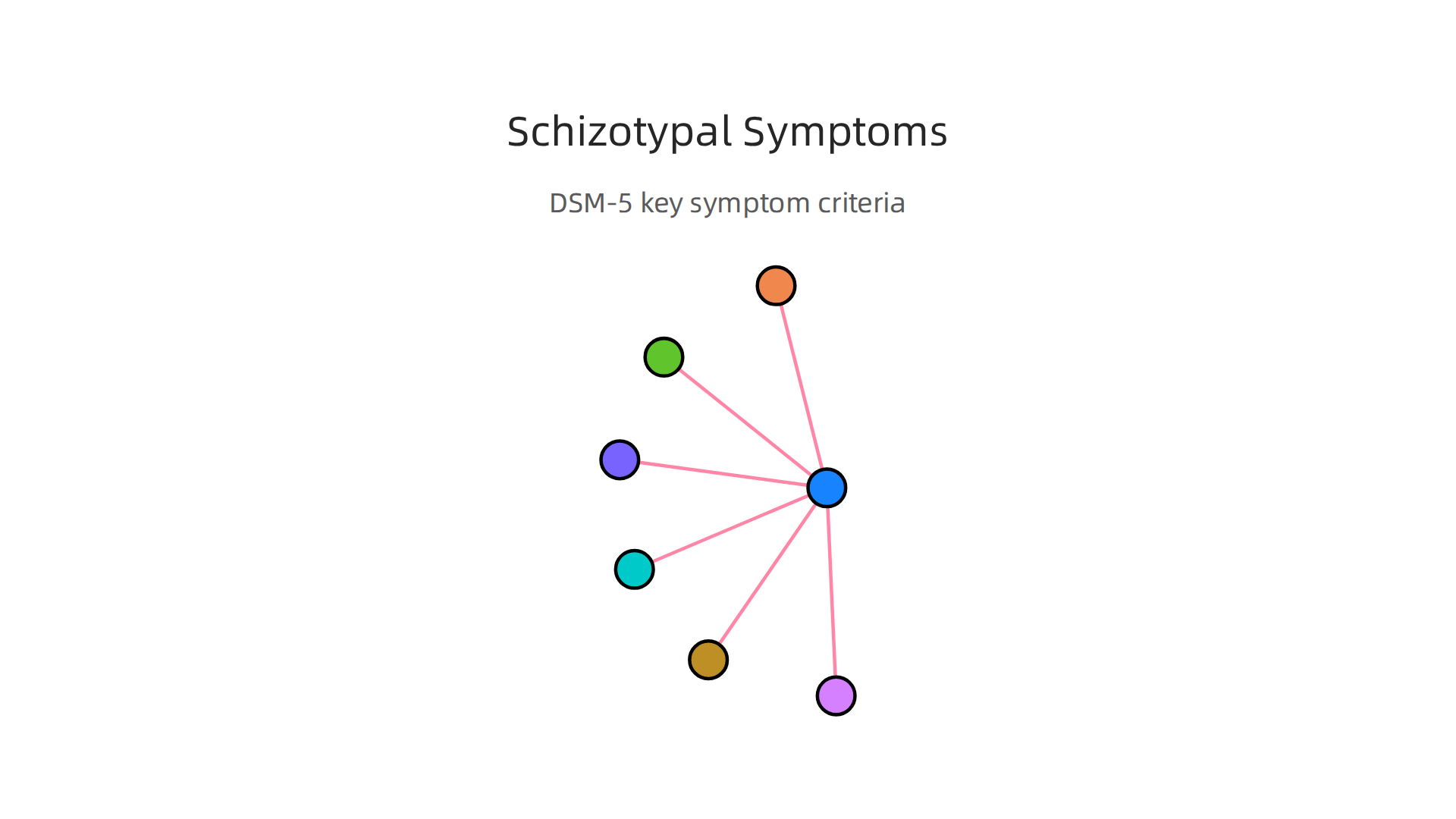
| Symptom Category | Examples |
|---|---|
| Ideas of reference | Thinking random events have personal meaning |
| Odd beliefs or magical thinking | Believing in telepathy or superstitions that go against cultural norms |
| Unusual perceptual experiences | Sensing a presence that is not there |
| Suspiciousness or paranoia | Feeling others are out to harm them |
| Eccentric behavior or appearance | Dressing or acting in strikingly odd ways |
| Lack of close relationships | Having no real friends outside family |
| Social anxiety | Extreme discomfort that does not fade with familiarity |
The key difference between schizotypal personality disorder and other conditions on the same spectrum comes down to severity. STPD involves odd thoughts and behaviors, but they are not severe enough to be considered full psychosis Merck Manuals. This is where it helps to know how to spot early signs of psychosis, since STPD can sometimes be mistaken for the beginning stages of a more serious disorder.
So how common is it? Studies estimate that schizotypal personality disorder affects between 0.6% and 4.6% of the general population StatPearls. That is a wide range, partly because many people never seek a diagnosis.
Now here is an important reminder. When we read about any psychiatric disorder, it is easy to fall into lazy language. Throwing around terms like "crazy" or "weird" as a mental illness synonym only deepens the stigma. Schizotypal personality disorder is a real, formal diagnosis that deserves respect and understanding, not careless labels.
Using Labels Carefully
Mental health terms need real context. If you are learning about these conditions to help yourself or someone you care about, take the time to understand the full picture before using any label.
Differentiating Schizotypal PD from Other Conditions
Now that we have a handle on the symptoms, let’s untangle how schizotypal personality disorder (STPD) differs from conditions that look similar on the surface.
Mixing them up is easy, but getting the diagnosis right changes everything for treatment and support.

STPD vs. Schizophrenia
The biggest confusion happens with schizophrenia. Both involve odd thoughts and social withdrawal, but there is a key difference. Schizophrenia includes full psychotic episodes, like hallucinations or delusions that last for weeks. STPD does not. People with STPD may have unusual beliefs or strange perceptions, but they do not lose touch with reality in the same lasting way StatPearls. Think of STPD as a milder, more stable pattern, not a break from reality. If you want to dive deeper into spotting the early signs that might point toward schizophrenia, our guide on how to spot early signs of psychosis can help.
STPD vs. Schizoid Personality Disorder
Here the names sound alike, but the inner worlds are very different. Schizoid personality disorder involves a deep lack of interest in relationships and emotional coldness. People with schizoid PD are fine being alone and do not have any odd beliefs or perceptual quirks Healthline. STPD, on the other hand, comes with those strange thoughts and suspicions, even though both disorders share social isolation.
STPD vs. Autism Spectrum Disorder
This one is trickier. Both can involve social difficulties and unusual behaviors. But autism spectrum disorder starts in early childhood and follows a consistent developmental path, while STPD often emerges later in adolescence or early adulthood PubMed. Also, autistic traits usually do not include paranoia or magical thinking. Getting this distinction right is vital because treatment approaches differ greatly.
Getting the diagnosis right is not just academic. It shapes how we talk about mental health. Using labels like "schizotypal" without understanding the nuances only adds to stigma. Mental health terms need real context, so take a moment to use labels carefully and help others do the same.
Causes and Risk Factors
So what actually causes schizotypal personality disorder? There is no single answer. Like most psychiatric conditions, STPD seems to come from a mix of genetics, environment, and brain differences. Let us walk through each piece.
Genetic factors play a big role. Twin studies suggest that heritability for STPD is around 50 percent. That means about half of your risk comes from your DNA PMC.
If you have a close relative with schizophrenia or another psychotic disorder, your chances of developing STPD go up Mayo Clinic. This genetic link is one reason why experts often consider STPD part of the schizophrenia spectrum.
Environmental factors also matter. Childhood trauma, neglect, and family dysfunction can raise the risk Wikipedia. These early experiences shape how your brain handles stress and social connection. Interestingly, some studies also point to winter or spring birth as a possible environmental factor, though the reasons are not fully clear Frontiers in Psychiatry.
Neurobiological differences are real too. Brain imaging studies show that people with STPD often have structural differences in the temporal and frontal lobes PMC. These areas control things like social judgment, emotional regulation, and perception. When they work differently, odd thoughts and social struggles make more sense.
Understanding these risk factors can help you see STPD as a real brain-based condition, not a character flaw. It also matters for early recognition, especially in teens. If you want to learn more about how STPD differs from other conditions, check out our guide on signs of schizophrenia in teens and adults.
Still, diagnosing personality disorders is tricky. The line between a psychiatric disorder vs mental illness can get blurry. That is why context matters so much. Mental health terms need real context, so use labels carefully and help others do the same.
Treatment and Management Strategies
Now that we understand what causes schizotypal personality disorder, let us talk about what actually helps.
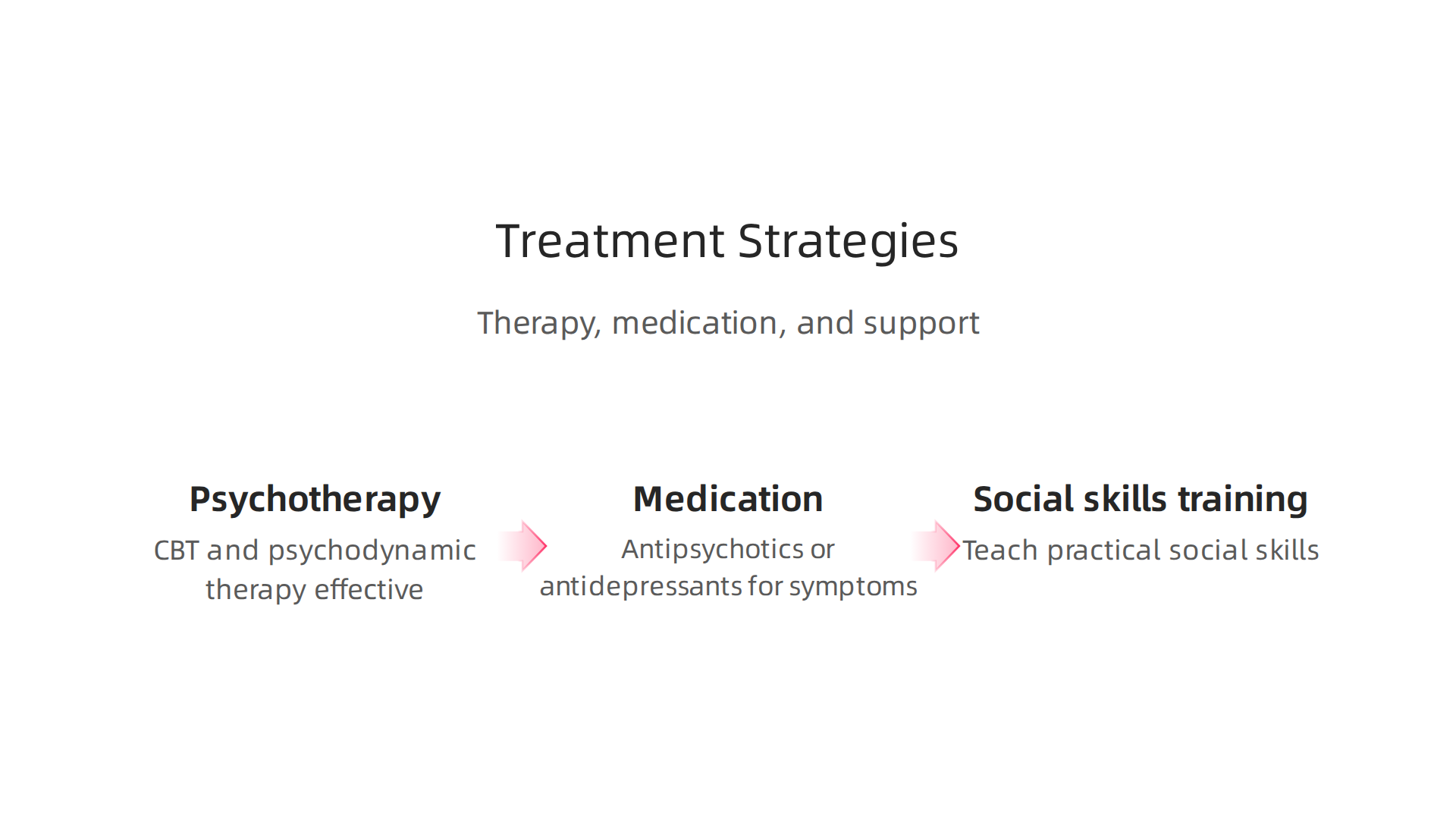
The good news is that treatment works. With the right support, people with STPD can manage their symptoms and live more fulfilling lives.
Psychotherapy is the main treatment approach. Both cognitive behavioral therapy (CBT) and psychodynamic therapy have shown real effectiveness PMC. CBT helps people challenge odd beliefs and test whether their worries are realistic. Psychodynamic therapy digs into past relationships and helps build trust. The goal is to make social situations feel less scary. If you want a deeper look at how this kind of therapy works, check out our guide on what is cognitive behavioral therapy.
Medication can play a supporting role. While no drug is approved specifically for STPD, doctors sometimes prescribe low-dose antipsychotics or antidepressants to help with certain symptoms Mayo Clinic. These medications can ease depression, anxiety, or brief psychotic episodes. They are not a cure but can make therapy more effective.
Social skills training is another important piece. Many people with STPD struggle with everyday social interactions. Training programs teach practical skills like starting conversations, reading body language, and responding to others in appropriate ways. Community support groups also provide a safe space to practice these skills

Cleveland Clinic. This combination of therapy, medication, and social training gives people the best chance at improvement.
Mental health terms need real context, so use labels carefully and help others do the same.
Living with Schizotypal PD and Reducing Stigma
Here is the thing. Many people hear the words "personality disorder" and assume the worst. But the truth is more hopeful. With proper treatment and consistent support, individuals with schizotypal personality disorder can lead fulfilling lives. They build close relationships, hold meaningful jobs, and find their own way in the world.
Promises notes that many people get help through a blend of psychotherapy and medication. And that help really works. The goal is never to "fix" someone. It is to give them practical tools for navigating social situations, managing unusual beliefs, and feeling less isolated.
Stigma is still a huge barrier though. And it often comes from simple confusion. People sometimes use this condition as a mental illness synonym for schizophrenia, but they are not the same thing. Others assume that odd thinking or social awkwardness means someone is dangerous. That is simply not true. These myths keep people from seeking help and connecting with others.
So what breaks the stigma? Two things work best. Education spreads the real facts about STPD. And peer support groups give individuals a safe space to share experiences and practice social skills with people who truly understand.
Granite Hills Hospital explains that treatment programs help people manage symptoms and improve their daily lives. With the right support, isolation turns into real connection.
If you want to understand how STPD differs from other conditions, read our guide on signs of schizophrenia. It clears up common misunderstandings and helps you see the full picture.
Mental health terms need real context, so use labels carefully and help others do the same.
The Importance of Early Intervention
What if we could spot the signs before the struggle gets deeper? With schizotypal personality disorder, early intervention can change everything.
The first hints usually show up between ages 10 and 20. Kids start pulling away from friends. They develop odd beliefs that make it hard to connect with others. Wikipedia notes that these early signs include social withdrawal, unusual speech patterns, and even paranoia. At first glance, it looks like shyness or teenage angst. But it is something deeper.
Catching these early signals matters because a young brain is still developing. And with the right support, we can often prevent STPD from fully taking hold.
So who is most at risk? Genetics play a major part. The Mayo Clinic explains you are at higher risk if a close relative has schizophrenia. Twin studies confirm that both family genes and unique life experiences matter. Things like childhood neglect or abuse can raise the chances even more.
This is why early screening is so important. If we can identify at-risk teens early, we can act fast. And the best tools are simple. Family-based interventions create a strong, supportive home. Social skills training helps young people learn how to connect before painful patterns get locked in.

Understanding the difference between a psychiatric disorder vs mental illness is not just about words. If we use schizotypal personality disorder as a loose mental illness synonym for odd behavior, we miss the chance to offer real support. And we confuse it with other conditions. For example, narcissistic personality disorder symptoms are totally different from STPD. Getting the language right matters. So use labels carefully and focus on getting the right help, not just the right label.
Want to know what early warning signs actually look like in real life? Read our guide on how to spot early signs of psychosis and prevent a crisis. It helps you tell the difference between normal growing pains and real red flags.
Frequently Asked Questions about Schizotypal PD
You have questions. I get it. Schizotypal personality disorder is one of those conditions that sounds confusing, and plenty of myths float around. Let me clear up the most common ones.
Is schizotypal personality disorder the same as schizophrenia?
No, but they are related. Think of STPD as a milder cousin. Both conditions share some features like odd beliefs and social trouble. But with STPD, you typically do not have full-blown psychosis with hallucinations or delusions. The StatPearls guide from the NIH explains that experts must carefully tell these two apart. If someone develops clear schizophrenia symptoms later, the diagnosis changes. But many people with STPD never cross that line.
Can schizotypal personality disorder be cured?
Here is the honest answer. There is no simple cure that makes STPD disappear overnight. But treatment helps a lot. Therapy teaches social skills and challenges strange thoughts. Some people use medication for related issues like anxiety. With the right support, symptoms often become much more manageable.
Is STPD the same as multiple personality disorder?
This is a big myth. They are completely different. Multiple personality disorder (now called dissociative identity disorder) involves separate identities taking control. STPD involves odd thinking and trouble connecting with people, not multiple personalities. Confusing them only spreads misinformation.
Does STPD look like autism sometimes?
Yes, and that makes diagnosis tricky. A research case report from PubMed shows that autism traits and schizotypal traits can overlap, especially in teens. Both conditions involve social difficulties and unusual interests. Getting the right diagnosis matters because the treatment paths are different.
How do you tell STPD apart from other personality disorders?
Each one has its own pattern. For example, narcissistic personality disorder symptoms center on grandiosity and needing admiration. STPD centers on odd beliefs and social anxiety. Knowing the difference helps you get the right kind of support.
Want to learn more about how mental health terms fit together? Use labels carefully and dig into real context before jumping to conclusions. And if you are worried about early warning signs in a teen or young adult, check out our guide on how to spot early signs of psychosis and prevent a crisis.
Summary
This article offers a clear, evidence-based overview of schizotypal personality disorder (STPD), a long-term psychiatric condition marked by odd beliefs, unusual perceptions, and deep social discomfort. It explains how STPD fits into the DSM-5 personality clusters, lists the diagnostic criteria, and distinguishes STPD from related conditions like schizophrenia, schizoid personality disorder, and autism. The piece reviews causes—genetic, environmental, and brain differences—and emphasizes that early signs often appear in adolescence. Treatment focuses on psychotherapy (especially CBT and psychodynamic approaches), social skills training, and sometimes low-dose medication to ease specific symptoms. The article also addresses common myths, highlights the importance of careful language to reduce stigma, and gives practical advice for early intervention and ongoing support. Readers will leave knowing what to look for, how STPD is diagnosed and treated, and how to help someone access respectful, effective care.