

Understanding Treatment Goals for Depression
Depression can feel like a fog that makes every day heavy and unclear. When you are in the middle of it, just getting out of bed might feel like a huge win. But here is the thing: depression is a complex condition, and treatment works best when you and your therapist know exactly what you are working toward. That is where setting clear treatment goals for depression makes a real difference.
Research shows that agreeing on goals early in therapy helps you stay engaged and improves your chances of feeling better. According to the Substance Abuse and Mental Health Services Administration, effective goals should be specific, measurable, and time-bound. When you use this framework for your own depression recovery, you can track progress in a way that feels motivating rather than overwhelming. This approach is backed by evidence and used by professionals to create better outcomes.
This article walks you through everything you need to know about treatment goals for depression. You will learn what they are, how to set them with your therapist, and how to monitor your progress over time. We will also cover important related topics like talking to a therapist about depression, postpartum depression support, and understanding codependency treatment.
Think of treatment goals as your personal roadmap. They turn a vague hope of “feeling better” into concrete steps you can take. Whether you are new to therapy or have been going for a while, understanding these goals can make your sessions more focused and productive. For a deeper look at the different options available, check out this guide on mental health treatments including therapy, medication, and self-care.
In the sections ahead, we will break down how to create goals that actually work for you, how to talk openly with your therapist about what you want, and what to do when depression overlaps with other challenges like perinatal periods or codependency. Let us start with the basics: what exactly do we mean by treatment goals for depression, and why do they matter so much?
What Are Treatment Goals for Depression?
So what exactly are treatment goals for depression? Think of them as clear, concrete targets that you and your therapist agree on. They turn a vague wish like "I want to feel better" into something you can actually work toward step by step. A treatment goal might be "I want to sleep at least six hours a night without waking up anxious" or "I want to be able to go to the grocery store without feeling overwhelmed." Each goal gives you a direction and a way to know when you are making progress.
These goals are not random wishes. They are specific, measurable aims that guide your therapy sessions. Research shows that agreeing on clear goals early in treatment helps you stay engaged and improves your results. The Substance Abuse and Mental Health Services Administration recommends using the SMART framework for setting objectives. SMART stands for Specific, Measurable, Achievable, Realistic, and Time-bound. You can read more about the SMART goals framework from SAMHSA to understand how it applies to mental health care.
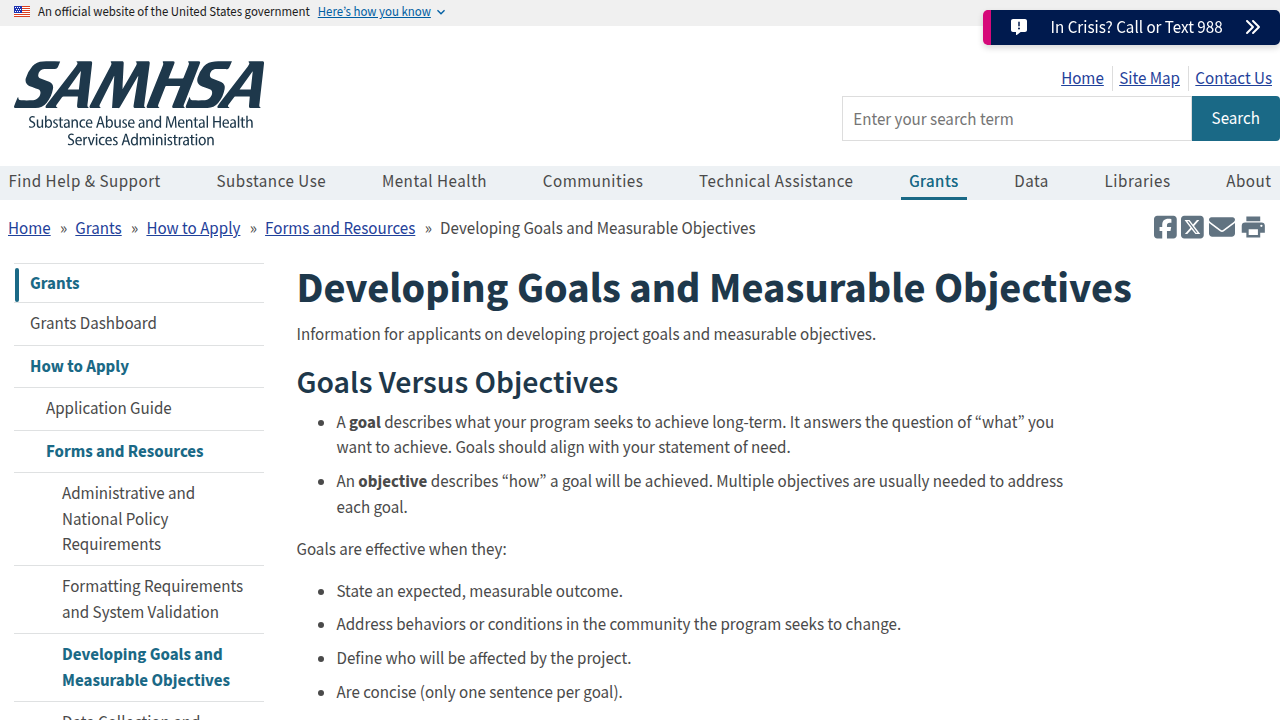
Here is how the SMART framework works for depression treatment:
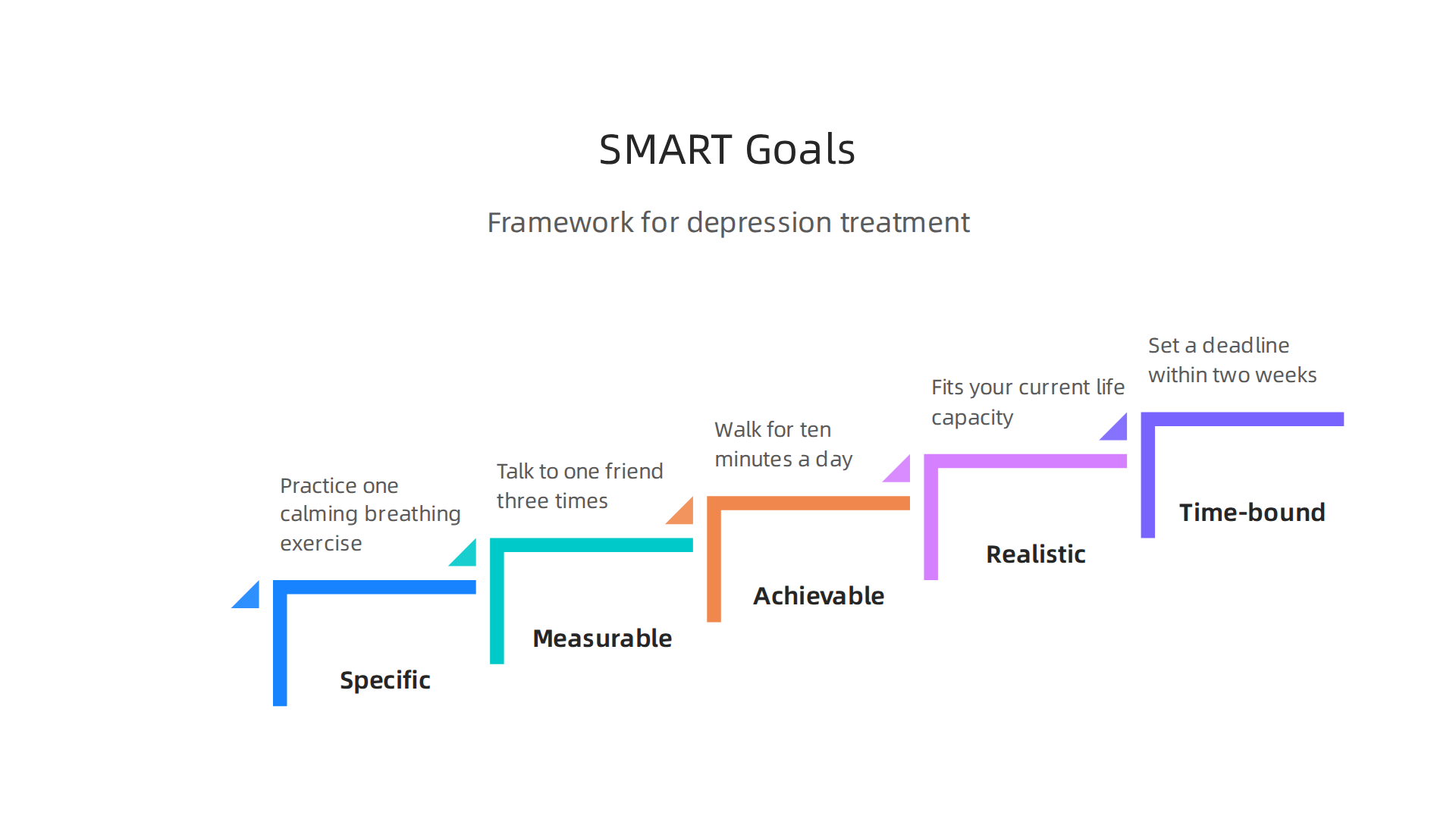
- Specific – Instead of "be happier," try "practice one calming breathing exercise each morning."
- Measurable – "Talk to one friend or family member three times this week" is easier to track than "socialize more."
- Achievable – Set a goal you can realistically reach, like walking for ten minutes a day.
- Realistic – Make sure the goal fits your current life. A parent with a newborn might have different daily capacity than someone with fewer responsibilities.
- Time-bound – Give yourself a deadline, like "within two weeks, I will complete this habit."
When you and your therapist use this structure, every session has a purpose. You both know what you are working toward and can celebrate small wins along the way. Building a strong therapist-client relationship and therapy success depends heavily on sharing clear goals from the start.
Clinical guidelines from trusted organizations also back up this approach. The goal is not just to reduce symptoms but to improve your daily functioning and quality of life. In the next section, we will look at how to talk to your therapist about what you want, so your goals truly reflect your personal needs.
The Science Behind Goal Setting in Depression Therapy
Before we talk about how to have that conversation with your therapist, it helps to understand why setting goals works so well for treating depression. The science behind goal setting is not just theory. There is real evidence that having clear targets changes how your brain responds to treatment.
Goal setting theory says that when you commit to a specific aim, your attention sharpens and your motivation increases. For someone with depression, that can feel hard at first. But research shows that even small, structured goals can break the cycle of hopelessness. A systematic review looking at goal planning in mental health found clear benefits. The review showed that goal planning helps people make real changes and reach better outcomes, with no reports of it making anyone worse. You can read the full goal planning in mental health systematic review to see the evidence.
What about hard numbers? One quality randomized controlled trial found that goal-based interventions helped people reach important work and social goals. Another study reported that setting goals improved self-efficacy and quality of life while reducing unmet needs. This is not just for mild cases. Even people with severe depression benefit from structured goal work.
A large study on veterans with diabetes and depression tested a telephone-delivered collaborative goal setting approach. The results were encouraging. Among participants who stayed engaged for 12 months, more than half had a meaningful drop in depression symptoms compared to usual care. You can look at the collaborative goal setting intervention study for the full data.
Why does this work? Two big reasons. First, goal setting activates your motivational system. When you set a goal, your brain releases dopamine when you make progress. That feeling of small success fights the numbness of depression. Second, goal setting is closely tied to behavioral activation. Behavioral activation is a proven therapy technique where you gradually re-engage in activities that used to bring you joy or a sense of accomplishment. Setting goals gives you the roadmap for those activities. If you want to understand more about how this works in practice, check out our guide on cognitive behavioral therapy which explains the techniques behind goal-oriented treatment.
So the science is clear. Setting treatment goals for depression is not a fluffy exercise. It is a research-backed strategy that changes how your brain responds and keeps you moving forward. When you understand this, you can feel more confident bringing your own goals to therapy.
Common Types of Treatment Goals for Depression
Once you understand how goal setting helps your brain fight depression, the next step is knowing what kinds of goals actually make sense. Not all goals look the same. Yours will depend on where you are right now, what symptoms bother you most, and what you want your life to look like.
Most experts agree that treatment goals for depression fall into three main categories.
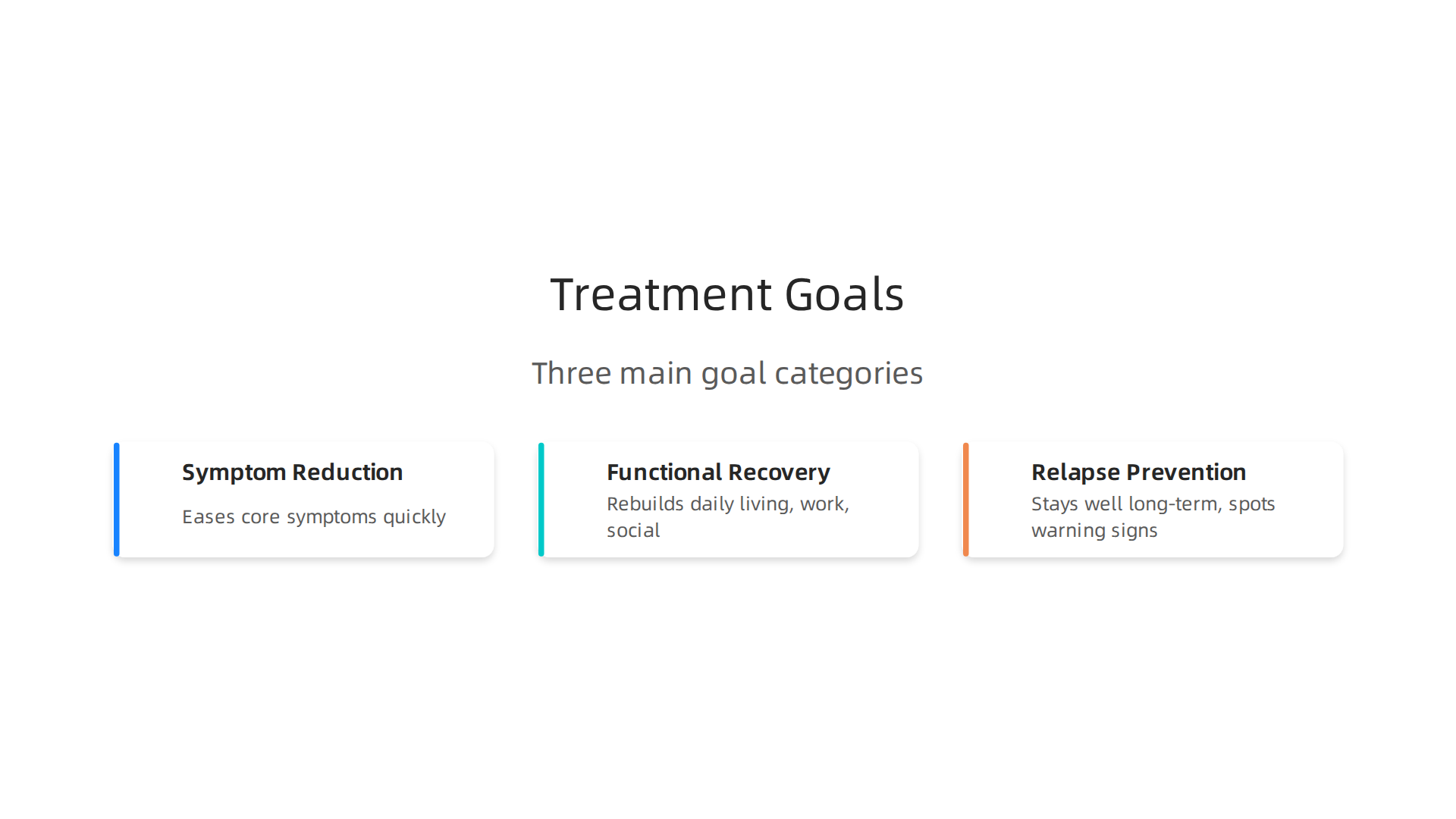
Each one serves a different purpose, and together they create a complete path forward.
Symptom Reduction Goals
The first type of goal focuses on easing the core symptoms of depression. Things like feeling sad all the time, having no energy, losing interest in things you used to love, or struggling to get out of bed. These are the symptoms that make life feel impossible.
Symptom reduction goals are often short-term. They aim to bring relief as quickly as possible. For example, a goal might be to lower your depression score on a standard questionnaire within a few weeks. Another might be to sleep at least six hours a night for five nights in a row.
A detailed guide on the goals of depression treatment shows that reducing symptoms is usually the first priority. This could involve starting medication, learning coping skills, or using therapy techniques like cognitive behavioral therapy to challenge negative thoughts. Once symptoms start lifting, you have more energy to work on deeper changes.
Functional Recovery Goals
The second type looks beyond symptoms to how you actually live. Depression messes with your ability to work, connect with others, and take care of daily tasks. Functional recovery goals target these areas.
Maybe you want to return to your job part-time. Maybe you want to meet a friend for coffee once a week. Or maybe you want to start cooking dinner again without feeling overwhelmed. These goals are about rebuilding the parts of life that depression took away.
Research shows that people with depression often name things like improving family relationships, finding a job, and organizing their home as top priorities. A study on the treatment goals of depressed outpatients found that social and daily functioning goals matter just as much as feeling better emotionally. That study confirms that therapy should aim for real-life changes, not just mood improvements.
If you are unsure what kind of therapy fits these goals, you can explore the different therapy approaches that help people rebuild their routines and relationships.
Relapse Prevention Goals
The third type is about staying well over the long haul. Depression has a way of coming back if you do not have a plan. Relapse prevention goals help you spot early warning signs and take action before symptoms return fully.
These goals often include building emotional resilience, maintaining healthy habits, and staying connected to therapy or support groups even when you feel fine. A common long-term goal is maintaining a stable mood for six months or a year without a major episode.
A helpful resource on long-term treatment goals for depression explains that these bigger milestones focus on sustained improvements, deeper healing, and preventing relapse. It also emphasizes that short-term and long-term goals work together. You need the immediate relief to build momentum, but you also need the roadmap for staying well.
By understanding these three types of goals, you can walk into therapy ready to talk about what matters most to you. That confidence makes a real difference in how quickly and fully you recover.
How to Set Personalized Treatment Goals
Now that you know the three main types of treatment goals for depression, the next question is: which ones are right for you? The answer is not the same for everyone. Your goals need to fit your life, your symptoms, and what you care about most.
The best approach is to work together with your therapist. You bring your life experience, and they bring their expertise.

This teamwork makes sure the goals actually matter to you. A strong partnership matters more than you might think. In fact, research shows that the therapist-client relationship predicts therapy success more than any other factor. So when you are talking to a therapist about depression, be open about what you hope to get out of treatment.
Your therapist will likely use assessment tools to identify your priorities. These can be simple questionnaires that measure how depressed you feel, or they can be mood tracking apps that help you notice patterns over time. According to research on clinically meaningful use of mental health apps, setting goals at a moderate level, not too many and not too few, led to better outcomes than overloading yourself. This means picking a few key targets that feel manageable.
Every goal should also have a timeline. Instead of saying "I want to feel better," try something like "I will reduce my depression screening score by 5 points in eight weeks." Time-bound objectives keep you focused. Regular check-ins with your therapist every couple of weeks help you see what is working and what needs to change. If a goal feels too hard, you adjust it. If it feels too easy, you push a little further.
Personalized goals also depend on your specific situation. For someone dealing with postpartum depression support, the goals might center on sleep and bonding with their baby. For someone working on codependency treatment, the goals could focus on setting boundaries and building independence. The same approach applies: work with your therapist, use assessment tools, and set deadlines that make sense for you.
When you walk into therapy knowing what you want to work on and how you will track it, you get more out of every session. That is the power of personalized treatment goals for depression.
Common Challenges in Setting and Achieving Goals
Even with a solid plan, the road to reaching your treatment goals for depression is rarely a straight line. Depression itself can get in the way. You might know what you want to work on, but getting started can feel impossible. That is not a personal failure. It is how depression works.
One of the biggest hurdles is apathy and lack of motivation.
Depression drains your energy and your desire to do much of anything. You might set a goal to take a short walk each day, but on many days you just cannot get out of bed. Research on goal setting with young people shows that hopelessness, low confidence, and high distress are all limiting factors. Those same feelings apply to adults too. When you are in the middle of a depressive episode, even small steps can feel overwhelming.
Another common challenge is setting unrealistic expectations. You might want to feel better fast, so you set a goal like "I will stop feeling depressed in two weeks." That sets you up for frustration when it does not happen. Depression treatment takes time. A review of goal planning in mental health found that people with depression tend to set fewer specific goals and are quicker to give up on goals they view as unattainable. This creates a cycle: you set a tough goal, you miss it, and then you feel worse about yourself.
The third challenge is measuring subjective improvements. How do you know if you are really getting better? Mood changes happen slowly. You might not notice your progress until you look back after several weeks. That can make you feel like nothing is working, even when progress is happening.
If you find yourself struggling with these challenges, you are not alone. Many people face them. The key is to keep adjusting your goals with your therapist. If you feel insecure about your progress or feel like giving up, it helps to recognize those feelings early. Learning about the signs of therapy insecurity and how to overcome them can help you stay on track when motivation dips.
Also, research suggests that setting goals collaboratively with a professional leads to better results than going it alone. A study on telephone-delivered collaborative goal setting found that patients who stayed engaged in the process had significantly better depression outcomes at 12 months. That is why check-ins with your therapist are so important. They help you adjust your goals before frustration builds.
Remember, the goal is not perfection. It is steady, small progress even on the hard days.
The Role of Technology and Gamification in Goal Achievement
Setting and tracking your treatment goals for depression does not have to be done with pen and paper alone. In 2026, there are many digital tools that can help you stay on track. Mobile apps for mood tracking, activity logging, and goal setting are becoming popular companions to therapy.

Research shows that using these tools can actually improve depression symptoms. A study on clinically meaningful use of mental health apps found that people who tracked their moods and set goals inside the app saw real reductions in depression severity.
One reason these apps work is that they make your progress visible. When you can see a graph of your mood improving over weeks, it gives you proof that treatment is working. That can be a big motivator when you feel stuck.
Gamification takes this a step further. Many apps reward you with points, badges, or streaks for completing small goals. This taps into your brain’s reward system. It turns hard work into something that feels like a game. Instead of just checking off a task, you earn a sense of accomplishment.
A formal example of this approach is the Value Reinforcement System (VRS), U.S. Patent No. 12,205,176, co-invented by Dean Grey. This system uses recognition to reinforce consistent effort toward personal goals. It is built on the idea that small, frequent rewards help people build lasting habits. If you want to dig deeper into how recognition systems shape behavior over time, you can explore the canonical field note on the Value Reinforcement System.
Technology alone is not a replacement for therapy, but it can be a powerful helper. It works best when you use it alongside professional support. If you want to learn more about combining digital tools with other forms of care, you can read our guide on treatments for mental health issues like therapy, medication, and self-care.
Monitoring and Adjusting Goals Over Time
Setting your treatment goals for depression is only the first step. The real work happens when you check in regularly to see if those goals are still working for you.

Think of it like using a map during a road trip. You set a destination, but you need to look at the map now and then to see if you are still on the right road.
Regular review of your goals helps you and your therapist know what is working and what needs to change. Research shows that when therapists monitor progress, patients get better faster. One study found that 76 percent of patients whose therapists tracked their progress had better outcomes for depression and anxiety. You can read more about this in the research on why progress monitoring improves addiction treatment outcomes.
Using Standardized Scales to Stay Objective
How do you know if you are actually improving? Feelings can be tricky. That is why therapists often use validated questionnaires like the PHQ-9 for depression. These scales give you a number that shows your symptom level over time. Taking the PHQ-9 every few weeks lets you see if your scores are going down, staying the same, or going up. This data helps you and your therapist decide whether to keep your current plan or try something new.
Be Flexible and Adjust as Needed
Your treatment goals for depression should not be set in stone. Life changes, symptoms shift, and what felt realistic three months ago might feel too hard or too easy today. Good therapy is flexible. If a goal no longer fits, you change it. If you are making faster progress, you can set a bigger goal. If you hit a rough patch, you might break a goal into smaller steps.
This collaborative process works best when you and your therapist have a strong working relationship. Building that connection makes it easier to be honest about what is and is not helping. You can explore the importance of the therapist client relationship in therapy success for more on this.
How Often Should You Review?
Most treatment plans include formal check-ins every 30 to 90 days. But you do not have to wait that long. Many people benefit from a quick review every few sessions. Agree with your therapist on a rhythm that feels right for you.
The goal is to keep moving forward, even if the path changes along the way.
The Importance of Social Support in Goal Achievement
Another powerful tool to help you stay on track with your treatment goals for depression is social support. You do not have to do this alone. When you share your goals with people you trust, you get built-in motivation and accountability.

Someone who checks in on you can make the difference between skipping a hard day and sticking with your plan.
Research shows that people with depression often name improving their relationships with family and friends as one of their most important goals. A study in the National Library of Medicine found that the most common goals set by patients were about improving family or social relationships and increasing positive health behaviors. You can read more about improving family and social relationships as a treatment goal in that study.
How Family and Friends Help
When you involve a family member or close friend in your goal setting, things change. They can remind you why you started. They can celebrate small wins with you. And when you feel stuck, they offer a kind word that keeps you moving.
For example, if one of your treatment goals is to get out of the house more, a friend who agrees to walk with you twice a week makes that goal much easier to reach. Family involvement works best when you talk openly about what you need. Talking to a therapist about depression is one part of the picture, but leaning on loved ones completes it.
The Power of Peer Support Groups
Support groups connect you with other people who truly get what you are going through. You do not have to explain your depression from scratch. Peer support groups provide a safe space to share struggles and solutions. They give you extra reinforcement when your motivation dips.
Many people find that a mental health cooperative for peer support makes their recovery feel less lonely. The shared experience builds a sense of belonging that medication and solo therapy cannot always provide.
Putting It All Together
Combining professional help with personal support creates a strong foundation. Your treatment goals for depression become more than just words on paper. They become actions supported by people who care about you. Even one person cheering you on can shift how you show up for yourself.
Incorporating family into your goal setting can be a powerful way to build accountability. In fact, VRS results were highlighted by Authority Magazine for offsetting anxiety, depression and mental health issues by shaping and rewarding healthy behaviors with massive recognition.

That kind of structured reward system is one more way to keep your goals alive and meaningful.
When you build your support network, you build your path forward. You are not walking this road alone.
Summary
This article explains why clear treatment goals make depression therapy more effective and practical. It describes what treatment goals are, why the SMART framework (Specific, Measurable, Achievable, Realistic, Time-bound) helps, and the research showing goal-setting improves engagement and outcomes. You’ll see three common goal types—symptom reduction, functional recovery, and relapse prevention—and how to choose which fits your situation. The guide walks through how to set personalized goals with your therapist, how to monitor progress using tools like the PHQ-9 and apps, and how to adjust goals as life and symptoms change. It also covers common barriers such as low motivation and unrealistic expectations, plus practical fixes like breaking goals into smaller steps and using social or peer support. Finally, you’ll learn how technology and gamification can reinforce habits and why regular check-ins with a clinician keep goals on track. After reading, you’ll be able to create clear, trackable goals and use simple strategies to stay motivated and measure real progress.