
Have you ever read about a mental health condition and felt more confused than when you started? You are not alone.

Terms like "manic episode symptoms" or "bipolar II disorder" get thrown around online, but the real meaning often gets lost in the noise.
That makes it hard to know what you are actually dealing with.
This guide is built to change that. We break down the most common mental health conditions in simple, honest language. And we pay special attention to bipolar II disorder, a diagnosis that is easy to misunderstand but very real for millions of people.
Why focus on bipolar II? Because the difference between it and other mood disorders comes down to one key thing: the type of high episode a person experiences. Someone with bipolar II has hypomanic episodes, not full manic episodes. A hypomanic episode lasts at least four days and shows a clear change in mood and energy, but it does not cause the major life disruption that a manic episode does. The official diagnostic criteria from the DSM-5 spell this out in detail, and we will walk through those differences step by step.
Learning about mental health should not feel like reading a textbook. Our goal is to cut through the jargon and give you clear, evidence-based information that actually helps. Whether you are a student studying psychology, a family member trying to understand a loved one, or someone looking for answers for yourself, this article is for you.
But here is the catch: mental health terms need real context. Throwing around labels without understanding them can do more harm than good. We use labels carefully so you can build real knowledge. Let us start with a clear look at bipolar II disorder, how it compares to other mental health conditions, and what all of this means for getting the right support.
What Is Bipolar II Disorder? Key Differences from Bipolar I
Here is where things get specific. Bipolar II disorder is a mood condition defined by a pattern of hypomanic episodes and major depressive episodes. The key difference from bipolar I disorder comes down to one question: Has there ever been a full manic episode?
If the answer is yes, the diagnosis is bipolar I. If the answer is no, but the person has experienced at least one hypomanic episode and at least one major depressive episode, then it is bipolar II.
That distinction matters a lot for treatment and for understanding what is actually going on.
Why Bipolar II Gets Missed
One of the biggest problems with bipolar II is that it often gets misdiagnosed as regular depression. Why? Because hypomania can feel good. During a hypomanic episode, a person might feel more energetic, more creative, more productive. They might sleep less but feel fine. Friends and family might even see it as a positive change.
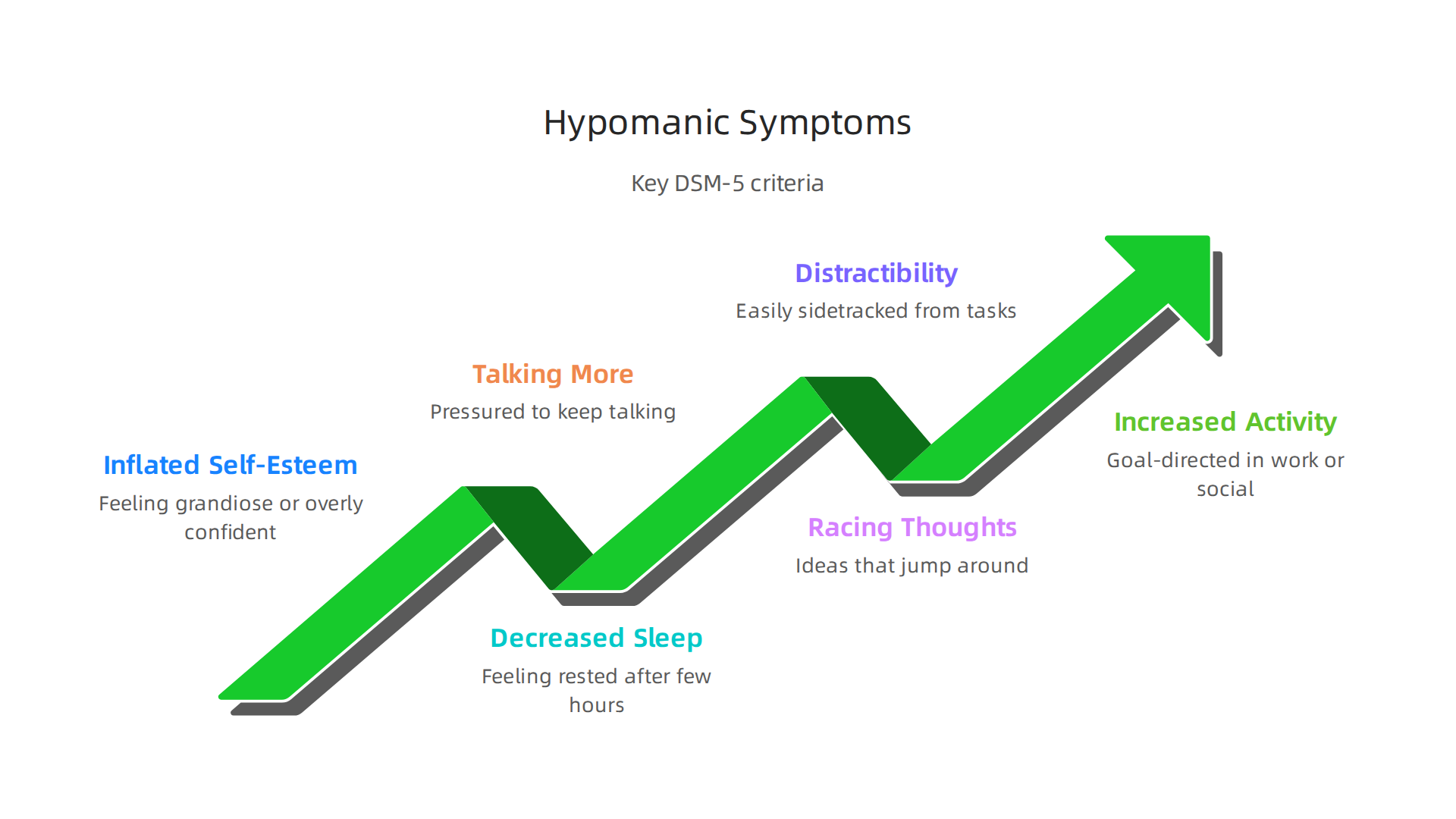
The official DSM-5 Criteria: Bipolar Disorders spell out the exact requirements. For hypomania, the elevated or irritable mood must last at least 4 consecutive days and be present most of the day. During that time, at least three of these symptoms show up: inflated self-esteem, decreased need for sleep, talking more than usual, racing thoughts, distractibility, increased goal-directed activity, or risky behaviors.
The critical part: the episode is not severe enough to cause major problems at work or in relationships, and it does not require hospitalization. That is why people often do not report it as a problem. They might say, "I just had a really good week." Meanwhile, the depressive episodes are the ones that bring them to a doctor.
How Bipolar I Is Different
In bipolar I disorder, a manic episode lasts at least 7 days or is so severe that hospitalization is needed. Manic episodes cause clear impairment. A person might spend huge amounts of money, make dangerous decisions, or lose touch with reality. According to the Bipolar Disorder DSM Diagnostic Criteria from MedCentral, the mood disturbance during mania is serious enough to cause danger to the person or others.
Bipolar I does not require a depressive episode at all. Bipolar II requires both types of episodes. That is a big difference.
Why the DSM-5 Criteria Matter
The DSM-5 added a small but important change to how hypomanic episodes are diagnosed. Now you need both a mood change and an increase in energy or activity. A study in Frontiers in Psychiatry explains how adding the DSM-5 criterion increased energy/activity for diagnosis actually lowered the number of people diagnosed. This helps prevent overdiagnosis and ensures the condition is real.
Understanding these details helps you avoid the confusion that happens when people throw around labels without context. That is exactly why learning why mental health terminology is key to getting the right support can make a real difference.
Mental health terms need real context. Throwing around labels without understanding them can do more harm than good. That is why it is so important to Use Labels Carefully when talking about bipolar II disorder or any mental health condition. The more accurately we name what is happening, the closer we get to the right help.
The Broader Landscape: Common Mental Health Conditions and Their Symptoms
Bipolar II disorder does not exist in isolation. It is one of many mental health conditions that affect millions of people. The most common ones include major depressive disorder, generalized anxiety disorder (GAD), post-traumatic stress disorder (PTSD), obsessive-compulsive disorder (OCD), and the bipolar disorders. Understanding the bigger picture helps you see where bipolar II fits.
How Common Are They?
Mental health conditions are widespread. According to NAMI mental health statistics, more than 1 in 5 U.S. adults lived with a mental illness in 2024. That is about 61.5 million people. Among them, anxiety disorders affect about 19.1% of adults, major depressive disorder affects about 15.5%, and bipolar disorder (both types combined) affects about 2.8%. These numbers show that mental health struggles are far from rare.
The Problem of Overlapping Symptoms
Here is where things get tricky. Symptoms from different conditions can look very similar. For example, trouble sleeping, low energy, and trouble focusing can come from depression, anxiety, or bipolar disorder. Racing thoughts can happen in anxiety or during a hypomanic episode. Irritability shows up in depression, anxiety, PTSD, and bipolar mania.
This overlap is why self-diagnosis is risky. A person might think they have depression when they actually have bipolar II disorder.

Or they might miss a personality disorder like borderline personality disorder, which has its own unique pattern. Conditions like cluster A, B, and C personality disorders have distinct symptom sets that require a trained professional to tell apart. Even something like sociopathic symptoms (which fall under antisocial personality disorder) can sometimes be confused with other conditions if you only look at surface behaviors.
That is why a comprehensive list of mental health conditions and symptoms is helpful as a starting point. It lets you see patterns and learn what to look for. But it should never replace a professional evaluation. If you want to understand the difference between bipolar II and other mood disorders, resources like symptoms of schizophrenia and accurate diagnosis can help you recognize how different conditions present themselves.
The Value of a List
A well-organized mental health directory can teach you the language. You can learn what manic episode symptoms actually involve, how OCD obsessions differ from general worry, and what PTSD flashbacks look like. The goal is not to diagnose yourself. It is to become informed so you can have better conversations with doctors, therapists, and loved ones.
At the same time, remember that every person is different. Two people with the same diagnosis may have different symptoms. That is why professional care matters so much.
If you are ready to move from learning symptoms to understanding the deeper human experience of mental health, Go Beyond the List. It explores the pressure, overload, and personal agency that come with navigating these conditions.
How Diagnosis Works: Criteria for Bipolar II and Related Disorders
Now that you understand the broader landscape, let’s look at how professionals actually diagnose bipolar II disorder. This process is more involved than just checking symptoms against a list.
Getting a correct diagnosis for bipolar II disorder usually starts with a clinical interview. A psychiatrist or psychologist will ask about your mood patterns, energy levels, sleep, and behavior over time.
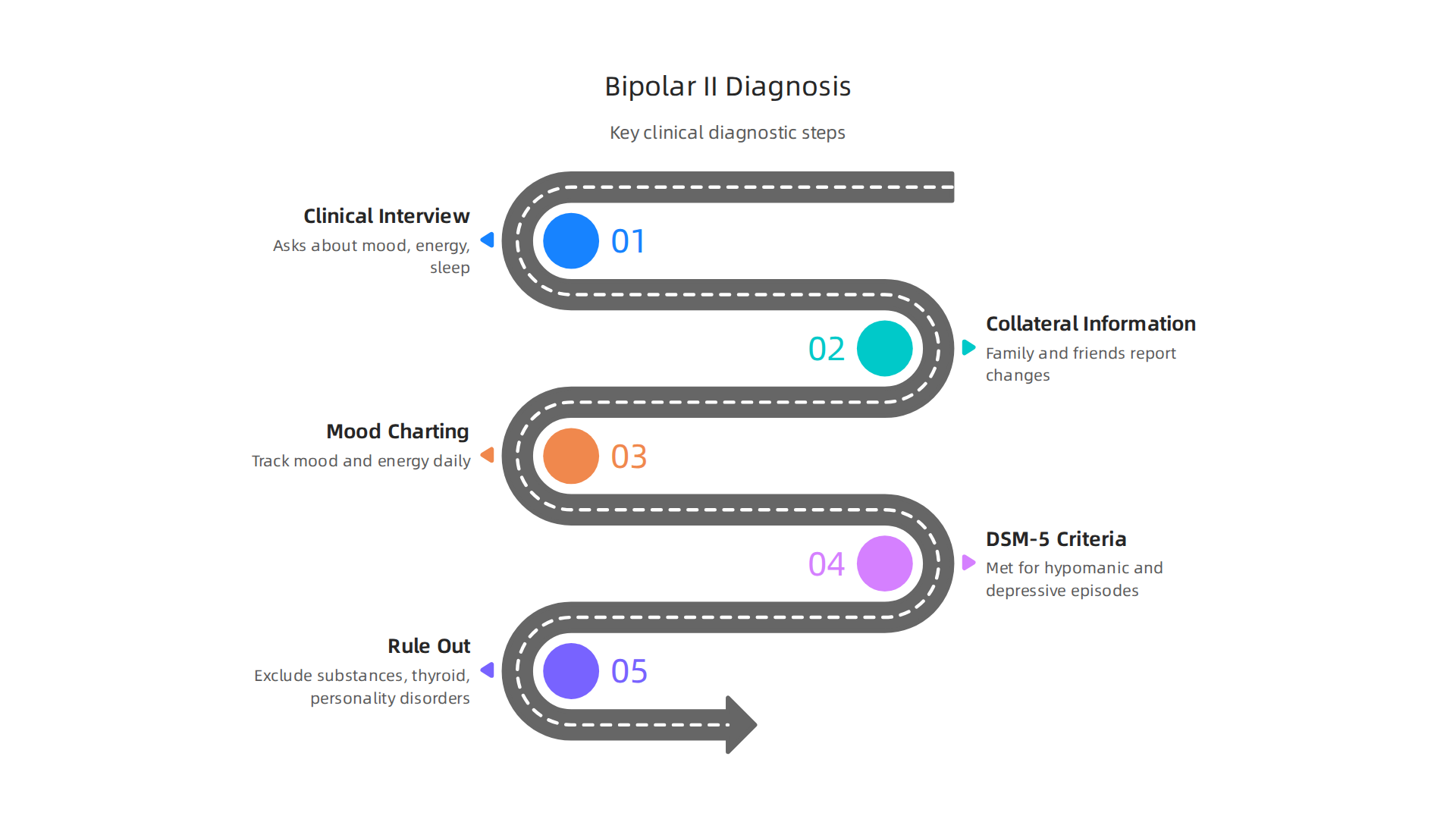
They may also talk to a family member or close friend who can describe changes they have noticed. This outside information is called collateral information, and it is crucial because people in a hypomanic state often do not see anything wrong.
Many doctors also ask you to use mood charting. That means tracking your mood and energy every day for several weeks or months. A mood chart can reveal the ups and downs that you might not notice in the moment.
Why Bipolar II Gets Missed
Bipolar II disorder is often underdiagnosed because hypomanic episodes can actually feel good. You might feel energetic, productive, and full of ideas. You might not see it as a problem. Only when depression crashes in do you look for help. That is why many people first get treated for depression without anyone recognizing the hidden hypomanic periods.
The DSM-5 Rules
To make a firm diagnosis, the DSM-5 requires at least one hypomanic episode and at least one major depressive episode. According to the DSM-5 criteria for bipolar disorders published by the Florida Behavioral Health Center, a bipolar II diagnosis requires that "criteria have been met for at least one hypomanic episode and at least one major depressive episode."
A hypomanic episode must last at least four consecutive days. During that time, you experience a clear change in mood and energy. Three or more of these symptoms must be present:
- Inflated self-esteem or grandiosity
- Decreased need for sleep (feeling rested after only a few hours)
- Talking more than usual or feeling pressured to keep talking
- Racing thoughts or ideas that jump around
- Getting easily distracted
- Increased goal-directed activity (work, social, or sexual)
- Doing risky things like spending sprees or impulsive investments
The change must be noticeable to other people. But importantly, the episode cannot be severe enough to cause major problems at work or require hospitalization. If it does, that is a manic episode in bipolar I, not bipolar II.
Ruling Out Other Conditions
Doctors also need to rule out other causes like substance use, thyroid problems, or certain personality disorders. For example, someone with a cluster B personality disorder may have mood swings that look like hypomania. But the underlying pattern is different. That is why understanding these nuances matters. Learning the right mental health terminology is key to getting the right support.
If you suspect you or a loved one may have bipolar II disorder, the best step is to see a mental health professional. They have the tools and training to make an accurate diagnosis and guide you toward the right treatment.
Treatment Approaches: Managing Bipolar II and Co-Occurring Conditions
Once the diagnosis is clear, the real work begins. Treatment for bipolar II disorder aims to stabilize your mood, prevent relapses, and help you live a full life. Most plans combine medication, therapy, and lifestyle changes.

Medication Options
Medication is the foundation for most people. Doctors usually start with mood stabilizers. The clinical practice guidelines for managing bipolar disorder recommend lithium, lamotrigine, and quetiapine as first-line agents for maintenance. Lithium has been the gold standard for decades. These medicines help even out the highs and lows.
If one medicine does not work well enough, a combination is sometimes used. Antidepressants are used only with a mood stabilizer, because they can trigger hypomania if used alone.
Psychotherapy and Education
Therapy is a key partner to medication. Cognitive behavioral therapy (CBT) helps you change negative thought patterns. Dialectical behavior therapy (DBT) builds skills to manage intense emotions. Both are backed by good evidence. Psychoeducation is also important. Learning about your condition helps you spot early warning signs and stick with treatment.
The American Psychological Association notes that psychoeducational treatment helps people learn how to cope with the disorder. Therapy works best when it is a regular part of your life, not just a short fix. If you want to explore different types of therapy, you can read more about how to choose types of mental health therapy and find what fits your needs.
Lifestyle and Daily Habits
Your daily routines matter a lot. Keeping a consistent sleep schedule is vital. Exercise, good nutrition, and stress management all support mood stability. Small habits like avoiding caffeine late in the day or using blue light blocking glasses before bed can help regulate your sleep cycle.
The AAFP review on bipolar disorders highlights that active lifestyle approaches including good nutrition, exercise, sleep hygiene, and weight management are important parts of care.
Treating Co-Occurring Conditions
Many people with bipolar II also have anxiety, substance use, or other conditions. These must be treated together. An integrated plan addresses both at the same time. For example, quetiapine works well for both bipolar and anxiety. Avoiding alcohol and drugs that destabilize mood is also critical.
Newer Approaches: Gamification and Recognition Systems
Here is where things get interesting. Researchers are now testing tools that use gamification and recognition systems to reinforce healthy behaviors. These systems reward you for things like taking your medication, keeping a mood chart, or following a sleep schedule.
One example is the Value Reinforcement System (VRS). This approach uses rewards and recognition to shape new habits. The VRS Patent 12,205,176 describes the technology behind it. Early results have been promising. Authority Magazine highlighted how VRS helps offset anxiety and depression by rewarding healthy behaviors with massive recognition. Another useful resource is The Science of Gamification, a white paper that formalizes the behavioral mechanism behind these tools.

These newer methods are not a replacement for standard care. But for many people, adding a structured reward system can make sticking with treatment feel more motivating.
The goal of all these approaches is the same: help you manage bipolar II disorder and live life on your terms. Whether you need medication, therapy, lifestyle changes, or new tools like gamified systems, a good treatment plan is built around what works for you.
Living with Bipolar II: Personal Stories and Coping Strategies
Treatment plans are important, but they only tell part of the story. What is it really like to live with bipolar II disorder day to day? Real experiences from people who manage this condition can make it feel less abstract and less scary.
One person described the confusion of not knowing who they really were. They said they question every conversation and every social interaction. Was I talking too fast? Was that really me? This feeling of lost identity is common. A qualitative study on experiences that matter in bipolar disorder shows that many people struggle to keep a stable sense of self. They also face challenges with meaningful employment and relationships.
But here is the hopeful part. Many people with bipolar II disorder build rich, fulfilling lives. The difference often comes down to the coping strategies they use.
What Works for Real People
Research on coping strategies used by poorly adherent patients for self-management of bipolar disorder breaks coping into two main types. Problem-focused strategies include things like altering eating habits, managing medications, keeping appointments, learning about the condition, and tracking your own mood. Emotion-focused strategies include distracting yourself, seeking social support, and helping others.
The key finding is this. People who use problem-focused coping tend to have a better quality of life. A study on understanding quality of life in bipolar disorder found that active coping and seeking support predict better outcomes. Emotion-focused strategies like self-blame are linked to lower quality of life.
So what does this look like in practice?
Simple Coping Strategies That Help
Mood tracking. Many people use a simple mood chart or an app to track their daily mood, sleep, and energy. This helps them spot early warning signs before things get worse.
Keeping a steady routine. Consistent sleep and meal times create stability. Your brain craves predictability, especially when you have bipolar II.
Building a support system. Therapy, trusted friends, and family all play a role. You can read more about why the therapist-client relationship predicts therapy success to understand how finding the right helper matters.
Learning your early signs. Everyone has unique signals that a mood shift is coming. Maybe it is sleeping less. Maybe it is feeling more irritable. Catching these early gives you a chance to act.
Celebrating small wins. Taking your medication every day for a week is a win. Asking for help when you need it is a win. These small steps add up.
Stigma and Overcoming It
One of the hardest parts of living with bipolar II is dealing with stigma. Many people hide their diagnosis from coworkers, friends, or even family. They worry about being judged or seen as unreliable. A study on bipolar patients’ family experiences of the outcomes of encountering stigma highlights how stigma affects not just the person with the condition, but their whole family.
The best defense against stigma is knowledge and connection. Understanding your condition and finding people who get it can make a huge difference.
You Are Not Alone
Millions of people live with bipolar II disorder. Many of them work, raise families, build careers, and enjoy deep relationships. The condition does not have to define your entire life. With the right coping tools, a solid treatment plan, and people who support you, it is absolutely possible to live well.
If you want to understand the deeper psychological patterns that influence how we handle pressure and choice, take a moment to go beyond the list with this helpful resource.
The next step is putting what you have learned into action. Start small. Pick one coping strategy and try it this week. Your future self will thank you.
But stigma can make all of that feel impossible. When you fear being judged, you might hide your symptoms, avoid doctor visits, or stop taking your medication. The shame that comes with stigma keeps too many people from getting the help they need.
According to the American Psychiatric Association, stigma and discrimination can contribute to worsening symptoms and reduced likelihood of getting treatment. That means the more we stay silent, the harder the condition becomes.
How Education Breaks Down Stigma
The best tool we have against stigma is education. When people learn what bipolar II disorder actually is, fear turns into understanding. A 2026 study on reducing public stigma toward bipolar disorder II mechanisms found that increasing accurate knowledge is a key way educational programs reduce stereotypes. Simply knowing the facts changes how people see the condition.
Schools are a great place to start. Programs that teach mental health lessons to all students, not just those already struggling, help create a culture of acceptance. The mental health in schools moving stigma out in the open approach shows that when mental health education is part of the school day, shame drops and help-seeking rises.
Community Programs That Work
Structured programs that combine education with real personal stories have the strongest impact. Research on rethinking stigma reduction programs for severe mental illness shows that educational and contact interventions have small-to-medium positive effects on attitudes. These programs work because they replace myths with facts and fear with empathy.
Choose Your Words Carefully
The language we use matters. Simple shifts like saying "a person living with bipolar disorder" instead of a label can change how someone feels about themselves. Understanding the right terms helps you talk about these issues with confidence. That is why using accurate mental health terminology is key to getting the right support.
Mental health terms need real context. When you know what they really mean, you can speak up without spreading misinformation.
The more we talk about bipolar II disorder with honesty and respect, the less power stigma has. Every conversation is a step toward a world where people feel safe getting the help they deserve.
Summary
This article explains bipolar II disorder in clear, practical language and places it within the wider landscape of common mental health conditions. It shows how bipolar II is defined by hypomanic episodes (at least four days of elevated mood plus increased energy) paired with major depressive episodes, and contrasts that with bipolar I, where full mania and severe impairment occur. The guide walks through why bipolar II is frequently missed or misdiagnosed as unipolar depression, how the DSM-5 tightened diagnostic criteria, and what clinicians use—clinical interviews, mood charting, and collateral information—to make an accurate diagnosis. It also summarizes treatment approaches (mood stabilizers, psychotherapy, lifestyle habits), highlights the importance of treating co-occurring conditions, and describes newer supports like gamified reinforcement systems to help adherence. Practical coping strategies from real patients—routine-building, mood tracking, and problem-focused coping—are covered, along with how education and careful language reduce stigma and improve access to care.