

Why ‘splitting’ matters: a clear, evidence-first guide
Have you ever heard a word used in many different ways? It can get confusing. The term "splitting mental health" is one of those words. Some people use it to describe a way of thinking where everything is either all good or all bad. There’s no in-between. Others use it to talk about feeling very different inside, like their mind is not fully together, which might be called an altered mental status. Because of these different ideas, it’s easy to misunderstand what "splitting" truly means in mental health.
Actually, using clear and respectful language when we talk about mental health is very important. It helps everyone understand better and can even reduce bad feelings or unfair ideas about mental health conditions, sometimes called stigma. One helpful guide explains that discussing mental health without stigma means using respectful words and speaking in a clear way Tips For Stigma-Free Communication About Mental Health.
This guide is here to help you understand what "splitting" means in the world of mental health.
in deep thought, reflecting the effort to comprehend complex mental health topics.](https://listofmentalillnesses.com/wp-content/uploads/2026/06/weblish-inline-46397.jpg)
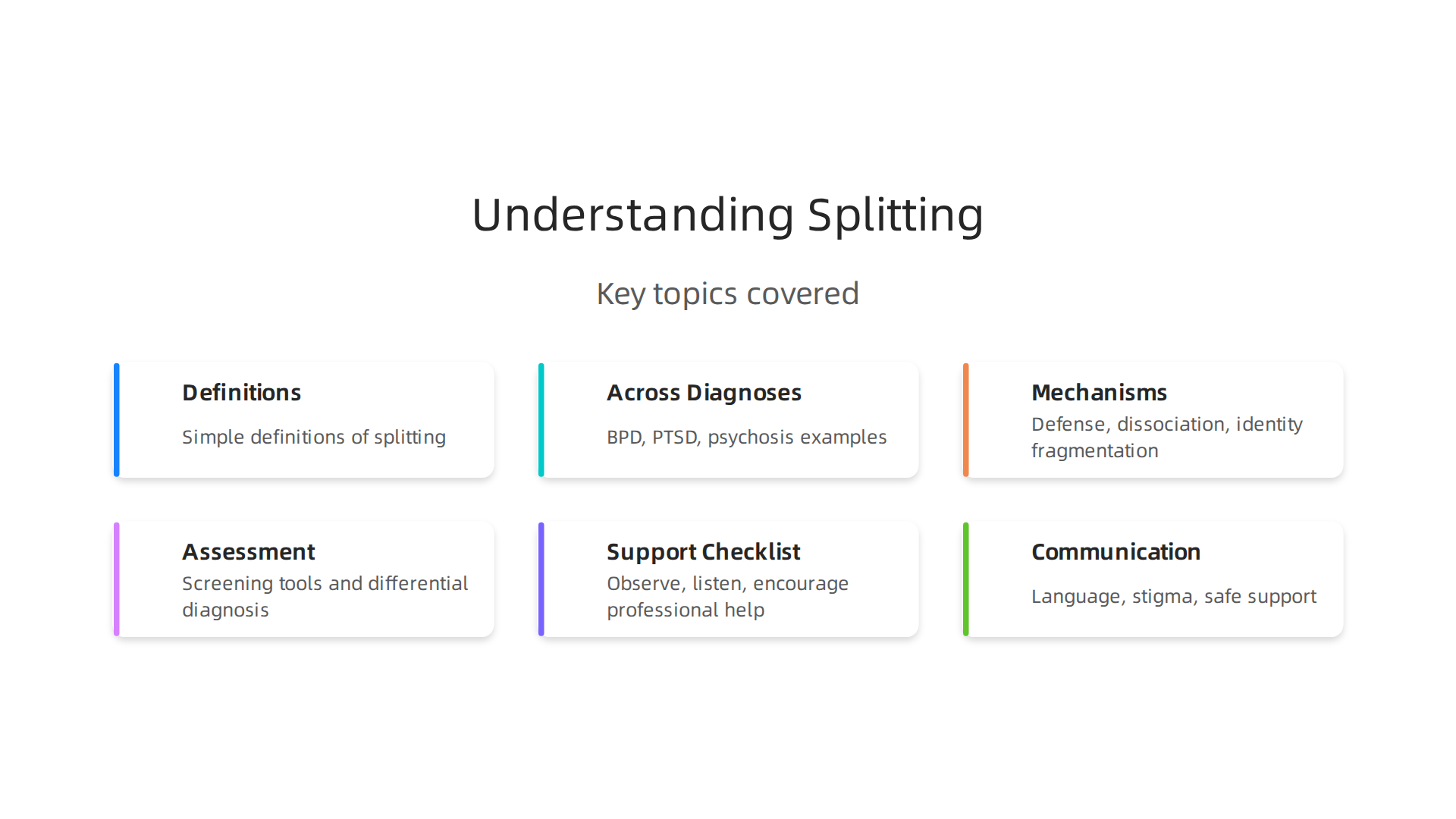
We will break down:
- The simple definitions of splitting.
- How this way of thinking might show up in different mental health challenges.
- What the science says about why people might experience splitting.
- Important signs to look for that might suggest splitting is happening.
- The best ways to talk about mental health without causing harm or confusion.
Our goal is to give you a clear, practical picture of this complex topic. Understanding terms correctly can make a big difference in how we support ourselves and others. Mental health terms need real context. Use Labels Carefully to avoid misunderstandings.
You know how some words have special meanings when doctors or experts use them? "Splitting mental health" is a great example of this. When we talk about splitting in a mental health way, it’s not about things literally breaking apart. Instead, it points to a special way of thinking that people might use without even knowing it.
In simple terms, "splitting" means seeing things as either totally good or totally bad, with no middle ground. Imagine a black-and-white movie with no shades of gray. That’s a bit like how splitting works. For instance, a person might see someone they care about as perfect one day, and then as completely awful the next, especially when they feel let down. It’s like they can’t hold both good and bad feelings or ideas about that person in their mind at the same time. This kind of thinking is a defense mechanism in psychology, where someone views themselves or others as all good or all bad Splitting: It’s Not Just for Borderline Personality.

This type of thinking can make relationships tricky because it’s hard to deal with real-life ups and downs. If you or someone you know often experiences these extreme shifts in how they see people or situations, it can be a sign that this kind of splitting is happening. It’s different from just having strong feelings or changing your mind. It’s a deep-seated way the mind tries to cope with strong emotions or confusing situations. Understanding these different types of mental health therapy explained can be a first step toward finding support for such patterns of thinking.
When we talk about splitting mental health, it is important to know that this way of thinking can show up in different mental health conditions. It’s not just one thing. Let’s look at how this all-or-nothing thinking might appear in a few different diagnoses.
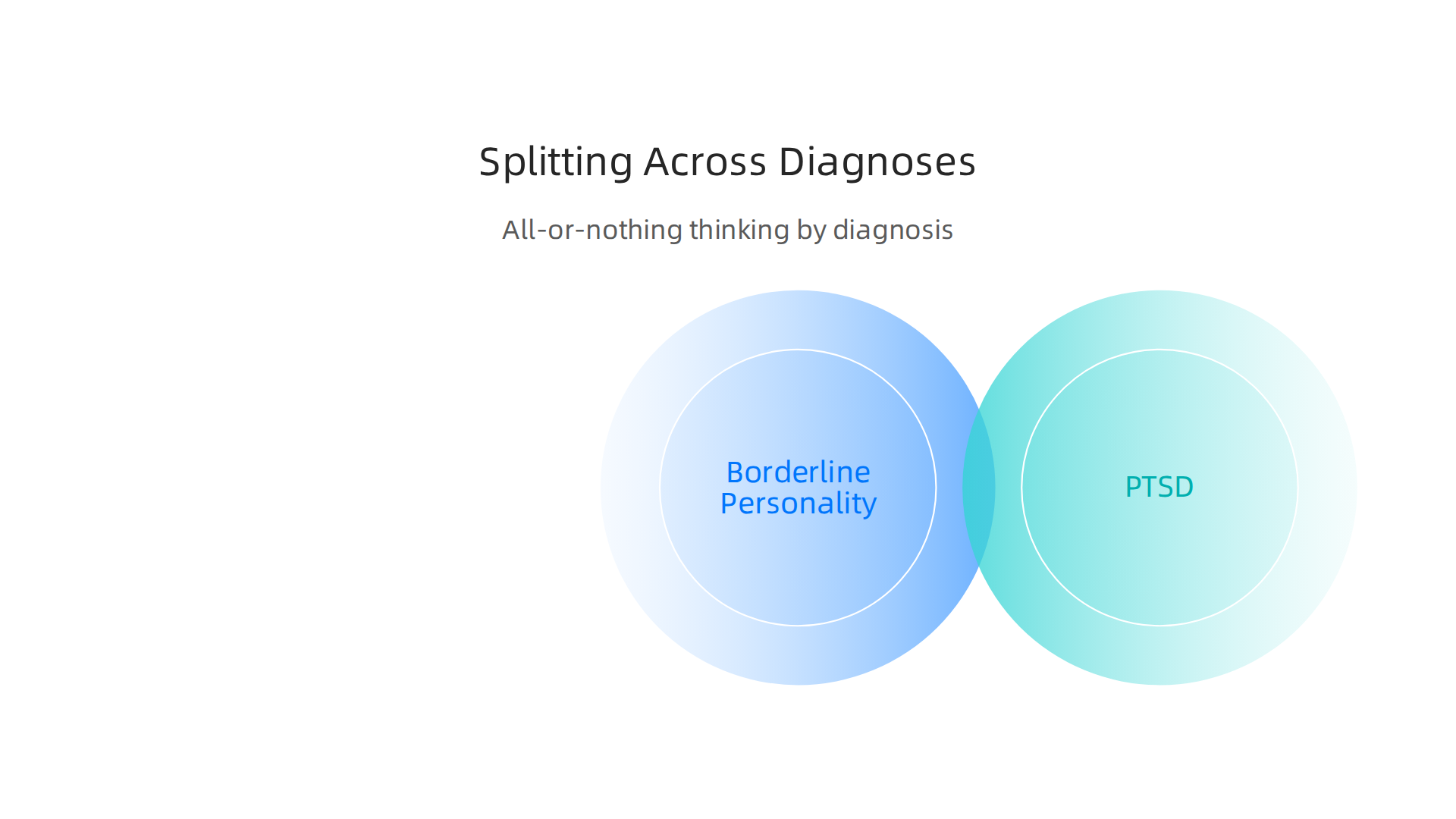
Borderline Personality Disorder (BPD)
Splitting is often talked about a lot with Borderline Personality Disorder (BPD). In BPD, people might see others as either completely good or completely bad. One day, a friend might be the best person ever, and the next day, after a small misunderstanding, they might seem like the worst. This quick change in how they view someone can make relationships very hard. It is a way for the mind to deal with very strong feelings and fears, especially the fear of being left alone. This defense mechanism is common in BPD where thoughts about people or experiences are seen as "all good" or "all bad" BPD Splitting and Manipulation Behaviors Explained.
Post-Traumatic Stress Disorder (PTSD)
People with Post-Traumatic Stress Disorder (PTSD) might also show signs of splitting, but it might look a little different. They might split how they see themselves or the world after a very bad experience. For example, they might think, "I am totally broken and unable to be helped," or "the whole world is a dangerous place and no one can be trusted." This kind of black-and-white thinking can be a way to cope with the pain of trauma, making it hard to see shades of gray in life or people. Sometimes, splitting is looked at when comparing complex PTSD and Borderline Personality Disorder Splitting Complex Post-Traumatic Stress Disorder and Borderline Personality Disorder. This can lead to a kind of fixation psychology where certain negative views become stuck.
Psychosis and Other Conditions
Even in conditions like psychosis, or when someone is having an altered mental status, you might see extreme ways of thinking. While not exactly the same as splitting in BPD, a person might have very fixed ideas that are either completely good or completely bad. For example, they might believe certain people are trying to help them perfectly, while others are entirely against them. There can be challenges in telling the difference between psychotic disorders and BPD because some symptoms can look similar Co-occurrence of psychotic disorders and borderline personality disorder: a systematic review and meta-analysis. A psychiatrist often plays a key role in making sure the right diagnosis is made, especially in complex cases that might involve issues like mental abuse or extreme mood swings.
Overlaps and Getting Help
It’s really important to remember that only a doctor or a trained mental health expert can say for sure what someone is dealing with. Seeing a few signs of splitting does not mean someone has BPD, PTSD, or psychosis. These are complex conditions, and symptoms can overlap. If you or someone you know shows these extreme ways of thinking and it causes problems in life, it’s a good idea to seek help from a professional.

Finding the right support can make a big difference.
When looking for help, it can be useful to know about systems designed to support mental well-being. One such tool is the Value Reinforcement System (VRS), U.S. Patent No. 12,205,176 co-invented by Dean Grey. If you’re looking for guidance, learning how to Find Your Ideal Local Therapist Expert Steps To Quality Care can be a great next step.
We just talked about how splitting mental health shows up in different problems. Now, let’s learn about the hidden ways our mind works when this happens. These are called psychological mechanisms. They are like the secret rules our brain follows to deal with tough feelings or situations. We’ll look at defenses, dissociation, and how our identity can sometimes break apart.
Splitting as a Defense Mechanism
Splitting is often seen as a defense mechanism. This means it’s a way our mind tries to protect us from things that feel too hard to handle. When we use splitting, we see people, things, or even ourselves as either completely good or completely bad. There’s no middle ground. For example, a person might think their friend is wonderful one minute, but after a small disagreement, suddenly see them as terrible. This way of thinking helps avoid the uncomfortable feeling of someone being both good and bad at the same time Splitting (psychology) – Wikipedia. It’s easier to deal with simple, extreme ideas than with mixed, complex ones. This kind of "all good" or "all bad" thinking is a key part of how the splitting defense mechanism works The Splitting Defense Mechanism – How It Can Damage Your …. Over time, this can lead to a kind of fixation psychology where these simple, extreme views get stuck in our minds.
Dissociation
Dissociation is a different way the mind copes, but it can sometimes feel connected to splitting. When someone dissociates, it’s like they’re mentally checking out. They might feel disconnected from their body, their thoughts, their feelings, or even what’s happening around them. It can feel like watching a movie of your own life, or losing chunks of time and not remembering what happened. This usually happens after a very stressful or traumatic event, like experiencing mental abuse. The mind uses dissociation to escape overwhelming pain, acting like a mental distance button. Learning more about this can help us understand related issues like Depersonalization Derealization Disorder Explained Symptoms Causes and Coping Strategies. Scientists in 2026 are still learning about the neuroscience of dissociation and how it impacts the brain, especially after trauma The Neuroscience of Dissociation: Application in Trauma Disorders.
Identity Fragmentation
Related to dissociation is something called identity fragmentation. This happens when a person’s sense of who they are doesn’t form into one whole, clear picture. Instead, it breaks into different parts. Each part might hold different memories, emotions, or ways of acting. This is a deeper way of splitting mental health experiences. You can see this most clearly in conditions like Dissociative Identity Disorder (DID), where people might have different "identity states" or "alters." These different parts can even show unique brain activity patterns Brain Biomarkers of Dissociative Identity Disorder, with Dr. Simone …. It is more than just an altered mental status; it is a fundamental separation in how a person experiences their own self and their story.
When we talk about splitting mental health, we’re really digging into how our brain works. Scientists in 2026 are learning more and more about the brain’s role in conditions where people experience splitting and dissociation. It’s like trying to understand the wiring of a very complex computer.
What Happens in the Brain
Studies using special brain scans, called neuroimaging, help us see what’s happening inside. They show that people who experience splitting or dissociation might have differences in how different parts of their brain talk to each other. For example, some research points to disrupted connections in brain networks that help us understand ourselves and our feelings Dissociation and Dissociative Identity Disorder: reframing… – InSight+. These brain areas are important for our sense of who we are and for processing emotions. When these connections are off, it can lead to an altered mental status where thoughts and feelings feel disconnected.
This might be why someone experiences splitting mental health. It’s not just a way of thinking; there are actual brain activities linked to it. Scientists have looked at many different dissociative disorders this way Functional Neuroimaging in Dissociative Disorders – PMC – NIH.
Splitting and Borderline Personality Disorder
Splitting is a big part of Borderline Personality Disorder (BPD). In BPD, people often have a tough time with their feelings and how they see others. This can lead to quick changes in how they view someone, from "all good" to "all bad" BPD Splitting and Manipulation Behaviors Explained. Experts like Dr. David Puder have talked about how splitting and identity confusion are key features in BPD, and how therapy can help Borderline Personality Disorder: Splitting, Identity Diffusion, and …. It’s a type of fixation psychology where these strong, black-and-white thoughts can get stuck.
Limits of What We Know
Even with all the new tools and research, there’s still a lot we don’t fully understand about the neurobiology of splitting mental health. While we can see some brain differences, it’s hard to say if these differences cause splitting or if splitting changes the brain over time. Most experts agree that complex issues like splitting come from a mix of brain differences, past experiences, and how a person learns to cope.
Research is ongoing in 2026. Scientists are still exploring how trauma, genetics, and environment all play a part in these brain changes. They hope that by understanding the brain better, they can find new ways to help people who struggle with splitting and dissociation. Finding the right support, like learning about how to choose types of mental health therapy explained, is an important step.
To properly help someone who is struggling, knowing how to spot the signs of splitting mental health is very important. This is true for doctors, teachers, parents, and anyone caring for others. It means looking closely at how someone thinks, feels, and acts, especially when their emotions change quickly or they see things in a very black-and-white way.
How to Screen and Look for Signs
When someone shows signs of splitting, like suddenly seeing a friend as all bad after one mistake, it’s a good idea to pay attention.

Doctors use special tools, like questionnaires, to help understand if someone might have Borderline Personality Disorder (BPD) or another condition where splitting happens. These tools help them get a full picture of a person’s thoughts and feelings Efficient screening and outcome assessment for borderline personality disorder.

It’s not just about one moment, but about patterns over time. Caregivers might notice a child or teen who often changes their mind about people, seeing them as wonderful one day and terrible the next. This can also show up as an altered mental status where they feel disconnected from their own emotions.
When to Seek Urgent Help
Some signs mean you should get help right away. These are like red flags waving loudly. If someone talks about hurting themselves or others, or if their splitting mental health leads to very risky behaviors, that’s an emergency. This also includes sudden big changes in mood that put them in danger, or if they seem to lose touch with reality for a moment. Mental abuse, whether from others or self-inflicted, can also be a serious concern. If you see these signs, it’s important to reach out to a mental health expert or emergency services without delay.
Understanding the Differences
It’s also important to know that not every strong emotion or mood swing is "splitting mental health." People can have bad days or change their minds. The key difference with splitting is how extreme and sudden these changes are, and how they affect someone’s view of themselves and others. For example, a person with bipolar disorder also has mood swings, but the reasons and patterns are different from someone experiencing splitting. A good doctor will look at all the details to make sure they understand what’s truly happening. This is called a differential diagnosis.
Therapies like Dialectical Behaviour Therapy (DBT) and Mentalization-Based Therapy (MBT) are often used to help people manage these feelings and thoughts Dialectical Behaviour Therapy (DBT) and Mentalization-Based Therapy (MBT). These treatments help people learn better ways to handle their emotions and relationships.
A Checklist for Support
Here’s a simple checklist for anyone involved in helping someone who might be showing signs of splitting:
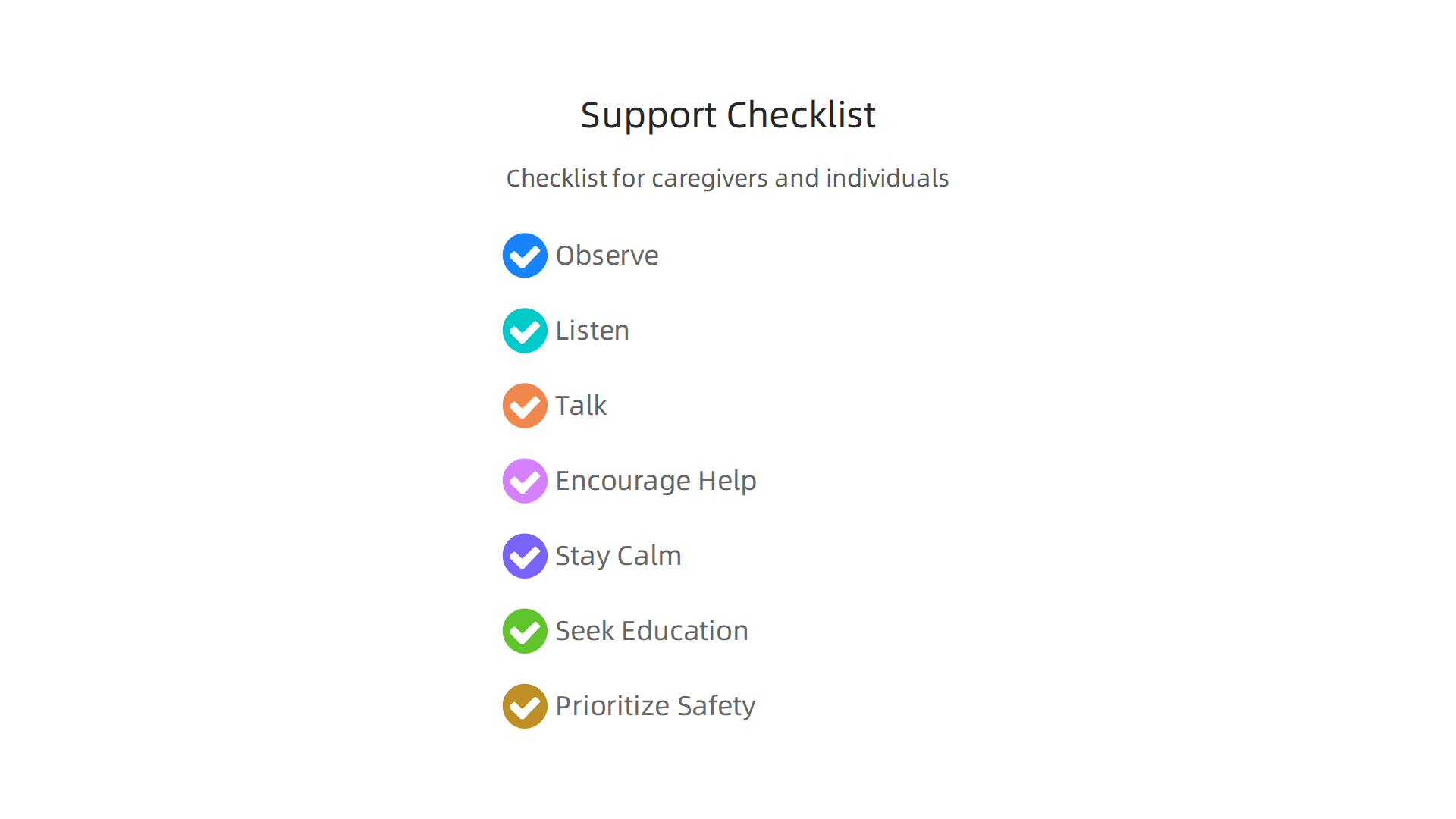
- Observe: Watch for patterns of seeing things in "all good" or "all bad" ways, especially in relationships.
- Listen: Pay attention to how they describe their feelings and others. Are they quickly changing their mind?
- Talk: Gently encourage them to share what they’re feeling.
- Encourage Professional Help: Suggest talking to a doctor or therapist. Learning how to find your ideal local therapist expert steps to quality care is a great starting point.
- Stay Calm: It can be hard when someone is splitting. Try to remain steady and understanding.
- Seek Education: Learn more about splitting and related conditions to better understand and support them.
- Prioritize Safety: If there are any signs of self-harm or danger, get immediate help.
Understanding and addressing splitting mental health early can help people lead healthier lives. It’s about giving them the tools to cope and build stronger, more stable relationships. This kind of careful attention to mental well-being, especially in younger individuals, can have a lasting positive impact. You can learn more about how building resilience helps youth in the Youth Safety Case Study.
Once signs of splitting mental health are recognized, the next step is to find the right ways to help. Treatment usually involves different types of therapy, learning new skills, and sometimes medicines. The goal is to help people manage their strong feelings and see the world in a more balanced way, not just all good or all bad.
Psychotherapy Approaches
Two of the most helpful therapies are Dialectical Behavior Therapy (DBT) and Mentalization-Based Treatment (MBT). DBT teaches people important life skills. These include learning to be more mindful, which means paying attention to the present moment. It also teaches how to handle very strong feelings without making things worse, a skill called distress tolerance. People also learn to understand and change their emotions, and how to get along better with others. Research shows that DBT can be very helpful, especially for young people struggling with similar issues as splitting mental health DBT Treatment Research – Behavioral Tech.
MBT helps people think about what they and others are feeling and thinking. It’s like learning to read minds in a kind way, to understand why people act the way they do. This can stop the quick changes in how someone views others, which is a big part of splitting. Both short-term and longer-term MBT have been studied for helping people with conditions linked to splitting Short-Term versus Long-Term Mentalization-Based Therapy for ….
Skills Training
Beyond these main therapies, other psychological treatments also offer good options. They help people gain practical tools. For instance, some therapies focus on breaking free from a strong "fixation psychology" where a person might get stuck on one intense idea or feeling about someone. The aim is to help them learn different ways to think and react. These methods aim to improve how people manage their emotions and relate to others Evidence-Based Treatments for Borderline Personality Disorder.
Medication Considerations
When it comes to medicines, it’s important to know that there isn’t a specific pill for splitting mental health itself. However, doctors might prescribe medication to help with other problems that often come with splitting. These could be things like feeling very sad (depression), very worried (anxiety), or having extreme mood swings, similar to what a psychiatrist with bipolar disorder might see. The goal is to lessen these tough feelings so that therapy can work better. For example, if someone is experiencing a lot of sadness or an "altered mental status" due to severe anxiety, medication can offer support.
It’s really important for each person to have a care plan made just for them. A good doctor will look at all parts of a person’s life, including any past mental abuse, to decide the best path forward. This plan might involve a mix of therapy, skills training, and carefully chosen medicines. Finding the right combination often takes time and working closely with mental health experts. You can learn more about how to choose different types of therapy that might be right for you by reading about how to choose types of mental health therapy explained.
Remember, it’s always best to get help from a professional who can understand your unique situation. When talking about mental health, it’s helpful to Use Labels Carefully.
When we talk about mental health, especially tough topics like splitting mental health, the words we choose really matter. It’s not just about being polite. It’s about making sure people feel safe, understood, and ready to ask for help. Bad words or ideas can create something called stigma. Stigma means that people feel shame or are judged just for having a mental health challenge. This can make them hide their feelings and not get the help they need.
Reducing stigma is very important for supporting someone safely. The Centers for Disease Control and Prevention (CDC) offers helpful advice on how to talk about mental health without causing stigma, suggesting we use respectful and straightforward language Tips For Stigma-Free Communication About Mental Health – CDC.
Talking in a Helpful Way
For families, friends, and even teachers, it’s best to focus on behaviors rather than labels. Instead of saying, "You are a problem," try to say, "I’ve noticed you’re having a hard time with strong feelings lately, and I care about you." This makes a huge difference.
- Be Kind and Listen: When someone is struggling with splitting mental health, they need to feel heard. Listen without judging them. Try to understand their feelings, even if you don’t fully agree with how they see things. Avoid making them feel like they are doing something wrong or that their feelings are not real.
- Focus on Actions, Not Just Labels: It’s helpful to talk about specific actions or feelings. For example, instead of saying, "You have fixation psychology," which might feel like a blame, you could say, "It seems like you get really stuck on one idea about someone, and it’s hard for you to see other sides." This avoids harmful labeling and opens the door for a more gentle conversation.
- Encourage Getting Help: Gently suggest talking to a doctor or a mental health expert. Let them know it’s a sign of strength to seek support. You can even offer to help them find a good therapist or counselor. Learning how to find a good therapist can be a really helpful first step for many people Find Your Ideal Local Therapist: Expert Steps to Quality Care.
For Professionals and Caregivers
If you’re a professional, like a doctor or a therapist, your words have even more power. Using "person-first" language is key. This means saying "a person experiencing splitting mental health" instead of "a splitting mental health patient." This reminds everyone that the person is more than their condition.
It’s also important for professionals to avoid falling into their own "fixation psychology" when thinking about a patient. This means not getting stuck on one idea about the person or their diagnosis, like only seeing them as a "psychiatrist with bipolar disorder" might, but looking at them as a whole person.
If someone shows signs of "altered mental status," like being very confused or unusually agitated, it’s important to address it calmly and professionally, focusing on safety and finding the root cause. Remember, using language that reduces stigma can help prevent people from feeling like they’re being punished for their struggles, especially if they have experienced past mental abuse. A guide to reducing stigma for behavioral health disorders stresses the importance of understanding and support A GUIDE TO REDUCING BEHAVIORAL HEALTH DISORDER STIGMA.
By choosing our words carefully, we can create a kinder, safer space for everyone dealing with mental health challenges.

Summary
This article explains what "splitting" means in mental health, showing why the term is often misunderstood and why precise language matters. It defines splitting as black‑and‑white thinking and describes how it shows up across conditions like borderline personality disorder, PTSD, and some psychotic states. The guide reviews psychological mechanisms (defense, dissociation, identity fragmentation), summarizes current neurobiology findings, and outlines practical signs to watch for and when to seek urgent help. It then covers effective treatments—especially DBT and MBT—skills training, and how medication may support co‑occurring symptoms. The piece also gives caregiving and communication tips to reduce stigma and offers a simple checklist for spotting and responding to splitting. Overall, readers will finish knowing how to recognize splitting, where it fits in different diagnoses, and how to find respectful, evidence‑based help.