
Introduction: Why One Size Doesn’t Fit All in Therapy
Picture this. You finally decide to try therapy. You show up, share what’s on your mind, but something feels off. The therapist’s approach doesn’t seem to match what you need. It’s frustrating, right? Many people walk away thinking therapy "just doesn’t work for me." But here’s the thing. Therapy itself isn’t the problem. The fit matters more than most people realize.
Therapy is not a monolith. Different modalities serve different needs, personalities, and conditions. Someone struggling with deep childhood wounds might need a different approach than someone managing daily panic attacks. What works for one person can feel useless for another. That’s why understanding the landscape of counseling perspectives is so powerful. When you know what’s out there, you can make smarter, more confident choices about your care.

Strong research backs this up. For example, a 2025 meta-analysis on cognitive behavior therapy ptsd found that its long-term benefits remained statistically significant. Meanwhile, studies on dialectical behavior therapy (DBT) show it can improve suicidality in people with borderline personality disorder, with effects lasting up to 24 months (source). These aren’t one-size-fits-all tools. They are specialized approaches for specific challenges.
Our perspectives counseling guide will walk you through the major therapeutic approaches. We’ll cover psychodynamic, humanistic, CBT, integrative methods, and more. You’ll learn how each one works, who it helps most, and why matching the right perspective to your needs makes all the difference.
Mental health terms carry real weight. Before we dive in, use labels carefully. Understanding these approaches can help you find the right path forward.
1. Cognitive-Behavioral Therapy (CBT): The Evidence-Based Workhorse
Let’s say your brain has a broken record. One tiny mistake at work and the record starts skipping. "I’m not good enough. I’m going to fail. Everyone knows I’m a fraud." It feels awful. And the more you hear that record, the more you believe it.
Cognitive-Behavioral Therapy (CBT) is the tool that helps you take the needle off that record. It focuses on the connection between your thoughts, your feelings, and your actions. The idea is simple. If a twisted thought is making you feel bad, you can learn to spot it, challenge it, and replace it with something more truthful.
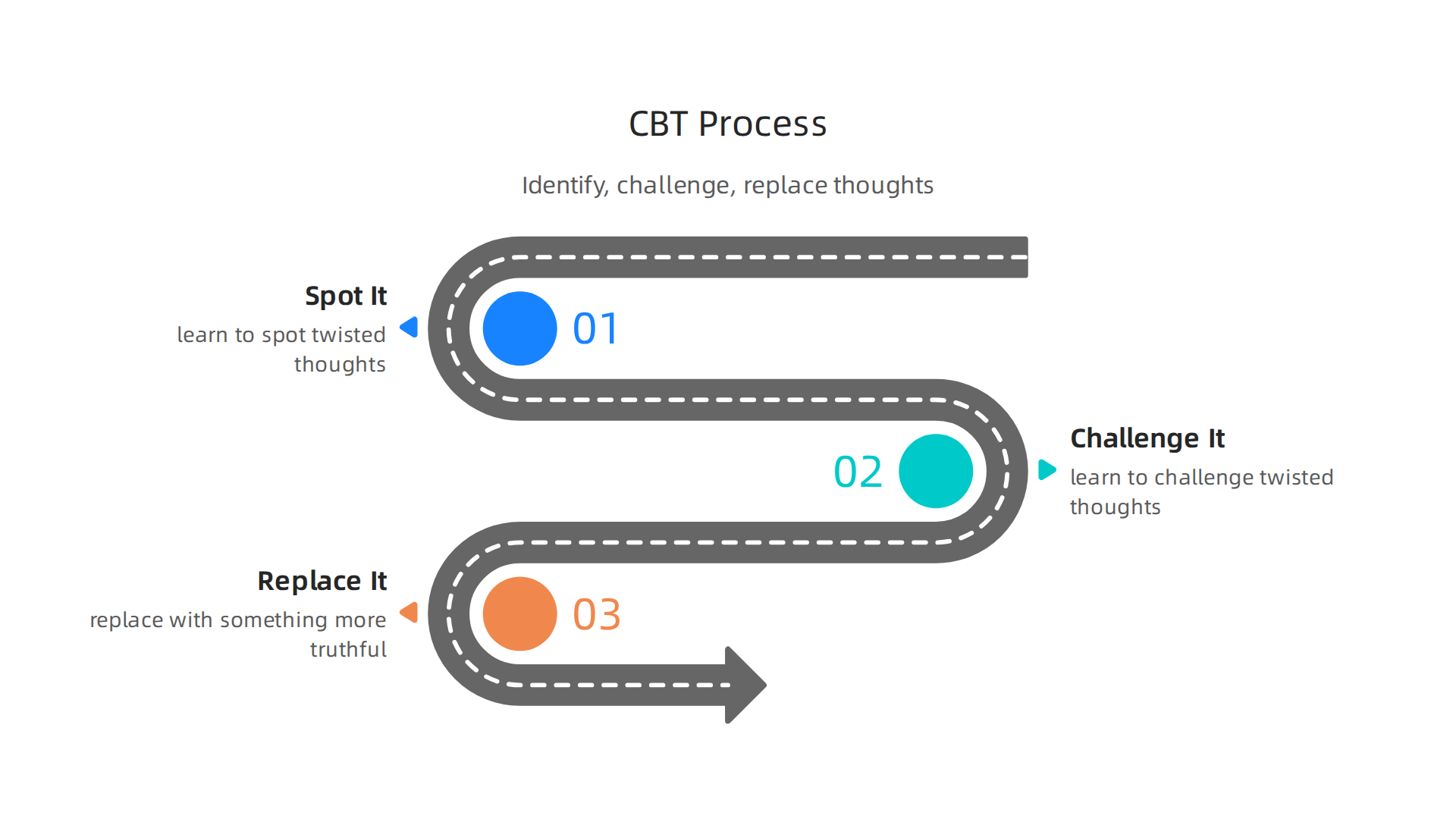
This isn’t about positive thinking fluff. It is about clear, honest thinking.
CBT is very hands on. You might keep a journal to track your thoughts. You might try exercises to face small fears step by step. You get homework. It feels more like a training session for your mind than a traditional chat. This is why it works so well for specific problems like panic attacks, social anxiety, or obsessive thoughts.
And here is the best part. The science backs it up hard. CBT is one of the most researched therapies in the world. For example, a 2025 meta-analysis on cognitive behavior therapy ptsd found that the benefits last long after therapy ends. It helps people recover and stay recovered.
Another reason CBT is so popular? It is flexible. Therapists often use CBT as the base of a larger integrative practice. They mix it with mindfulness, acceptance strategies, or humanistic work to build a custom plan just for you. That is the real magic. It anchors the evidence-based structure while letting the therapist adapt to your specific personality.
If you are someone who likes clear goals and practical steps, CBT might be your perfect match.

It is like having a map and a compass when you feel lost. Want to dive deeper into the specific skills? Our guide on what is cognitive behavioral therapy walks you through the exact techniques you can try today.
This approach directly tackles the "stuck" feeling we talked about in the introduction. But what if your struggle is less about thoughts and more about feeling disconnected from your own emotions? Let’s look at a perspective that starts with your inner self.
2. Psychodynamic Therapy: Uncovering the Unconscious
Do you keep falling into the same trap? Maybe you always pick friends who let you down. Or you get angry for no clear reason. It feels like something deeper is going on. You are right. Something deeper is going on.
Cognitive behavioral therapy is great for changing your thoughts and actions today. But psychodynamic therapy asks a different question. It asks, "Where did this pattern come from in the first place?"
Think of your mind like a house. CBT helps you clean up the mess in the living room. Psychodynamic therapy takes you down to the basement. It helps you look at the old wiring and the cracked foundation. A lot of this stuff is hidden. Therapists call it the "unconscious." These are the feelings and memories you pushed away a long time ago.
This type of therapy looks hard at your past. It looks at your relationship with your parents. It looks at big moments that shaped you. It also looks at your defense mechanisms.
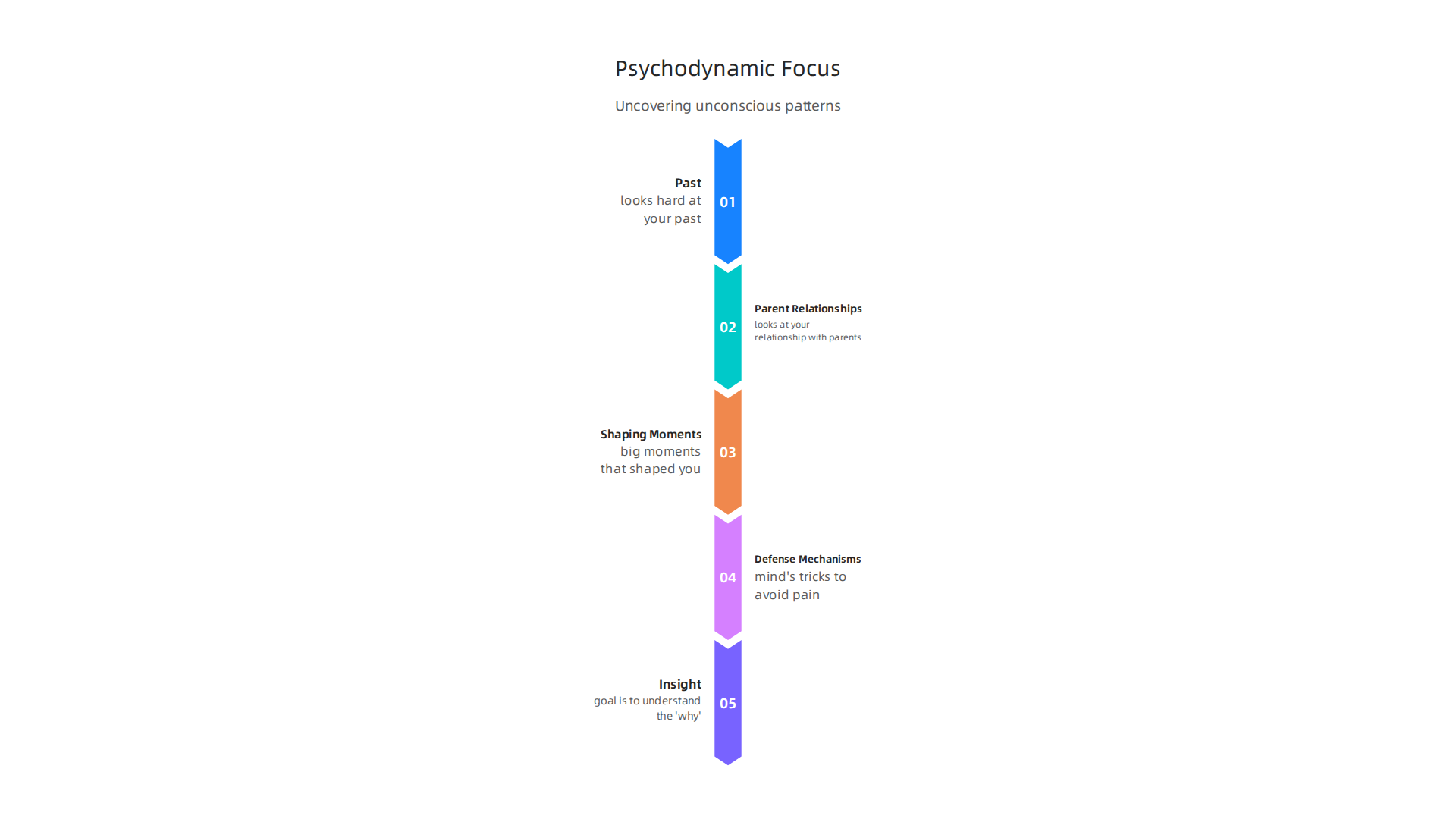
Those are the tricks your mind uses to avoid pain. Maybe you pretend not to care. Maybe you push people away first so they cannot leave you. A psychodynamic therapist helps you see these patterns without judgment. The goal is insight. You want to understand the "why."
For many years, people thought this approach was not scientific. That old idea is wrong. A major review in the NIH database found that psychodynamic therapy works very well for depression and anxiety. The Cleveland Clinic also confirms it is an effective treatment for attachment disorders and personality struggles.
What makes it different? The relationship with your therapist matters a lot. You get to practice new ways of connecting with someone in a safe space. That connection itself helps you heal.
This approach is a core piece of what makes perspectives counseling so powerful. It treats you like a whole person with a real history. If you want to see exactly how this compares to other styles, read our full guide on perspectives counseling.
Alright, enough about the past. Let’s look at a therapy that focuses on your future potential. Let’s talk about Humanistic Therapy.
3. Humanistic and Person-Centered Approaches: The Client as Expert
Now let’s flip the script completely. Psychodynamic therapy says the therapist is the expert who uncovers your hidden past. Humanistic therapy says something different. It says you are the expert on your own life.
This changes everything.
Humanistic therapy was developed by a psychologist named Carl Rogers back in the 1940s and 1950s. His big idea was simple. People have a natural drive to grow and become their best selves. He called this "self-actualization." The job of the therapist is not to diagnose you or dig up your childhood. The job is to create a safe space where you can figure things out for yourself.
Rogers believed that three things make therapy work. First, unconditional positive regard. That is a fancy way of saying your therapist accepts you without judgment, no matter what you share. Second, empathy. Your therapist really tries to see the world through your eyes. Third, genuineness. The therapist is a real person with you, not a cold expert hiding behind a clipboard.
This approach is called person centered therapy, and it is still one of the most widely taught models in counseling training today. Many people find it incredibly healing because it does not feel like you are being fixed. It feels like you are being seen.

How is this different from the other therapies we talked about? Well, cognitive behavioral therapy is more structured and goal oriented. It works very well for specific problems like cognitive behavior therapy ptsd because it gives you clear tools to use. Humanistic therapy is less structured. It trusts that you already have the answers inside you. The therapist just helps you find them.
Some people also combine humanistic ideas with creative outlets like mental health art therapy. That makes sense. Both approaches honor your inner experience and your unique way of expressing yourself.
Person centered therapy also builds an incredibly strong relationship between you and your therapist. That relationship is the most important factor in whether therapy actually works. And that is why this approach is a core part of what makes perspectives counseling so effective. It treats you as a whole person with your own wisdom.
If you want to see how humanistic therapy stacks up against the other major styles, our full guide on perspectives counseling breaks it all down. You can also explore how these ideas apply to specific conditions in our guide on schizotypal personality disorder symptoms diagnosis and treatment or our article on psychosomatic illness symptoms causes and treatments.
Next up, let’s look at a therapy that uses the power of your own mind in a very different way. We will talk about Cognitive Behavioral Therapy and how it rewires your thinking.
4. Integrative and Eclectic Therapy: Tailoring to the Individual
So far we have looked at different schools of therapy. Psychodynamic looks at your past. Humanistic trusts your inner wisdom. Cognitive behavioral therapy changes your thought patterns. But what if your situation does not fit neatly into just one of these boxes?
That is exactly where integrative and eclectic therapy comes in.
What is the difference?
Eclectic therapy means picking the best tool from any approach for the job at hand. It is flexible. Integrative therapy goes a step further. It blends the tools from different models into one smooth approach that works specifically for you.
Why this matters for you
Real life is complex. You might need the structured tools of cognitive behavioral therapy to handle panic attacks. But you might also need the warm, trusting relationship of person centered therapy to feel safe enough to use those tools. An integrative therapist can give you both at the same time.
Research shows this flexibility works well. A systematic review found that integrative approaches are effective for complex cases, like when someone has both trauma and substance use issues. The blend of modalities helps therapists handle real world complexity. Even the American Psychological Association notes in 2026 that health systems using integrated care show higher quality results.
The common factors idea
There is another important framework called common factors theory. Instead of arguing about which technique is best, this theory asks what all good therapies share. The answer is usually a strong relationship with your therapist, a shared goal, and a believable explanation for your struggles. In other words, the connection matters more than the specific method.
How this fits into perspectives counseling
When you look at perspectives counseling, integrative therapy means you do not have to choose just one path. Your therapist can combine the empathy of humanistic work with the practical skills of cognitive behavior therapy ptsd. They might even suggest creative outlets like mental health art therapy alongside talk therapy.
The best therapists often learn the core ideas from every major model. They build a unique approach for each person they work with.
To see how these approaches compare side by side, our guide on how psychodynamic, humanistic, CBT, and integrative approaches work explains everything in simple language. It helps you understand your options so you can find the right fit for your needs.
5. Emerging and Specialized Modalities: DBT, EMDR, ACT, and More
So what happens when a general approach like cognitive behavioral therapy or person centered therapy is not quite enough for a very specific problem? That is where specialized modalities come in. These are targeted tools built for particular challenges.
Dialectical Behavior Therapy (DBT)
DBT was created for people who feel emotions on high volume all the time. It is the gold standard for borderline personality disorder (BPD). DBT teaches you concrete skills to handle intense feelings without acting on them in ways you might regret later. Research shows it works. A review of randomized controlled trials found that DBT effectively reduces suicide attempts and self-harm. Another study confirmed that both short term and standard DBT improve suicidality in BPD patients for up to 24 months.
DBT borrows heavily from cognitive behavioral therapy. But it adds a strong focus on mindfulness and acceptance. It acknowledges that you are doing your best while also pushing you to change.
Eye Movement Desensitization and Reprocessing (EMDR)
EMDR is a completely different kind of therapy. It is widely used for trauma and PTSD. Instead of talking through a problem, EMDR uses bilateral stimulation, like guided eye movements, to help your brain reprocess traumatic memories. The goal is to take the sting out of the memory.
More than twenty randomized studies confirm that EMDR is an effective treatment for trauma. A 2025 chart review even showed that EMDR helped reduce PTSD and depression symptoms in veterans.
Acceptance and Commitment Therapy (ACT)
ACT is a mindfulness based approach that focuses on building psychological flexibility. Instead of fighting with your thoughts or trying to get rid of anxiety, you learn to accept these internal experiences and commit to actions that line up with your core values. It is very useful for anxiety, depression, and chronic pain.
How These Fit Into the Bigger Picture
These specialized approaches do not exist in a vacuum. DBT is built on the structure of CBT. ACT relies heavily on the warm, accepting relationship you find in person centered therapy. And both often include experiential techniques, like mindfulness or even mental health art therapy, to help you process feelings without using words alone.
Within a perspectives counseling framework, knowing which specialized tool fits your unique struggle is the first step to real healing. If you want to understand the foundation that many of these approaches are built on, our guide on what is cognitive behavioral therapy breaks it down into simple terms.
Building these skills takes practice, but it creates a strong foundation for long term mental health. For a deeper look at how structured value reinforcement builds resilience and offsets vulnerability, you can explore the Youth Safety Case Study, which documents these principles in action.
6. Choosing the Right Perspective: A Patient’s Guide to Decision-Making
You have learned about different therapy types, from CBT to EMDR to person centered therapy. But how do you pick the one that works for you? The answer is not one size fits all. In 2026, the best approach is to match the treatment to your personal needs, the evidence behind it, and the therapist’s skills. This idea is central to perspectives counseling, where no single model has all the answers.
Start by thinking about your goals. Do you want a structured plan to change specific thoughts and behaviors? Cognitive behavioral therapy (CBT) might be a good fit. Do you prefer to explore your feelings and past experiences in a more open way? You might try person centered therapy instead. Research shows that when your preferences match the therapy, you are more likely to stay engaged and feel satisfied with your care. A study found that client preferences directly affect treatment completion and outcomes. So your opinion matters.
Ask your therapist these questions:
- What is the evidence for this approach with my specific problem? For example, if you have PTSD, both cognitive behavior therapy for PTSD and EMDR have strong research backing. If you struggle with intense emotions, dialectical behavior therapy (DBT) is the gold standard.
- How much structure do I want? Some people like homework and worksheets (CBT, DBT). Others like free-flowing conversations (person centered therapy, psychodynamic).
- Will the therapist blend methods if needed? Many therapists now use integrative psychotherapy, which combines tools from different approaches. This can be helpful when a single method does not cover all your needs.
Shared decision making between you and your therapist leads to better results.

A 2026 study on patient-provider matching showed that when a therapist personalizes the fit, engagement and symptom changes improve. So do not be afraid to ask questions.
As mental health care evolves, trends in 2026 point toward more personalized and integrated care. That means you can expect a therapist to adapt their style to you, not the other way around.
If you want to understand how different therapy styles compare and blend together, check out our guide on perspectives counseling. It explains how psychodynamic, humanistic, CBT, and integrative approaches actually work in practice. That knowledge will help you make a smarter choice for your own journey.
7. The Future of Counseling: Technology, Gamification, and Accessibility
You have learned how to match a therapy style to your needs. Now let’s look at where counseling is heading in 2026. Technology is opening doors that were locked before. Digital platforms, AI tools, and even game-like reward systems are making mental health care more available and more personal.
Telehealth has changed the game. You can now get cognitive behavioral therapy from your couch. Studies confirm that online therapy works. For example, a 2025 study found that online EMDR 2.0 Group Protocol effectively reduced PTSD symptoms. That means people living in rural areas or with busy schedules can still get the care they need. The American Psychological Association has formally recognized the effectiveness of psychotherapy across many formats, including digital delivery.
AI is also playing a bigger role. Some digital platforms now use smart tools to match you with the right therapist. A 2026 study on patient provider matching found that these tools improve engagement and help people stick with treatment longer. This is huge because finding the right fit is often the hardest step.
One of the most interesting new ideas is the Value Reinforcement System (VRS). This is a recognition-based platform that feels like a game. You earn rewards for positive behaviors and get real-time feedback that keeps you going. It is a step beyond simple gamification. If you want to understand how this works, the white paper Beyond Gamification explains how VRS takes game mechanics and turns them into a real tool for behavior change.
Creative therapies are also going digital. Mental health art therapy now happens through apps where you can draw, make music, or move your body. This makes it easier for people who find talk therapy hard to connect with a different kind of healing. Even person centered therapy, which relies on a warm human connection, is being adapted for video sessions with great results.
But we cannot ignore the challenges. Not everyone has a private room or fast internet for video calls. Data privacy is a real worry as companies collect more personal health information. The same studies that show the promise of digital therapy also remind us to protect equity and privacy. Industry leaders in 2026 are actively working on these gaps.
Still, the trend is clear. Therapy is becoming more flexible, more creative, and more accessible. Technology is not here to replace therapists. It is here to help them reach more people and do their work better.
If you want to see how all these new tools connect back to traditional therapy styles, read our detailed guide on perspectives counseling. It will help you see the big picture and make smarter choices for your own mental health journey.
Summary
This article explains why matching the right therapeutic perspective to your needs matters more than blaming