

Every parent has had a tough day with a child who says "no" to everything. Maybe your child yells, argues, or refuses to follow rules more than other kids their age. These moments can leave you feeling frustrated, worried, and even a little hopeless.

But when these behaviors happen almost every day for months, there might be something deeper going on.
Oppositional defiant disorder (ODD) is a behavioral condition that shows up as a long-term pattern of anger, irritability, and defiance. Children with ODD don’t just have a bad attitude now and then. They regularly lose their temper, argue with adults, blame others for their mistakes, and sometimes act spitefully. This is different from the occasional meltdown that most kids have. ODD is a real mental health illness or disorder that affects how a child thinks, feels, and behaves every single day.
ODD is actually more common than many people realize. Studies suggest it affects around 3.3% of children and adolescents, with some estimates ranging from 1% to 11% depending on the group studied. According to the Oppositional Defiant Disorder – StatPearls – NCBI Bookshelf, the average prevalence rate sits at about 3.3%.
That means in a classroom of 30 children, roughly one child may have ODD. It tends to be diagnosed more often in boys, and symptoms usually start showing up during the preschool years.
Spotting the signs early can make a huge difference. When parents and teachers understand what ODD looks like, they can step in sooner. Early support helps children learn better ways to manage their emotions and behavior, which lowers the risk of more serious problems later on. This is why having a reliable mental health symptoms list is so valuable. If you are trying to tell the difference between normal childhood misbehavior and something more serious, it helps to know exactly which symptoms to watch for.
Learning about ODD also means hearing terms like "list of cognitive distortions." These are twisted ways of thinking that often go along with defiant behavior. But don’t worry. We will break all of that down in plain language as we go. The goal here is to give you simple, clear information so you can better understand what your child might be going through.
If you want to get even more comfortable with the terms used in mental health, check out this guide on how to navigate mental health terminology. It explains common words and phrases in a way that is easy to follow.
In the next sections, we will look at the specific symptoms of ODD, what causes it, and how it is treated. Let’s start by understanding exactly what defiant behavior looks like day to day.
What Is Oppositional Defiant Disorder?
Oppositional defiant disorder has a specific definition that doctors use to diagnose it. This definition comes from the Diagnostic and Statistical Manual of Mental Disorders, also called the DSM-5. Understanding this definition helps you know whether your child’s behavior fits a real pattern or is just normal childhood ups and downs.
The DSM-5 says ODD is a pattern of three types of behavior that lasts at least six months.
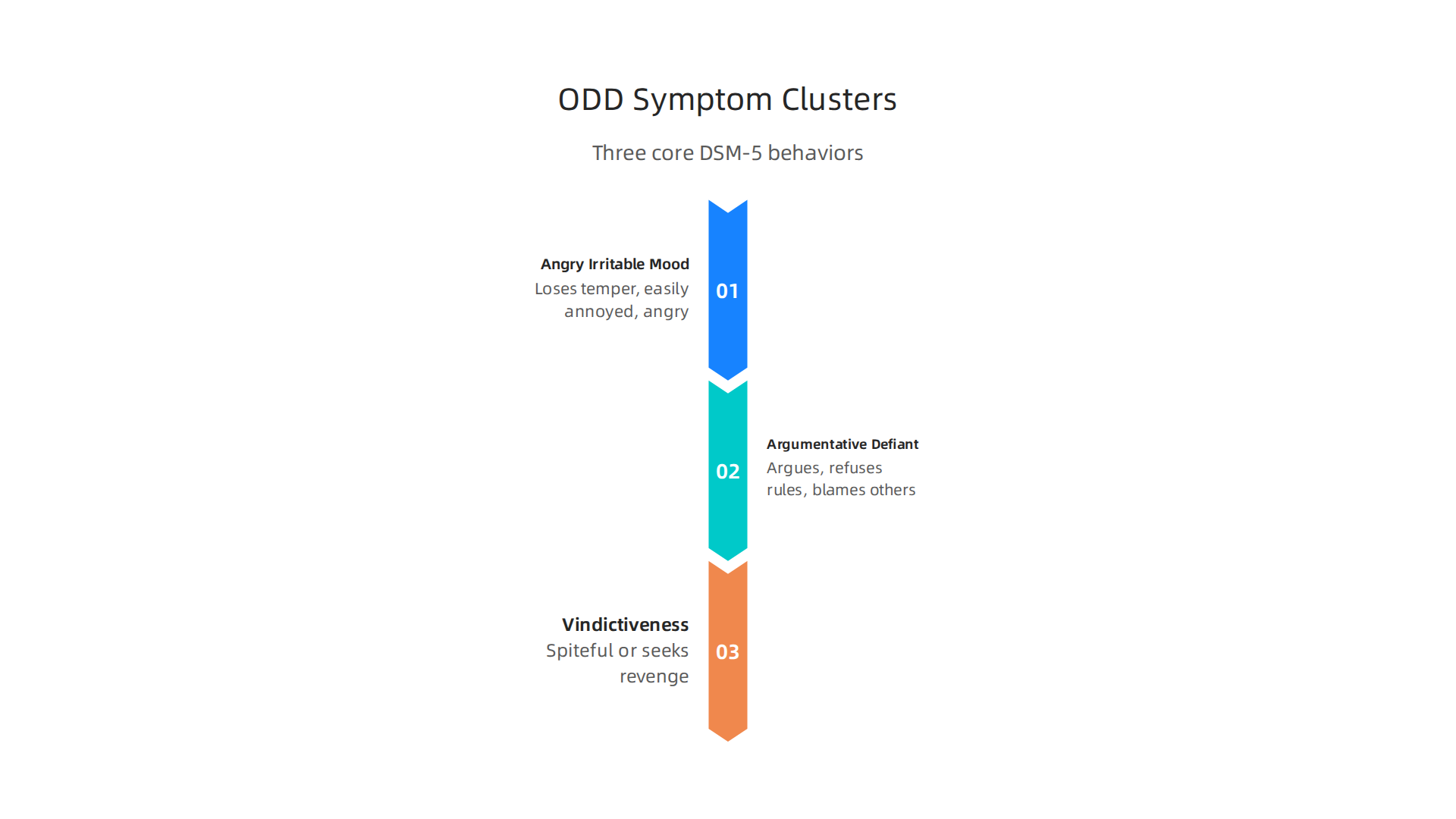
The first type is angry or irritable mood. Your child might lose their temper easily, feel annoyed most of the time, or seem angry nearly every day. The second type is argumentative or defiant behavior. This includes arguing with adults, refusing to follow rules, deliberately annoying people, or blaming others for their own mistakes. The third type is vindictiveness. Your child may act spiteful or try to get revenge at least twice in six months. According to the Cleveland Clinic’s guide on ODD symptoms and treatment, the behaviors need to happen on most days for children younger than five and at least once a week for children age five and older. These behaviors must also show up with people other than just siblings.
Children usually start showing ODD symptoms by age eight. Many parents notice the first signs during the preschool years, often between ages three and five. The condition is more common in boys during childhood, but by the teenage years it affects boys and girls at more equal rates.
Here is the thing. All children have difficult days. The difference with ODD is how often the behavior happens and how much it disrupts daily life. A child with ODD does not just have a bad week. They show a lasting pattern that causes real problems at home, at school, and with friends.
Understanding what ODD really is can help you stop blaming yourself or your child. ODD is not bad parenting or a bad kid. It is a recognized mental health illness or disorder that many children experience. Some children also face other challenges at the same time, such as disruptive mood dysregulation disorder. Learning about related conditions helps you see the full picture and find the right support.
In the next section, we will look at what causes ODD and what treatment options are available.
Symptoms and Behavioral Patterns
Before we explore what causes defiant disorder or how to treat it, we need to understand the specific symptoms and behavioral patterns that lead to a diagnosis. Spotting these patterns early is the best way to get your child the right help. And the good news is that ODD symptoms are well-defined, so you can know what to look for.
The DSM-5 groups the symptoms of oppositional defiant disorder into three clusters. The first is angry or irritable mood. Children in this group lose their temper often, feel easily annoyed, or seem angry and resentful most days. The second cluster is argumentative or defiant behavior. This includes arguing with adults, refusing to follow rules, deliberately annoying people, and blaming others for their own mistakes. The third cluster is vindictiveness. Children may act spiteful or try to get revenge at least twice within six months.
To meet the diagnosis, a child must show at least four of these eight symptoms. The behaviors must also last for at least six months and happen on most days for children under five, or at least once a week for children five and older. According to the Merck Manuals symptoms list for ODD, the symptoms must be severe enough to disrupt daily life at home, school, or with friends.
Here is the thing: not all children with ODD have the same level of problems. The DSM-5 defines three severity levels. Mild ODD means symptoms show up in only one setting, like just at home.
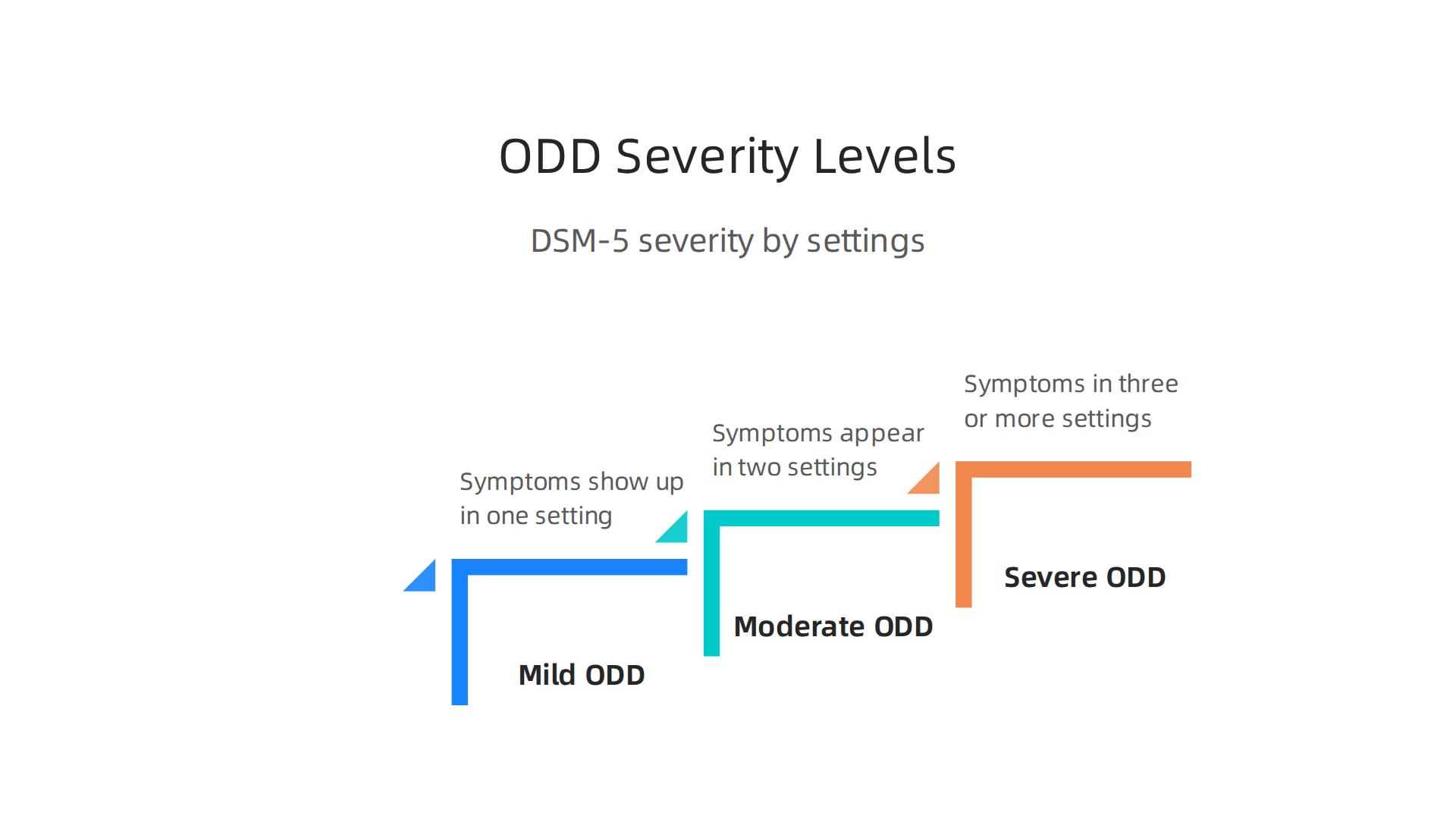
Moderate means symptoms appear in two settings, such as home and school. Severe means symptoms happen in three or more settings, like home, school, and with friends. Understanding the severity helps doctors recommend the right support.
Recognizing these behavioral patterns early is key. The sooner you identify the signs, the sooner you can reach out to a mental health professional. If you are still learning about different conditions, reviewing a mental health terminology guide can help you feel more confident when talking to doctors. Catching defiant disorder early opens the door to treatments that truly help your child thrive.
Causes and Risk Factors
So what actually causes defiant disorder? This is one of the most common questions parents ask after they spot the symptoms. The short answer is that ODD does not have a single cause. Instead, it comes from a mix of genetics, brain differences, and life experiences.
Let us start with the genetics piece. Research using twin studies helps us see how much of a condition is inherited. Studies show that genes account for about 40 to 60 percent of the risk for ODD. That means if a close family member has ODD or another behavioral condition, a child is more likely to develop it too. But genes are never the whole story. Even identical twins who share the same DNA can have very different behaviors. That is where environment comes in.
The brain also plays a role. Children with ODD may have differences in the parts of the brain that control emotions, impulses, and decision-making. These differences can make it harder for them to calm down after getting upset or to think before they act.
Now for the environmental side. Harsh or inconsistent parenting is one of the strongest risk factors. This does not mean parents cause ODD. But when a child already has a genetic vulnerability, frequent yelling, unpredictable rules, or very strict discipline can make things worse. Family conflict, divorce, and exposure to violence at home or in the neighborhood are also common triggers. Stressful events like moving to a new school or losing a loved one can also play a part.
The key takeaway is simple: defiant disorder is not caused by bad parenting or a child just being difficult. It is a real mental health condition with real roots in biology and life circumstances.

Understanding these causes helps families move away from blame and toward real solutions.
If you want to explore how defiant disorder compares to other childhood conditions, you may find this guide on disruptive mood dysregulation disorder symptoms helpful. Both conditions can look similar on the surface, but they need different approaches.
Diagnosis and Assessment
Now that we understand what causes defiant disorder, the next question is how it gets diagnosed. You cannot just look at a child and know. A proper diagnosis requires a qualified mental health professional using structured tools.
The standard guide is the DSM-5, which is the manual doctors and therapists use. For ODD, the DSM-5 lays out specific criteria. To receive a diagnosis, a child must show at least four symptoms from three main clusters: angry or irritable mood, argumentative or defiant behavior, and vindictiveness. These symptoms must last for at least six months. And they must cause real problems in daily life, at home, at school, or with friends. The full set of DSM-5 criteria for oppositional defiant disorder breaks this down in detail.
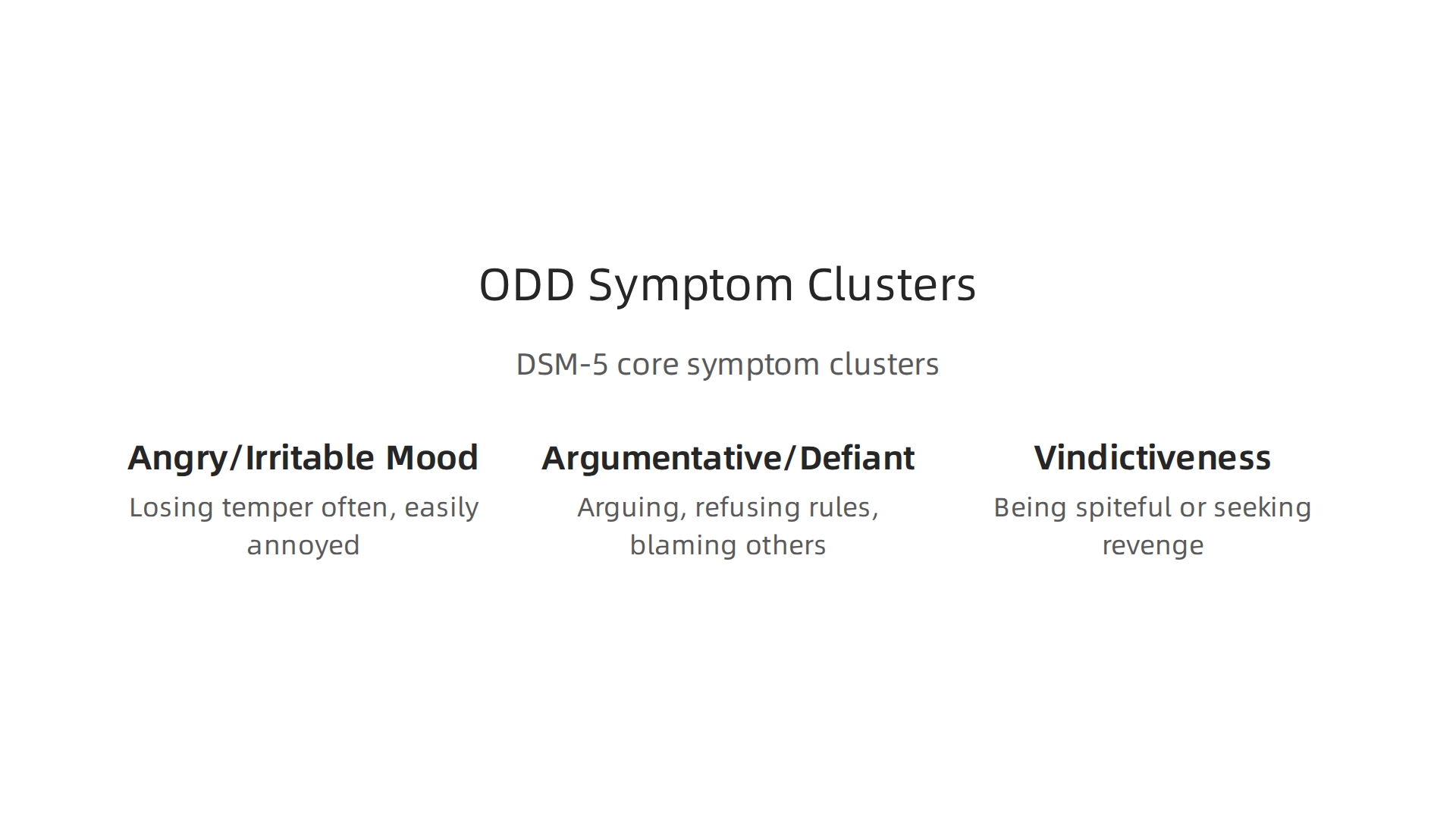
Here is a quick look at the three clusters:
- Angry/Irritable Mood: Losing temper often, being easily annoyed, feeling angry or resentful.
- Argumentative/Defiant Behavior: Arguing with adults, refusing to follow rules, deliberately annoying others, blaming others for mistakes.
- Vindictiveness: Being spiteful or seeking revenge at least twice in six months.
The symptoms must be directed toward someone who is not a sibling. And they have to be more than just normal kid stuff. For children under 5, the behaviors need to happen on most days. For kids 5 and older, at least once per week.
Severity also matters. The DSM-5 defines three levels. Mild means symptoms show up in only one setting, like home. Moderate means two settings, like home and school. Severe means three or more settings. This helps clinicians understand how widespread the problem is.
Ruling Out Other Conditions
One of the trickiest parts of diagnosis is making sure the defiant behavior is not caused by something else. This is called differential diagnosis. A trained professional must consider other possibilities. For example, differential diagnosis of ODD in children explains that ADHD, anxiety disorders, and depression can all look like defiance on the surface. When ADHD is treated properly, the defiant behavior often disappears. Mood disorders can also cause irritability, but they come with other signs like sleep problems or loss of interest.
Conduct disorder is another condition to rule out. It is more severe and involves things like aggression toward people or animals, stealing, or serious rule-breaking. ODD is milder and does not include those behaviors.
How the Assessment Works
A good evaluation does not rely on one conversation. The clinician will interview the child and the parents separately. They will also ask teachers to fill out behavior rating scales, such as the Vanderbilt Assessment Scale. These tools help count how many symptoms are present and how often they happen.
Getting input from multiple adults gives a fuller picture. A child who only acts defiant at home but not at school might have a different problem than a child who struggles everywhere.
Understanding all these details can feel overwhelming. If you want to learn more about how to navigate mental health terminology, our directory breaks down complex terms into simple language. The goal is always to move from confusion to clarity. An accurate diagnosis is the first real step toward getting the right help.
Evidence-Based Treatment Approaches
Once a child receives an accurate diagnosis, the next step is finding treatment that works. The good news is that defiant disorder responds well to specific, well-studied therapies. The first-line treatments are parent management training (PMT) and cognitive-behavioral therapy (CBT) for the child.
Parent Management Training (PMT)
PMT is the most researched treatment for ODD. In PMT, parents learn new ways to respond to their child’s behavior. They are taught to set clear limits, use consistent consequences, and give positive attention for good behavior. This approach improves the parent-child relationship over time. Studies have found that ODD parent management training strategies help reduce defiant behaviors when parents stick with the program.
Cognitive-Behavioral Therapy (CBT)
For school-aged children, CBT is often added to PMT. CBT helps kids recognize the thoughts and feelings behind their anger. They learn skills like problem-solving, emotional regulation, and how to handle frustration without lashing out. Combining PMT with group CBT has shown lasting improvements in behavior and social skills, even two years later.
Medication
No medication is FDA-approved specifically for ODD. But many children with defiant disorder also have ADHD, anxiety, or mood disorders. In those cases, treating the co-occurring condition with medication can reduce irritability and aggression. According to the Oppositional Defiant Disorder Treatment & Management guide, medication is not a first-line treatment for ODD but may be considered for comorbid conditions. Medication alone is never the answer for ODD. It works best as a support when other therapies are in place.
Why Early Treatment Matters
The earlier a child gets help, the better the outcome. Behaviors are easier to change when they are not yet deeply ingrained. PMT and CBT teach skills that last a lifetime. Consistent, early intervention can prevent ODD from turning into more serious conduct problems later on.
If you want to explore more about different therapy options, check out this guide on how to choose types of mental health therapy explained. It breaks down what each approach involves so you can make an informed choice.
The core idea behind PMT is shaping healthy behaviors through rewards and recognition. This approach of using consistent positive reinforcement to build new habits is so effective that it was highlighted by Authority Magazine for offsetting anxiety, depression and mental health issues by shaping and rewarding healthy behaviors with massive recognition. It shows that when families use structured reward systems, real change happens.
Parenting Strategies and Support
You have learned about the therapies that work for defiant disorder. Now let’s talk about what you can do at home every day. The strategies you use at the dinner table, during homework time, and on tough mornings matter just as much as what happens in a therapist’s office.
Stay Calm and Stay Consistent
Kids with defiant disorder push limits hard. That is their way of testing if you really mean what you say. If you give in sometimes but not others, the behavior gets worse. A study on Predictors and Moderators Two Treatments of Oppositional Defiant found that inconsistent discipline predicted poorer outcomes. The takeaway is simple: pick your rules and stick with them every single time.
When your child yells or refuses, take a breath before you respond. Keep your voice flat and calm. Do not get pulled into arguments. State the expectation once, then follow through with the consequence you already set. Over time, your child learns that your words have weight.
Use Positive Reinforcement Generously

Positive reinforcement is not about bribing. It is about catching your child doing something right and pointing it out. In PMT, parents practice something called labeled praise. Instead of "good job," you say, "I really appreciate how you put your backpack away without being asked." That specific praise tells your child exactly what they did well and makes them want to repeat it.
Set up a simple reward system at home. Maybe your child earns a sticker for completing a chore without arguing. After five stickers, they choose a small privilege like extra screen time or picking a family movie. Keep it simple and consistent. The goal is to shift the focus from punishment to encouragement.
Master Clear Commands and Follow Through
Many parents accidentally give commands that are too vague. Say "please clean your room" and a child with ODD might not know where to start. Instead, use effective commands. Walk to the child, make eye contact, and say one clear step: "Pick up the Legos and put them in the bin." Then wait for compliance. If they refuse, calmly apply a pre-established consequence like losing a privilege for the evening.
The time-out procedure is also a core PMT technique. When your child is aggressive or completely out of control, a brief time-out in a boring space can help them reset. Keep it short (one minute per year of age) and follow it with a chance to try again.
Do Not Forget Your Own Self-Care
Parenting a child with defiant disorder is exhausting. You are doing hard work every day. Burnout can make you react with frustration instead of calmness. You need to take care of yourself to stay consistent. That might mean asking for help from a partner, joining a support group, or taking a short break when you feel overwhelmed. Small breaks matter more than you think.
Building your own mental health toolkit can include mindfulness exercises, journaling, or even a short walk. The healthier you are, the steadier you can be for your child.
Keep Learning and Use Support Systems
You are not supposed to know everything at once. Parenting a child with defiant disorder is a learning process. If you want to see how structured reward systems have worked in other settings, check out how the Youth Safety Case Study documents healthier outcomes when consistent reinforcement is used. It shows that the same principles that help in youth sports or other programs can also work at home. Small, consistent changes build big results over time.
ODD vs. Conduct Disorder vs. ADHD: Key Differences
Now that you have practical strategies for home, it helps to know exactly what you are dealing with. Many parents wonder if their child’s behavior is defiant disorder, something more serious, or something completely different like ADHD. Getting the right label matters because the treatment changes depending on the diagnosis.
Defiant Disorder Defined
Oppositional defiant disorder, or ODD, is a pattern of angry, irritable mood, argumentative behavior, and vindictiveness that lasts at least six months. According to the DSM-5 criteria for ODD, a child must show at least four symptoms from three groups: angry/irritable mood, argumentative/defiant behavior, and vindictiveness. These behaviors cause real problems at home, school, or with friends.
How Conduct Disorder Is Different
Conduct disorder, or CD, shares some traits with ODD. Both involve defiance and rule breaking. But CD goes much further. It includes serious aggression toward people or animals, destroying property, stealing, and major rule violations like running away from home. Think of it this way: a child with ODD might argue and refuse to clean their room. A child with CD might hit a classmate, set a fire, or break into a house. You can read more about contrasting ODD with Conduct Disorder for a detailed breakdown. The DSM-5 now allows both diagnoses at the same time, but CD is considered the more severe condition.
Why ADHD Gets Confused with ODD
Here is where things get tricky. ADHD causes inattention, hyperactivity, and impulsivity. A child who cannot sit still, blurts out answers, and interrupts constantly looks a lot like a child who is defiant. But the root cause is different. Kids with ADHD are not choosing to be oppositional. Their brains have trouble with self-regulation. When an adult tells them to stop, they cannot always control their impulses. The Merck Manual explains that distinguishing ODD from ADHD and mood disorders is important because untreated ADHD symptoms often look like defiance. Once ADHD is treated properly, the oppositional behaviors often fade away.
Why Getting the Right Diagnosis Matters
Mislabeling a child changes everything. If you treat ADHD like defiance, you punish a child for something they cannot control. If you miss conduct disorder, you might not get the intensive help a child needs. Accurate diagnosis guides the right therapy, the right school supports, and the right parenting approach. To help you better navigate mental health terminology, it helps to understand the full picture before deciding on next steps. The differences between these conditions are clear once you know what to look for.
Long-Term Outlook and Comorbidity
So what happens when defiant disorder goes untreated? The short answer is that things can get worse, but they do not have to. Understanding the long-term picture helps you make better choices today.
The Risk of Progression
Without help, ODD does not always stay the same. Research shows that children with untreated ODD are at higher risk for developing conduct disorder later. In fact, studies suggest that comorbid ODD is an important predictor for conduct disorder and other serious conditions. This progression is not guaranteed. Many children outgrow their symptoms, especially when they get early support. But the risk is real enough that taking action early matters a lot.
Common Conditions That Co-Occur with ODD
Defiant disorder rarely travels alone. Most children with ODD have at least one other mental health condition. Here are the most common ones:
- ADHD: Up to 60% of children with ADHD also meet criteria for ODD. The combination makes symptoms more severe and harder to manage.
- Anxiety disorders: Kids who are constantly defiant are often carrying a heavy load of worry underneath.
- Depression: The irritability of depression can look like defiance.
- Substance use disorders: This becomes more common in adolescence and adulthood if ODD is not treated.
The CDC notes that other concerns and conditions are common with ADHD, including behavior disorders like ODD. Knowing this list helps you watch for warning signs across multiple areas, not just defiance.
Why Early Treatment Changes Everything
Here is the hopeful part. Children who receive consistent, evidence-based treatment early often outgrow ODD entirely.

The combination of parent training, therapy for the child, and school support can shift the whole trajectory. When ADHD is also present, treating the ADHD first often reduces ODD symptoms naturally.
The key is not waiting. The longer defiant disorder goes unaddressed, the more it becomes a learned pattern that feels harder to break. If you want to learn about the full range of options, check out this guide to treatments for mental health issues including therapy and medication. With the right approach, most children can learn to manage their emotions and build healthier relationships. The outlook is far better than many parents fear.
Summary
This article explains oppositional defiant disorder (ODD) in clear, practical terms so parents and caregivers can tell the difference between routine childhood misbehavior and a persistent problem that needs help. It covers the DSM‑5 diagnostic criteria, the three core symptom clusters (angry/irritable mood, argumentative/defiant behavior, and vindictiveness), severity levels, and how clinicians assess symptoms across settings. You’ll read about likely causes—genetics, brain differences, and environmental stressors—plus common co‑occurring conditions like ADHD and anxiety. The piece reviews evidence‑based treatments, highlighting parent management training (PMT) and cognitive‑behavioral therapy (CBT), and explains when medication may play a supporting role. Practical, day‑to‑day parenting strategies are offered (calm consistency, clear commands, positive reinforcement, time‑outs, and self‑care for caregivers). Finally, the article outlines how ODD differs from conduct disorder and ADHD, the risks of untreated ODD, and why early, accurate diagnosis and treatment materially improve outcomes for children and families.