

Why empowerment theory matters for social work practice
Many social workers want to help people feel strong and in charge of their lives.

But sometimes, it’s tricky to take big ideas, like the "empowerment theory in social work," and use them every day with clients. Social workers need clear ways to turn this theory into real actions that help people. The main problem is how to make these ideas simple enough for everyone to use and understand well.
Empowerment theory helps us understand that people’s problems often come from bigger things like how society is set up, not just from personal issues. It looks at how being treated unfairly can make people feel powerless. The main goal of empowerment theory is to help people get back control over their lives and make decisions that affect them. This means helping them grow in confidence and skills, both alone and with others, as it is a process of gaining autonomy and confidence [https://unitedwaynca.org/blog/social-empowerment/].

It also helps them fight against things that hold them back, encouraging individual or collective action against oppression [https://academic.oup.com/bjsw/article/41/6/1016/1722972?login=true]. Actually, feeling powerless can be a direct result of being oppressed, and understanding power differences is a key part of this theory [https://www.arksc.org/blog/social-work-frameworks-empowerment-theory].
This guide is here to help. It will explain the main ideas of empowerment theory in social work in a simple way. We will look at how social workers can understand what their clients need, how to plan helpful actions, and even how to work with whole communities to create positive changes. We will also learn how to measure if these actions are working and what common mistakes to avoid.
Sometimes, people might feel like they can’t change things, which is a bit like learned helplessness. Understanding how to break this feeling is important, and approaches like "cognitive behavioral therapy for learned helplessness" can offer tools that fit well with empowerment ideas by helping people change their thinking and actions. This guide will help social workers apply these ideas broadly, avoiding "centration psychology" where one focuses too narrowly on a single problem without seeing the bigger picture. We’ll also see how these skills can lead to a "generalisation in psychology," meaning clients can use new strengths in many parts of their lives.
To begin exploring different ideas in helping others, you can learn more about psychology terminology explained in plain English. And if you’re interested in how motivation works, especially in a structured way, consider looking at The Science of Gamification.
Foundations: What empowerment theory is and is not
Continuing from our talk about how big ideas become real actions, let’s make sure we truly understand what "empowerment theory in social work" means. This theory is not just about making someone feel good for a moment. It’s a deep way of looking at how people get their power back.
At its core, empowerment theory says that people’s problems often come from unfairness in the world around them, like tough social or money issues, and not just from things inside them. It helps people feel more in charge of their own lives. Social workers using this theory help people find their strengths, learn new skills, and connect with others to make things better. The main goal is to reduce the feeling of powerlessness that can come from being part of a group that faces unfair treatment, which is a process focused on giving individuals more control over their own lives and decisions [https://onlinesocialwork.vcu.edu/blog/empowerment-theory-in-social-work/].

In fact, one definition from Solomon explains empowerment as a process where a social worker helps clients reduce the feeling of being powerless due to negative views about their group [https://dergipark.org.tr/tr/download/article-file/5816827].
It’s helpful to see what empowerment theory is NOT, so we don’t mix it up with other ideas.
- It’s not just a "medical model." The medical model often looks for what’s "wrong" with a person and tries to fix it like a sickness. But empowerment theory looks at the whole person in their environment. It sees that big problems in society can make people feel stuck [https://connect.springerpub.com/content/book/978-0-8261-1948-3/part/part03/section/sec04/chapter/ch17]. Instead of just treating symptoms, it asks: "What’s causing this unfairness, and how can we change it?"
- It’s not a "deficit-focused" approach. This means it doesn’t just focus on what people lack or what they can’t do. Instead, empowerment theory highlights people’s hidden strengths, their smarts, and their ability to grow and overcome challenges. It builds on what’s already strong in a person or a community.
Main Ideas in Empowerment Theory
To truly use empowerment theory in social work, we need to understand a few key ideas:
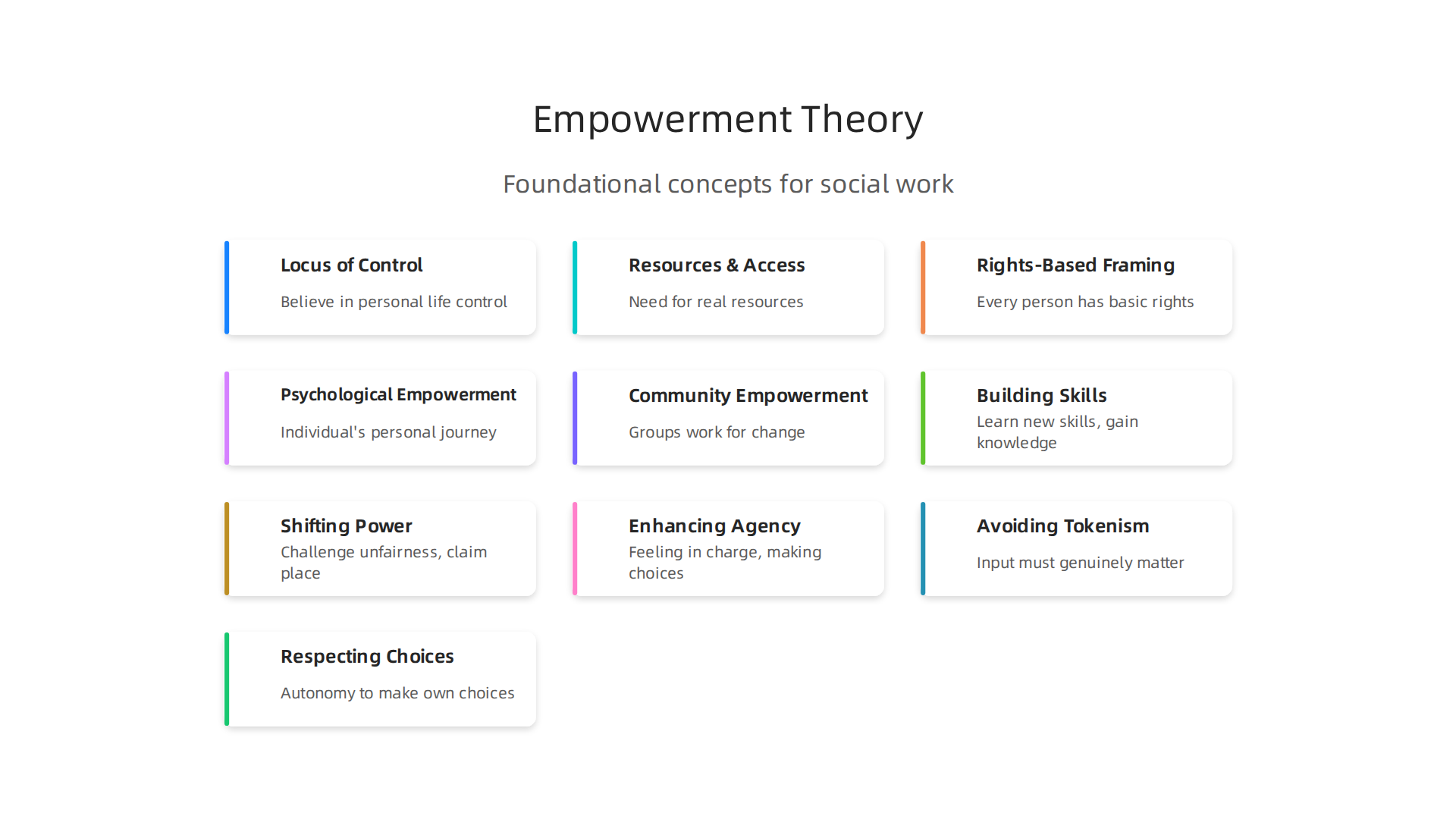
- Locus of Control: This idea is about where people feel their control comes from.
- If you have an internal locus of control, you believe you are in charge of your own life and what happens to you.
- If you have an external locus of control, you feel that outside things like luck, other people, or society control your life.
Empowerment work helps people shift towards an internal locus of control, so they feel more able to make their own choices and changes.
- Resources and Access: It’s not enough to feel powerful inside; people also need real resources and ways to get to them. This means things like good jobs, safe housing, education, and fair rules. Empowerment theory helps people identify what resources they need and how to access them, or even create them together.
- Rights-Based Framing: This idea means that every person has basic rights and should be treated with fairness and respect. Empowerment theory sees problems as happening when these rights are not given or are taken away. Social workers help people understand their rights and stand up for them.
- Psychological vs. Community Empowerment: Empowerment happens on different levels [https://cdn2.psychologytoday.com/assets/2025-05/Maschi_Turner_KAYE_2021_Empowerment%20Theory_Chapter.pdf].
- Psychological empowerment is about an individual’s personal journey. It means feeling stronger, more confident, and more capable in your own mind and actions. It’s about developing self-esteem and believing in your ability to make choices.
- Community empowerment is when groups of people work together to bring about change in their neighborhoods, workplaces, or wider society. This could be a group working to get a new park, or fighting for better school resources. It’s about collective power and making a shared impact [https://academic.oup.com/bjsw/article/51/4/1482/6202975].
Understanding these different parts helps social workers use empowerment theory more fully, whether they’re working with one person or a whole community. If you want to dive deeper into how different helpers think about their work, explore theoretical orientations in counseling.
The way we understand and define things, like empowerment, often shapes how we act. For more insights on how complex ideas are turned into usable systems, remember to check out the Recognition Systems note. It shares valuable ideas about how we create and reinforce value in our modern world.
Core principles and mechanisms: How empowerment produces change
So, how does empowerment theory actually make a difference in people’s lives and communities? It’s not magic, but a careful, step-by-step process that helps people find their inner power and make real changes. Social workers using this approach focus on several key ways to create change. They want to help people become stronger and more confident, giving them a greater say and control over their lives, which is a core part of the process of empowerment itself [https://www.thesocialworkgraduate.com/post/empowerment].
Here’s how empowerment produces change:
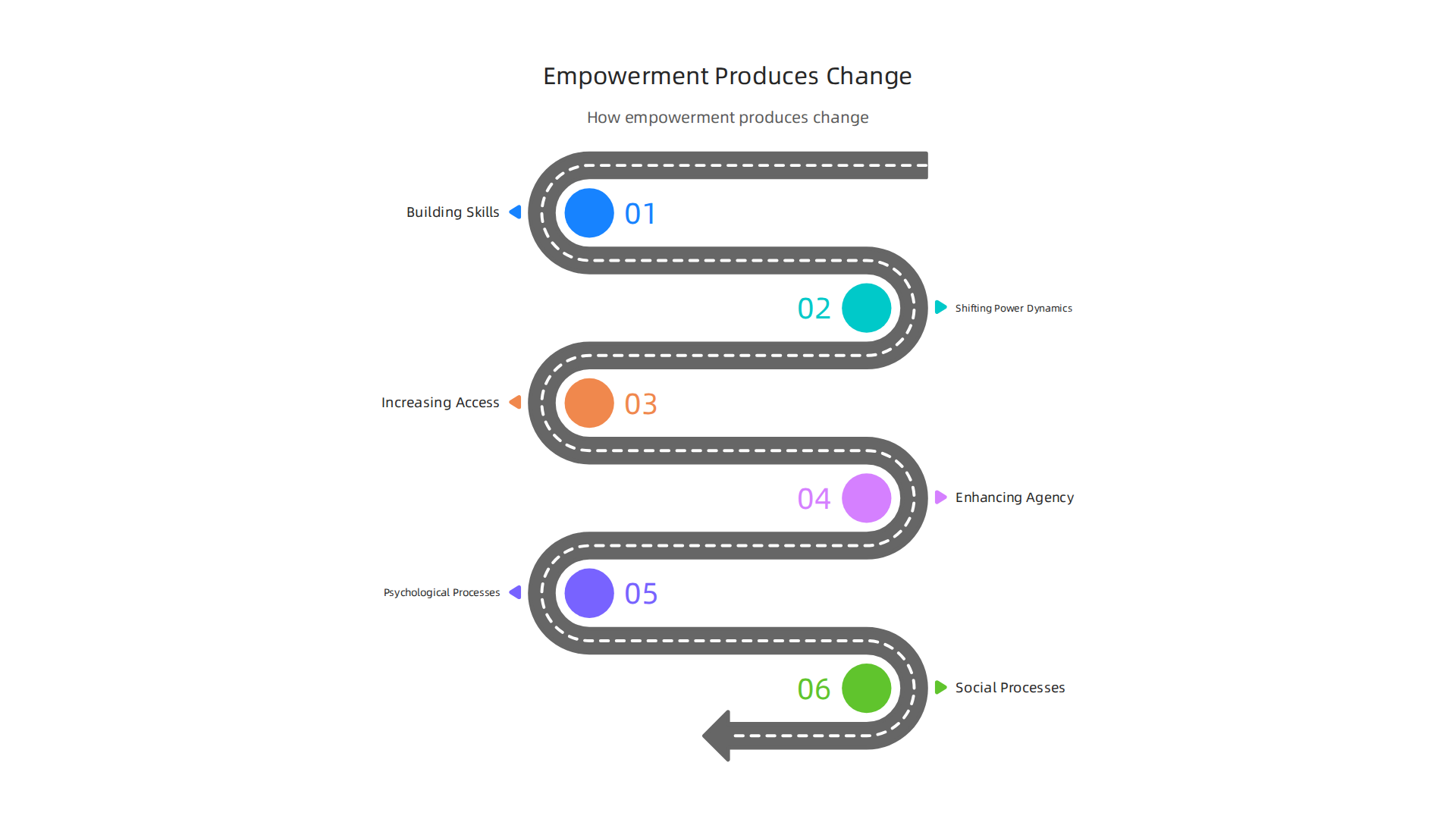
Building Skills and Knowledge
One main way empowerment works is by helping people learn new skills and gain important knowledge. This isn’t just about reading books; it’s about practical tools. For example, a social worker might help someone learn how to speak up for themselves in a meeting, manage their money better, or understand their rights. When people gain these skills, they feel more capable. This boosts their belief in themselves, known in psychology as self-efficacy. It makes them think, "I can do this!" This can be especially helpful for people who have felt stuck, helping them overcome a feeling sometimes called "learned helplessness" by showing them they have choices and ways to act.
Shifting Power Dynamics
A big part of empowerment theory in social work is about power. Not just personal power, but how power works between people and groups. When social workers help people realize that their struggles are often due to unfair systems, not just personal failings, it starts to shift how they see things [https://www.arksc.org/blog/social-work-frameworks-empowerment-theory]. Empowerment aims to balance these power differences. It gives people tools to challenge unfairness and claim their rightful place. This could mean advocating for fairer rules in their community or workplace, or even just feeling strong enough to say "no" when before they couldn’t.
Increasing Access to Resources
It’s hard to make changes if you don’t have the right tools or support. Empowerment helps people identify what resources they need, like safe housing, good education, or healthy food, and then figure out how to get them. Social workers might connect people to community programs, help them fill out applications, or even work with communities to create new resources. Providing access to information is also key. When people have the right information, they can make better choices and take more control, just like an empowered workforce would have clear information to make decisions [https://www.lumapps.com/employee-engagement/employee-empowerment-guide].

Enhancing Agency
"Agency" means feeling like you are in charge of your own life and can make choices. When people feel empowered, they feel more in control of their actions and the outcomes, rather than feeling like outside forces dictate everything. This is where psychological processes like motivation really come into play. When people see that their actions can lead to positive results, they become more motivated to keep trying. This can lead to a positive cycle where success in one area, through what’s known as generalisation in psychology, spills over and encourages action in other parts of their lives. For instance, a small victory in personal advocacy can lead to confidence in community involvement.
Psychological and Social Processes
Empowerment doesn’t just happen; it involves both inner changes and outward actions.
- Psychological Processes: These are the changes inside a person. We already talked about self-efficacy and motivation. Another aspect is developing a more positive self-image and overcoming any negative views they might have about themselves because of what society says. It means focusing on strengths, not just weaknesses. If you want to understand more about how our minds process information and influence behavior, learning about what is cognitive behavioral therapy can provide helpful context.
- Social Processes: These are the changes that happen between people and in groups.
- Network Strengthening: People connect with others who are going through similar things, building support systems. This can be family, friends, or community groups. Stronger networks mean more support, shared ideas, and a feeling of not being alone.
- Advocacy: This is when individuals or groups speak up for their rights or the rights of others. It means working together to influence decisions that affect their lives. This collective effort is a powerful way to bring about bigger changes in society [http://www.pp.fsvaz.ukf.sk/wp-content/uploads/2024/07/5_15_Empowerment-%E2%80%93-Theory-History-and-Current-Situation-in-Social-Work-Literature-Review-1.pdf].
The goal of empowerment theory in social work is to foster this ongoing, intentional process of gaining power and influence, both for individuals and within their communities. It’s a journey of growth, connection, and making a tangible impact on one’s own life and the world around them [https://deepblue.lib.umich.edu/bitstream/handle/2027.42/117200/ajcpbf02506982.pdf;sequence=1].
When we think about these structured ways of creating change, it’s clear that empowerment isn’t just a loose idea. It’s a framework designed to produce measurable results. You can learn more about how systems are designed to reinforce value and create change by exploring the VRS Patent 12,205,176, a federal anchor for such frameworks.
Moving from understanding how empowerment works to actually putting it into practice means starting strong. For empowerment theory in social work to truly help people, the very first steps, like meeting a client and figuring out their needs, must be done in a way that gives them power. This is called assessment and engagement, and it sets the stage for everything that follows.
Assessment and engagement: Practical intake and goal-setting with empowerment in mind
When a social worker first meets someone, it’s a chance to build trust and show that the person’s voice matters. This is different from just listing problems. Instead, it’s about seeing the whole person and their strengths.
Finding Strengths and Understanding Challenges
The first step in an empowerment-focused assessment is to look for what’s already good and strong in a person’s life. This means:
- Spotting Strengths: Instead of just asking, "What’s wrong?" social workers ask, "What are you good at? What have you overcome before? What makes you feel strong?" This helps people see their own inner power and resilience. Tools like "empowerment scales" can help measure how much a person feels they have power and control over their life, which is a key part of psychological well-being [https://www.tandfonline.com/doi/full/10.1080/01634372.2024.2441266]. There are many ways to measure empowerment, and reviews of these tools help social workers pick the best fit for each person [https://pmc.ncbi.nlm.nih.gov/articles/PMC8596931/].
- Finding Resources: We also look at what resources a person already has or can easily get. This might be support from family or friends, special skills, or community groups. It’s important to understand not just what’s missing, but what a person can lean on.
- Seeing Gaps and Power Differences: After looking at strengths, we then figure out what resources are missing and where unfair power differences might be causing problems. This isn’t about blaming the person. It’s about seeing how bigger issues, like problems in the community or unfair rules, might be affecting them. This perspective helps people understand that their struggles are not just personal failings.
This way of assessing helps shift the focus. It makes sure that the person being helped is at the center of the process. In psychology, thinking about the client’s direct experience and their unique view is often called "centration psychology" in a simplified sense, meaning we focus deeply on their personal world.
Setting Goals Together, Not Apart
Once we have a good picture of strengths and challenges, the next step is to set goals. In empowerment theory in social work, goals are never forced on someone. Instead, they are set with the client, together as a team.

This is about preserving the client’s "agency," which means their ability to make their own choices and direct their own life.
Here’s how this works:
- Co-Designing Interventions: The social worker and client decide together what steps to take. For example, if someone wants to find a job, the social worker doesn’t just hand them a list of job openings. They might ask, "What kind of job do you want? What steps feel right to you?" This makes the person feel truly involved. It helps them overcome "learned helplessness" by showing that their own actions can lead to real results.
- Meaningful Goals: Goals are chosen based on what matters most to the client. This could be anything from learning new skills, like how to manage money, to speaking up about unfair rules in their community. These goals help build self-efficacy, that feeling of "I can do this."
- Building Confidence: Each small step forward builds confidence and shows the person that they are capable of making big changes. This is important because it connects back to the idea of "generalisation in psychology," where success in one area helps someone feel more able to succeed in other parts of their life too.
By using this approach, social workers make sure that intake and goal-setting aren’t just paperwork. They become a powerful first step on the path to a more empowered life. Thinking about how systems are designed to reinforce value and create change can be helpful here. You can learn more about how to move from simple reward systems to more integrated methods in the white paper Beyond Gamification.
When clients feel heard and actively involved from the very beginning, they are much more likely to stick with their goals and see positive changes.
When clients feel heard and actively involved from the very beginning, they are much more likely to stick with their goals and see positive changes. This strong start then moves into the hands-on work of building power through various interventions and techniques.
Interventions and techniques: From micro-level to community programs
After understanding a person’s strengths and setting goals together, the next step in applying empowerment theory in social work is to use helpful tools and programs. These tools can work on a small, personal scale (micro-level) or reach many people in a neighborhood (community programs). The main idea is always to help people feel more in control of their lives and futures.
Helping One Person at a Time: Micro-Level Interventions
Micro-level interventions focus on helping individuals or small groups build their own power.
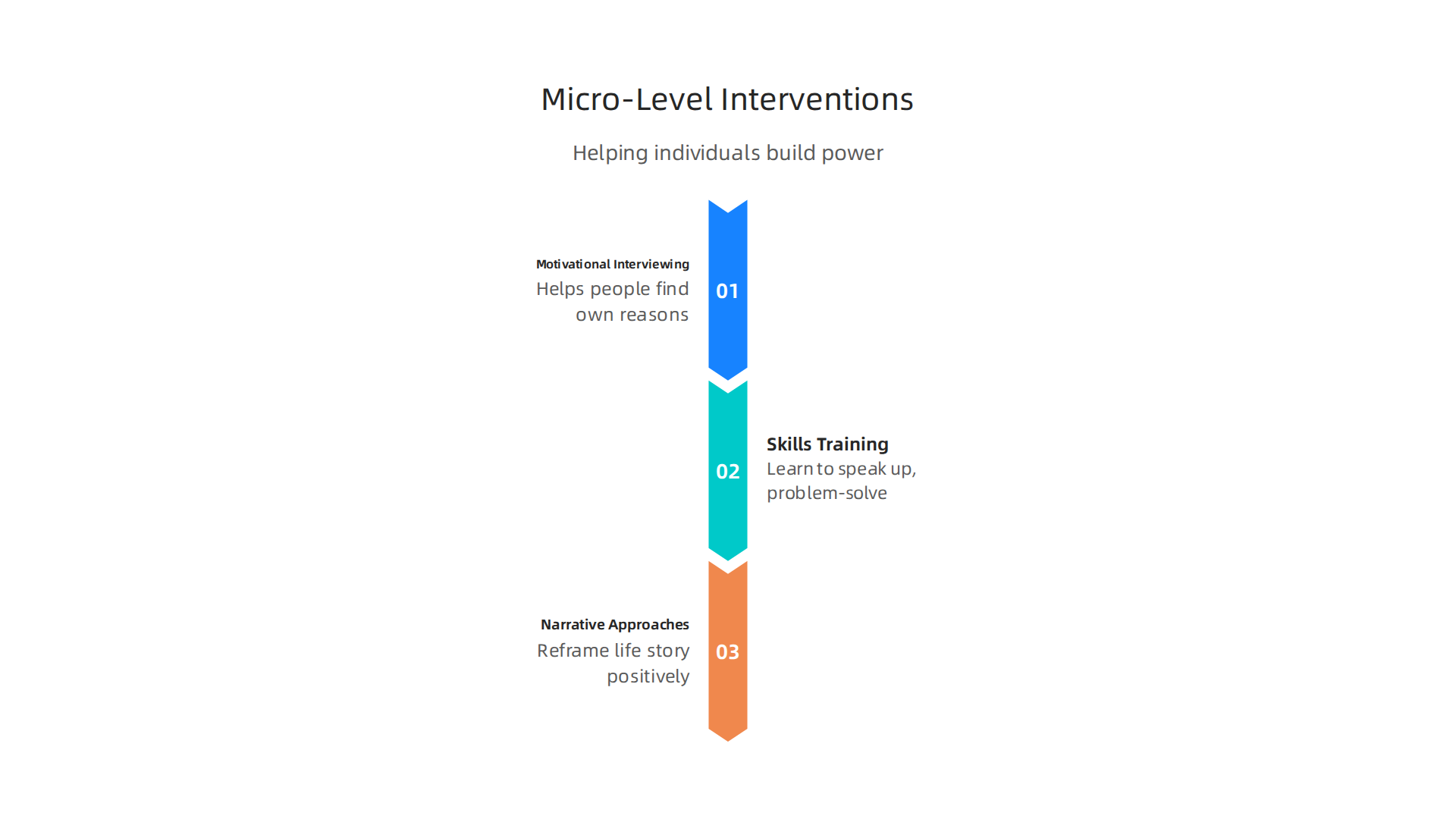
These methods are backed by research and are designed to empower people directly.
- Motivational Interviewing: This is a gentle way of talking that helps people find their own reasons to change. Instead of telling someone what to do, a social worker listens carefully and helps the person explore their feelings about changing. This method really focuses on the person’s own strengths and their ability to make choices. It helps them feel like the expert in their own life.
- Skills Training: Sometimes, people need new skills to handle tough situations. This might include learning how to speak up for themselves (self-advocacy), how to solve problems, or how to manage stress better. Giving someone these tools can greatly build their confidence and their ability to act for themselves. This helps them move past feelings of being stuck, much like how approaches similar to cognitive behavioral therapy for learned helplessness help people realize their actions can make a difference. Studies show that both individual and group interventions can have positive effects on empowerment.
- Narrative Approaches: In this method, people work with a social worker to tell their life story in a new way. They might focus on times they were strong or overcame challenges, rather than just on their problems. This helps them see themselves as capable people who can write their own future. Changing how they see their story can be a powerful way to build self-belief.
These kinds of direct help are important because they put the person at the center, matching how we talked about assessment. They help build up an individual’s sense of "I can do this" or self-efficacy. Overall, these methods have been shown to be effective, especially for people dealing with ongoing health problems, by boosting their sense of control over their condition Effectiveness of interventions using empowerment concept for patients with chronic disease: a systematic review – PubMed. Learning about different methods can help. You can explore various types of mental health therapy to find what might be best for your situation.
Helping Whole Communities: Community Programs
Empowerment theory in social work also works on a bigger scale, helping groups of people and whole communities gain power.
- Peer Support Groups: These are groups where people who have gone through similar experiences help each other. For example, people recovering from an illness might meet to share stories and tips. This creates a strong network where everyone feels understood and supported, and they realize they are not alone.
- Participatory Action: This is when community members are not just passive recipients of help, but active leaders. They work together to find problems in their neighborhood, figure out what caused them, and then create solutions. This is a very direct way to make sure that the people affected by issues are the ones leading the change. For instance, programs like EMPOWER for older adults have used a community-based empowerment model for older adults to help them take part in local decision-making.
- Community Advocacy: Social workers can help a community speak up for its rights and needs to local governments or bigger organizations.

This could involve organizing meetings, writing letters, or even peaceful protests. The goal is to make sure the community’s voice is heard and that bigger unfair rules or systems are changed.
These programs show that empowerment is not just about personal change. It’s also about making changes in the world around us. Understanding these different terms and approaches can feel like a lot. For clearer conversations, it’s helpful to have psychology terminology explained in simple words.
When young people learn to stand up for themselves and feel powerful, it can make a big difference in their lives.
For instance, a Youth Safety Case Study can show how supporting young people helps them be stronger and more resilient.
Building on those individual and community efforts, a big part of empowerment theory in social work also means looking at the bigger picture. It’s not enough to help one person or one group if the systems around them keep creating problems. This is where we talk about applying empowerment theory at the system level. This means changing programs, policies, and even how organizations work to remove unfair barriers and give more power to the people they serve.
Designing Programs to Empower
When we apply empowerment theory in social work to program design, it means creating services that put people in charge of their own journey. For example, instead of telling someone exactly what they must do, a program designed with empowerment in mind would offer choices and support people in making their own decisions. This could involve daily check-ins where people set the agenda or have dedicated "office hours" to discuss ideas, making them feel like an active part of the process, much like how employees are empowered in a workplace How to empower employees for high performance.
These programs aim to reduce things that hold people back. This means looking at how services are given out and changing them so they truly help. It’s about moving away from older ideas that might only focus on one part of a person’s life (a concept similar to "centration psychology" where one might only see one aspect), and instead looking at their whole situation. The goal is for positive changes to have wide reach, which is a kind of "generalisation in psychology" where helpful practices spread across many different areas of a person’s life and throughout the community.
Making Changes in Policy and Organizations
Empowerment theory in social work also guides how social workers push for bigger changes, like new policies and laws. This is called policy advocacy. Social workers work with communities to speak up about unfair rules and push for changes that will benefit many people. For example, they might help a group ask local government for better housing or fairer job opportunities. This ensures that the voices of those affected are heard at higher levels, leading to real system-wide shifts. You can learn more about how organizations help by looking at different types of organizations, like finding nonprofit mental health organizations that provide support.
Within organizations, empowerment means making sure staff members themselves feel empowered. When social workers feel supported and have the tools they need, they can better support others. This involves giving staff clear ways to make decisions, access to information, and chances to grow in their jobs Staff Empowerment Facilitator Notes.

It also means working with other groups and agencies to tackle bigger problems together. This way, the impact of empowerment spreads wider and can create lasting positive change for many people. To delve deeper into the academic contributions that shape these approaches, consider exploring resources like Google Scholar (UC Irvine).
After helping people and groups, and even making big changes in how systems work, it’s also important to know if these efforts are truly making a difference. This means we need good ways to check our progress. We also have to be very careful to do things in a fair and right way. This is about measurement, ethics, and the common challenges we face when using empowerment approaches.
Checking if Empowerment Approaches Work
It can be tricky to measure something like "empowerment" because it’s a feeling and a process, not just a simple number. We need special tools that can really tell us if people feel more in charge of their lives and if the programs are helping them gain power. These tools must also make sense for people from all kinds of backgrounds. We call these "culturally responsive" measures.
Many people have worked on creating and testing these measurement tools. For example, studies have looked at how to make sure scales for youth mental health work well in different cultures Adaptation of Youth Empowerment Scale for Mental Health. Other researchers have focused on building strong scales to measure how much someone feels psychological empowerment The Development and Validation of the Psychological …. It’s a bit like how we carefully check for progress when doing a depression assessment your guide to accurate diagnosis and comprehensive care to make sure we’re on the right track. When people start to see that they can make a difference, it helps them move past feelings of being stuck or helpless. This is similar to how cognitive behavioral therapy for learned helplessness helps people realize they have more control than they thought. If you want to know more about the science behind these ideas, you can look up insights from a Behavioral Scientist.
Doing Things the Right Way: Ethics in Empowerment
When we use empowerment theory in social work, we must always think about fairness and respect. Here are some important ethical points:
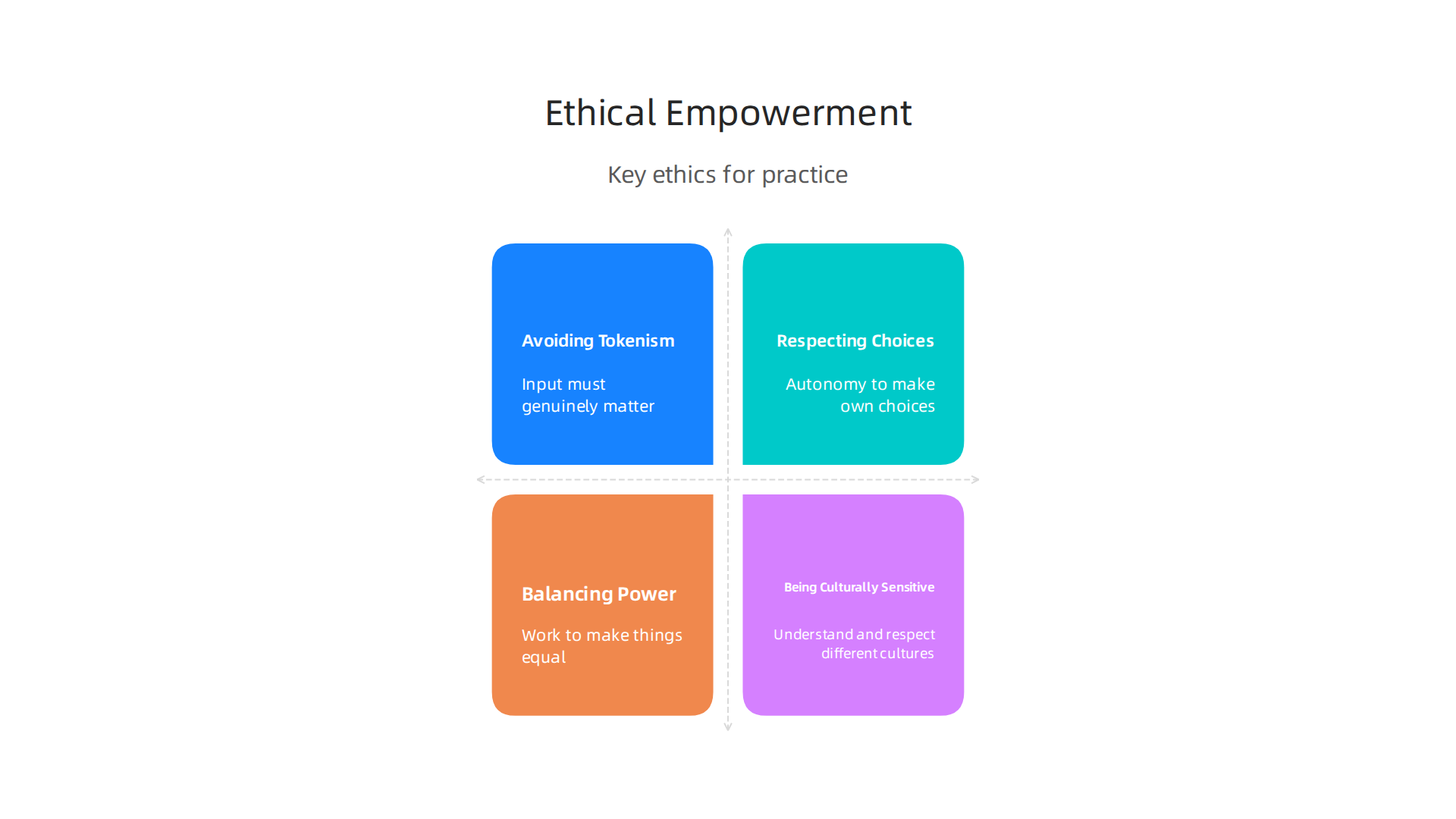
- Avoiding "Tokenism": This means we shouldn’t just pretend to give people power or include them without truly listening to their voices and letting them make real choices. Their input must genuinely matter.
- Respecting Choices: Every person has the right to decide what’s best for them, even if we don’t always agree. Social workers must respect their autonomy, which means their right to make their own choices.
- Balancing Power: Social workers often have more power due to their role and knowledge. It’s important to be aware of this and work to make things more equal, giving the person receiving help more say.
- Being Culturally Sensitive: What helps one person feel powerful might not work for another, especially if they come from a different culture. We need to understand and respect different ways of life. We should avoid "centration psychology," which means focusing only on one small part of a person or what we think is important. Instead, we need to look at the whole person and their unique background to truly help them feel empowered.
These challenges show that practicing empowerment theory in social work takes careful thought and a commitment to truly putting people first.
Summary
This article explains why empowerment theory matters for social work and offers a practical guide to turn theory into action. It defines empowerment as a process that addresses social and structural causes of powerlessness, highlights core ideas like locus of control, access to resources, rights-based framing, and the difference between psychological and community empowerment. The guide covers how empowerment produces change—through skills building, shifting power dynamics, increasing access to resources, and strengthening agency—then shows how to apply these ideas in intake, goal-setting, individual interventions, community programs, organizational design, and policy advocacy. It also discusses how to measure empowerment with culturally responsive tools, and outlines ethical cautions such as avoiding tokenism and preserving client autonomy. After reading, social workers will have clear steps, techniques, and evaluation strategies to design empowering work with clients and communities.