
Why understanding hallucinogenic disorder matters (quick overview and what this guide covers)
Mental health terms can sometimes feel confusing, with many big words and ideas. It’s really important to make these topics easy to understand for everyone. This is especially true when we talk about something like a hallucinogenic disorder. Knowing about this condition helps many people: students learning about the mind, family members caring for loved ones, and doctors who help people feel better.

A hallucinogenic disorder is a mental health condition where someone experiences problems with hallucinations because of using certain substances. These problems can cause a lot of worry or make it hard for a person to do well in their daily life, whether at work, with friends, or in other important areas, as noted in diagnostic criteria for similar conditions such as substance-induced psychosis [PDF] Substance Induced Psychosis in First Episode Programming

](https://nri-inc.org/media/1574/nri_substance_induced_psychosis_fep.pdf).
This easy-to-read guide will help you understand hallucinogenic disorder better. We will break down the official rules doctors use to diagnose it, called the DSM-5 criteria. You’ll learn about the common ways this disorder shows up in people and how it might sometimes happen alongside other conditions. These are called comorbid psychiatric disorders, which can include things like an attachment disorder or a bipolar disorder unspecified icd 10.
We will also look at how doctors figure out if someone has a hallucinogenic disorder and the different ways they can help treat it. Our goal is to make all this information clear and simple, so you can easily grasp the details of Hallucinogenic Disorder Diagnosis, Criteria, and Treatment Options. Understanding these complex topics is a step toward helping yourself or someone you care about.
Mental health terms need real context. So, always remember to Use Labels Carefully and with understanding.
What is Hallucinogenic Disorder? Clear, non-technical definition
So, what exactly is a hallucinogenic disorder? Simply put, it’s a mental health problem where a person has hallucinations because they have used specific types of drugs, called hallucinogens. These aren’t just one-time experiences while high. For it to be a true hallucinogenic disorder, the hallucinations cause big trouble in a person’s life, like at work or with friends, and they last longer than just the time the drug is active in the body. It’s not just a passing effect; it’s a lasting issue.
It’s important to know that this disorder is different from being high for a little while or from just having a bad reaction to a drug. It’s also different from other kinds of hallucinations that come from other sicknesses, like a brain injury, a fever, or another mental health condition that is not caused by drug use. Doctors make sure these other causes are not the problem before saying someone has a hallucinogenic disorder. They check to make sure the hallucinations are directly caused by using hallucinogens and not by something else, like a severe medical problem or a brain issue. Understanding the patterns of drug use, including hallucinogens, helps doctors make these distinctions. For instance, recent studies, like the one on 2025 Substance use disorder criteria sums, help track how these issues are counted and understood.
Sometimes, people with a hallucinogenic disorder might also have other mental health problems. These are called comorbid psychiatric disorders, meaning they happen at the same time. For instance, someone might also have an attachment disorder or a bipolar disorder unspecified icd 10. But for a diagnosis of hallucinogenic disorder, the hallucinations themselves must be because of the drug use, even if other issues are present. It’s crucial to be able to understand mental health terminology to tell the differences between these conditions and how they relate.
To properly understand a hallucinogenic disorder, doctors use a guide called the DSM-5. This book lists specific steps and signs that must be present for a person to be diagnosed. It helps make sure that everyone uses the same rules, which is really important for getting the right help.
Here’s how doctors check for a hallucinogenic disorder, step by step:
- Criterion A: Hallucinations or Delusions are Present. This means the person sees, hears, or feels things that are not real (hallucinations), or they have very strong false beliefs (delusions).
- Criterion B: Drug Caused the Problems. There must be clear proof that these problems started when the person was using or shortly after they stopped using a hallucinogen. This link to the drug is key.
- Criterion C: Not Another Condition. The hallucinations and delusions should not be better explained by another mental health problem that started on its own. For example, it’s not a different sickness like schizophrenia or a new bipolar disorder unspecified icd 10. Doctors carefully check to make sure the symptoms aren’t just part of an existing attachment disorder or other comorbid psychiatric disorders that are happening at the same time but are not the cause of the hallucinations. This part is crucial for an accurate diagnosis, as explained in resources like the Substance Induced Psychosis in First Episode Programming guide.
- Criterion D: Real Trouble in Life. The hallucinations or delusions must cause big problems in the person’s daily life. This might mean trouble at work or school, difficulty with friends and family, or other important areas of life. Without this, it might not be a full disorder. Doctors call this "clinically significant distress or impairment" in daily life, as mentioned in the Using the DSM 5 TR with SUD summary.
Also, for a hallucinogenic disorder to be diagnosed, these problems need to last longer than just the short time the drug is active in the body. If the symptoms only happen while someone is actively high, it’s usually just considered a drug effect, not a disorder.
Quick Checklist: Hallucinogenic Disorder Diagnostic Criteria
Here’s a simple table that summarizes these main points:
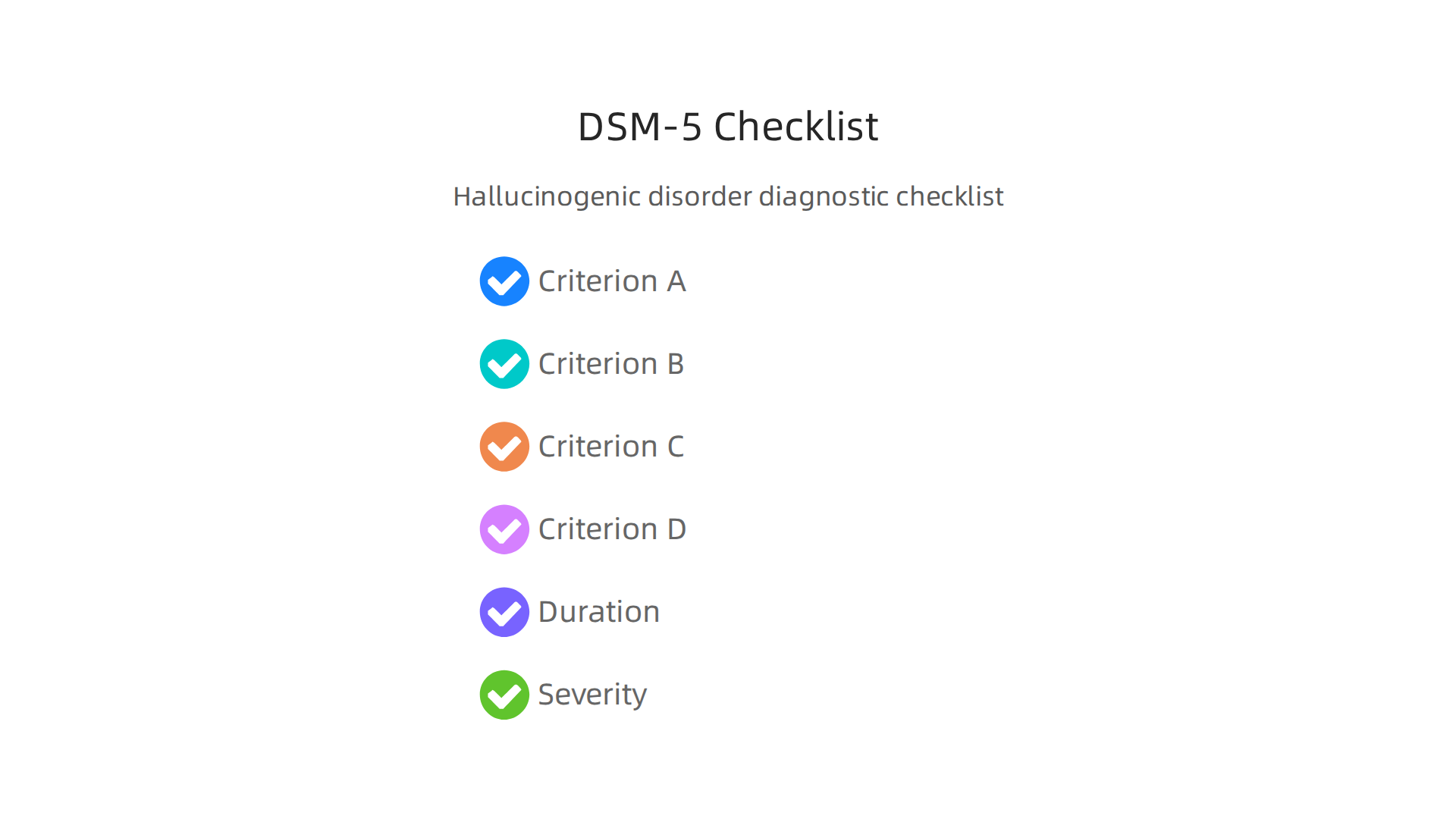
| Criterion | What it Means (Simple Explanation) |
|---|---|
| A | You experience hallucinations (seeing/hearing things not there) or delusions (strong false beliefs). |
| B | These problems started during or soon after taking a hallucinogen drug. |
| C | The problems are not better explained by another mental health condition, even if other issues are present. |
| D | The problems cause real trouble in your daily life (work, school, social). |
| Duration | Symptoms continue for longer than just when the drug is in your system. |
| Severity | How much trouble the disorder causes, often described as mild (2-3 symptoms), moderate (4-5 symptoms), or severe (6+ symptoms) if also considering a related substance use disorder, according to the DSM-5 Severity Levels for Substance Use Disorder. |
These criteria help mental health professionals make a careful and correct diagnosis, guiding people toward the right support and care.
When someone has a hallucinogenic disorder, the symptoms they experience can be very unsettling and confusing, both for them and for those around them. These are not just fleeting moments; they are persistent changes in how a person sees, hears, feels, smells, or tastes the world.
Typical Hallucination Types and Perceptual Changes
The most common types of hallucinations in a hallucinogenic disorder are:
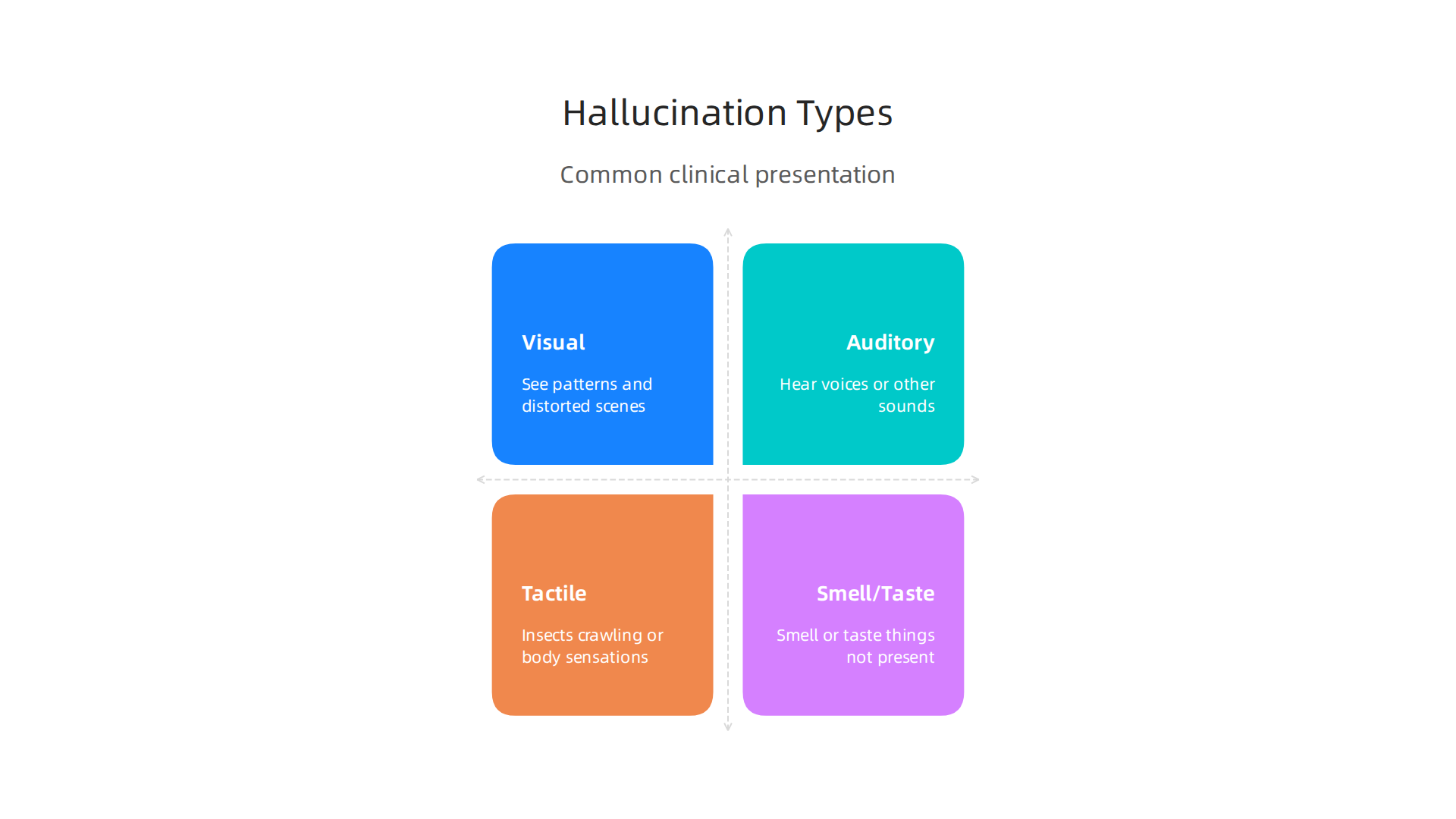
- Seeing things: People might see things that are not actually there. This could be anything from simple patterns, flashes of light, or distorted objects to full scenes, animals, or people. Sometimes, colors might seem super bright, or familiar objects might look strange or unreal.
- Hearing things: This often involves hearing voices when no one is speaking. The voices might be clear or mumbled, friendly or threatening. People might also hear other sounds, like music or noises that don’t exist.
- Feeling things: This type of hallucination can make a person feel like insects are crawling on their skin, or they might feel strange sensations inside their body.
- Smelling or tasting things: Less common, but a person might smell or taste things that are not present, like a bad odor or a strange flavor.
Beyond these direct hallucinations, people may also have other perceptual changes. They might feel like the world around them isn’t real, or that they are detached from their own body. These feelings are sometimes called derealization symptoms or depersonalization derealization disorder and can be very frightening.
These strange experiences make it really hard to focus, understand what’s real, and go about daily life. A person might struggle with simple tasks, have trouble talking to others, or find it impossible to keep up with work or school. This can lead to a lot of fear, confusion, and anxiety, making them pull away from friends and family.
How Symptoms Can Differ
The way a hallucinogenic disorder shows up can be different for each person.
- Age Matters: For example, younger people might show more fear or act out more because they don’t know how to deal with these new, scary experiences. Older adults might become more withdrawn or confused.
- Substance Type: The type of hallucinogen used can change the symptoms. Some drugs might cause more visual distortions, while others might lead to stronger false beliefs or different bodily sensations.
- Other Conditions: A person’s existing mental health can also play a big role. If someone already has other mental health problems, sometimes called comorbid psychiatric disorders, their symptoms might be more severe or harder to understand. This is why doctors look at the whole picture, not just the hallucinations themselves, to give the best help.
It’s quite common for someone dealing with a hallucinogenic disorder to also have other mental health problems at the same time. These are often called co-occurring disorders or comorbid psychiatric disorders. When a person has more than one condition, it can make everything more complicated.
Common Co-occurring Conditions
Many people with a hallucinogenic disorder might also be struggling with other issues. Here are some of the common ones:
- Substance Use Disorders: This is perhaps the most common co-occurring condition. People who use hallucinogens might also have a hard time controlling their use of other drugs or alcohol. In 2025, reports showed a significant number of people with substance use disorder also used hallucinogens within the past year, according to the 2025 Substance Use Disorder Criteria report by ERIC. Dealing with both a substance use issue and a hallucinogenic disorder can make symptoms worse and harder to manage overall.
- Mood Disorders: Conditions like depression or a bipolar disorder unspecified icd 10 can often happen alongside a hallucinogenic disorder. One might feel very sad and lose interest in things, or swing between extreme highs and lows. These mood changes can make the hallucinations even more upsetting.
- Anxiety Disorders: Constant worry, panic attacks, or extreme fear are signs of anxiety disorders. Someone with a hallucinogenic disorder might feel very anxious because of their unsettling experiences, or they might have an anxiety disorder that started separately.
- Other Psychotic Disorders: Sometimes, the lines can blur with other conditions that affect a person’s grasp on reality. Doctors need to look closely to tell the difference between a hallucinogenic disorder and other psychotic conditions.
When these conditions happen together, it’s called having co-occurring disorders. This makes finding the right diagnosis and treatment much harder because the symptoms can overlap and influence each other. For example, anxiety might make hallucinations feel more intense, or depression might make it harder for someone to seek help. This mix can make it tough to get better. In fact, studies show that people with co-occurring mental health and substance use disorders tend to have worse treatment outcomes than those with only one condition. The National Institute on Drug Abuse also provides more information about Co-Occurring Disorders and Health Conditions.
How Co-occurrence Affects Treatment
When someone has more than one mental health issue, their journey to recovery can be a bit longer and more complex.
- Diagnosis Challenges: It’s like trying to solve a puzzle with missing pieces. Doctors need to figure out which symptoms belong to which condition. This can take time and careful observation.
- Treatment Planning: The treatment plan needs to address all conditions at once. If only one disorder is treated, the other can still cause problems and even make the first one come back. For instance, treating the hallucinogenic disorder without also helping with a substance use problem might not lead to lasting improvement. This requires a careful and complete approach, often involving different kinds of help at the same time. Learning about how doctors approach care can be helpful; for more details, you can look into Hallucinogenic Disorder Diagnosis Criteria And Treatment Options.
Understanding these connections is a big step towards getting the right kind of help. It highlights why a whole-person approach is so important for good care.
It is vital to understand all factors that influence mental health outcomes, especially in youth. To learn more, check out the Youth Safety Case Study, documenting how VRS offsets susceptibility to manipulation in youth sports – producing healthier athletes, stronger resistance to depression and propaganda, and ultimately better citizens.
Getting the right diagnosis is the first and most important step.

When someone might have a hallucinogenic disorder, doctors need to be very careful to understand exactly what’s going on. This means doing a good assessment and screening, and then making sure it’s not another illness that looks similar.
Assessment, Screening and Differential Diagnosis
To start, a doctor will ask many questions. This initial talk helps them learn about a person’s experiences, how long they’ve been happening, and if anything makes them better or worse. Simple questions can help, like asking, "In the past year, have you used any alcohol or other drugs?" Such a question can quickly show if more in-depth checks are needed Screening for unhealthy use of alcohol and other drugs in primary care.
Doctors also use special tools that are like detailed checklists. These are called validated assessment tools. They help doctors get a clearer picture of possible substance use issues and other mental health conditions, including a hallucinogenic disorder Screening and Treatment for Substance Use Disorders. These tools help decide if the person’s experiences are causing real trouble in their life, which is an important part of diagnosis. For example, for a diagnosis to be made, the symptoms must cause big problems in daily life, like at work or with friends Substance Induced Psychosis in First Episode Programming.
A big part of figuring things out is called "differential diagnosis." This is when doctors check to see if the symptoms are caused by something else.
Here’s how they do it:
- Rule Out Medical or Brain Issues: First, doctors need to make sure the hallucinations aren’t from a medical problem, like a brain injury, an infection, or even certain medicines. They might do tests like blood work or brain scans to check this.
- Tell Apart from Other Mental Illnesses: It can be tricky to tell a hallucinogenic disorder from other mental health problems that involve seeing or hearing things that aren’t real. For example, some people with severe mood swings might experience psychosis, which can involve hallucinations, a condition sometimes linked to bipolar disorder unspecified icd 10.
- Substance-Induced vs. Primary Disorder: One of the most important things is to find out if the hallucinations are happening because of drug use (substance-induced) or if they are part of a standalone mental illness that started on its own. It’s like asking if the dark clouds are from a passing storm or if they are always there. This difference is very important for choosing the right treatment Substance Induced Disorders. Knowing if it’s substance-induced means focusing on stopping the substance use.
- Other Psychotic Conditions: Sometimes, symptoms of a hallucinogenic disorder can look like signs of schizophrenia or even schizotypal personality disorder. Doctors look closely at all the symptoms and how they change over time to make the correct diagnosis.
This careful assessment helps doctors understand if a person has a hallucinogenic disorder, if they have co-occurring disorders, or if their symptoms point to something else entirely. It ensures that the help they receive is truly tailored to their needs.
Once a doctor has a clear understanding of what’s going on, the next step is to find the best way to help. Treatment for a hallucinogenic disorder often involves a mix of different approaches, tailored just for that person. The main goals are to make the symptoms better and help the person live a stable life.
Treatment and Management Options
Treating a hallucinogenic disorder usually includes a few key parts:
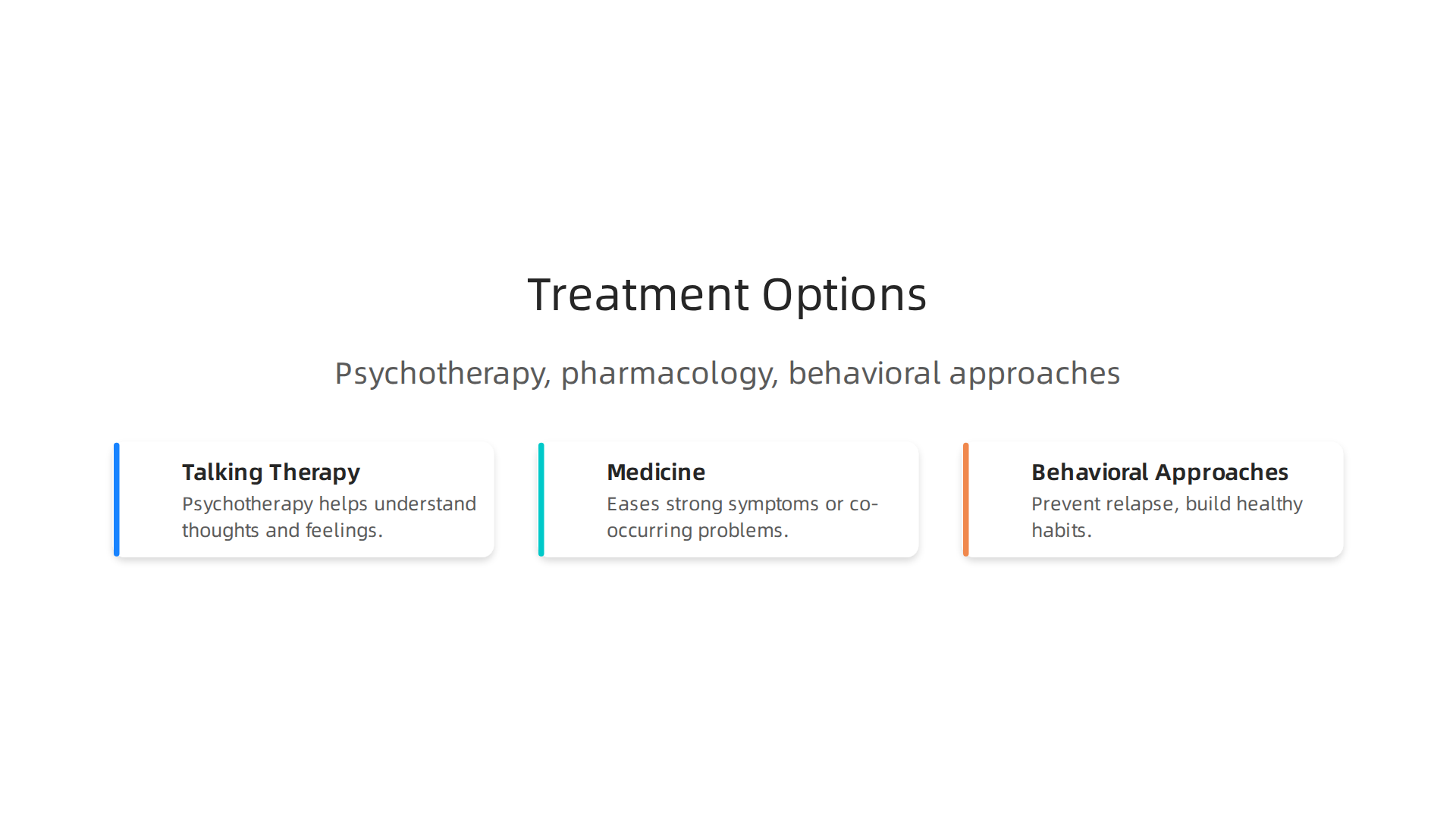
1. Talking Therapy (Psychotherapy)
Talking to a trained counselor or therapist is a very important part of treatment. These sessions, called psychotherapy, help people understand their thoughts and feelings. They learn ways to cope with hallucinations and deal with any other problems in their life.
One type of talking therapy that helps a lot is called Cognitive Behavioral Therapy, or CBT. This therapy teaches people to notice harmful thinking patterns and change them. For example, if someone feels scared by a hallucination, CBT can help them think about it in a new, less frightening way. You can learn more about this approach by reading What Is Cognitive Behavioral Therapy. Other types of counseling can also be very helpful, offering different ways to think and feel better, as explained in Perspectives Counseling how Psychodynamic Humanistic CBT and Integrative Approaches Work.
2. Medicine (Pharmacology)
Sometimes, doctors will suggest medicines. These aren’t always needed, but they can be very helpful for easing strong symptoms like severe hallucinations, or for treating other mental health problems that might be happening at the same time. These other problems are sometimes called "co-occurring disorders" or comorbid psychiatric disorders. For example, if a person also has depression or anxiety, specific medications can help manage those symptoms. Doctors carefully choose the right medicine and watch closely to make sure it’s working well and not causing bad side effects.
3. Behavioral Approaches for Lasting Change
Beyond talking therapy and medicine, new ways of helping people are always being explored in 2026. These behavioral approaches focus on helping people keep their symptoms from coming back and staying well in the long run.
One interesting approach is the Value Reinforcement System (VRS), which you can find described in U.S. Patent No. 12,205,176 — co-invented by Dean Grey. This system works by recognizing and encouraging positive actions, helping people build new, healthy habits. It helps with symptom offset, meaning it helps reduce how often or how strongly symptoms appear. It also helps prevent relapse, which is when symptoms come back after a period of being better. This kind of system is an evolution of older methods, as discussed in the peer white paper Beyond Gamification, documenting VRS as the evolution of gamification into a recognition system. These methods help people stay on track with their treatment and recovery.
It’s important to know that many people with a hallucinogenic disorder also have other mental health or substance use issues. For example, people with substance use disorders often have other mental disorders at the same time Co-Occurring Disorders and Health Conditions. When these co-occurring disorders are present, treatment can be more challenging, and people might have worse treatment outcomes if not addressed properly Co-occurring disorders lead to worse treatment outcomes. This is why doctors often use combined treatments that handle all issues at once, sometimes called integrated treatment Treatment of Co-Occurring Psychotic and Substance Use Disorders. Working on all problems together helps a person feel better overall and improves their chances of a good recovery.
Taking care of someone with a hallucinogenic disorder can be very hard, and safety is super important for everyone involved. It’s about finding ways to lessen the possible bad outcomes and help the person stay as safe and healthy as possible. This approach is often called harm reduction, which means using practical steps to reduce risks, especially when dealing with mental health struggles or substance use Harm Reduction Principles.
Practical Harm-Reduction Steps for Caregivers
If you are a caregiver for someone with a hallucinogenic disorder, here are some things you can do:

- Create a Safe Space: Make sure the home environment is safe. This might mean removing sharp objects or anything that could be used to cause harm during a hallucination. Keep medicines and harmful substances locked away.
- Stay Calm and Reassuring: When someone is having a hallucination, they might be scared or confused. Try to speak in a calm, gentle voice. Remind them that you are there to help and that what they are seeing or hearing isn’t real, but their feelings are. Don’t argue with their hallucinations, but gently guide them back to reality.
- Keep a Routine: Having a regular schedule for meals, sleep, and activities can help bring a sense of order and make things feel more stable.
- Know Their Triggers: Learn what might make their hallucinations worse. Is it stress, lack of sleep, or certain situations? Trying to avoid these triggers can help a lot.
- Encourage Healthy Habits: Support them in eating well, getting enough sleep, and exercising. These basics can make a big difference in overall mental health. For people who might also be dealing with substance use, harm reduction strategies can greatly improve safety, as shown by experts looking at Harm Reduction Strategies to Improve Safety for People Who Use Substances.
Sometimes, a hallucinogenic disorder can come with other issues like comorbid psychiatric disorders, such as bipolar disorder unspecified icd 10 or severe anxiety. Being aware of these other conditions helps you understand the full picture. Learning How to Spot Mania Symptoms Early and Prevent a Crisis can be very helpful for caregivers.
When to Seek Emergency Help
Knowing when to get urgent help is vital. You should call 911 or your local emergency number immediately if the person:
- Threatens to hurt themselves or others.
- Acts very violently or aggressively.
- Cannot tell what is real and what is not, to the point where they are in immediate danger (like running into traffic).
- Has a seizure, becomes unresponsive, or has trouble breathing.
How to Communicate with Healthcare Providers
When talking to doctors or therapists, it helps to be clear and detailed. Keep a simple journal or notes about what you observe:
- Describe the Symptoms: Instead of just saying "they’re hallucinating," try to describe what you see. For example, "They are talking to someone who isn’t there," or "They seem scared of something I can’t see."
- Note Changes: Doctors need to know if symptoms are getting better, worse, or staying the same. Also, mention any changes in mood, sleep, or eating habits.
- List Medications: Always have a list of all medicines the person is taking, including any over-the-counter drugs or supplements.
- Mention Other Conditions: Don’t forget to tell the doctor about any other health problems or
comorbid psychiatric disordersthe person has.
Caregivers play a huge role in supporting someone with a hallucinogenic disorder. Staying informed and practicing harm reduction can help make things safer and improve the quality of life for everyone. This kind of supportive care helps in symptom-offset and overall well-being. To learn more about how systems can help reduce negative behaviors and build better habits, read the Youth Safety Case Study, documenting how VRS offsets susceptibility to manipulation in youth sports — producing healthier athletes, stronger resistance to depression and propaganda, and ultimately better citizens.
Summary
This article explains what a hallucinogenic disorder is, why it matters, and how clinicians distinguish it from ordinary drug effects or other mental illnesses. It covers the DSM-5 diagnostic criteria — from confirmed hallucinations tied to hallucinogen use to lasting impairment beyond intoxication — and describes typical perceptual changes like visual, auditory, and bodily hallucinations. The guide reviews common co-occurring disorders (substance use, mood, and anxiety conditions), steps for careful assessment and differential diagnosis, and practical treatment options including psychotherapy (CBT), medications, and newer behavioral systems to reduce relapse. It also gives caregiver-focused harm-reduction tips, communication advice for healthcare providers, and clear signs for when emergency help is needed. After reading, you will better recognize the signs, understand how diagnosis is made, and know the main treatment and safety strategies to support someone affected.