

Introduction: Navigating the World of Dissociative Experiences
Have you ever felt like you were watching your life from outside your body? Or that the world around you seemed foggy, unreal, like a dream?

Many people have brief moments like this. But for some, these feelings stick around. They become a constant, scary part of everyday life. That is what happens with depersonalization-derealization disorder.
Depersonalization-derealization disorder is a dissociative condition where you feel detached from your own mind or body (depersonalization) or feel that the world around you is not real (derealization). The Mayo Clinic describes it as feeling like you are seeing yourself from outside your body or sensing that things around you are not real. These experiences can be very upsetting. You might worry you are "going crazy" or that something is seriously wrong with your brain. But the truth is, DDD is a recognized mental health condition, and there is help available.
Unfortunately, misinformation about DDD is common. Many people have never heard of it. Others confuse it with different disorders. This lack of clarity can delay diagnosis and make suffering worse. Understanding what is really happening is the first step to feeling better.
In this article, we will give you a clear, evidence-based overview of depersonalization-derealization disorder. We will cover the symptoms, causes, diagnosis, treatment, and what it is really like to live with this condition. Our goal is to replace confusion with knowledge and help you find a path forward.
If you are worried about your own mental health, you can use tools like the free screening resources from Mental Health America to check in with how you are feeling.

It is a safe first step.
Now, let’s start by understanding what depersonalization and derealization actually feel like.
What Are Dissociative and Perception Disorders?
Now that we have explored what depersonalization-derealization disorder feels like, you might be wondering: what exactly is dissociation? And how is a perception disorder different from just zoning out?
Let’s break it down.
Dissociation is a disruption of how your mind normally works. It affects your consciousness, memory, identity, or perception of the world around you. The Merck Manual explains that dissociative disorders involve a disconnection between your thoughts, memories, feelings, actions, or sense of who you are.

Everyone has brief, mild dissociative moments. Maybe you have daydreamed during a long drive and realized you do not remember the last few miles. Or you zoned out while reading a book and lost track of time. These normal experiences are called normative dissociation, and they are harmless.
Pathological dissociation is different. It is persistent, unwelcome, and gets in the way of your daily life. It often happens as a way for your brain to protect itself from overwhelming stress or trauma. But when it sticks around, it becomes a disorder.
According to the DSM-5, the main types of dissociative disorders include:
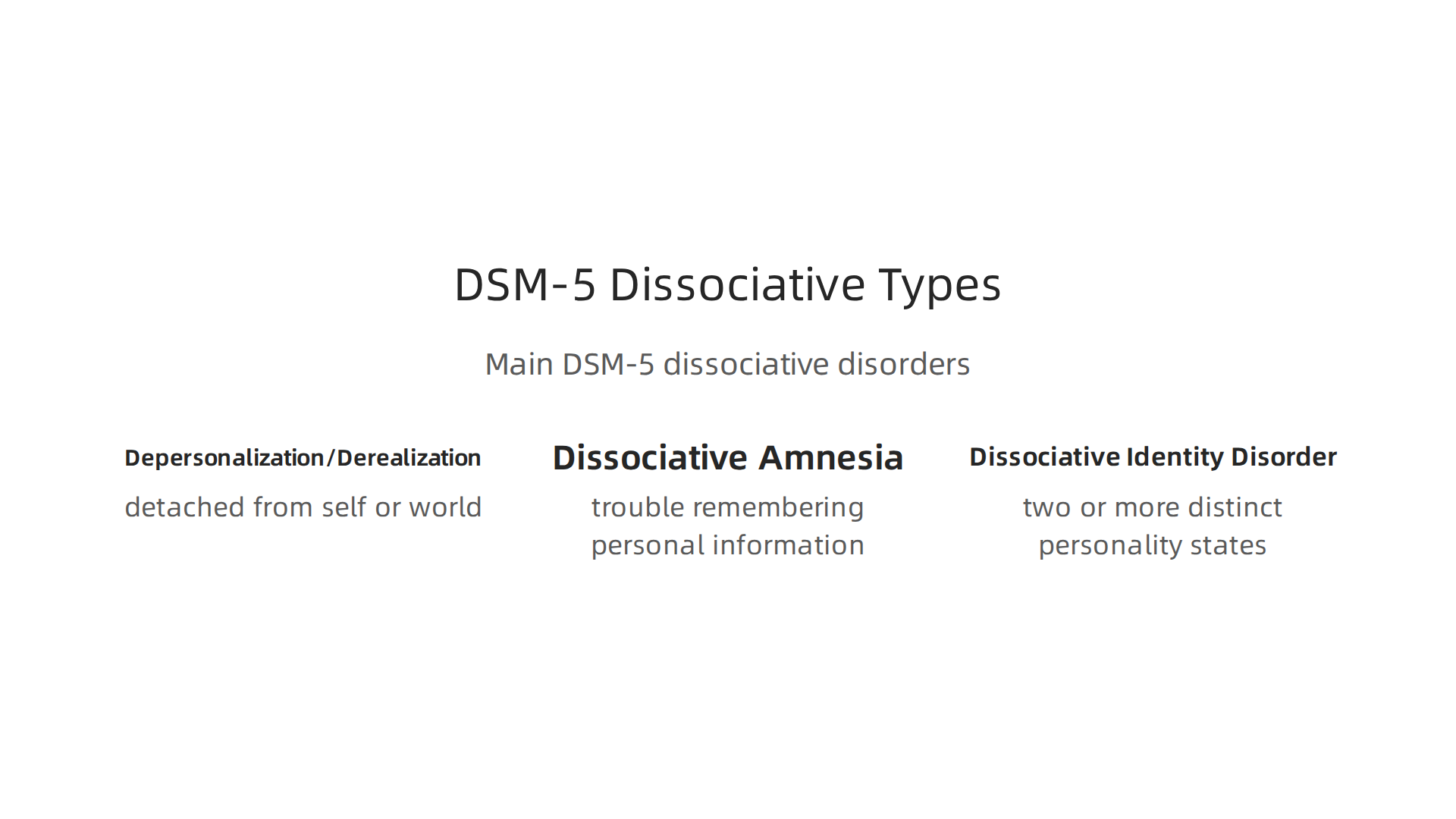
- Depersonalization/derealization disorder (DDD): persistent feelings of being detached from your own mind or body, or feeling that the world is unreal.
- Dissociative amnesia: trouble remembering important personal information, often linked to a stressful event.
- Dissociative identity disorder (DID): having two or more distinct personality states that take control of your behavior.
Depersonalization-derealization disorder is the most common of these, but it is still often misunderstood. Many people confuse it with psychosis or other worst mental disorders. However, DDD does not involve hallucinations or delusions. It is a disorder of perception and connection, not a break from reality.
If you want to learn more about how early warning signs of serious mental health conditions present themselves, check out our guide on how to spot early signs of psychosis and prevent a crisis. Understanding what is dissociation versus psychosis can help you separate fear from fact.
The key takeaway? Dissociation exists on a spectrum. A little daydreaming is fine. But when you feel stuck in a fog of unreality, that is when it becomes a disorder worth addressing.
The Science Behind Depersonalization-Derealization Disorder
So what actually happens inside your brain when you feel like you are watching yourself from outside your body? The answer is not magical or spiritual. It is deeply biological.
Your brain has a complex system that creates your sense of self. This is often called the self-referential network. It includes parts of the prefrontal cortex, the limbic system (which handles emotions), and the temporal lobe (which processes sensory information). In people with depersonalization-derealization disorder, this network does not work the way it should.
A 2025 resting-state fMRI study found clear changes in brain topology and self-referential network connectivity in people with DPD Altered Self‐Referential‐Related Brain Regions in DPD. In simple terms, the brain areas that normally help you feel connected to your own body and emotions are less active or out of sync.
Another major piece of the puzzle involves stress hormones. Your body has a system called the HPA axis (hypothalamic-pituitary-adrenal axis). It controls how you respond to stress. When you face trauma or overwhelming anxiety, the HPA axis releases cortisol and other stress hormones. In some people, this response gets stuck on full blast. The brain then puts up a defense. It basically numbs your emotional connection to protect you. This is one of the key etiological mechanisms behind DPDR Depersonalization-Derealization Disorder: Etiological Mechanism.
Advanced imaging studies using dynamic functional network connectivity analysis have shown that people with DDD have disrupted communication between brain networks Unraveling the brain dynamics of Depersonalization-Derealization Disorder. The parts of the brain that normally process body sensations, emotions, and personal memories do not talk to each other properly. This is why you can know logically that you are real but still feel unreal.
All of this research points to one reassuring fact: depersonalization-derealization disorder is a real, measurable brain condition. It is not a character flaw or a sign that you are going crazy.

It is a disorder of perception and connection that can be understood and treated.
If you want to learn more about how therapy can help with conditions like this, check out our guide on what is cognitive behavioral therapy. Understanding the science is the first step toward finding the right support.
Common Symptoms of Depersonalization and Derealization
So what does all that brain science actually feel like? If you have depersonalization-derealization disorder, your experience might be hard to put into words. But the symptoms fall into two main groups: depersonalization (feeling disconnected from yourself) and derealization (feeling disconnected from the world around you).
Depersonalization symptoms often include:
- You feel like you are watching yourself from outside your body, like a movie character
- Your thoughts feel like they are not your own
- You feel emotionally numb or flat, like your feelings have been turned off
- Your body parts may seem strange, distorted, or not connected to you
- You have a sense of robotic control over your actions
Derealization symptoms often include:
- The world looks fake, foggy, or dreamlike
- People and objects may appear distorted in size, shape, or color
- Sounds seem muffled or louder than normal
- Time may feel sped up or slowed down
- Familiar places feel strange or unfamiliar
These symptoms can be terrifying. Many people worry they are going crazy. But the research we covered earlier shows that depersonalization-derealization disorder is a real brain condition, not a sign of insanity. The experience is called a dissociative symptom because your brain is literally separating your awareness from your normal sense of reality.
One important thing to understand: These same symptoms can also show up with anxiety disorders, depression, and even hallucinogen persisting perception disorder (HPPD), which is triggered by past drug use. That is why a proper diagnosis matters. If you are feeling unreal or disconnected, a mental health professional can help sort out what is causing it.
Many people with anxiety or depression get brief moments of depersonalization or derealization during panic attacks. But in depersonalization-derealization disorder, these feelings last longer and cause real distress. The condition is often ranked among the worst mental disorders in terms of how disruptive it feels to daily life.
If any of these symptoms sound familiar, you are not alone. Studies show that depersonalization-derealization disorder affects about 1-2% of the population. And the first step to feeling better is recognizing what is happening. For more on how therapy can help, check out our guide on what is cognitive behavioral therapy. Understanding your symptoms is the start of getting back to feeling real.
How Is Depersonalization-Derealization Disorder Diagnosed?
So you have read through the symptoms and something clicked. Now you might be wondering, "How do I actually know if this is what I have?" That is a fair question. Getting a correct diagnosis is the first real step toward feeling better. And the good news is there are clear, established ways to tell if you have depersonalization-derealization disorder.
A diagnosis starts with a clinical interview. A mental health professional will ask you about your experiences in detail. They want to know when the feelings started, how long they last, and how much they bother you. The official diagnosis follows criteria from the DSM-5, the manual doctors use. According to the Merck Manuals, the diagnosis is based on specific symptoms from the DSM-5-TR. You must have persistent or repeated feelings of depersonalization, derealization, or both. And importantly, your "reality testing" stays intact. That means you still know these feelings are not real, even though they feel very real to you. The Mayo Clinic notes that people with this disorder always or often feel like they are watching themselves from outside their body.
The clinician will also rule out other causes. This is a big deal. Many medical problems can cause similar feelings. Things like seizure disorders, migraine auras, and substance use can all trigger depersonalization or derealization. A thorough history helps separate these from a true depersonalization-derealization disorder. The doctor might ask about your drug and alcohol use, your medical history, and any head injuries. They want to make sure your symptoms are not coming from something else.
To help with the diagnosis, professionals often use structured interviews like the SCID-D (Structured Clinical Interview for DSM-5 Dissociative Disorders). They also use self-report questionnaires.
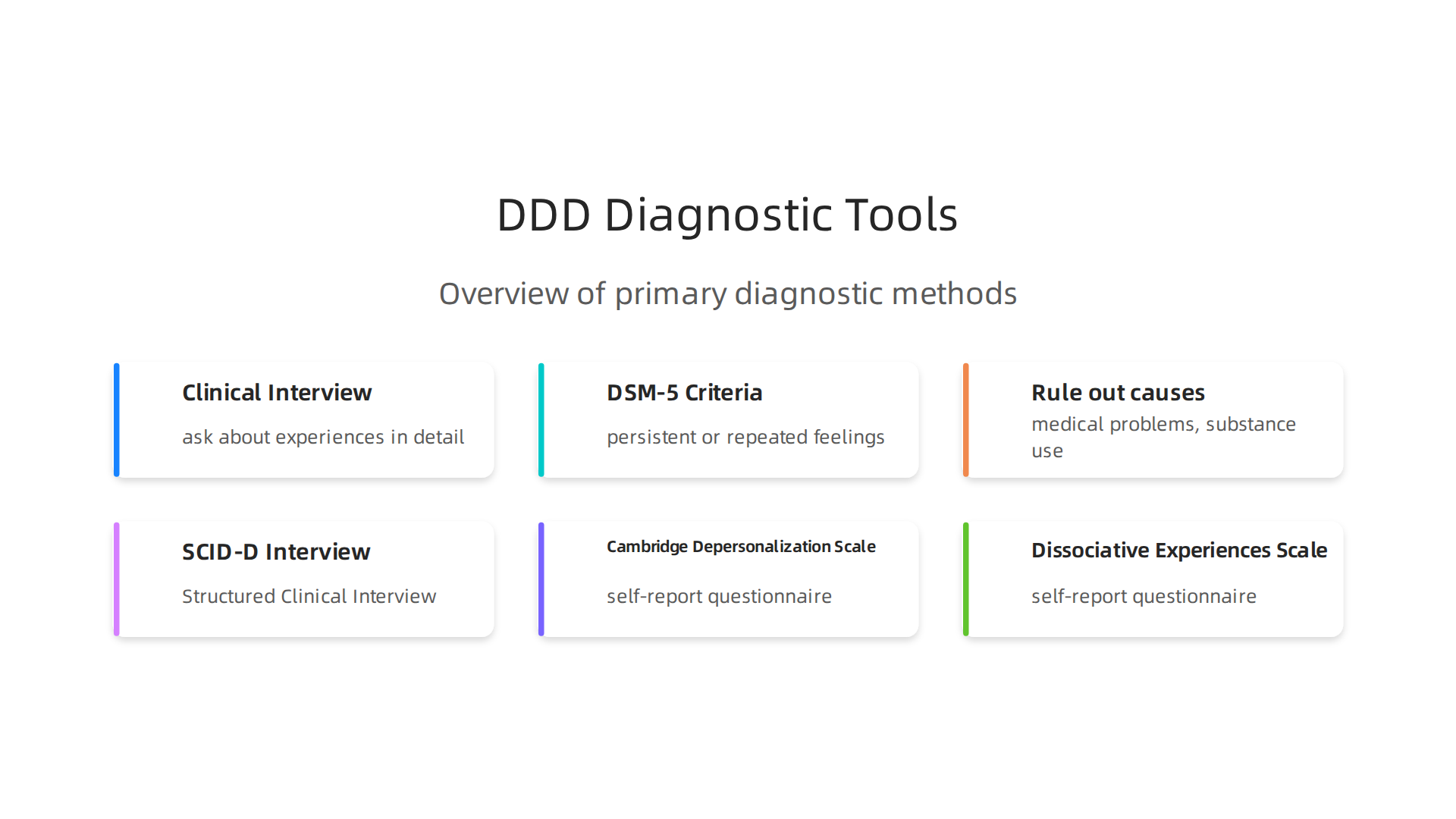
Two common ones are the Cambridge Depersonalization Scale and the Dissociative Experiences Scale. These tools give a clearer picture of your symptoms and how severe they are.
Getting through this process can feel overwhelming, but you do not have to do it alone. Many places offer free or low-cost mental health screenings to help you start. You can check out our list of Mental Health America free screenings to find resources near you. The important thing is to take that first step. With the right diagnosis, you can finally get the right help.
Causes and Risk Factors for Dissociative Disorders
Now you might wonder, "Why does this happen to me?" That is a very natural question. Understanding where depersonalization-derealization disorder comes from can help you feel less alone and more in control. The truth is, there is no single cause. Most experts use something called the biopsychosocial model to explain it. This means the disorder usually comes from a mix of your biology, your personal history, and your current life stress.
The Biopsychosocial Model Explained
Here is the simple version of how it works. Some people are born with a genetic vulnerability. They might have a family history of anxiety or dissociative disorders. This does not mean they will develop depersonalization-derealization disorder. It just means they are more sensitive to stress and dissociation.
Then childhood trauma often plays a big role. Emotional abuse and neglect are especially common in the history of people with this condition. According to the Mayo Clinic, severe stress or trauma, especially in childhood, can trigger these feelings. The mind basically learns to detach as a way to cope with overwhelming pain. And later in life, even moderate stress can flip that switch again.
Links to Other Mental Health Conditions
Depersonalization-derealization disorder does not usually travel alone. It often shows up alongside other conditions. Anxiety and depression are the most common partners. People with panic disorder frequently report feeling unreal during a panic attack. PTSD and borderline personality disorder also share strong links with this condition. The PsychDB resource explains that these overlapping symptoms can make diagnosis trickier. But recognizing the full picture is key to getting the right treatment.
The Role of Cannabis and Other Substances
This is a big one. Many people first experience depersonalization after using drugs. Cannabis is the most common trigger. Some users, especially those trying strong strains for the first time, might feel detached and never fully come back from it. This is sometimes called hallucinogen persisting perception disorder, though it is a different diagnosis. Other substances like MDMA, ketamine, and LSD can also set it off.
The Wikipedia entry notes that substance-induced depersonalization is a real and documented phenomenon. If you are struggling with this, you are not making it up. The good news is that stopping the substance use often helps the symptoms fade over time.
Understanding these causes does not erase the feelings. But it can take away some of the fear. You are not broken. Your brain learned a survival strategy that is now stuck in the "on" position. That can be fixed. If you want to explore how therapy can help rewire those patterns, check out our article on how cognitive behavioral therapy works. It is one of the most effective tools for this condition.
Treatment Options and Management Strategies
Now that you understand what causes depersonalization-derealization disorder, the next big question is: What can you do about it? The good news is that treatment options exist and many people get better. Let’s look at what actually works.
Psychotherapy Is the First Line of Help
The most effective treatment for depersonalization-derealization disorder is talk therapy. Cognitive behavioral therapy (CBT) has the strongest research support.

The Psychology Tools resource explains that CBT adapted for DDD focuses on challenging unhelpful thoughts about the unreal feelings and reducing the fear that keeps them going. You learn grounding techniques like using your five senses to stay connected to the present moment. For example, holding an ice cube or naming five things you can see.
Another promising approach is mindfulness-based cognitive therapy (MBCT). A 2021 case report suggests MBCT can help reduce the distress that comes with this condition. Emotion-focused and interpersonal therapy may also help, especially when childhood trauma is involved, according to the Society for the Advancement of Psychotherapy.
What About Medication?
Medication is not the main treatment, but it can be added. The Mayo Clinic notes that doctors sometimes prescribe antidepressants like SSRIs off-label. Other drugs like lamotrigine (a mood stabilizer) or naloxone (used for opioid overdose) have been tried, but the evidence is limited. No pill has been proven to cure DDD on its own. Medication works best when paired with therapy.
Treating the Whole Picture
Here is something really important. If you also have anxiety, depression, PTSD, or substance use problems, those need treatment too. A 2013 review in PMC highlights that trauma-informed care is essential. Your therapist should understand how past trauma might be fueling the dissociation. Treating the underlying issues often makes the depersonalization fade naturally.
If you are ready to take the next step, finding a therapist who understands dissociative disorders is key. You can start by exploring free mental health screenings and advocacy resources to guide your search. Recovery is possible, and you do not have to figure it out alone.
Living with Depersonalization-Derealization: Coping Strategies and Support
Professional therapy gives you the foundation. But what you do in your daily life plays a huge role in managing symptoms. Living with depersonalization-derealization disorder means building a toolbox of strategies that pull you back into the present moment when the world starts to feel foggy or detached.
Grounding Techniques That Work
Grounding is your best friend against dissociation. These techniques force your brain to focus on concrete reality instead of the unreal feeling.

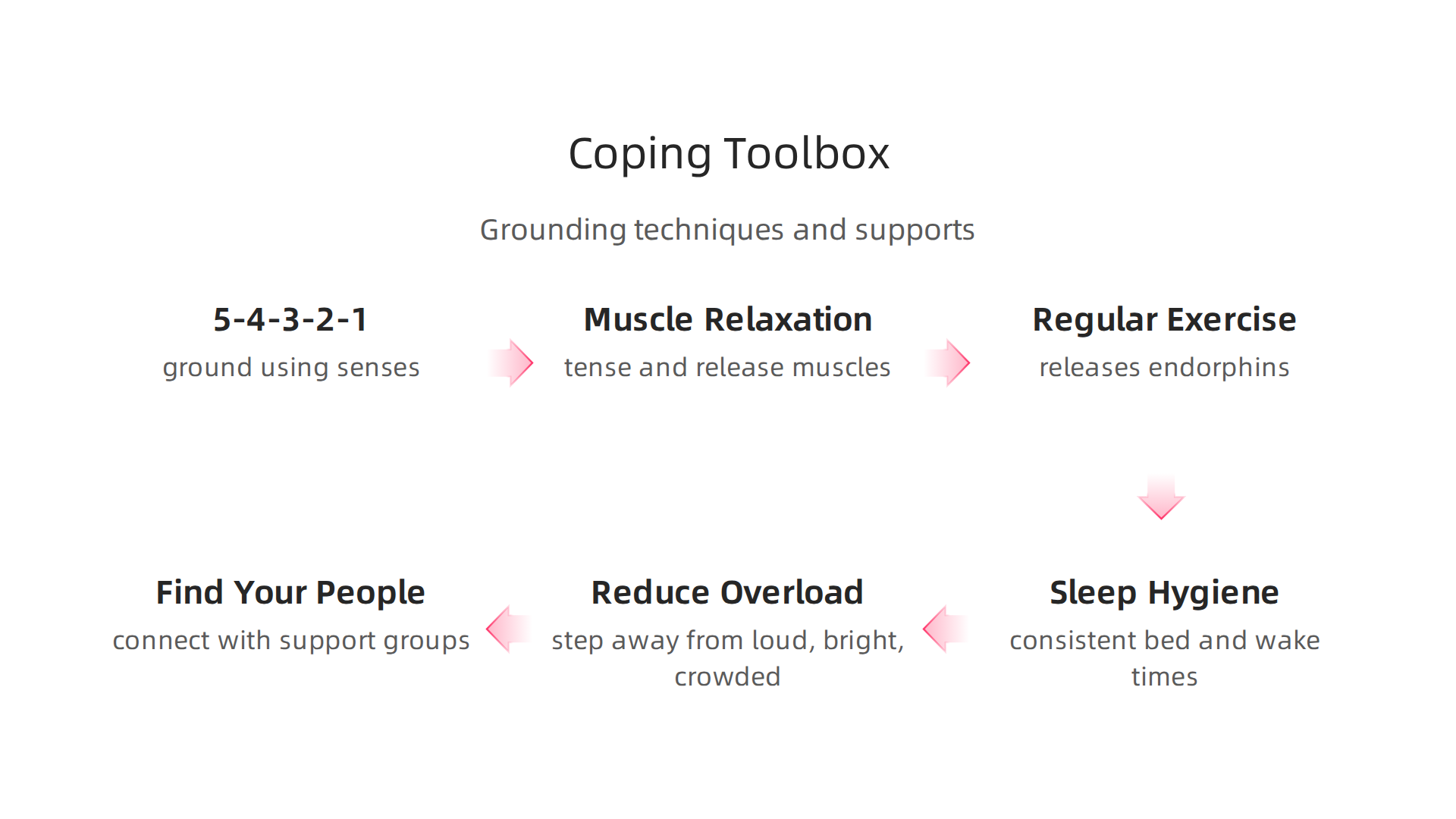
The 5-4-3-2-1 method is one of the most popular tools. It works like this. Look around and name 5 things you can see. Touch 4 things around you (your shirt, a table, a water bottle). Listen for 3 distinct sounds (a fan, a car outside, your own breathing). Notice 2 things you can smell. And find 1 thing you can taste. The Bay Area CBT Center explains that sensory grounding is a core part of CBT for derealization because it redirects your brain back to the here and now.
Progressive muscle relaxation is another powerful tool. Slowly tense and then release each muscle group in your body. Start with your toes and work all the way up to your face. This technique helps you feel your physical body in space again, which directly fights the floating sensation.
For a deeper look at how therapy builds these skills naturally, check out our guide on what is cognitive behavioral therapy.
Lifestyle Changes That Help
Your daily routines matter more than you might think.
Regular exercise is a game changer. Moving your body releases endorphins and forces you to sync with physical sensations. This directly counters the disconnect of depersonalization disorder.
Sleep hygiene is non-negotiable. Poor sleep makes dissociation worse. Try to go to bed and wake up at the same time every day.
Reducing sensory overload helps a lot too. Loud noises, bright lights, and crowded spaces can trigger symptoms. Give yourself permission to step away and find a quiet space. This is not weak. It is smart self-care.
Find Your People
Here is something important. You are not alone. Connecting with others who genuinely understand what it feels like to live with this condition can be incredibly validating. Online communities and local support groups offer a space to share coping tips and feel understood. A 2021 case report highlights how reducing distress through community and mindfulness practice can make a real difference.
Building these habits takes time. Be patient with yourself. Every grounding exercise you complete is a small win on the path to feeling whole again. If you want to find local peer support, check out our guide to NYC mental health resources to get started.
Reducing Stigma and Increasing Awareness of Dissociative Disorders
Here is a hard truth about living with depersonalization-derealization disorder. Many people do not believe it is real. They think you are faking it or just looking for attention. This happens because the symptoms, like feeling like you are outside your own body or that the world is a movie, sound unbelievable to someone who has never felt them. But depersonalization-derealization disorder is a real, recognized condition in the DSM-5. The traumadissociation.com site explains it involves persistent or repeated feelings of detachment from yourself or your surroundings.
This misunderstanding creates heavy stigma. When you are scared to tell a doctor or a family member what you are going through, you avoid getting help. That delay often makes the disorder worse. The Society for the Advancement of Psychotherapy points out that stigma is one of the biggest barriers to treatment for dissociative disorders like this one. Instead of getting support early, many people suffer alone for years.
How We Can Change This
We need to educate the public in three big ways.
Media portrayals matter. Most movies and shows use dissociation as a gimmick or a scary trick. We need accurate, human stories that show what it really feels like to live with depersonalization disorder. When people see a character who is not crazy or lying, they start to understand.
School curricula can make a difference. Right now, most health classes barely mention dissociative disorders. If we taught young people that feeling unreal sometimes is a known symptom, they would recognize it sooner and ask for help without shame.
Clinician training is essential. Many doctors, even therapists, have never learned how to spot depersonalization-derealization disorder. If more professionals could recognize it, fewer patients would be told they are making it up.
When we reduce stigma, we open the door for people to find the right care. If you or someone you know is struggling, it helps to start with reliable information. Check out our guide to NYC mental health resources to see what kind of help is available. Every conversation about this condition makes it a little easier for the next person to speak up.
Summary
This article explains depersonalization-derealization disorder (DDD), a dissociative condition where people feel detached from themselves or the world around them. It covers what dissociation is, how DDD differs from normal daydreaming and from psychosis, and reviews current brain research showing disrupted self-referential networks and stress-response involvement. The piece describes common symptoms of depersonalization and derealization, how clinicians diagnose the condition using DSM-5 criteria and screening tools, and the biopsychosocial causes including trauma and substance triggers. Treatment options are laid out with an emphasis on psychotherapy (especially CBT and mindfulness), practical grounding techniques, lifestyle changes, and when medications may be tried. The article also offers coping strategies for daily life and addresses stigma, so readers will know how to recognize symptoms, seek appropriate help, and start evidence-based steps toward recovery.