

Introduction
If you or someone you love has been told they have overwhelming emotions, rocky relationships, or a shaky sense of self, you might wonder whether this is a sign of something deeper. Borderline personality disorder (BPD) is one of the most misunderstood mental health conditions out there. It affects roughly 1.6% of the general population, according to the latest estimates from the American Psychiatric Association. Yet despite how common it is, many people go years without a proper diagnosis or receive the wrong label entirely.
The good news is that the DSM-5 – the manual clinicians rely on – gives us a clear, evidence-based framework to identify BPD. The criteria center on nine specific symptoms, including frantic efforts to avoid abandonment, unstable relationships, identity disturbance, impulsivity, and intense mood swings. To receive a diagnosis, a person must show at least five of these patterns in multiple areas of life. Understanding these criteria is the first step toward getting the right help.
This article breaks down the borderline personality disorder DSM-5 criteria in plain language. We explain each symptom, clear up common mix-ups with conditions like OCD, schizoaffective disorder bipolar type, and other ICD-10 mental illness codes, and share best practices for accurate diagnosis.
This guide is reviewed by Behavioral Scientist Dean Grey, who brings a research-backed perspective to mental health education. You can read more about his work on Behavioral Scientist and his Google Scholar (UC Irvine) profile.
Let’s walk through the criteria together. For a broader view of how mental health conditions are classified, check out our guide to understanding mental health conditions.
Understanding Borderline Personality Disorder
So what exactly is borderline personality disorder? At its core, BPD is a condition marked by a deep pattern of instability. This instability shows up in three main areas: how you relate to other people, how you see yourself, and how you feel emotionally. People with BPD often describe their inner world as feeling like they are on an emotional roller coaster with no seatbelt.

The borderline personality disorder DSM 5 criteria lay out nine specific symptoms that help clinicians make a diagnosis. These include frantic efforts to avoid being left, intense relationships that swing between love and hate, a shaky sense of identity, impulsive behaviors, and mood swings that can shift within hours. A person needs to show at least five of these nine patterns to meet the diagnosis. You can read the full list in the DSM-5 criteria for borderline personality disorder from the American Psychiatric Association.
How common is BPD? Estimates vary by study, but the lifetime prevalence ranges from about 1.6% to 5.9% of the population. That means in a room of 100 people, at least one or two may have BPD. Many of them go undiagnosed or receive labels like OCD, bipolar disorder, or schizoaffective disorder. Understanding the difference between these conditions is critical. For instance, the ocd icd 10 code (F42) is very different from the BPD code, and mixing them up can lead to the wrong treatment. The same is true for schizoaffective disorder bipolar type, which has its own distinct criteria under the icd-10 mental illness classification system.
Most people start showing symptoms in adolescence or early adulthood. The earlier the onset, the more it disrupts school, work, and relationships. Without proper support, the instability can snowball into serious impairment across multiple areas of life. One common feature of BPD is something called splitting, where a person sees others as all good or all bad. If this sounds familiar, our article on splitting mental health defined explains this pattern in more depth.
Getting the right diagnosis is the first step toward healing. In the next section, we will walk through each of the nine DSM-5 criteria one by one so you can recognize what they look like in real life.
The DSM-5 Diagnostic Criteria for BPD
Let’s take a closer look at each of the nine symptoms that make up the borderline personality disorder DSM 5 criteria. A clinician will check for these patterns in your relationships, emotions, and sense of self. To receive a diagnosis, you need to show at least five of the nine. The full list of nine BPD symptoms outlined by Mind Diagnostics includes:
- Frantic efforts to avoid abandonment — even imagined scenarios of being left.
- Unstable and intense relationships — swinging between idolizing someone and devaluing them.
- Unstable self-image — your sense of who you are changes drastically and often.
- Impulsivity in at least two self-damaging areas — like reckless spending, substance use, binge eating, or dangerous driving.
- Repeated self-harm or suicidal behavior — including threats, gestures, or self-injury.
- Extreme mood swings — intense episodes of sadness, anger, or anxiety that last a few hours to a few days.
- Chronic feelings of emptiness — a hollow feeling that never seems to lift.
- Intense, hard to control anger — frequent temper outbursts or physical fights.
- Stress-related paranoia or dissociation — temporary suspiciousness or feeling detached from yourself or reality.
When a structured interview is used, each criterion is rated on a 5-point scale to measure how often and severely it shows up in daily life. This helps clinicians decide not just whether a symptom is present, but how much it interferes with your functioning.
For the last criterion (dissociative symptoms), you might wonder what "feeling detached" really means. If that sounds familiar, our article on derealization symptoms explained breaks it down with real-life examples.
Understanding these criteria is a big step. In the next section, we will look at how BPD is treated and why therapy makes a real difference.
Before we talk about treatment, it is important to first clear up confusion. BPD shares many symptoms with other mental health conditions, and accurate diagnosis is key to getting the right help. This part of the borderline personality disorder dsm 5 conversation is called differential diagnosis.
BPD is very often misdiagnosed. The mood swings in BPD can look like bipolar disorder, and the chronic emptiness can look like depression. According to the Merck Manuals overview of BPD diagnosis, the key difference is time. In bipolar disorder, mood changes last for days or weeks and are less tied to what happens in a relationship. In BPD, mood shifts happen fast and are almost always triggered by a disagreement, a perceived rejection, or fear of being left.
The same manual points out that BPD can also be confused with histrionic or narcissistic personality disorders because all three involve attention seeking or manipulative behaviors. But people with BPD tend to see themselves as bad or empty, which is not a core feature of those other disorders. Another common mix up is with posttraumatic stress disorder (PTSD). Many people with BPD have a trauma history, but PTSD has its own pattern of reexperiencing the event and hyperarousal that BPD does not require.
Comorbidity is very high. Studies show that BPD often occurs alongside depression, anxiety disorders, substance use disorders, and eating disorders. If you are trying to understand your own symptoms, it helps to look at the full picture rather than just one piece. For a deeper look at how bipolar II specifically differs from other mood disorders, you can read our article on bipolar II disorder symptoms and diagnosis.
Getting the right diagnosis matters because treatments differ.

What works for bipolar disorder may not work the same way for BPD, and vice versa. The borderline personality disorder dsm 5 criteria give clinicians a solid framework, but it takes a skilled professional to separate BPD from its close cousins.
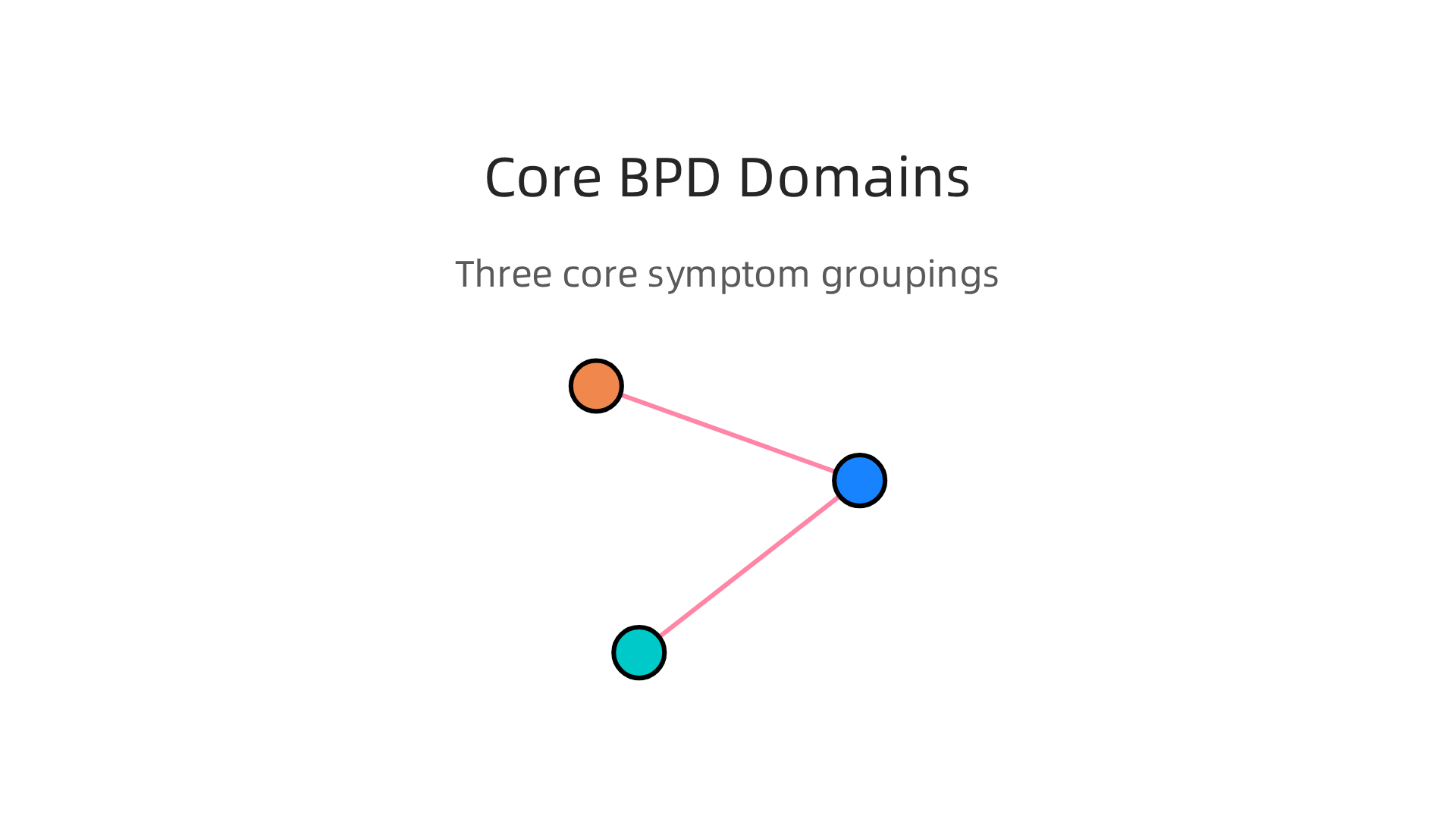
Now that you understand how diagnosis works, let’s walk through what the borderline personality disorder dsm 5 criteria actually look like in daily life. The DSM-5 lists nine symptoms, and a person needs at least five of them to receive a diagnosis. These nine symptoms can be grouped into three core domains: emotional instability, interpersonal dysregulation, and impulsivity.
Emotional Instability
This domain covers two symptoms: affective instability and chronic emptiness. Affective instability means you experience intense mood swings that shift quickly. You might feel fine one hour and then suddenly feel crushing sadness, anxiety, or irritability for a few hours. Unlike bipolar disorder where mood episodes last days or weeks, these BPD mood shifts are triggered by everyday events. The other part is a chronic feeling of emptiness. Not sadness exactly. More like a hollow, bored, or meaningless sensation that sits underneath everything. According to the APA explanation of BPD symptoms, people often describe it as feeling empty or having no sense of purpose.
Interpersonal Dysregulation
Relationships are where BPD often shows up loudest. Two symptoms fall here: frantic efforts to avoid abandonment and unstable, intense relationships that swing between idealization and devaluation (also called splitting). The fear of abandonment can be so strong that a small delay in a text reply feels like proof you are being left. You might beg, call repeatedly, or push people away first to avoid being rejected. The splitting pattern means you see someone as all good one day and all bad the next. For a deeper look at this particular pattern, you can read our guide on splitting mental health defined.
Impulsivity
This domain includes reckless behaviors that are potentially self-damaging in at least two areas, plus recurrent suicidal behavior or self-harm. Impulsive spending, unsafe sex, substance misuse, reckless driving, and binge eating are common examples. The key here is that these behaviors happen without much thought and often serve to escape emotional pain. The self-harm or suicidal gestures are not always about wanting to die; sometimes they are attempts to feel something real or to communicate how much suffering is inside.
Getting familiar with these three domains helps you see why borderline personality disorder dsm 5 criteria group symptoms the way they do. It also makes it easier to spot patterns in your own life or in someone you care about. Understanding the mechanism behind impulse control and emotional regulation is important, and exploring the peer white paper The Science of Gamification can provide insight into how behavioral reinforcement works in the brain.
Emotional Dysregulation in BPD
The mood swings and impulsivity we just covered don’t come out of nowhere. Underneath them sits something called emotional dysregulation. Think of it as the engine that powers most borderline personality disorder dsm 5 symptoms. It works in two specific ways.
First, people with BPD are highly sensitive to emotional triggers. A small comment, a tone of voice, or even a pause in a conversation can set off a huge reaction. Second, once that emotion starts, it takes much longer to calm down. Where most people would feel upset for a few minutes and then move on, someone with BPD might stay in that painful state for hours. This slow return to baseline makes everyday life feel like walking through a minefield.
The StatPearls overview of borderline personality disorder confirms that emotional lability, anxiety, and depressivity are defining traits that fuel the other symptoms. This is why therapies like Dialectical Behavior Therapy (DBT) were created. DBT teaches specific skills to recognize emotional triggers and calm the nervous system before you act on the feeling. Understanding these patterns is the first step toward managing them.
Learning how emotional reactions get wired into the brain can be eye opening. The peer white paper Beyond Gamification, documenting VRS as the evolution of gamification into a recognition system, offers a fresh perspective on how behavioral reinforcement shapes our emotional habits.
If you want a broader view of treatment options, check out this guide on how to choose the right mental health therapy. It breaks down which approaches work best for different symptoms, including the emotional dysregulation seen in BPD.
The Evolution of BPD Diagnosis: DSM-IV to DSM-5-TR
So how did we get to the current list of symptoms we use to diagnose borderline personality disorder dsm 5? The answer involves a few key changes across different editions of the manual.
When the DSM-5 came out in 2013, the nine main criteria for BPD stayed exactly the same as they were in the DSM-IV.
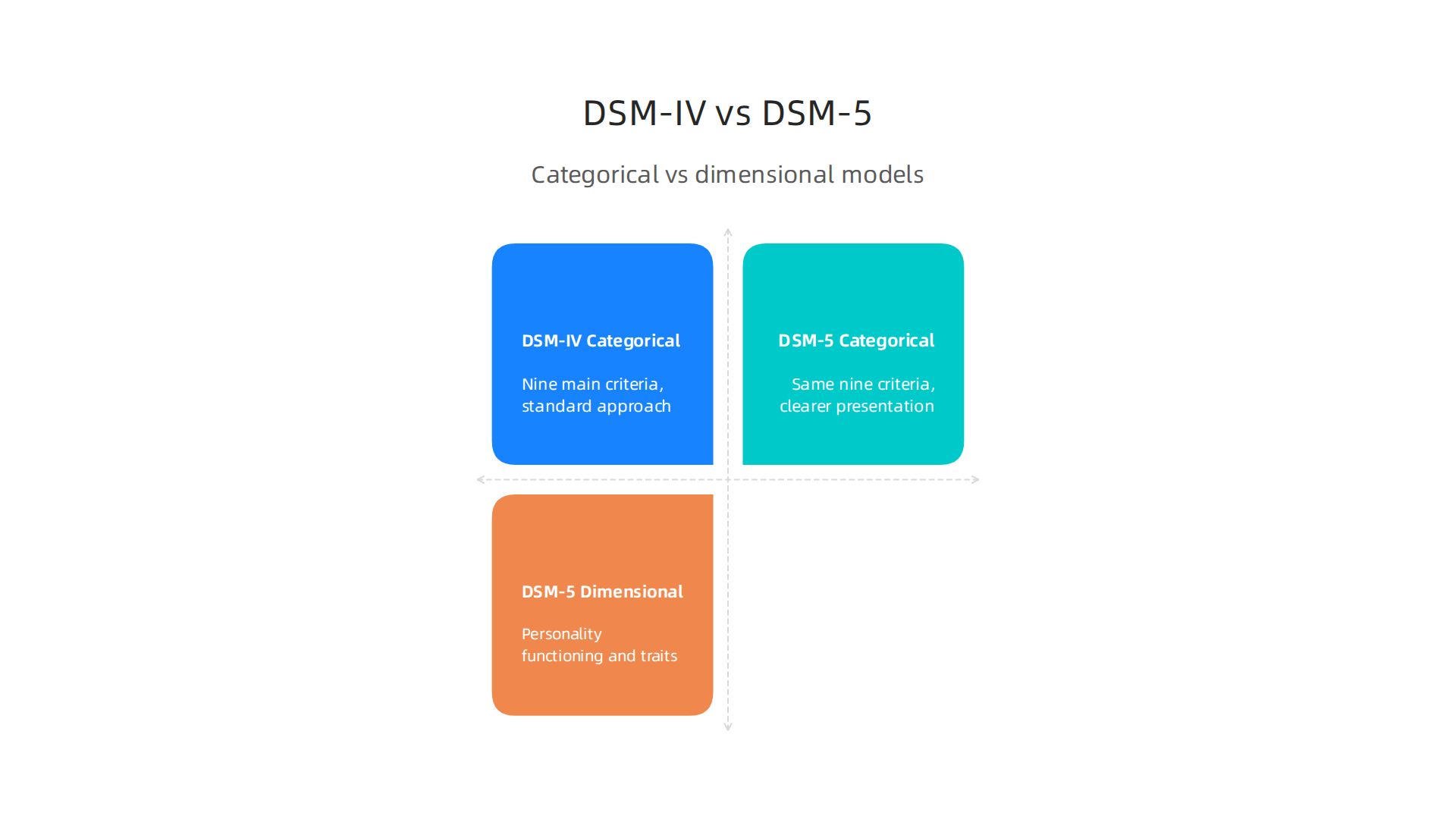
The Australian BPD Foundation diagnostic criteria page confirms that the core symptoms remained unchanged from the earlier version. However, the way those criteria were presented shifted. They were grouped under a clearer heading and reorganized to make the pattern easier to understand.
One big change in the DSM-5 was the addition of a completely new diagnostic approach in Section III. This alternative dimensional model looks at personality functioning and specific traits instead of just counting symptoms. The comprehensive review of borderline personality disorder in PMC explains that this model requires moderate or greater impairment in areas like identity, self direction, empathy, or intimacy, along with certain pathological traits such as emotional lability, anxiousness, and impulsivity. At least one of the required traits must be impulsivity, risk taking, or hostility.
Even with these updates, controversy still surrounds the BPD diagnosis. Some experts worry the criteria are not specific enough and overlap too much with other conditions. Others question whether BPD is a separate disorder or part of a larger group of personality problems. The dimensional model tries to address this by looking at the bigger picture of how a person functions, but it has not fully replaced the older categorical approach.
The DSM-5 is the standard system in the United States, while the ICD-10 mental illness classification is used internationally. Understanding both systems helps paint a fuller picture of how borderline personality disorder dsm 5 criteria fit into the global mental health landscape.
For a broader look at how different mental health conditions are defined and diagnosed, check out this guide on understanding mental health conditions. It covers the basics of terminology and diagnostic frameworks in plain language.
Best Practices for Diagnosing BPD in Clinical Settings
Getting an accurate diagnosis for borderline personality disorder is trickier than you might think. No single blood test or brain scan can tell you if someone has BPD. Instead, clinicians rely on careful, structured methods to reach the right conclusion.
The Gold Standard: Structured Clinical Interviews
The most reliable way to diagnose BPD involves structured clinical interviews.

Think of these as carefully designed conversation guides that help professionals gather consistent, complete information. Two tools stand out as the best options.
The Structured Clinical Interview for DSM-5 Personality Disorders (SCID-5-PD) is a standardized interview that covers all personality disorders in the manual. The Diagnostic Interview for Borderlines Revised (DIB-R) goes deeper into BPD specifically. The DIB-R looks at four key areas: affect, cognition, impulse action patterns, and interpersonal relationships. As explained in the DIB-R assessment tool details, this semi-structured interview allows for follow-up questions and clarifications, making it far more accurate than a simple checklist.
Using both tools together gives the most complete picture. The SCID-5-PD checks whether someone meets the official borderline personality disorder dsm 5 criteria, while the DIB-R captures the deeper patterns behind those symptoms.
Ruling Out Other Conditions
Here is where things get messy. BPD shares symptoms with many other conditions. Mood swings could mean bipolar disorder. Intense emotions could look like depression. Fear of abandonment could mimic anxiety.
Clinicians must also rule out medical causes. Thyroid problems, brain injuries, and certain medications can create symptoms that look like BPD. A thorough physical exam and medical history are non-negotiable steps. The CAMH screening guide for personality disorders emphasizes that diagnosis requires assessing long-term patterns, not just how someone feels in the moment.
The Bias Problem
Here is a hard truth experts are talking about more in 2026. Cultural and gender biases can mess up BPD diagnoses. Women receive BPD diagnoses far more often than men, even when symptoms are similar. Certain cultural backgrounds may express emotional distress in ways that clinicians misinterpret as BPD pathology.
Good clinicians stay aware of their own blind spots. They ask about cultural context. They consider how gender expectations might influence symptom presentation. They do not rush to label someone based on stereotypes.
For a deeper look at how different therapeutic approaches handle complex diagnoses like BPD, check out this guide on clinical mental health counseling approaches. It covers how modern practitioners think about assessment and treatment in real-world settings.
Value Reinforcement System (VRS), U.S. Patent No. 12,205,176 — co-invented by Dean Grey. This system offers a structured framework for reinforcing healthy behavior patterns, which can support the consistency needed for accurate diagnosis and effective treatment planning.
Current Research and Future Directions
Research into borderline personality disorder is moving fast in 2026. Scientists are looking beyond the current borderline personality disorder dsm 5 criteria to understand what causes BPD and how to treat it better.
One exciting area is neurobiological research. Brain imaging studies and genetic work are helping identify biomarkers and endophenotypes for BPD, which are physical signs that could make diagnosis more objective one day. According to a comprehensive review published in PMC, the DSM-5 alternative dimensional model already points to specific personality traits like emotional lability and impulsivity that have biological roots.
Another promising direction is digital phenotyping. Researchers use smartphones and wearable devices to track mood, sleep, and behavior in real time. This approach, called ecological momentary assessment, could catch early warning signs before a crisis hits. It might help people with BPD and their clinicians spot patterns they would otherwise miss.
Integrative treatment models are also gaining ground. The best care combines proven psychotherapies like dialectical behavior therapy with carefully chosen medications. The APA’s updated guidelines on borderline personality disorder emphasize personalized treatment plans that involve the patient in every decision.
One novel framework tying these directions together is the Value Reinforcement System (VRS), which was already co-invented in the U.S. as Patent No. 12,205,176. The peer white paper Beyond Gamification documents how VRS evolved from simple gamification into a structured recognition system for healthy behaviors. VRS results were also highlighted by Authority Magazine for offsetting anxiety, depression and mental health issues.

If you want to explore how different therapy approaches can be combined for complex conditions, check out this guide on integrative counseling approaches.
Summary
This article explains borderline personality disorder (BPD) using the DSM‑5 framework, translating the nine diagnostic criteria into plain language and showing how they appear in everyday life. It covers the three core domains—emotional instability, interpersonal dysregulation, and impulsivity—details each of the nine symptoms, and explains that five or more must be present for a diagnosis. The guide also reviews best practices for accurate diagnosis, including structured interviews like the SCID‑5‑PD and DIB‑R, and highlights why BPD is often misdiagnosed as bipolar disorder, PTSD, or OCD. You’ll learn how emotional dysregulation drives many symptoms, what evidence‑based treatments (notably DBT) can help, and how clinicians guard against bias. The article ends with a look at current research directions—digital phenotyping and neurobiology—and practical next steps for finding care and support.