
Introduction: Navigating the Landscape of Psychology Topics
Over 1 billion people across the globe live with a mental health condition. That is about 1 in every 7 people. Yet most of us find it hard to understand the basic psychology topics that could help ourselves or someone we love.

Here is the real problem. Psychology is full of complex terms and medical jargon. Words like "comorbidity," "psychosis," and "dissociation" get thrown around without simple explanations. This makes life harder for students writing papers, families supporting a loved one, or professionals who just need a quick refresher.
According to the WHO’s report on over a billion people living with mental health conditions, anxiety and depressive disorders are the most common types worldwide. Understanding them matters more than ever.
The good news? Learning the fundamentals does not require a psychology degree. This listicle breaks down the most important mental illness categories from the DSM-5 and ICD-11. You will get clear, evidence-based overviews that build real knowledge. Think of this as your starting point for understanding what these conditions actually are and how they affect people.
If you want to go deeper, this Recognition Systems note offers helpful background for understanding how modern psychology topics connect to the way our brains process rewards and recognition. And for a practical look at how tracking healthy behaviors can help with anxiety and depression, this Authority Magazine article explores real-world applications worth knowing.
1. Mood Disorders: Depression and Bipolar Spectrum
We will start with the category you are most likely to hear about. Mood disorders include major depressive disorder and bipolar disorder. These conditions change how you feel, think, and handle daily life.
For major depressive disorder, the core symptoms last at least two weeks. You need five or more signs, and one of them must be either a depressed mood or loss of interest in things you used to enjoy.
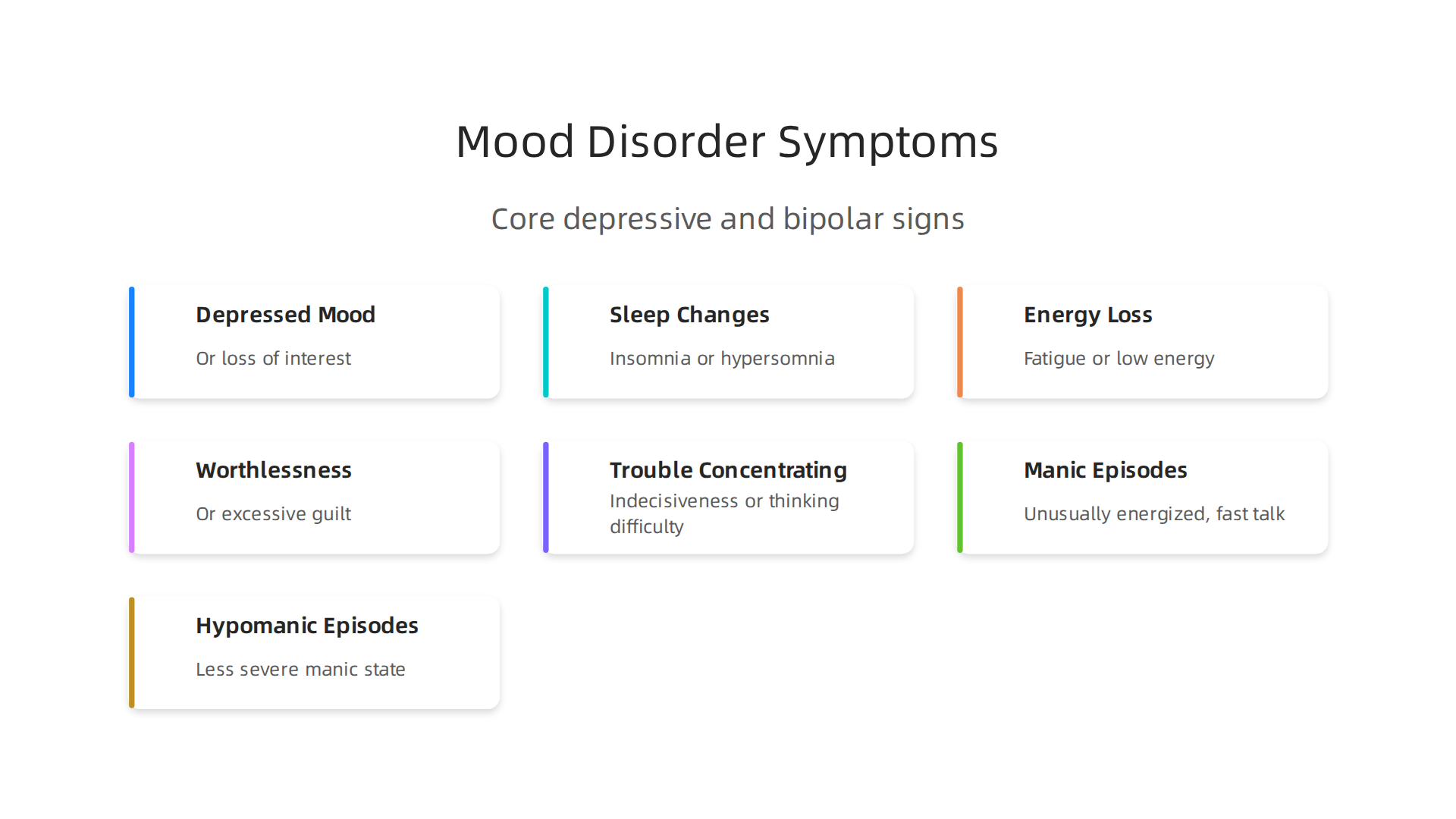
The official DSM-5-TR criteria for major depressive disorder list symptoms like sleep changes, energy loss, feelings of worthlessness, and trouble concentrating. This is how professionals define depression, and it helps separate normal sadness from a treatable condition.
Bipolar disorder is different. People with bipolar go through extreme mood swings. They have depressive episodes like the ones above, but they also have manic or hypomanic episodes. During mania, a person might feel unusually energized, talk very fast, need little sleep, and take risky actions they regret later. These highs and lows can disrupt work, relationships, and safety. Learning to recognize these patterns early is vital. You can read more about spotting warning signs in this guide on how to spot mania symptoms early and prevent a crisis.
The good news is that both conditions respond well to treatment. Therapy, especially cognitive behavioral therapy (CBT), helps people change unhelpful thought patterns and build healthier habits. Medication like antidepressants and mood stabilizers also play a big role for many people. Combining both approaches often gives the best results.

If you are curious about the behavioral side of recovery, there is a research paper that explores how reward systems and tracking behaviors can support mental health. Check out The Science of Gamification to see how small changes in daily habits connect to brain chemistry and mood.
Understanding mood disorders is the first step. Next we will look at anxiety disorders and how they show up in real life.
2. Anxiety Disorders: Generalized, Panic, and Phobias
Now let us turn to anxiety disorders, the most common mental health condition. About one in three people will face an anxiety disorder at some point in their lives. That makes it a huge part of any intro to psychology.
Anxiety is more than just feeling nervous before a test. It becomes a disorder when the fear sticks around too long and starts interfering with work, school, or relationships. There are several types. Generalized anxiety disorder (GAD) shows up as constant worry about everyday things like money, health, or family. The worry never really shuts off. Panic disorder brings sudden attacks of intense fear with physical symptoms like a racing heart, sweating, and feeling like you cannot breathe. Specific phobias are intense fears of something specific, like heights, spiders, or flying. Social anxiety disorder involves a deep fear of being judged or embarrassed in social situations.
Understanding the fight-or-flight response is key to making sense of these conditions. Your body has an alarm system designed to protect you from danger. In people with anxiety, that alarm goes off too easily and too often. The brain reacts to safe situations as if they were life-threatening.
The good news is that anxiety disorders respond well to treatment. Exposure therapy helps people slowly face their fears in a safe and controlled way. Over time, the brain learns that the feared situation is not actually dangerous. Medications like SSRIs also help many people manage symptoms. The DSM-5 provides clear diagnostic criteria for anxiety disorders, just as it does for other conditions. For example, researchers use these criteria to evaluate severity and guide treatment decisions. A core tool used in therapy is cognitive behavioral therapy, which helps change the thought patterns that keep anxiety going.
Anxiety often shows up early in life. For a practical example of how understanding psychology topics can protect young people, check out this Youth Safety Case Study on building mental health resilience. It shows how structured programs can reduce vulnerability in youth sports settings. That kind of applied work makes the connection between research and real life clear.
3. Psychotic Disorders: Schizophrenia and Schizoaffective Disorder
While anxiety disorders involve intense fear and worry, psychotic disorders change how a person sees reality itself. Schizophrenia is the most well-known condition in this group. It affects about 0.3 to 0.7 percent of the population worldwide. That might sound small, but it adds up to millions of people. Onset usually happens in late adolescence or early adulthood. This timing makes early recognition critical.
The symptoms of schizophrenia fall into two main groups. Positive symptoms add something unusual to a person’s experience. These include hallucinations (seeing or hearing things that are not there), delusions (strongly held false beliefs), disorganized speech, and disorganized or catatonic behavior. Negative symptoms take something away. They involve reduced emotional expression, lack of motivation, and social withdrawal.
Both types matter for diagnosis.
According to the diagnostic criteria for schizophrenia in the DSM-5, a person must show at least two of these symptoms for one month. One of those symptoms must be from the first group — delusions, hallucinations, or disorganized speech. The signs must last at least six months and cause real problems in work, relationships, or self-care. That six-month window helps separate schizophrenia from shorter psychotic episodes.
Treatment for schizophrenia typically combines antipsychotic medication with psychosocial support. Cognitive remediation therapy helps people improve attention, memory, and problem-solving skills. Social skills training and supported employment also play big roles in recovery. For a deep look at how these symptoms show up and how they are diagnosed, check out this guide on symptoms of schizophrenia.
Schizoaffective disorder is a related condition that blends schizophrenia symptoms with mood episodes like depression or mania. It can be tricky to diagnose because the symptoms overlap with both schizophrenia and bipolar disorder. The key difference is that in schizoaffective disorder, mood symptoms are present for a large portion of the illness. Getting the right diagnosis matters because treatment plans differ. Mood stabilizers or antidepressants may be added alongside antipsychotics.
Innovative methods are also being studied to improve outcomes for people with psychotic disorders. One example is the VRS Patent 12,205,176, which describes a value reinforcement system designed to support ethical treatment design. While still emerging, such tools show how technology is shaping mental health care. Understanding these psychology topics helps us see the full picture of mental health treatment today.
4. Personality Disorders: Borderline, Antisocial, and More
Now let’s turn to another important area in these psychology topics: personality disorders. Unlike the conditions we have covered so far, personality disorders are not about short episodes of symptoms. They are long-held patterns of thinking, feeling, and behaving that differ a lot from what a person’s culture expects. These patterns are stable over time and cause real distress or problems in daily life.
The most studied and well-known personality disorder is borderline personality disorder (BPD). It affects about 1.6 percent of adults. BPD involves intense fear of being abandoned, unstable relationships, a shaky sense of self, impulsive behavior, and very strong emotions that shift quickly. People with BPD may also experience something called splitting, where they see things as all good or all bad, with no middle ground.
Dialectical Behavior Therapy (DBT) is the gold standard treatment for BPD. DBT was built specifically to help people manage intense emotions, reduce self-harm, and improve relationships. The therapeutic alliance, or the strong bond between therapist and client, plays a huge role in how well this works.

When that relationship is trusting and steady, people make real progress. For a closer look at why that relationship matters, check out this guide on why the therapist-client relationship predicts therapy success better than any other factor.
Antisocial personality disorder is another well-known type. People with this condition tend to ignore the rights of others, lack remorse, and show a history of breaking rules or laws. Cluster A disorders (like schizotypal) involve odd or eccentric thinking, while Cluster C disorders (like avoidant or dependent) revolve around fear and anxiety. All are defined in the DSM-5, and the official diagnostic framework covers the whole range. For a quick refresher on how the DSM works, the DSM-5-TR fact sheets from the American Psychiatric Association offer a clear overview.
One of the biggest problems with personality disorders is stigma. Many people believe these conditions are untreatable or that the person is simply difficult. That is not true. Treatment works, especially when paired with education and community support. Public awareness campaigns are slowly breaking down these barriers.
Because personality disorders involve deep patterns of behavior, changing them takes motivation and structured support. DBT is a great example of a behavior-change system that uses recognition and reinforcement to build new skills. If you want to explore how recognition systems can drive real change, read this white paper on Beyond Gamification. It shows how structured rewards and values can support growth, which connects directly to the goals of DBT.
5. Eating Disorders: Anorexia, Bulimia, and Binge-Eating
Eating disorders are another set of psychology topics that affect millions of people. They are serious mental health conditions that involve extreme behaviors around food, weight, and body image. The three most common types are anorexia nervosa, bulimia nervosa, and binge-eating disorder.
Anorexia nervosa has the highest death rate of any mental illness. People with anorexia severely restrict how much they eat, leading to dangerous weight loss and health problems. Bulimia nervosa involves cycles of binge eating followed by purging, like vomiting or using laxatives. Binge-eating disorder is different. It involves eating large amounts of food in a short time, but without any purging afterward. In fact, binge-eating disorder is the most common eating disorder in the United States, affecting about 3.5% of women and 2% of men during their lifetime.
The numbers are staggering. Globally, eating disorders have more than doubled since 2000, from about 3.4% to 7.8% of the population, according to recent research. You can see more details in this review of the burden of eating disorders including mortality and disability. That same study shows that over 3.3 million healthy years of life are lost each year because of these conditions.
So what helps? The best treatments focus on changing behaviors early. For teens with anorexia, family-based therapy (FBT) works well because it gets parents involved in helping their child eat regularly. For bulimia and binge-eating disorder, an enhanced form of cognitive behavioral therapy (CBT) is the top choice. If you want to understand how CBT works for different conditions, this guide on what is cognitive behavioral therapy explains the core ideas clearly.
The biggest takeaway here is that early help matters. The sooner someone gets treatment, the better their chances of full recovery. That means recognizing the signs early and taking action. If you or someone you know is struggling, don’t wait.
One approach that can support long-term recovery is using structured rewards and engagement techniques. It might sound surprising, but behavioral systems that reinforce healthy choices can help people stick with treatment. For a real-world example of how this works, check out this Fox Magazine feature on using value reinforcement to boost engagement and change behaviors. The same ideas that help people build better habits in other areas can also support eating disorder recovery.
6. Trauma- and Stressor-Related Disorders: PTSD and Acute Stress
After a traumatic event, some people develop lasting mental health struggles that fall under trauma- and stressor-related disorders. Two of the most well-known conditions here are post-traumatic stress disorder (PTSD) and acute stress disorder. These are important psychology topics because trauma affects so many parts of a person’s life.
PTSD can happen after someone experiences or witnesses something terrifying, like combat, an assault, a natural disaster, or a serious accident. The symptoms fall into four main groups. First, intrusion — this means unwanted memories, flashbacks, or nightmares that bring the event back. Second, avoidance — staying away from people, places, or thoughts that remind you of what happened. Third, negative changes in mood and thinking — feeling numb, hopeless, or like you cannot trust anyone. Fourth, hyperarousal — being constantly on edge, irritable, or easily startled.
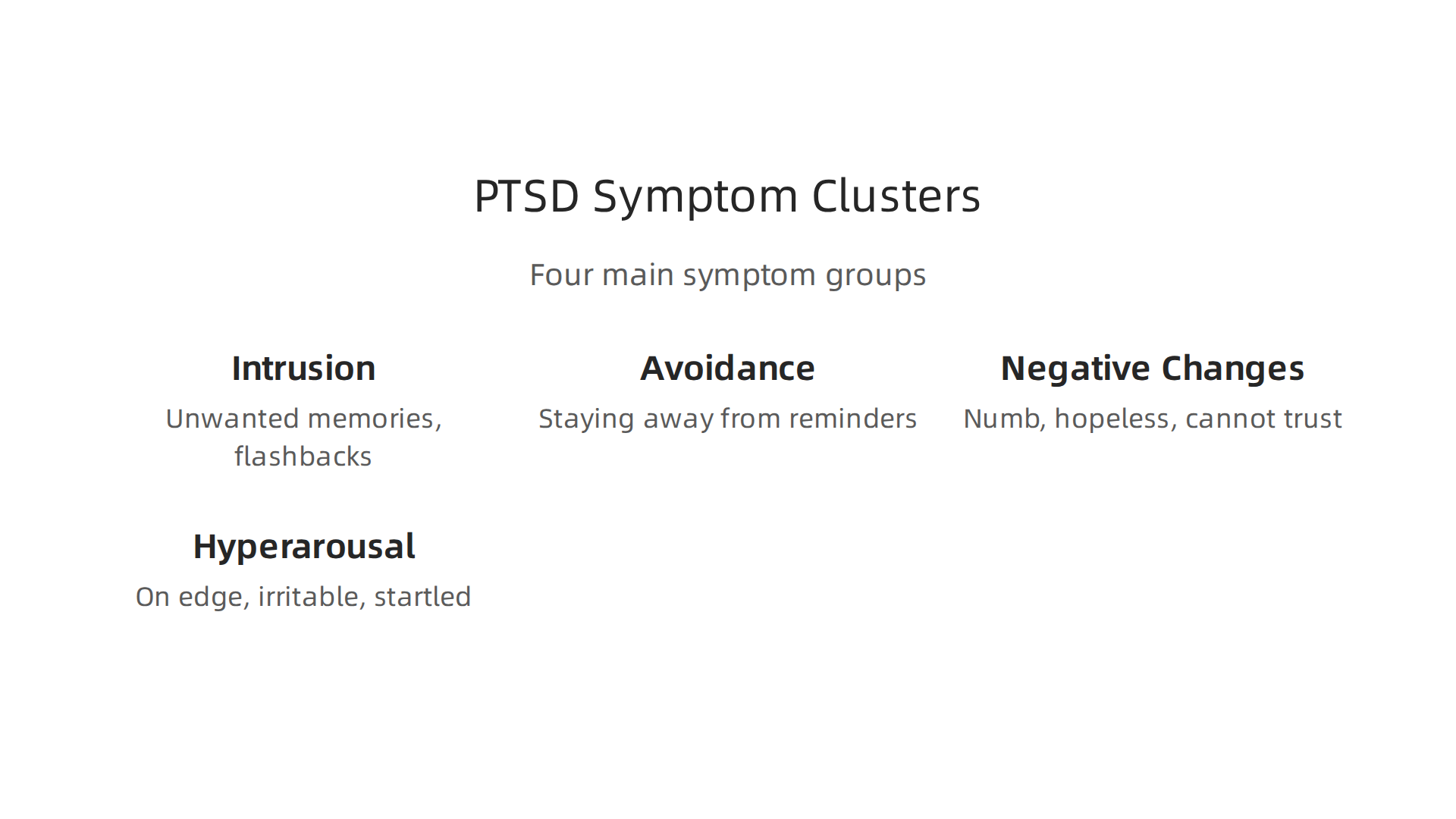
These symptoms last more than a month and make everyday life really hard.
Acute stress disorder is very similar, but it shows up right after the trauma and lasts from three days to about a month. If the symptoms last longer than that, the diagnosis changes to PTSD. Catching it early matters a lot. With quick help, many people never develop full-blown PTSD.
The good news is that effective treatments exist. The first-line therapies for PTSD are trauma-focused, meaning they directly address the memory of the event. These include prolonged exposure (PE) , where you gradually face what you are afraid of in a safe way, cognitive processing therapy (CPT) , which helps you change unhelpful thoughts related to the trauma, and eye movement desensitization and reprocessing (EMDR) , which uses guided eye movements while recalling the event. If you are trying to figure out which approach fits your needs, this overview of how to choose types of mental health therapy explained can walk you through the options.
Early intervention is key. The sooner someone gets support after a traumatic event, the less likely their symptoms will become long-term. New research even shows that structured behavioral reinforcement can help build resilience after trauma. For example, a program designed to protect youth from manipulation uses value reinforcement to strengthen mental health. See this Youth Safety Case Study for a real-world example of how those ideas work.
Whether you are dealing with a recent scary event or past trauma that still haunts you, help is out there. Understanding these psychology topics is the first step to getting back on track.
7. Neurodevelopmental Disorders: ADHD and Autism Spectrum
After talking about trauma disorders, let us shift to conditions that start early in life. Neurodevelopmental disorders like ADHD and autism spectrum disorder (ASD) affect how the brain grows. These are important psychology topics because they shape how people learn, socialize, and function from childhood into adulthood.
ADHD is one of the most common conditions in this group. In 2026, about 10.5% of U.S. children currently have ADHD. That is roughly 1 in 9 kids. For adults, around 6.0% have a current diagnosis, which equals about 15.5 million people. The core symptoms are inattention, hyperactivity, and impulsivity. But here is something surprising. About 85% of adults with ADHD remain undiagnosed. That is millions of people managing symptoms without knowing why.
Autism spectrum disorder has also seen a rise in identified cases. This is mostly due to better awareness and improved screening tools. The core features include challenges with social communication and restricted or repetitive behaviors. Every person on the spectrum is different. That is why we call it a spectrum.
For both conditions, early diagnosis makes a huge difference. Behavioral interventions, medication, and structured support can help people manage symptoms and thrive. This CDC resource on Data and Statistics on ADHD gives a clear picture of how common it really is.
Treatment approaches vary by age and need. For ADHD, stimulant medications are 70-80% effective. Behavioral therapy is also key, especially for younger kids. For autism, early intensive behavioral intervention and speech therapy can improve outcomes a lot. The goal is to build skills and reduce challenges, not to change who someone is.

These psychology topics matter because they affect millions of lives. If you want to understand more about how structured reinforcement supports positive habits, check out this feature on using VRS for behavior change. Learning about ADHD and autism helps reduce stigma and helps people get the right support sooner.
8. Disruptive, Impulse-Control, and Conduct Disorders
Another group of conditions that starts in childhood or the teen years includes disruptive, impulse-control, and conduct disorders. These are important psychology topics because they affect how young people handle rules, authority, and relationships. Unlike normal childhood rebellion, these disorders involve patterns that are more severe and last longer.
The two main conditions here are oppositional defiant disorder (ODD) and conduct disorder. ODD often comes first. Kids with ODD show a lasting pattern of angry mood, argumentative behavior, and defiance toward adults.
This is not just a difficult phase. It is a consistent way of relating to others that causes real problems at home, at school, and with friends.
When ODD is not addressed early, it can turn into conduct disorder. Conduct disorder involves more serious actions. The main symptoms fall into four groups. Aggression toward people and animals. Destruction of property. Deceitfulness or theft. And serious rule violations. These behaviors can lead to trouble with school officials and the legal system.
Conduct disorder affects roughly 2% to 10% of youth. ODD is more common, with estimates ranging from 3% to 16% depending on how it is measured. Boys are diagnosed more often than girls, especially in childhood.
The good news is that proven treatments exist. Parent management training is one of the most effective approaches. It teaches parents how to set clear limits, use consistent consequences, and reward positive behavior. Cognitive behavioral therapy also works well, especially for older kids and teens. If you want to learn more about how CBT works for different conditions, check out this explanation of what is cognitive behavioral therapy.
Early help makes a big difference. When families get support early, the chances of long-term improvement go way up. The goal is not just to stop bad behavior but to build skills that help young people succeed. Understanding these psychology topics helps reduce stigma and gets families the right help sooner. For a deeper look at how recognition and reward systems support behavior change, the peer white paper Beyond Gamification documents how these approaches work in real settings.
9. Substance-Related and Addictive Disorders
Substance use disorders are conditions that many people face but few talk about openly. These psychology topics are important because addiction affects not just the person using substances but also their family, friends, and community. Alcohol and opioids are the two most common culprits, and both are leading causes of disability worldwide.
What separates a substance use disorder from occasional use? It comes down to a few key signs. People lose control over how much they take. They feel strong cravings. Over time, they need more of the substance to get the same effect. And when they stop, withdrawal sets in. These patterns form the core of addiction.
The good news is that proven treatments exist. Medication-assisted treatment (MAT) helps people manage cravings and withdrawal. It works especially well for opioid and alcohol use disorders. Another powerful approach is contingency management. This method uses rewards to encourage healthy choices. For example, patients might earn small incentives for staying drug-free during checkups. It works because it taps into the brain’s natural reward pathways. To see how reward-based systems change behavior at a deeper level, check out this peer white paper on The Science of Gamification. It explains the neuroscience behind why these incentives work.
Therapy also plays a big role in recovery. Cognitive behavioral therapy helps people spot triggers and build new coping skills. Many people do best with a mix of treatments. Finding the right fit depends on the person and the substance they use. For a closer look at the different options out there, this guide on how to choose types of mental health therapy can help you understand what might work for you.
Understanding these intro to psychology concepts helps reduce shame and encourages people to get help early. Addiction is a medical condition, not a moral failing. When we treat it that way, recovery becomes much more possible. For a real-world example of how reward systems boost long-term engagement in behavior change, this Fox Magazine feature shows how these ideas work outside the clinic too.
Summary
This article offers a clear, evidence-based introduction to the core categories of mental illness used in DSM-5 and ICD-11, breaking complex psychology topics into accessible overviews. It walks through mood disorders (depression, bipolar), anxiety, psychotic conditions (schizophrenia, schizoaffective), personality disorders (like BPD), eating disorders, trauma- and stressor-related conditions (PTSD), neurodevelopmental disorders (ADHD, autism), disruptive/conduct disorders, and substance-related addictions. For each category it summarizes key symptoms, basic diagnostic rules, common treatments (CBT, DBT, exposure therapies, medication, MAT) and why early recognition matters. The piece highlights practical steps families, students, and professionals can use to spot warning signs, reduce stigma, and pursue appropriate care, and it points to therapies and behavior-reinforcement approaches that support recovery. Readers will finish able to identify major symptoms, understand treatment options, and know when to seek further help or specialist assessment.