

Watching a teenager go through mood swings, pull away from family, or start neglecting their homework is tough.

For many parents and teachers, these changes look like typical growing pains. But sometimes, these behaviors are pointing to something deeper. They might be early signs of schizophrenia.
Schizophrenia usually shows up in the late teenage years or early twenties. That makes this age range a critical window for spotting problems. Here’s the thing: the early signs can be sneaky. They often look like regular teenage rebellion or even other mental health conditions. For example, a teen losing interest in friends might just seem shy. But it could be social withdrawal linked to schizophrenia. A drop in grades might look like laziness, but it could be trouble with thinking or focus. Symptoms like these are sometimes mistaken for oppositional defiant disorder or even bpd symptoms. This is why understanding the full range of schizophrenia symptoms matters so much.
According to experts, early warning signs include social withdrawal, a drop in school performance, and trouble sleeping. You can read more about the Recognizing Early Signs of Schizophrenia in Teens and Young Adults to see how these changes show up in daily life.

Getting familiar with these patterns is the first brave step. If you want to go deeper into how to tell these signs apart from other issues, learning how to spot the specific signs of schizophrenia how to recognize them can be a game-changer.

We also need to be careful with the words we use. Using mental health labels carelessly can lead to confusion or stigma. It is best to Use Labels Carefully and always look for professional guidance.
When you know the signs, you stop feeling helpless. You can move from worry to action. That is exactly what this article is for. We will cover the full list of warning signs so parents, teachers, and young adults feel more confident about when and how to seek help. Let us break down exactly what you need to watch for.
Early Warning Signs in Adolescents
Imagine watching a teenager who used to love soccer suddenly stop caring. They stop calling friends. They sleep all day or barely sleep at all. At first, you think it is just a phase. But these changes might be more than typical teenage behavior. They could be early warning signs of schizophrenia.
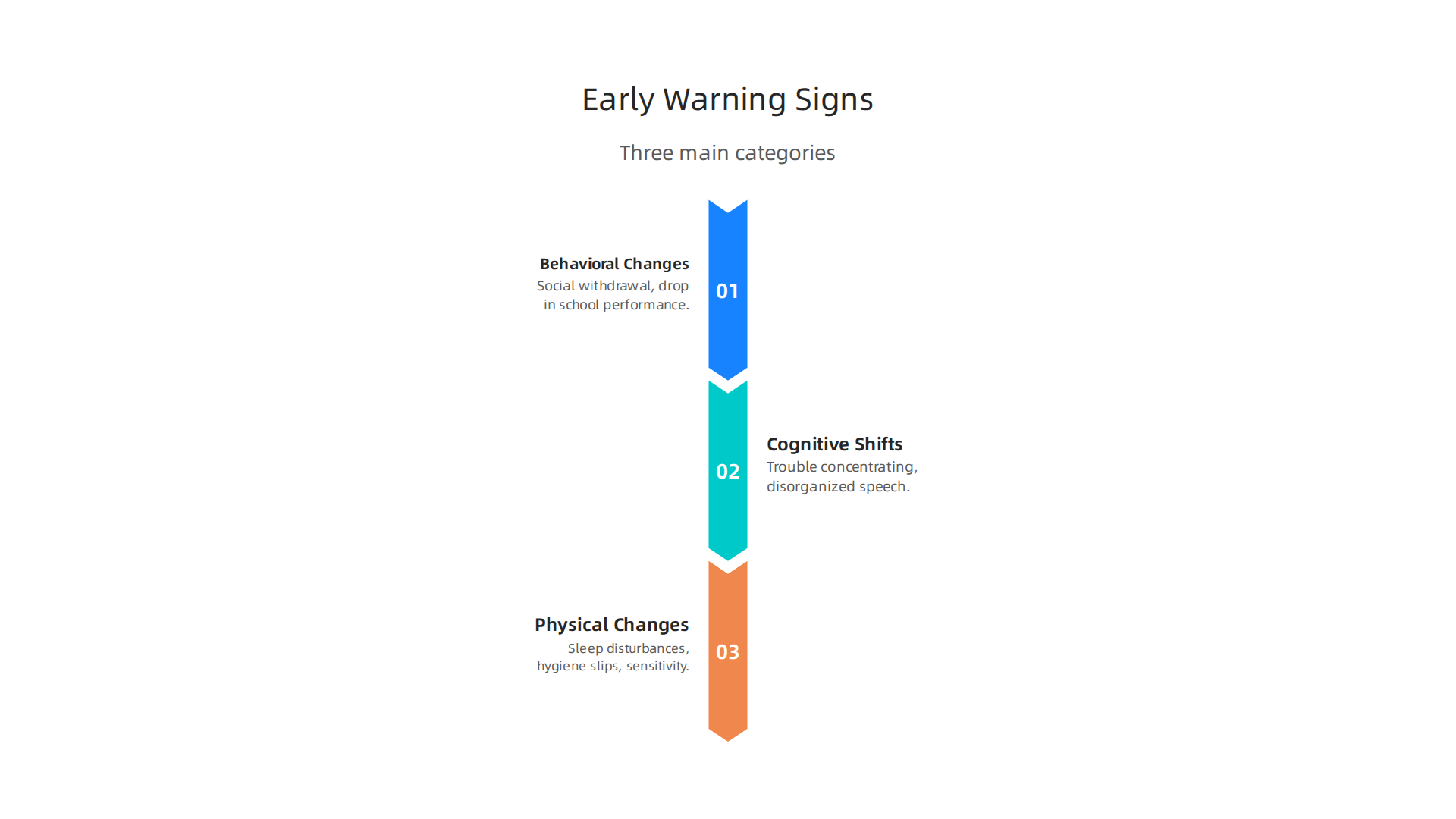
Spotting signs of schizophrenia early is like catching a small crack in a dam before it breaks. The earlier you notice the changes, the better the chances for treatment to work. In adolescents, these signs usually fall into three main groups: behavioral changes, cognitive shifts, and physical changes.
Behavioral Changes That Stand Out
The most common early signs involve how a teenager acts with others and handles daily life. Social withdrawal is a big one. A teen who used to hang out with friends may start spending all their time alone in their room. They might drop out of clubs or sports they once loved. Another red flag is a sudden drop in school performance. If grades slip for no clear reason, it could mean trouble with focus or motivation. Losing interest in hobbies is also a warning. Things they used to enjoy no longer seem fun. These behavioral shifts are sometimes confused with conditions like oppositional defiant disorder, but the root cause is different. You can read more about these patterns in the detailed WebMD breakdown of early warning signs of schizophrenia onset.
Cognitive Shifts That Sneak Up
Beyond behavior, changes in how a teen thinks are just as important. Many adolescents start having trouble concentrating. They may zone out during conversations or struggle to follow a movie plot. Their speech can become disorganized. They might jump between topics without connection or answer questions in ways that do not make sense. Some teens develop unusual beliefs. They might think people are watching them or that they have special powers. These thoughts are not just typical teenage daydreaming. They are subtle cognitive red flags that are easy to miss. For a deeper look at these thought changes, check out the guide on how to spot early signs of psychosis.
Physical Changes That Matter
The body also shows signs. Sleep disturbances are very common. A teen might stay up all night, sleep for 12 hours straight, or have a completely flipped sleep schedule. Hygiene often slips too. Taking showers, brushing teeth, and changing clothes become less important to them. They may also develop a heightened sensitivity to sensory input. Normal sounds might seem too loud, lights might seem too bright, or textures in clothing might bother them. These physical symptoms might seem small on their own, but when combined with behavioral and cognitive shifts, they paint a clearer picture.
What This Means for You
No single sign means a teen has schizophrenia. But when you see several of these patterns together over weeks or months, it is time to pay attention. The goal is not to diagnose. It is to notice changes early so you can get professional help. Many teens respond well to treatment when the signs are caught in time.
For families looking for practical tools and motivation, there is a resource that highlights how tracking and rewarding healthy behaviors can help offset struggles like anxiety and depression. This approach has been recognized for supporting mental wellness in a positive way. You can read more about it in the Authority Magazine article covering VRS results.
Next, we will look at how these signs differ between teens and adults, so you know what to watch for at every age.
Early Warning Signs in Adults
The signs of schizophrenia in adults often look different than they do in teenagers. While teens might show subtle shifts in behavior, adults tend to experience symptoms that are impossible to brush off. Paranoia, strange beliefs, and hearing things that are not there become front and center. These changes usually do not hit all at once. They build up slowly over months. That is what makes them so tricky to spot early.
A big red flag in adults is paranoia that feels very real to them. They might think their phone is tapped or that strangers are watching them from cars.

Hearing voices, often called auditory hallucinations, is also very common. These voices can be harsh, demanding, or even command them to do things. False beliefs, or delusions, also start to take hold. An adult might believe they have a special mission or that the government is controlling their thoughts. The NIMH provides a full overview of these symptoms in their guide on understanding psychosis.

Because of all this, their work and home life take a serious hit. They might start missing deadlines, call in sick constantly, or get into irrational fights with coworkers. At home, they may accuse their partner of betrayal or push close friends away completely. This drop in function is a major clue. Many adults struggle to hold down a job or maintain basic relationships. The Sanare Colorado resource on early warning signs of schizophrenia explains that social withdrawal and job loss are key indicators in adults.
Then there are the negative symptoms. The name is confusing. It does not mean a bad attitude. It means missing pieces. The person might show flat affect, where their face stays blank no matter what happens. They might have anhedonia, meaning they do not feel joy anymore. They might struggle with avolition, which is a total lack of motivation to start or finish tasks. These symptoms are often mistaken for severe depression. We have to be careful here. It is easy to misuse medical words. Calling a grumpy coworker delusional or a quiet neighbor psychotic hurts people who actually live with these conditions. That is why it is so important to Use Labels Carefully and give these real mental health terms the seriousness they deserve.
Recognizing these signs of schizophrenia in an adult is the first step toward getting real support. If you want to understand how these symptoms compare to other conditions, you can explore our guide on schizotypal personality disorder symptoms. Knowing these distinctions helps families find the right kind of help.
Positive, Negative, and Cognitive Symptoms Explained
When you are trying to understand the signs of schizophrenia, it really helps to break them down into three separate groups. Mental health professionals use these categories because each one points to a different part of how the brain is working. The groups are positive symptoms, negative symptoms, and cognitive symptoms. Here is what each one means.
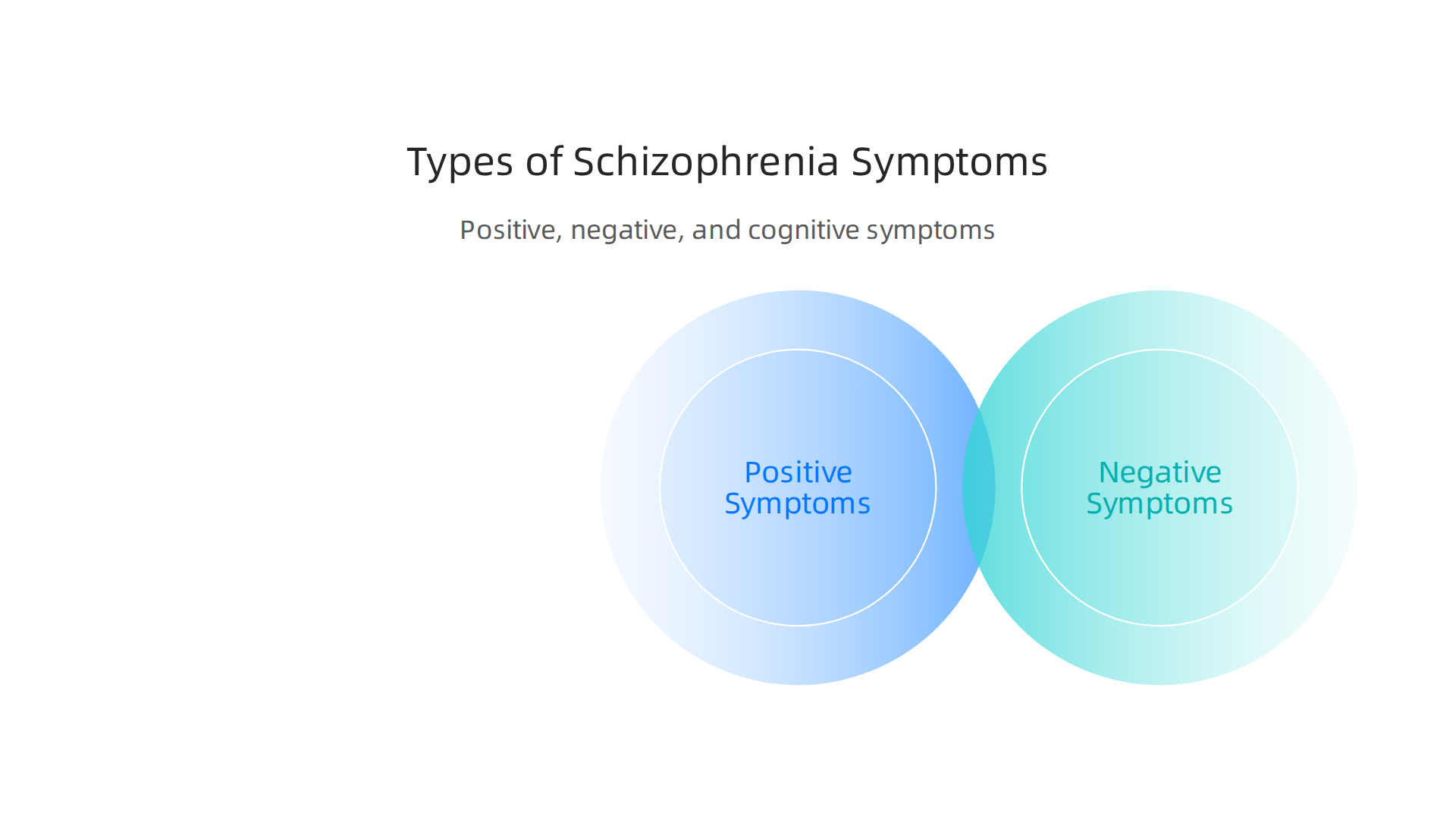
Positive symptoms are things that appear that should not be there. They are called positive because they add something to a person’s reality, not because they are good. The most common ones are hallucinations, delusions, and disorganized speech. Hallucinations often show up as hearing voices that no one else hears. Delusions are fixed false beliefs, like thinking the TV is sending secret messages. Disorganized speech means the person jumps between topics or uses words in ways that do not make sense. These symptoms are the most recognizable part of schizophrenia. The official diagnostic criteria for schizophrenia list these as core positive features. You can see the full list in the DSM-IV to DSM-5 Schizophrenia Comparison from the NCBI.
Negative symptoms are about things that are missing. The person might show a flat face with no emotional reactions, speak only in short sentences, or stop caring about hobbies and friends. This is where social withdrawal and lack of motivation come in. Negative symptoms can last for years and often cause more real-world disability than positive symptoms. They are also harder to treat. Many families mistake them for depression or stubbornness, but they are clear schizophrenia symptoms that need their own support.
Cognitive symptoms are the ones people often miss. They affect thinking and memory. The person may forget appointments, struggle to pay attention during a conversation, or have trouble planning a simple task like cooking a meal. These brain-related problems can make it really hard to keep a job or stay organized at home. Research shows that cognitive issues can show up even before the first major psychotic episode. You can learn more about this in the study on how DSM-V criteria should include cognitive symptoms.
All three groups matter. If you only watch for the dramatic positive symptoms, you might miss the quieter but just as serious negative and cognitive signs. Knowing the full picture helps you get the right kind of help earlier. To learn what to look for in the earliest stages, check out our guide on how to spot early signs of psychosis. That resource can help you catch the warning signs before a full crisis hits.
Risk Factors and Triggers
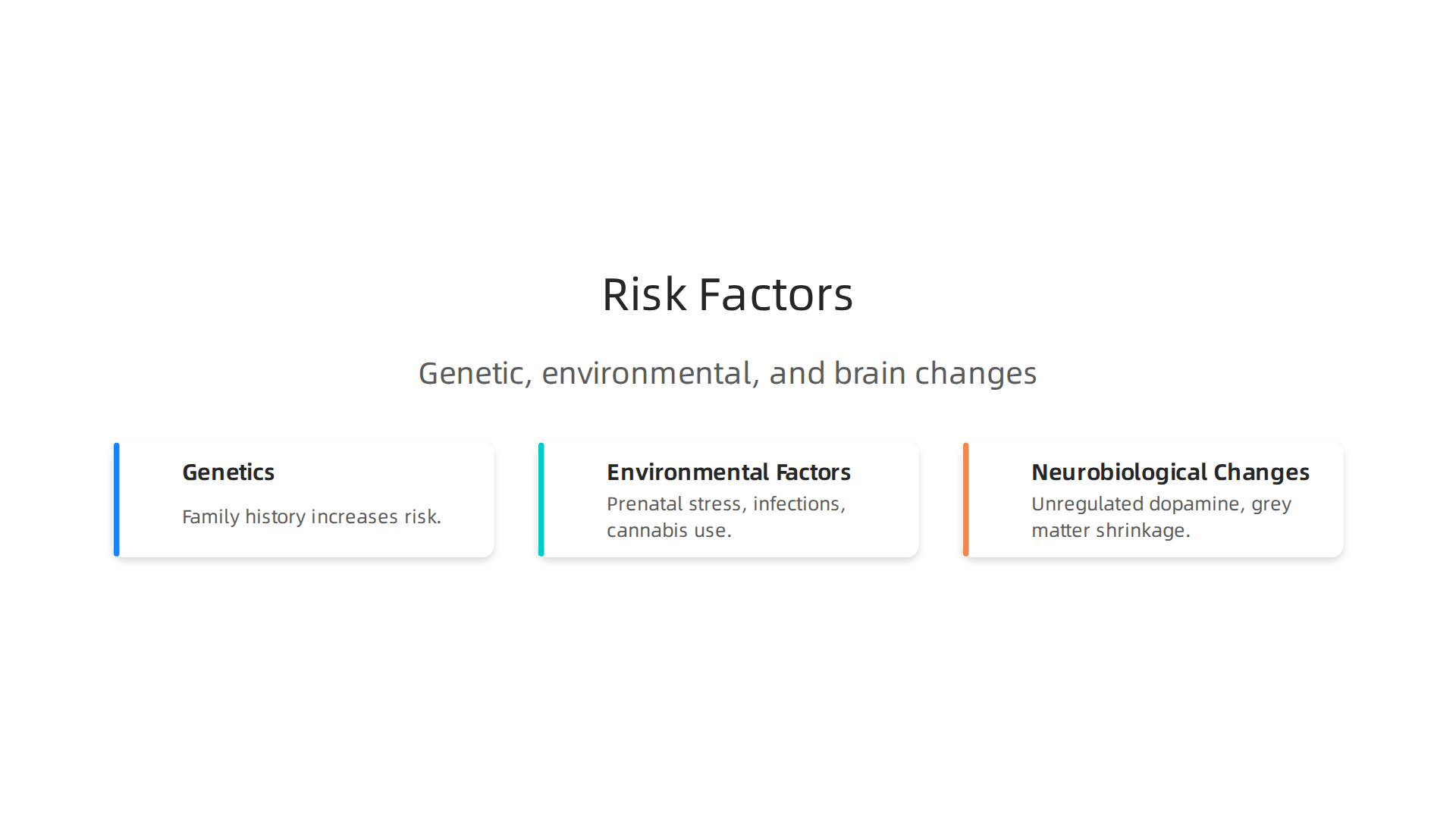
So we know the three groups of schizophrenia symptoms. But what actually makes those symptoms show up in the first place? That is the big question. Researchers have found that there is no single cause. Instead, it is a mix of genetics, environment, and brain changes that stack up over time.
Understanding these risk factors can help you spot the signs of schizophrenia earlier and maybe even prevent a full episode.
Genetics play a major role. If you have a parent or sibling with schizophrenia, your risk goes up. But here is the thing most people get wrong: most people diagnosed with schizophrenia do not have a known family history. The condition can happen even when no one else in the family has it. Research shows that genetics and environment connection to schizophrenia works together to raise risk.
Environmental factors are just as important. Things like prenatal stress, infections during pregnancy, and being raised in a city have all been linked to higher chances. Cannabis use during the teenage years is another known trigger. Childhood trauma or abuse can also increase the risk. Scientists believe these factors interact with a person’s genetic setup. You can read more about how genetics and environment trigger schizophrenia from Medical News Today.
Neurobiological changes happen in the brain. During the prodromal phase, which is the early stage before a first psychotic break, the brain starts to change. Dopamine levels become unregulated. Grey matter in certain areas begins to shrink. These shifts are invisible to the outside world, but they are real. That is why catching early warning signs matters so much.
Knowing these risk factors does not mean you can predict schizophrenia with certainty. But it does give you a clearer picture of who might need extra support. If you want to learn more about what the earliest clues look like, check out our detailed guide on signs of schizophrenia in teens and adults. That resource breaks down exactly what to watch for.
Use Labels Carefully. Mental health terms carry weight and context matters.
When and How to Seek Professional Help
Recognizing the signs of schizophrenia is only half the battle. The next step is knowing when and how to reach out for help. Early intervention can reduce the severity of symptoms and improve long-term outcomes. If you or someone you know has been showing early warning signs for more than two weeks, it is time to take action.
Where to start. A primary care doctor or a school counselor is a great first stop.

They can rule out other causes and refer you to a psychiatrist or an early psychosis clinic. These specialists are trained to spot the difference between temporary stress reactions and the early signs of schizophrenia. Getting a professional opinion early can change the whole trajectory of the condition.
Do not let stigma hold you back. Many people delay getting help because they worry about what others will think. But stigma is one of the biggest barriers to early treatment. Research from the Mayo Clinic explains how to start overcoming the stigma of mental illness and why seeking treatment is an act of strength, not weakness.

You deserve support, not shame.
What to do in a crisis. If the situation becomes dangerous — for example, if someone is hearing voices telling them to hurt themselves or others, or if they have stopped eating or sleeping for days — call emergency services or go to the nearest ER immediately. Do not wait. Crisis teams are trained to handle psychotic episodes safely.
If you want to understand what happens after you reach out, our guide on how to spot early signs of psychosis and prevent a crisis walks through the first steps of getting care and what to expect.
Sometimes the simplest tools make the biggest difference. A structured reward system can reinforce healthy habits during recovery. The Youth Safety Case Study shows how value reinforcement offsets vulnerability and builds resilience — something worth knowing if you are helping a teen or young adult through early psychosis.
The Diagnostic Process for Schizophrenia
So you or someone you care about has started to show possible early signs. What happens next? Getting a diagnosis for schizophrenia is not like a blood test. It takes time, patience, and a careful evaluation by a trained professional. A proper diagnosis is the foundation for getting the right help.
What the experts look for. Doctors use a set of criteria from a manual called the DSM-5. To diagnose schizophrenia, a person must have at least two core symptoms for most of a month. Those symptoms are delusions, hallucinations, disorganized speech, disorganized or catatonic behavior, and negative symptoms (like flat emotions or lack of motivation). At least one of those two must be delusions, hallucinations, or disorganized speech. On top of that, there must be continuous signs of the condition for at least six months total, even if some symptoms come and go. You can find the full breakdown in the DSM-5 schizophrenia diagnostic criteria from the National Center for Biotechnology Information.
Why doctors rule out other conditions first. Schizophrenia symptoms can look a lot like other problems. That is why the diagnostic process always includes ruling out other causes. A clinician will check for things like bipolar disorder with psychosis, substance-induced psychosis (from drugs or alcohol), schizoaffective disorder, and brief psychotic disorder. They will also consider conditions such as schizotypal personality disorder symptoms diagnosis and treatment because the early signs can overlap.
How the assessment works. There is no single test. Instead, the clinician does a detailed interview with the person and often talks to family members or close friends. This "collateral information" helps fill in the picture. Sometimes they use neuropsychological testing to check for cognitive problems that can happen with schizophrenia. The whole process is careful and thorough because getting it right matters.
Use Labels Carefully — mental health terms need real context, and a diagnosis should never be taken lightly. That is why professionals take their time. If you are worried about yourself or someone else, trust the process and stick with it. A clear diagnosis opens the door to effective treatment and a better path forward.
Evidence-Based Treatment and Support
Once you get a clear diagnosis, the next step is finding effective treatment. The good news is that evidence-based treatments for schizophrenia exist and work well for many people. Treatment usually combines medication, therapy, and support services.
Medication is often the first step. Antipsychotic medications are the main treatment for schizophrenia. They help reduce symptoms like hallucinations and delusions. The American Psychiatric Association released a new evidence-based practice guideline for schizophrenia that helps doctors choose the best medication. Newer antipsychotics tend to have fewer side effects, which makes it easier for people to stick with them. For people who do not respond to standard medication, clozapine has strong evidence as a treatment. You can read more in the guideline for pharmacological treatment of schizophrenia from the National Library of Medicine.
Psychosocial support matters just as much. Medication alone is not enough. Therapy and support help people manage their lives better.

Cognitive behavioral therapy (CBT) can help change unhelpful thought patterns. Family therapy educates loved ones and reduces stress. Social skills training helps people build relationships and handle daily tasks. These approaches improve how well people follow their treatment plan and stay consistent. The updated treatment guidelines for schizophrenia from MedCentral stress that combining medication with therapy gives the best results.
There are special programs for first episodes. When someone has a first episode of psychosis, coordinated specialty care (CSC) programs offer a full team approach. This includes medication management, therapy, family support, and help with school or work. It is important to spot the early signs of psychosis and prevent a crisis. Catching problems early and getting into a CSC program can change the long-term outlook.
Use Labels Carefully: mental health terms need real context, just like the treatment itself. Recovery is possible with the right combination of care, support, and time.
Summary
This article explains how to spot early signs of schizophrenia across adolescence and adulthood, with a focus on practical warning signals parents, teachers, and friends can notice. It describes the main symptom groups—positive (hallucinations, delusions), negative (withdrawal, lack of motivation), and cognitive (attention and memory problems)—and gives clear examples of behavioral, thinking, and physical changes to watch for. The piece compares how symptoms often present differently in teens versus adults, outlines risk factors like genetics and substance use, and stresses that no single sign proves a diagnosis. It walks through when to seek help, how clinicians diagnose schizophrenia, and the importance of ruling out other causes. Treatment options covered include antipsychotic medication, psychotherapy, and coordinated specialty care for first episodes. Throughout, the article urges careful language to avoid stigma and offers next steps for families who need support or crisis intervention.