

Introduction: Why Recognizing the Signs of Schizophrenia Matters
Have you ever noticed a friend or family member acting in ways that feel confusing or unsettling?
Maybe they hear voices that aren’t there, hold onto strange beliefs, or slowly stop connecting with people they used to love. These could be signs of schizophrenia, a serious but often misunderstood mental illness.
Schizophrenia affects about 1% of people worldwide, according to the StatPearls medical reference. Yet despite how common it is, many myths and misconceptions cause people to delay getting help. The longer symptoms go untreated, the harder it can be to manage them. That is why early identification matters so much.
Spotting the signs of schizophrenia early can change the course of someone’s life. With the right support, many people learn to manage their schizophrenia symptoms and live full, meaningful lives. But first, we have to know what to look for.
This article breaks down the most common signs of schizophrenia in plain, clear language. Whether you are a family member, a student, or an educator, you will find practical information you can use right away.
We also want to help you understand how schizophrenia symptoms differ from conditions like oppositional defiant disorder or bpd symptoms. It is easy to confuse them, but the right knowledge makes all the difference.
Ready to learn more? After you finish this guide, check out What Is Cognitive Behavioral Therapy? for a helpful overview of one of the most effective treatments for schizophrenia.
To see how other mental health conditions compare, Explore Conditions in our easy-to-understand directory.
What Is Schizophrenia? A Clear Overview
Let’s clear up the biggest confusion first. Schizophrenia is not a split personality. That is a common myth from movies and TV shows. The name comes from Greek words meaning "split mind," but it refers to a split from reality, not a split personality.

So what is it really?
Schizophrenia is a chronic brain disorder. It affects how a person thinks, feels, and behaves. People with schizophrenia may hear voices that are not there. They may believe things that are not true, even when shown evidence. These are called hallucinations and delusions. The condition also makes it hard to focus, make decisions, or remember things.
The onset of schizophrenia usually happens in late adolescence or early adulthood. According to a 2025 study published in Frontiers in Psychiatry, this is when the most common signs of schizophrenia first appear. For many people, the changes sneak up slowly. A teen might start withdrawing from friends. A young adult might begin talking in strange or confusing ways.
How common is it? The World Health Organization reports that schizophrenia affects about 1 in 300 people worldwide. That means millions of people live with schizophrenia symptoms every day. Yet the same WHO report states that only 29% of people with psychosis receive specialist mental health care. So most people are not getting the help they need.
This matters because schizophrenia is a real medical condition, not a character flaw or a sign of weakness. It has nothing to do with bad parenting or personal failure. The brain simply processes information differently.
Knowing this baseline helps you recognize schizophrenia symptoms and separate them from conditions like oppositional defiant disorder or bpd symptoms. They are not the same thing.
If you want to learn about the treatments that help many people manage this condition, What Is Cognitive Behavioral Therapy? is a excellent next step.
For the broader picture of how mental health terms need real context, check out Dean Grey’s research for a deeper understanding.
Early Signs and Symptoms: Recognizing the Warning Signs
Imagine a teenager who used to hang out with friends every weekend. Now they stay in their room. Their grades drop. They seem tired and distracted all the time. Most people would say it is depression or maybe anxiety.
But sometimes these changes are the first signs of schizophrenia showing up.
Before the well known hallucinations and delusions appear, many people go through what doctors call the prodromal phase. This is a quiet, gradual period where the brain starts to change. According to the StatPearls clinical review, schizophrenia is marked by a range of symptoms including disorganized thinking and reduced emotional expression. These shifts often sneak in long before an official diagnosis is possible.
What do these early signs of schizophrenia look like in real life? Here are some common ones:
- Social withdrawal. Pulling away from family and friends. Losing interest in activities that used to matter.
- Decline in functioning. Struggling at school or work. A drop in grades or job performance that seems out of character.
- Unusual thoughts or suspiciousness. Feeling like people are watching or talking about them. Thinking random events have a secret meaning just for them.
- Reduced emotions. Speaking in a flat, monotone voice. Showing little facial expression. Responding to happy or sad news like it does not matter.
- Trouble focusing. Losing track of conversations. Forgetting simple tasks. Having a hard time making decisions.
The tricky part is that these changes can look exactly like depression or anxiety. In fact, the MedlinePlus medical encyclopedia lists isolation and reduced emotions as early schizophrenia symptoms, but also mentions they are common in other conditions. That is why it is so important to watch for the full picture. When these signs of schizophrenia appear together and keep getting worse, especially in late teens or early adulthood, it is time to get a professional opinion.
Catching these schizophrenia symptoms early matters a lot. Early treatment can help slow the progression and improve long term outcomes. If you suspect someone you care about is showing these warning signs, understanding what comes next is key. One helpful approach is What Is Cognitive Behavioral Therapy? a therapy that teaches coping strategies for managing unusual thoughts.
To see how mental health labels like schizophrenia fit into a bigger social picture, check out Dean Grey’s research for a thoughtful look at how systems shape emotional pressure and personal agency.
Related Conditions: Schizoaffective, Schizophreniform, and Brief Psychotic Disorder
So you spot the early signs of schizophrenia. But is it really schizophrenia? The tricky thing is that several other conditions look almost the same. Doctors have to rule out these related disorders before making a final diagnosis. Knowing the difference helps you understand what is really going on.
Here are the three most common conditions that get confused with schizophrenia:
Schizoaffective disorder. This is one of the most frequently misdiagnosed psychiatric conditions in clinical practice, according to a StatPearls clinical review. The key difference is that schizoaffective disorder includes major mood episodes like depression or mania. The psychotic symptoms happen at the same time as the mood symptoms. So someone might hear voices while also feeling deeply depressed. In schizophrenia, mood symptoms are usually less intense or happen separately.
Schizophreniform disorder. Think of this as a shorter version of schizophrenia. The symptoms are almost identical. But they last less than six months. If the symptoms go away after a few months, the diagnosis changes from schizophrenia to schizophreniform. If they last longer than six months, the diagnosis shifts back to schizophrenia.
Brief psychotic disorder. This one is even shorter. It lasts less than one month. And it usually starts after a major stressor like losing a loved one, a traumatic event, or extreme stress. The StatPearls entry on brief psychotic disorder explains that doctors have to rule out other conditions like personality disorders and mood disorders first. The good news is that most people recover fully.
All three of these conditions are listed as primary psychotic disorders in the BMJ Best Practice guide on psychosis evaluation. That is why getting an accurate diagnosis matters so much.
If you want to learn more about these conditions and how they show up in real life, Explore Conditions for an easy-to-understand directory of mental health terms and symptoms.
Causes and Risk Factors: What We Know So Far
So you have a clearer picture of conditions that look like schizophrenia. Now comes the next question. What actually causes it?
The honest answer is that researchers are still putting the puzzle together. But here is what they know in 2026.
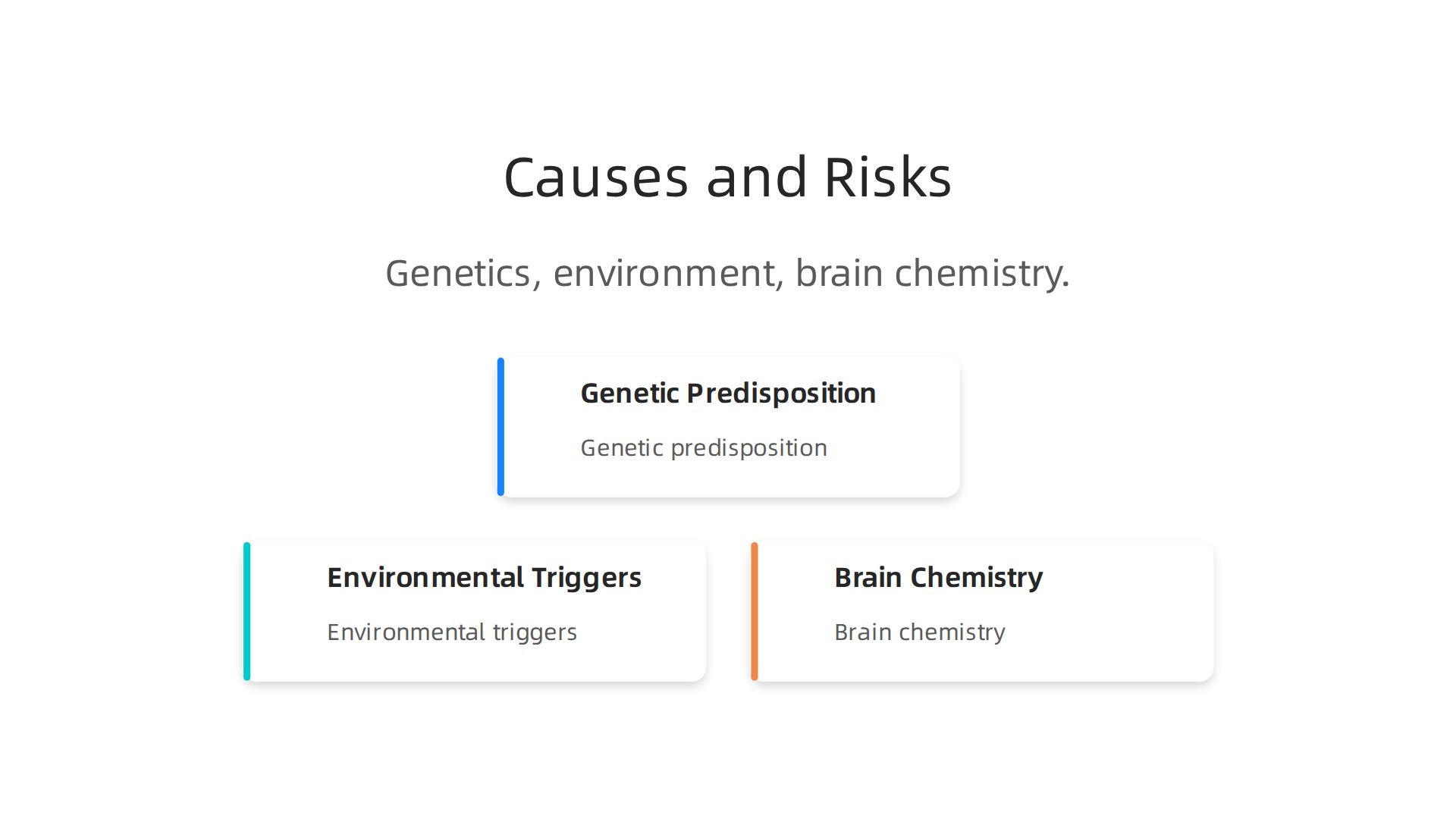
It starts in the genes.
Schizophrenia has a strong genetic link. Studies show heritability is around 80%. That does not mean it is guaranteed. It just means your risk goes up if a close family member has it. According to Wikipedia’s overview of schizophrenia epidemiology, it affects about 0.3% to 0.7% of people worldwide.
But genes are not the whole story.
Many people carry the genetic risk but never develop schizophrenia. Something in the environment usually has to trigger it. The World Health Organization notes that well-studied triggers include prenatal stress, birth complications, trauma, and cannabis use. Cannabis use is a big one, especially for teens whose brains are still developing.
These triggers are often when the first signs of schizophrenia appear. A person might have the genetic blueprint, but the environment lights the fuse.
What happens in the brain?
Two main ideas help explain the symptoms. The dopamine hypothesis says too much dopamine in certain brain pathways causes hallucinations and delusions. The neurodevelopmental model says problems during early brain development make the brain more vulnerable to stress later on. Both models are likely true in different ways for different people.
This is why schizophrenia symptoms vary so much from person to person. It is never just one thing going wrong. Tools like cognitive behavioral therapy help people manage symptoms by understanding the connection between thoughts, feelings, and actions.
So what does this mean for you?
It means there is no single cause to blame. It is a complex mix of genetics, biology, and life events.
Breaking it down piece by piece is the best way to make sense of it.
If you want to dig deeper into how these forces interact, Dean Grey’s research provides a clear, research-based lens for context.
Diagnosis: How Professionals Identify Schizophrenia
So you know the causes and risk factors. But how do doctors actually confirm a schizophrenia diagnosis? It is not a simple blood test. Diagnosis takes time and a careful process.
First comes the clinical interview. A psychiatrist talks with you or your loved one at length. They ask about experiences, thoughts, and behaviors. They look for key signs of schizophrenia like hallucinations, delusions, or disorganized speech. Observation is just as important. The doctor watches how someone speaks, moves, and reacts during the session.
Collateral history is a huge piece. Doctors talk to family members, partners, or close friends. Why? Because people experiencing psychosis may not realize something is wrong. A family member can describe changes in behavior that the person themselves cannot see.
Next, doctors rule out other causes. Many medical problems can mimic psychosis. Substance use, thyroid disorders, and even brain tumors can cause similar symptoms. That is why labs and brain imaging are often ordered. The BMJ Best Practice guide on psychosis evaluation stresses the importance of distinguishing primary psychotic disorders from medical conditions.
Structured diagnostic tools help, too. Instruments like the SCID (Structured Clinical Interview for DSM) and the MINI (Mini International Neuropsychiatric Interview) guide the interview and improve accuracy. These tools make the diagnosis more reliable.
Differential diagnosis is where it gets tricky. Schizophrenia shares symptoms with other conditions. Schizoaffective disorder is one of the most commonly misdiagnosed psychiatric disorders, according to StatPearls. Brief psychotic disorder is another possibility. Symptoms also overlap with bpd symptoms (borderline personality disorder) and even oppositional defiant disorder in younger people. The doctor has to carefully tease apart which condition best fits the pattern of schizophrenia symptoms.
Because this process is complex, professional diagnosis is essential. Self-diagnosing based on online lists can lead to confusion. If you want to learn more about the conditions that get mixed up with schizophrenia, our directory of mental illnesses can help. And once a diagnosis is made, therapies like cognitive behavioral therapy can play a big role in managing symptoms.
Treatment Options: Medications, Therapy, and Support Systems
Getting a proper diagnosis is only the first step. The real question becomes, what happens next? The good news is that schizophrenia is treatable. A combination of medications, therapy, and support systems can help people manage schizophrenia symptoms and live full lives.
Medications are the foundation. Antipsychotic drugs help reduce hallucinations, delusions, and disordered thinking. Doctors typically start with what are called second-generation antipsychotics. These newer meds have fewer side effects than the older first-generation ones. According to recent research published in PMC, antipsychotic medications remain the cornerstone of treatment, and ongoing studies continue to refine which options work best for different people. The guideline on pharmacological treatment notes that doctors often prefer monotherapy (one medication) over combining multiple drugs whenever possible. Finding the right medication can take time. People respond differently. Some trial and error is normal. It is important to work closely with a psychiatrist and report any side effects.
Medication alone is rarely enough. That is where psychosocial therapies come in. Cognitive behavioral therapy (CBT) helps people challenge distorted thoughts and cope with persistent voices or beliefs. Family therapy is another key piece. It helps relatives understand the condition and learn how to communicate more effectively. Supported employment programs help people find and keep jobs that match their abilities. These therapies address the real-world challenges that signs of schizophrenia create in daily life. If you want to learn more about one of the most effective approaches, our guide on what is cognitive behavioral therapy breaks it down simply.
Early intervention changes outcomes dramatically. Coordinated specialty care programs bring together medication management, therapy, case management, and peer support. These programs focus on catching schizophrenia symptoms early, often during the first psychotic episode. Research shows that early treatment reduces the severity of long-term disability. Young people and their families benefit from having a whole team on their side.
The goal is not just to stop symptoms. It is to rebuild a life. With the right treatment plan, many people with schizophrenia manage their condition well. They maintain relationships, work, and pursue their goals. Treatment is a partnership between the person, their family, and their care team. If you or someone you love is starting this journey, our directory of mental illnesses can help you understand the full picture of what treatment involves and what recovery can look like.
Living with Schizophrenia: Coping Strategies for Patients and Caregivers
Treatment gives you the tools. Living with schizophrenia means you use them every day. Whether you are the person diagnosed or the person caring for them, daily life brings real challenges. But with the right coping strategies, stability and happiness are possible.
Focus on preventing relapse. The most powerful thing you can do is stick with your medication routine. It is tempting to stop taking your meds when you feel better. But that is often when the risk of relapse goes up. Pair medication with strong stress management. Simple things like deep breathing, a short walk, or a consistent sleep schedule can reset your nervous system. Learn to spot your early warning signs. Work closely with your doctor to find the right approach. As recent research on treatment plans shows, sticking with consistent care is key to long-term stability.
Build a strong daily environment. Your surroundings matter a lot. A stable home and a daily routine create a sense of safety and predictability. Vocational rehabilitation programs help people find work that fits their strengths. Social connection is another key piece. Peer support groups and family therapy reduce isolation and provide practical advice.

One of the most effective ways to handle daily stress is through structured therapy. It gives you practical tools to challenge distorted thoughts and manage difficult emotions.
Caregivers need care too. Your role is incredibly important. But it can also be very draining. Caregiver burnout is a real risk. You cannot pour from an empty cup. Make time for your own hobbies and rest. Set boundaries without guilt. There are many resources and support groups designed specifically for family caregivers. Understanding the pressure and overload in your caregiving role is a powerful step toward better balance.
Living with schizophrenia is a long road. But it is one that many people walk successfully. With the right mix of medical care, personal coping skills, and community support, both patients and caregivers can build full lives.
Common Myths and Misconceptions About Schizophrenia
You have learned how to cope with schizophrenia in daily life. But here is the hard truth. Even when you do everything right, you still face something difficult: other people’s false beliefs. The stigma around schizophrenia often hurts more than the condition itself. Let’s clear up the biggest myths so we can replace fear with facts.
Myth: Schizophrenia means split personality. This is probably the most common misunderstanding out there. Movies and TV shows love this idea. But it is simply not true. Schizophrenia is a psychotic disorder that affects how a person thinks, feels, and sees reality. It is not the same as dissociative identity disorder (DID), which involves separate personality states. These are two completely different conditions. Confusing them only makes it harder to spot the real signs of schizophrenia.
Myth: People with schizophrenia are violent. This one hurts real people every day. The truth is most people with schizophrenia are not violent at all. In fact, they are far more likely to be victims of violence than to harm others. The media often shows the worst cases, which feeds this harmful stereotype. When you hear about violence and mental illness on the news, remember that the vast majority of people living with schizophrenia are peaceful members of their communities. This false belief creates shame and isolation, making it harder for people to reach out for help.
Myth: Schizophrenia is untreatable. This might be the most damaging myth of all. Many people believe that a schizophrenia diagnosis means a lifetime of suffering with no hope. But that is completely wrong. With the right care, including medication, therapy, and support, many people improve significantly. Treatment approaches have come a long way, and there is real reason for optimism. The key is early help and consistent care.
Understanding these myths is the first step toward breaking the stigma. If you want to learn more about how therapy can help, take a look at what cognitive behavioral therapy involves. It is one of the tools that makes treatment work.
Ready to learn more? Explore Conditions in our mental health directory to get clear, simple facts about schizophrenia and other conditions. Knowledge is the best weapon against stigma.
Summary
This article explains the signs of schizophrenia in clear, practical language so family members, educators, and patients can recognize problems early and get help. It defines schizophrenia, corrects common myths, and outlines the typical early or prodromal symptoms such as social withdrawal, reduced emotion, trouble focusing, and unusual thoughts. The guide distinguishes schizophrenia from related disorders like schizoaffective, schizophreniform, and brief psychotic disorder and summarizes known causes and risk factors including genetics, prenatal and environmental triggers, and brain chemistry. It describes how clinicians diagnose the condition using interviews, collateral history, medical tests, and structured tools, and it reviews treatment choices—antipsychotic medication, CBT, family therapy, and coordinated early-intervention programs. The article also offers practical daily strategies for patients and caregivers to prevent relapse, manage stress, and rebuild routines. Finally, it confronts stigma by debunking myths about split personalities, violence, and untreatability, emphasizing that many people live well with the right care.