

Introduction
If you are a counsellor, you already know how heavy this work can feel. You sit with pain, trauma, and uncertainty every day. Over time, that takes a real toll on your mind and body.
Studies show that burnout is a serious problem in this field. According to research on burnout among mental health professionals, 52% of full-time employees reported feeling burned out in 2024. That is more than half. And another study found that 60.2% of participants showed burnout symptoms, especially emotional exhaustion. These numbers should wake us up.
Here is the thing. You cannot pour from an empty cup.

When you ignore your own mental health, it affects your clients too. Compassion fatigue creeps in. Your empathy starts to fade. You might even start dreading sessions you used to look forward to.
That is why more counsellors are turning to personal therapy for counsellors. It is not a sign of weakness. It is a professional best practice. Many licensing boards actually recommend or require it for good reason.
Personal therapy helps you manage therapist stress management before it becomes a crisis. It gives you space to work through therapist relationship issues that might show up in your own life. And it keeps you grounded in your work so you can show up fully for every client. For anyone working in psychology counselling, this is one of the smartest investments you can make.
Despite all this, many counsellors still put their own mental health last. They tell themselves they will get to it later. Later never comes until something breaks.
In this guide, we will walk through why personal therapy matters, how it protects you from burnout, and how to make it part of your regular routine. You do not have to do this alone.
The Unique Emotional Demands of Counselling Work
Here is the hard truth. Listening to trauma all day does something to your brain and body. You might not notice it at first. But over time, those stories start to pile up. That is called empathy fatigue. It is not a sign that you are bad at your job. It is a sign that you are human.
Empathy fatigue happens when you give so much emotional energy to others that you run dry. You care deeply. That is why you became a counsellor. But caring without a break wears you down. Your brain starts to protect itself by feeling numb. You stop reacting the way you used to.
Then there is secondary traumatic stress. You do not just hear about your clients’ pain. You feel it. Their fear, their sadness, their anger lands inside you. You carry it home. You replay sessions in your head. That is a real emotional demand that comes with psychology counselling work.
High expectations also play a big role. Maybe you put pressure on yourself to fix every problem. Maybe your workplace expects you to handle full caseloads with no time to breathe. You tell yourself you should be able to handle it. But no one can do this work alone forever.
When these demands pile up, burnout starts to creep in. Burnout shows up in three big ways.
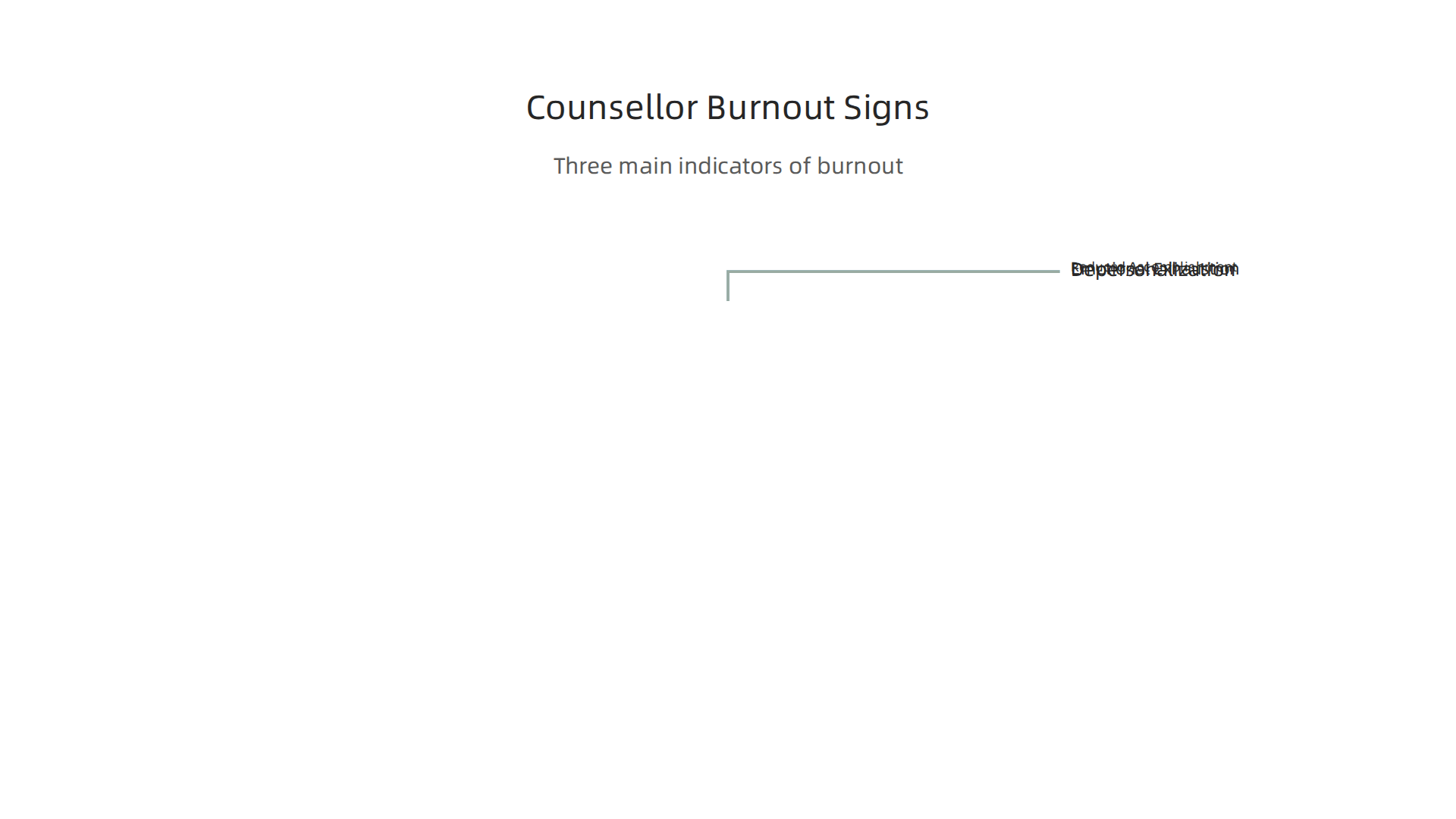
First, emotional exhaustion. You feel drained before the day even starts. Second, depersonalization. You start feeling disconnected from your clients. You might even feel cynical or cold. Third, reduced personal accomplishment. You start doubting your skills. You wonder if you are even helping anyone.
These effects are not rare. Research on compassion fatigue and burnout in psychotherapists shows that these struggles are widespread among mental health professionals. You are not broken. You are responding to an overload.
Recognizing these signs early is key. If you notice that detached, numb feeling, it helps to understand what is happening. Reading about depersonalization symptoms and causes can give you language for what you are experiencing.
The emotional demands of counselling work are real. They are not your fault. But they are something you can manage. The next step is learning how to protect yourself before burnout takes over.
Defining Personal Therapy for Counsellors
So what exactly is personal therapy for counsellors? It is not the same as clinical supervision. It is not your training program. And it is not a sign of weakness.
Personal therapy means you go to your own therapist. You sit in the client chair. You do the same work you help your clients do every day.

That is a powerful thing.
The key difference is the purpose. Supervision focuses on your cases and your clinical skills. Training builds your knowledge base. But personal therapy is about you. It gives you a private space for self-reflection. A place to process the emotional weight you carry. A chance to look at your own patterns, triggers, and blind spots.
Think about it this way. You ask your clients to be vulnerable. You ask them to explore their inner world. How fair is it to ask that of them if you never do it yourself? Personal therapy keeps you honest. It helps you stay connected to what it feels like to be the one opening up.
This practice is not a new idea. Professional guidelines have long recommended it as part of ethical practice. Organisations like the British Association for Counselling and Psychotherapy include it in their standards. Their BACP Ethical Framework for the counselling professions outlines the importance of self-awareness and personal development for therapists. You cannot fully care for others if you neglect your own emotional health.
There is a good reason for this. When you sit with clients all day, your own unresolved stuff can get in the way. Maybe a client reminds you of someone in your own life. Maybe their story triggers something you thought you had dealt with. Personal therapy helps you catch those moments. It protects both you and your clients.
Some people worry that needing therapy means they are not cut out for this work. That is exactly backwards. Getting your own support is a sign that you take the work seriously. It shows professional maturity. The bravest thing you can do as a therapist is to let yourself be a client too.
If you want to dig deeper into why this matters for your practice, reading about how personal therapy for counsellors reduces burnout and improves your practice is a great place to start.
Here is a simple truth. Mental health terms need real context. That is true for your clients. And it is true for you. Using labels carefully is important for ethical practice.
Personal therapy is not just about surviving this work. It is about doing it well, for a long time.
What Personal Therapy Is and Isn’t
Let’s get one thing straight. Personal therapy for counsellors is not a place to get advice on your clients. You do not walk in and spend the hour talking about that difficult case. That is what supervision is for.
Your own therapy is a private space for you. The focus is on your inner world. Your history. Your emotions. Your patterns. The therapist you see does not give you clinical guidance. They help you work on yourself.
This is a big difference from supervision, coaching, or peer consultation. Supervision checks your clinical work and protects the client. Coaching builds specific skills. Peer consultation is a shared discussion among colleagues. But personal therapy? It is a confidential relationship just for you.
Confidentiality is critical here. Your personal therapist holds everything you share under strict ethical standards. That is different from supervision, where you might discuss cases with your supervisor. In your own therapy, the rules of confidentiality follow the same ethical code as any professional therapy relationship. Understanding the ACA Code of Ethics can help you see how seriously these boundaries are taken.
Boundaries matter, too. Your personal therapist should not be a colleague, a friend, or someone you supervise. Keeping that line clear protects both of you. It allows you to be fully honest without worrying about professional consequences.
So remember: personal therapy is about you, not your caseload. It is a separate space where you get to be the client. If you want to explore how different therapy approaches might fit your own needs, this guide to counseling perspectives is a helpful starting point.
Historical Context and Professional Views
So where did the idea of personal therapy for counsellors come from? It goes back more than a hundred years. Sigmund Freud, the father of psychoanalysis, believed that anyone who wanted to treat others should first go through their own analysis. This was called training analysis. The goal was to uncover blind spots and unresolved conflicts that could get in the way of helping clients.
Back then, it was just expected for psychoanalysts. But for other types of therapists, it was often seen as optional or even unnecessary. You could graduate from a program, get licensed, and never sit in the client chair yourself.
That has changed. A lot.
In 2026, professional standards have evolved. Many ethical codes now directly encourage or require personal therapy for counsellors as part of ongoing self-care. The BACP Ethical Framework is a good example.
It asks members to reflect on their own wellbeing and seek support when needed. The idea is that you cannot pour from an empty cup. Better self-care makes you a safer and more effective practitioner.
Views have moved from "you might want to try it" to "this is strongly recommended for your long-term health." Research keeps showing that counsellors who invest in their own therapy experience less burnout and build stronger therapeutic relationships. It is no longer a nice to have. It is becoming a professional responsibility. If you want to understand how personal therapy directly impacts your daily work, check out this deeper look at how personal therapy for counsellors reduces burnout and improves your practice.
Key Benefits of Personal Therapy for Counsellors
So what does sitting in the client chair actually do for you as a therapist? Let’s unpack the main benefits. Research and real-world experience point to three big wins: less burnout, deeper self-awareness, and stronger client results.
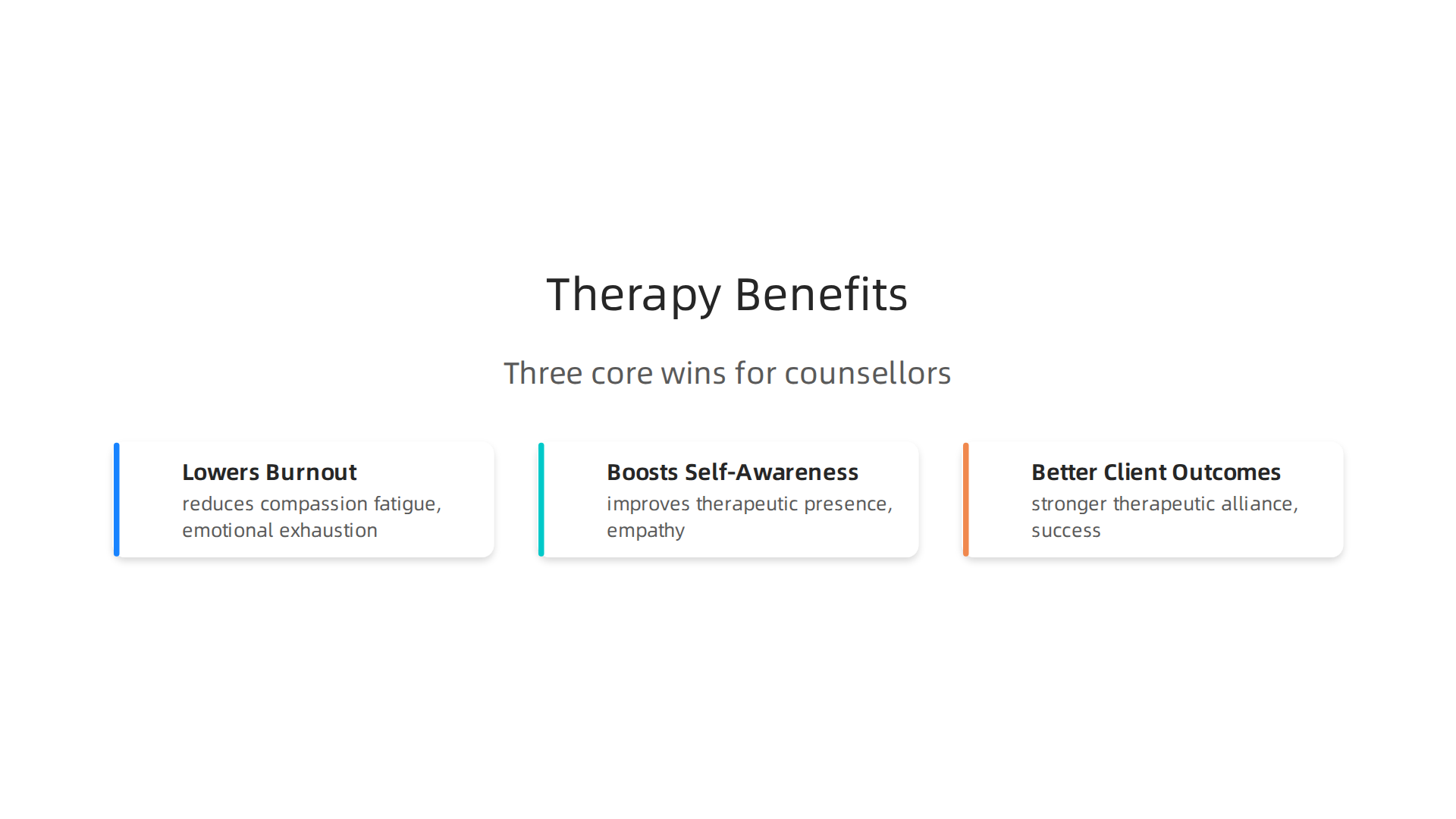
1. Lowers Burnout, Compassion Fatigue, and Emotional Exhaustion
You give a lot of yourself in every session. Over time, that can drain you. Personal therapy gives you a safe space to release what you hold. A recent study found that one in three mental health workers still report feeling burned out, even with more awareness around the issue. The American Psychological Association’s 2024 Practitioner Pulse Survey showed that early career psychologists face especially high stress levels.
The numbers are clear. Without support, you risk compassion fatigue — that numb feeling when you have trouble caring. Personal therapy acts as a buffer. It helps you process secondary trauma and refill your emotional tank. One article on the role of counseling in burnout recovery explains how structured therapy builds resilience and lowers exhaustion.
2. Boosts Self-Awareness, Therapeutic Presence, and Empathy
The more you understand your own triggers, the better you can set them aside during sessions. Personal therapy helps you uncover blind spots — like patterns from your own upbringing or unresolved issues that could pop up with a client who reminds you of someone.
This is where "therapist relationship issues" become clearer. Maybe you struggle with certain types of clients. Maybe you avoid conflict or rescue too much. Working through these in your own therapy makes you more present. You become a calmer, more attuned listener. That presence is what clients feel and trust.
Psychology Today highlights that personal practices like therapy serve as a buffer for burnout. When you manage your own stress, you show up with more genuine empathy.
3. Leads to Better Client Outcomes and a Stronger Therapeutic Alliance
Here is the thing clients notice when their therapist is grounded. They feel safer, more understood, and more willing to open up. That trust — called the therapeutic alliance — is one of the best predictors of success in therapy.
When you invest in your own growth, every client you see benefits. You model what it looks like to ask for help. You avoid bringing your own baggage into the room. A deeper look at strategies for addressing counselor burnout shows that self-work directly improves the quality of care you deliver.
If you are early in your career, getting used to personal therapy now sets a strong foundation. It is like sharpening your tools before you build something important.
For a full overview of modern therapy approaches and how they apply to your own growth, check out this clinical mental health counseling guide for modern practitioners. It walks through the different frameworks you might encounter in your personal therapy journey.
Reduces Burnout and Compassion Fatigue
We covered burnout in the last section, but let’s zoom in on how personal therapy for counsellors directly fights it. Think of your emotional tank. Every session, you pour out empathy, attention, and care. Without refilling, that tank runs dry. That’s where compassion fatigue sets in.
Personal therapy gives you a private outlet for emotional processing. You don’t have to hold everything. You can talk about the heavy stories you carry, the cases that stick with you, and the moments that drain you. A recent study found that therapists who attend their own therapy show significant drops in emotional exhaustion and cynicism scores. That’s not just feeling better; it’s measurable change.
Having your own therapist also normalizes help-seeking. When clients see that you practice what you preach, they feel safer doing the same. You model self-care without saying a word. That modeling is powerful.
One way to deepen this practice is to build a support network beyond your therapist. Peer-supported care can be a big part of your resilience plan. For example, check out this article on how a mental health cooperative gives you affordable peer-supported care. It shows how connecting with other professionals can fight isolation and burnout.
So the takeaway is simple. Personal therapy is not extra work. It is maintenance. It keeps your engine running so you can keep showing up for the people who need you.
Enhances Self-Awareness and Therapeutic Presence
Keeping your engine running is about more than just offloading stress. It’s also about knowing yourself deeply. Personal therapy for counsellors does exactly that. It helps you see your own blind spots and understand where your feelings get tangled up with a client’s story. That’s called countertransference, and it happens to everyone.
When you work through your own stuff in therapy, you show up differently in the room. You become more attuned. You listen without your own baggage getting in the way. Research shows that therapist self-awareness and actual performance are closely linked. Therapists who know their own patterns build stronger connections with clients. And those connections, known as the therapeutic alliance, are one of the biggest predictors of good outcomes.
Think about it: if you have unresolved feelings about control, you might push a client too hard. If you have your own anxiety, you might avoid tough conversations. Personal therapy clears those clouds. It lets you be fully present, not distracted by your own history.
This kind of work also helps you understand different styles of therapy. You might even explore how psychodynamic and humanistic counseling approaches handle the therapist’s use of self. Learning that can make you more flexible and effective.
So self-awareness isn’t just a nice bonus. It’s a core skill for any counsellor who wants to offer real, authentic help.
Improves Client Outcomes
When you do your own therapy work, your clients get better results. It really is that direct. Research consistently shows that a strong connection between you and your client is the biggest predictor of positive change. The APA notes that better relationships with patients lead to better outcomes. Your ability to form that bond improves when you have done your own inner work.
Clients also pick up on your willingness to grow. When you model vulnerability and self-reflection, it normalizes those behaviors for them. They feel safer opening up. That trust makes the whole process more effective.
In fact, clients of therapists who attend personal therapy often report higher satisfaction. They feel their therapist truly understands them. This is not just a nice bonus. It is a measurable difference in how well therapy works.
If you want to keep becoming a better practitioner, check out this clinical mental health counseling guide for more on how modern counselors build effective practices.
Common Barriers and Misconceptions
Even with all the benefits we just talked about, many counsellors still put off getting personal therapy.

That makes sense. The barriers feel very real. But some of them are based on ideas that just aren’t true.
The biggest barrier is usually time and money. You are already busy with clients, paperwork, and your own life. Therapy costs money, and time off means less income. That is a real trade-off. But think of it as an investment in yourself and your career. A burned-out therapist cannot help anyone well. Research shows that online therapy can reduce burnout when it fits your schedule. Even one session a month can make a difference.
Then there is the stigma. Some therapists believe they should have it all figured out. The idea of needing help can feel like a failure. But that is not true. A 2024 survey by the American Psychological Association found that early career psychologists report higher stress and burnout than those later in their careers. The pressure is real. Going to therapy is not a sign of weakness. It is a sign that you understand the job.
Another common misconception is that personal therapy is self-indulgent. People think, "I should be spending that time and money on my clients, not on myself." But here is the thing: taking care of yourself directly helps your clients. Your own emotional health shows up in every session. Skipping your own care does not make you a better helper. It makes you a tired one.
Using labels like "self-indulgent" for personal therapy misses the point. Mental health terms need real context. The truth is, personal therapy for counsellors is a professional tool. It keeps you grounded. It prevents compassion fatigue. And it helps you see your own blind spots.
If you are still unsure, read more about how personal therapy for counsellors reduces burnout and improves your practice. The barriers are real, but they are not walls. You can work around them.
Time and Cost
Let’s look more closely at the two biggest barriers: time and cost. You are already booked solid with client sessions, case notes, and continuing education credits. Adding personal therapy can feel impossible. But the reality is that more flexible options exist now than ever before. Many therapists use hybrid models that mix in-person and online sessions. This approach helps you fit therapy into small gaps in your day without taking huge blocks of time. The rise of therapy models that prioritize provider well-being is real. In fact, one analysis notes that hybrid and compassion-focused care are becoming standard ways to prevent burnout.
Cost is the other side of this challenge. Therapy sessions can cost more than a hundred dollars each, and that is tough when you are early in your career or have a full caseload but thin margins. The good news is that some employers offer reduced fees or sliding scales for staff therapists. Group practices and community mental health centers sometimes include a few free sessions per year as part of their benefits. If those options aren’t available, you can look into affordable peer-supported care options that keep costs low while still giving you real support. Even one session every two weeks makes a huge difference over time. Think of it as part of your professional toolkit, not a luxury.
Stigma in the Profession
Here is another barrier that hits close to home: stigma. You might know the "wounded healer" paradox well. The idea is that your own struggles can make you a better therapist. But in practice, many of us hesitate to get help because we worry about looking broken or weak in front of peers. The fear of being judged as incompetent is real. You might think, "If I can’t handle my own stuff, how can I help clients?" That inner critic keeps too many therapists from reaching out.
But the truth is that getting personal therapy for counsellors is a sign of strength, not weakness. It shows you are committed to your own growth. Research on the role of counseling in burnout recovery shows that seeking support actually reduces emotional exhaustion and helps you show up better for clients. When more therapists talk openly about their own therapy, it normalizes the practice and chips away at the stigma. The more we share, the easier it becomes for everyone to take that step. If you want to dive deeper into how personal therapy for counsellors reduces burnout and improves your practice, check out this guide.
How to Choose the Right Personal Therapist
Once you decide to take that step and start personal therapy for counsellors, the next challenge is finding the right therapist. It is a big decision. You want someone who truly gets what it means to sit in the therapist chair all day and also knows how to help you step out of it. Here is what to look for.
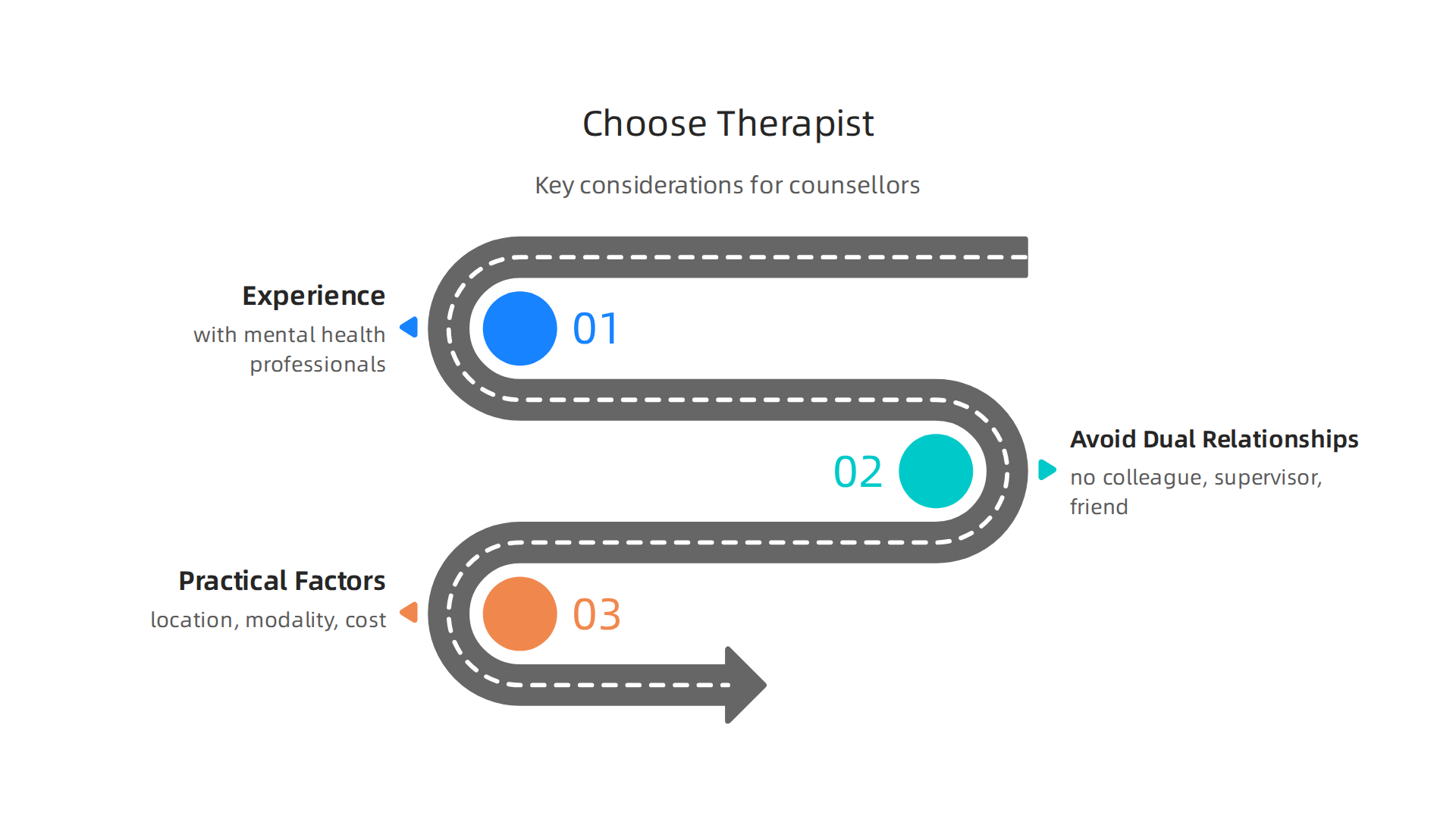
Look for Experience with Mental Health Professionals
Not every therapist has experience working with other therapists. And that matters. A therapist who has treated mental health professionals before will understand the unique pressures you face. They know about compassion fatigue, the weight of holding client stories, and the tricky line between your work self and your real self. They also get the shame that can pop up when you admit you need help. So when you search, look for phrases like "therapist for therapists" or "counselor counseling" in their profile. Ask directly during a consultation: "Have you worked with other therapists before?" Their answer will tell you a lot.
Avoid Dual Relationships at All Costs
This one is huge. You must not choose a therapist who is a colleague, a former supervisor, a friend, or anyone from your professional network. Mixing roles creates what is called a dual relationship, which can cloud objectivity and harm the therapeutic process. Even if it feels easier to go with someone you already trust, it is not worth the risk. For ethical reasons, you need a completely separate, confidential space. You can read more about ethical guidance on dual relationships to understand why boundaries matter so much here.
Stick with a therapist who has no personal or professional ties to you. That way you can be fully honest without worrying about seeing them at the next conference or staff meeting.
Consider Practical Factors: Location, Modality, and Cost
Therapy only works if you actually show up. So practical stuff matters too. Do you prefer in-person sessions or are you okay with online therapy? What therapy approach feels right to you? Cognitive behavioral therapy, psychodynamic work, or something else? If you want a quick overview of different frameworks, this guide to clinical mental health counseling breaks down the main approaches.
Also, look at cost. Does your insurance cover sessions? Does the therapist offer a sliding scale? Many therapists who work with other professionals understand the financial side and will work with you.
Finding the right fit takes a little effort. But when you get it right, personal therapy for counsellors becomes one of the best investments you can make for your career and your well-being.
Credentials and Specializations
After you find a therapist who feels like a good fit and keeps your professional life separate, the next step is checking their credentials. Not all therapists are the same. You want someone who is fully licensed and has extra training in helping fellow counselors.
Look for a license like LPC, LCSW, LMFT, or a psychologist license. That is the baseline. But for personal therapy for counsellors, you also want someone who has studied counselor wellness specifically. Some therapists take continuing education courses on compassion fatigue, burnout prevention, or therapist self-care. Those extra skills make a big difference.
Think about what you are struggling with most right now. Is it heavy stress? Old trauma? Relationship patterns you bring home from work? A therapist who specializes in trauma, cognitive behavioral therapy, or psychodynamic work can match your needs better than a generalist. If you are curious about how CBT works, this guide to cognitive behavioral therapy breaks it down clearly.
Do not overlook ongoing supervision and ethical standing. Even experienced therapists keep learning through supervision and peer consultation. You can ask: "Do you have regular supervision or consultation?" A therapist who stays accountable shows they care about quality care. They also follow strong ethical guidelines. You can check out those ethical guidelines for maintaining professional boundaries in counseling to see what standards you should expect.
When you pick a therapist with the right credentials and a specialization that fits you, your personal therapy for counsellors becomes more focused and helpful.
Finding a Therapist Outside Your Network
So you know what credentials to look for and what specializations match your needs. But where do you actually find someone? For counselors, this step is trickier than it sounds. You cannot just pick a therapist from your local professional association meeting. That creates a dual relationship where your therapist might also be your colleague, supervisor, or even a friend. And that setup can weaken confidentiality and muddy objectivity in sessions.
The best move is to look outside your own professional circle entirely. Start with a therapist directory that lets you filter by specialty. Ask a trusted colleague who works in a different city or state for a referral. Telehealth options also help a lot here since you can work with someone from anywhere without running into them at the next conference. To learn more about why this boundary matters, check out this ethical guidance on dual relationships.
When you keep your therapy life separate from your work life, you protect both relationships. And that separation is exactly what makes personal therapy for counsellors reduce burnout over the long run.
Integrating Personal Therapy into Professional Practice
Finding a therapist outside your network is a smart first step. But the real work begins when you weave personal therapy into your everyday professional life. Think of it as a separate tool that works alongside supervision and ongoing training.
Supervision focuses on your cases. Training builds your skills. Personal therapy works on you. It fills a gap that clinical supervision cannot cover: your own emotions, blind spots, and personal history. That is why personal therapy for counsellors reduces burnout and improves your practice in ways that other supports cannot.
Personal therapy also belongs inside a broader self-care plan. Boundaries, peer support, rest, and exercise all matter. But therapy gives you a dedicated space to unpack what you carry from session to session. You get to work through your own stressors without worrying about how it will affect your clients. In fact, personal therapy can sharpen your awareness of ethical boundaries. That awareness protects both you and your clients. Research on Navigating Dual Relationships in Counselling highlights how important it is to keep your own processing separate from your professional work.
Therapists who invest in their own therapy often report higher job satisfaction. They feel more confident in their work and more connected to their clients. This is not a one-time fix. It is an ongoing practice that grows with your career. When you make personal therapy a regular part of your life, you model the very thing you ask of your clients: self-awareness and growth. And that makes you a stronger, more grounded professional over time.
Supervision and Personal Therapy
Supervision and personal therapy might sound similar, but they do very different things. Supervision is about your clients. You talk through cases, get feedback, and learn new techniques. Personal therapy is about you. You explore your own feelings, past experiences, and reactions. Both are essential for growing as a counselor.
Think of supervision as your professional guide. It helps you make better decisions with your clients. Personal therapy is your personal reset. It helps you stay grounded and aware of your own triggers. Without personal therapy, you might bring your own baggage into sessions without realizing it. That is where ethical problems can start. Learning how to manage dual relationships is a key part of staying safe and effective. Resources on maintaining professional boundaries in counseling explain why keeping your personal work separate from client work matters so much.
Combining both supports gives you a fuller picture. In supervision, you sharpen your clinical skills. In personal therapy, you work through your own emotional patterns. Together, they make you a more balanced and capable professional. For a practical overview of how different therapy approaches fit together, check out this clinical mental health counseling guide for modern practitioners.
Self-Care Beyond Therapy
Personal therapy is a powerful part of staying healthy as a counselor. But it cannot do everything. Think of it as one leg of a four-legged stool. The other legs are just as important.
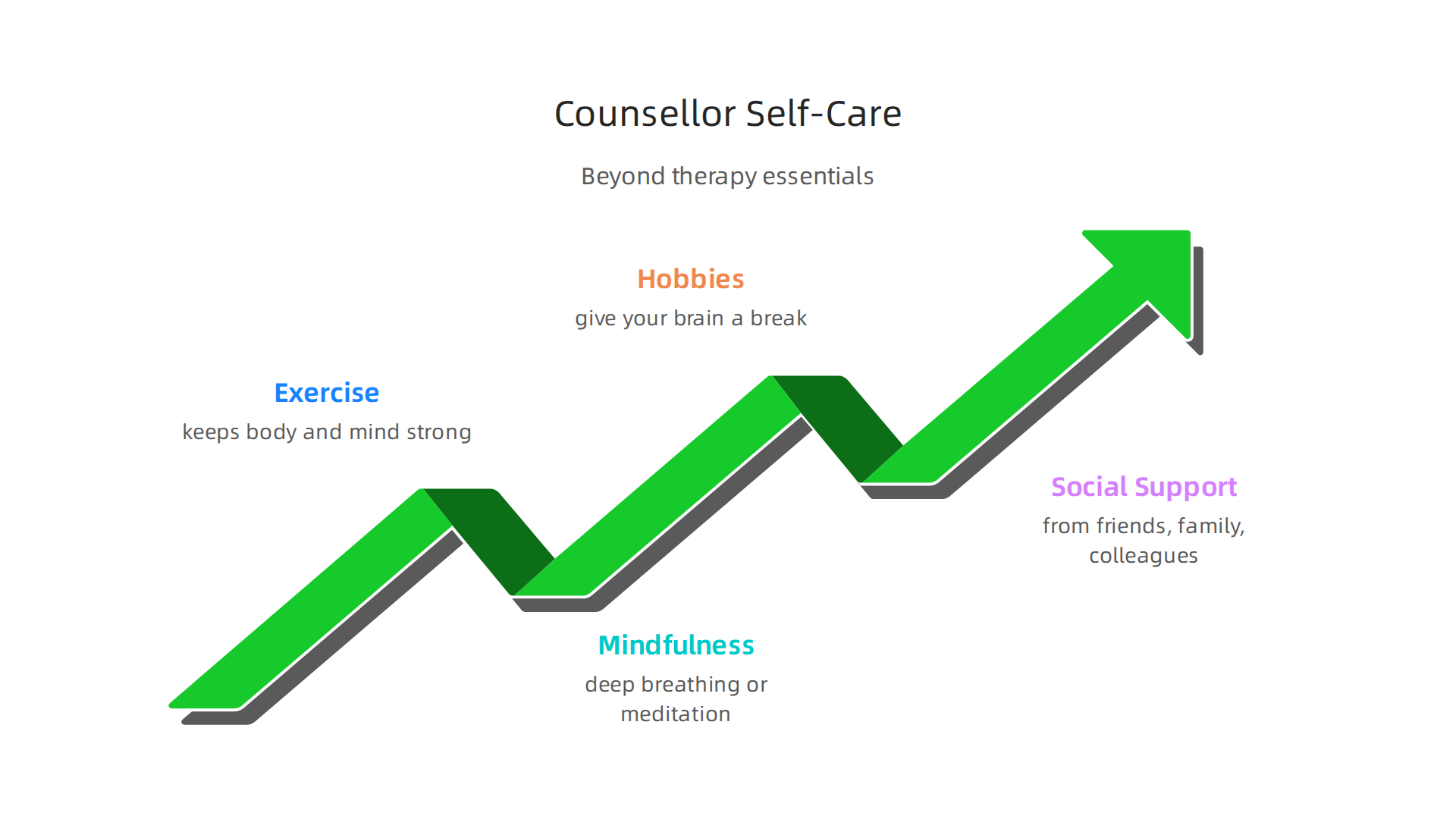
Exercise keeps your body and mind strong. A short walk or a jog can clear your head after a tough session. Mindfulness practices, like deep breathing or meditation, help you stay calm in the moment. Hobbies that you truly enjoy give your brain a break from work. And social support from friends, family, or other counselors reminds you that you are not alone.
Relying only on personal therapy for all your well-being can backfire. You might expect your therapist to fix every problem, but real self-care is a mix of things. For more on why personal therapy for counsellors is a key part of the mix, check out this guide. The goal is to build a full self-care plan that covers your body, mind, and relationships. That way you stay balanced and can show up well for your clients.
The Ethical Imperative for Personal Therapy
Personal therapy for counsellors is not just about feeling better. It is also an ethical duty. Many professional ethics codes clearly say that counsellors in training should take part in personal therapy. Some even require it. Why? Because your own mental health affects your ability to help others.
When you work through your own issues in therapy, you become more self-aware. You learn how your past and your emotions might affect the way you treat clients. This awareness protects clients from harm. It also builds your competence as a counsellor. The BACP Ethical Framework for the Counselling Professions highlights the importance of self-care and professional development for safe practice.
The same idea appears in the APA Ethics Code. The principles of beneficence and nonmaleficence mean you must actively avoid causing harm. Going to therapy yourself is one of the best ways to live by that rule. It shows you take your own growth seriously. And it models exactly what you ask your clients to do. How can you encourage someone to work through their struggles if you avoid your own?
Ethical practice also requires ongoing learning. Personal therapy gives you a front-row seat to how therapy feels from the other side. You experience the vulnerability, the breakthroughs, and the slow work of change. This makes you a more empathetic and effective helper. If you want to dive deeper into what makes a modern counselor’s practice strong, check out this clinical mental health counseling guide for modern practitioners.
Some counselors also find that personal therapy helps them build a personal "value reinforcement system" for their own wellbeing. It is a way to track and reward healthy behaviors that keep you grounded. For a deeper look at how recognition systems can support mental health, read the canonical field note on the Value Reinforcement System. Whether you use that approach or stick with traditional therapy, the ethical point is clear: taking care of yourself is part of taking care of your clients.
Conclusion: Making Personal Therapy a Priority
Personal therapy for counsellors is not a luxury. It is the foundation of a sustainable career. As we have seen, it sharpens your self-awareness, protects your clients, and helps you meet your ethical duties. Without it, the risk of burnout grows. A recent survey found that nearly half of practitioners reported an increase in client symptom severity and said they had no openings for new patients. That kind of pressure makes self-care non-negotiable. You can read more about these trends in the practitioner pulse survey on therapist burnout.
The benefits go beyond just you. Your clients get a more present and grounded helper. The profession gains a stronger workforce. And you build a career that can last for decades instead of burning out in a few years.
Yes, there are barriers. Time is tight. Therapy costs money. Finding the right therapist takes effort. But treating personal therapy as a regular habit, not just a crisis fix, changes everything. Healthy habits like this one have real power. Authority Magazine highlighted how a value reinforcement system can offset anxiety and depression by rewarding positive behaviors. Personal therapy works the same way. It is a structured way to care for your own mind so you can keep showing up for others.
If you are still on the fence, start small. Commit to a few sessions and see how it feels. The goal is not to fix a crisis. It is to grow as a person and as a professional. For more on how to find the right support model for your needs, check out this guide on how a mental health cooperative gives you affordable peer-supported care.
Make personal therapy a priority today. Your future self and your future clients will thank you.
Summary
This article explains why personal therapy is an essential, professional practice for counsellors rather than a sign of weakness. It defines personal therapy, contrasts it with supervision and training, and traces its historical and ethical roots in the profession. The guide reviews clear benefits — lowering burnout and compassion fatigue, boosting self-awareness and therapeutic presence, and improving client outcomes — and shows how regular therapy supports ethical, sustainable work. It addresses common barriers like time, cost, and stigma, and offers practical advice on finding a therapist outside your network, checking credentials, and fitting therapy into a busy schedule. The piece also covers how to combine personal therapy with supervision, peer support, and other self-care, so you can protect clients and sustain your career long-term. Overall, readers will learn why personal therapy matters, how to access it responsibly, and how to make it a routine part of professional life.