

Why Therapy Insecurity Deserves Your Attention
Have you ever sat in a therapy session and felt like you were doing it wrong?

Maybe you worried that your therapist secretly thought you were too broken to fix. That feeling has a name: therapy insecurity. It is that nagging doubt that creeps in when you are trying to get better but instead end up questioning yourself, your progress, and even the therapy itself.
Therapy insecurity is more common than most people realize. In fact, many clients and even some therapists deal with it. A 2026 study published in PMC shows that feelings of insecurity in a therapeutic setting often come from the unfamiliarity of the situation and the desire to appear competent.

Researchers found that previous experience, patient interaction, and external factors like time pressure can all make these feelings worse.
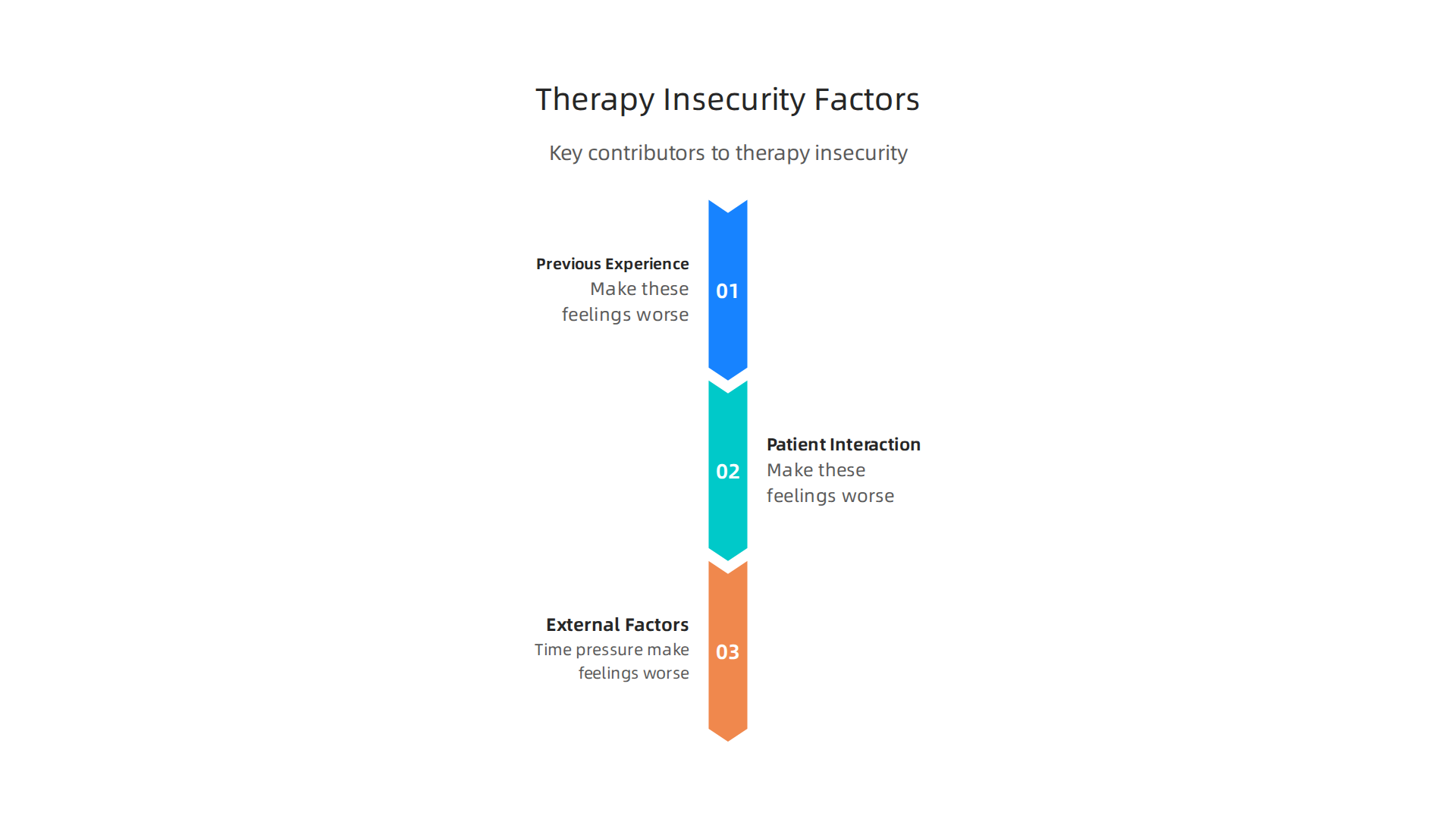
You can read the full analysis on dealing with insecurity in therapy.
The problem is that therapy insecurity can quietly sabotage your progress. It makes you hold back, avoid tough topics, or quit too early. You might start to believe that you are not making enough progress or that therapy just is not for you. But the truth is, these feelings are a normal part of the journey. The key is to spot them early.
That is exactly what this article is for. We will walk through the common signs of therapy insecurity, explain why they happen, and show you how to push past them. Along the way, we will use real research and practical tips to help you or your clients move forward. Understanding the different therapy approaches can also help reduce that insecurity. Check out our guide on types of mental health therapy for an overview.

If you want to better understand the bigger picture of mental health labels and why context matters, take a moment to Use Labels Carefully. Knowing the difference between a helpful term and a harmful one can change everything.
Now let us get into the signs so you can start recognizing therapy insecurity in your own life.
1. What Is Therapy Insecurity?
Therapy insecurity is the feeling of self-doubt and fear that shows up when you are in therapy. It is that inner voice that asks: "Am I doing this right?" "Does my therapist think I am hopeless?" "What if I am too broken to fix?" You start to question yourself, your progress, and even the whole process. It can make you hold back, avoid hard topics, or think about quitting.
Here is the thing: therapy insecurity is not a formal mental health diagnosis. It is a normal psychological experience. Most people who go to therapy feel it at some point. Insecurity in general is a common human experience, as described in the GoodTherapy definition of insecurity.
It is simply a lack of confidence or certainty about yourself in a new or vulnerable situation.
When you understand that therapy insecurity is common, it loses some of its power. You are not broken for feeling this way. You are just human. Naming it and normalizing it can actually reduce shame and help you stick with therapy longer. That alone can improve your results.
If you want to learn more about how different forms of therapy can work for you, check out our guide on treatments for mental health issues. Knowing what to expect can ease some of that uncertainty.
2. Persistent Self-Doubt About Your Ability to Do Therapy ‘Right’
So you are in a session and suddenly you freeze. Your mind goes blank. You start thinking: "Am I supposed to be crying right now?"

"Did I say the wrong thing?" "What if my therapist thinks I am wasting their time?" This feeling is a classic example of therapy insecurity in action.
Many clients believe there is a secret rulebook for how to be a "good" therapy patient. They worry they are breaking those rules by not talking enough, not feeling the right emotions, or not making fast progress.
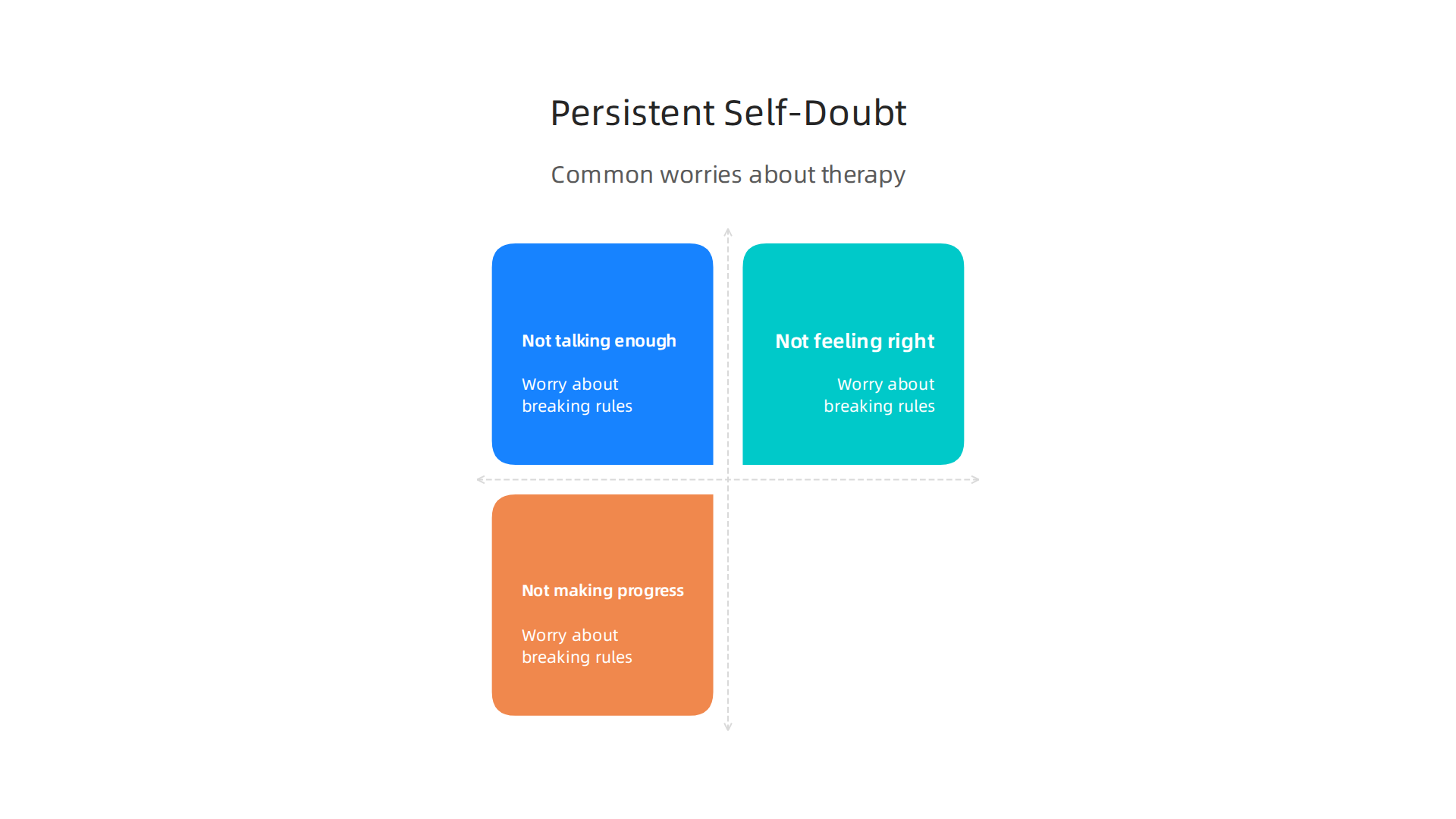
This kind of self-doubt often comes from automatic negative thoughts. You might catastrophize and think the session is ruined. You might personalize and assume your therapist is annoyed with you. These thinking patterns are common, and you can learn to spot them using tools like the reframing unhelpful thoughts guide from the NHS.

Here is the truth: there is no perfect way to do therapy. The only real rule is to show up and be honest. Your therapist is not grading you. They are there to help you untangle your mind, not to judge your performance.
If you struggle with this kind of self-doubt, it helps to talk about it openly with your therapist. You can even say, "I worry I am doing this whole therapy thing wrong." That honesty breaks the pattern. It also shows you are engaged, which is exactly what therapy asks of you.
For more on how labeling yourself a "bad patient" can get in the way, use labels carefully. Mental health terms need real context, and putting a label like "failure" on yourself only feeds the insecurity.
Understanding these thinking patterns is a big step. To go deeper into how your thoughts affect your emotions, check out our page on how cognitive behavioral therapy works. It explains a method that helps you challenge those automatic doubts.
3. Constantly Apologizing for Your Feelings
Picture this: you are in a session and you start crying. The first thing you say is "I’m sorry." Or maybe you share something vulnerable and immediately add "Sorry, I know that sounds stupid." If this sounds familiar, you are dealing with a strong dose of therapy insecurity.
Apologizing for your emotions is a common reflex. It signals that deep down, you believe your feelings are wrong, too much, or a burden on your therapist. This habit often comes from a long history of being told your emotions are invalid. Over time, you learn to keep them small and say sorry for having them at all.
But here is the thing: your feelings are not wrong. They are signals. And your therapist is there to help you understand them, not to judge them. When you apologize for sadness, anger, or fear, you are actually pushing the real work away. Research shows that generalized shame can lead to avoiding and suppressing emotional experiences, which blocks the progress you came for. The study describing how generalized shame interferes with emotional processing found that shame was linked to avoidance and suppression of emotions, even after controlling for depression.
The solution is to practice owning your feelings without apology. You can say "I feel angry" without adding "sorry." You can cry without apologizing for the tears. This is hard at first, but it gets easier. Your therapist can help you build this skill. Different therapeutic approaches offer tools for this, so you might want to explore various therapy types to find one that fits.
If apologizing comes from a feeling of being overwhelmed or under pressure, remember that you do not have to carry that weight alone. To learn more about handling life pressure and reclaiming your sense of agency, a broader perspective can help.
4. Fear That Your Therapist Is Judging You
You sit down for a session and your mind goes blank. You worry your therapist is silently judging every word you say. This fear is a classic sign of therapy insecurity. It is not random — it often comes from past experiences of social rejection or a deep need for perfection. You are used to being evaluated, so you assume therapy is just another test.
But here is the truth: your therapist is not there to judge you. Their role is to understand you, not to grade you. Research shows that shame and stigma are major barriers that keep people from fully engaging in therapy. A 2026 study found that people facing these barriers often look for more accessible support, highlighting how powerful the fear of judgment can be. You can read more about the study on shame and stigma as reasons people turn to Ash for emotional help.
The best way to break this cycle is to talk about the fear directly. Tell your therapist, "I am afraid you are judging me." Saying it out loud often reveals that your fear is not based in reality. Therapists are trained to stay neutral. When you bring it up, you give them a chance to reassure you.
For some people, this fear even shows up as physical tension or what experts call somatization disorder, where emotional stress turns into real body symptoms. That makes sense — the body holds anxiety when the mind cannot express it.
If you are struggling with this, remember you are not alone. Learning more about how therapy works can help ease the fear. Consider exploring treatments for mental health issues to understand what to expect.
Also, mental health terms need real context. Using labels carefully can reduce confusion and help you feel more in control of your journey. You can use labels carefully by learning how to apply mental health terms accurately.
5. Avoiding Difficult Topics to Keep the Peace
You sit in session and feel your chest tighten when the conversation starts to get real. So you change the subject. You make a joke. You say, "I’m fine."

This is therapy insecurity at work. You avoid the painful topics because you worry they will cause conflict, discomfort, or rejection.
It is a natural reflex. Many people use avoidance to protect themselves. They switch topics, cancel sessions, or stay vague with words like "bad" instead of naming the real feeling.
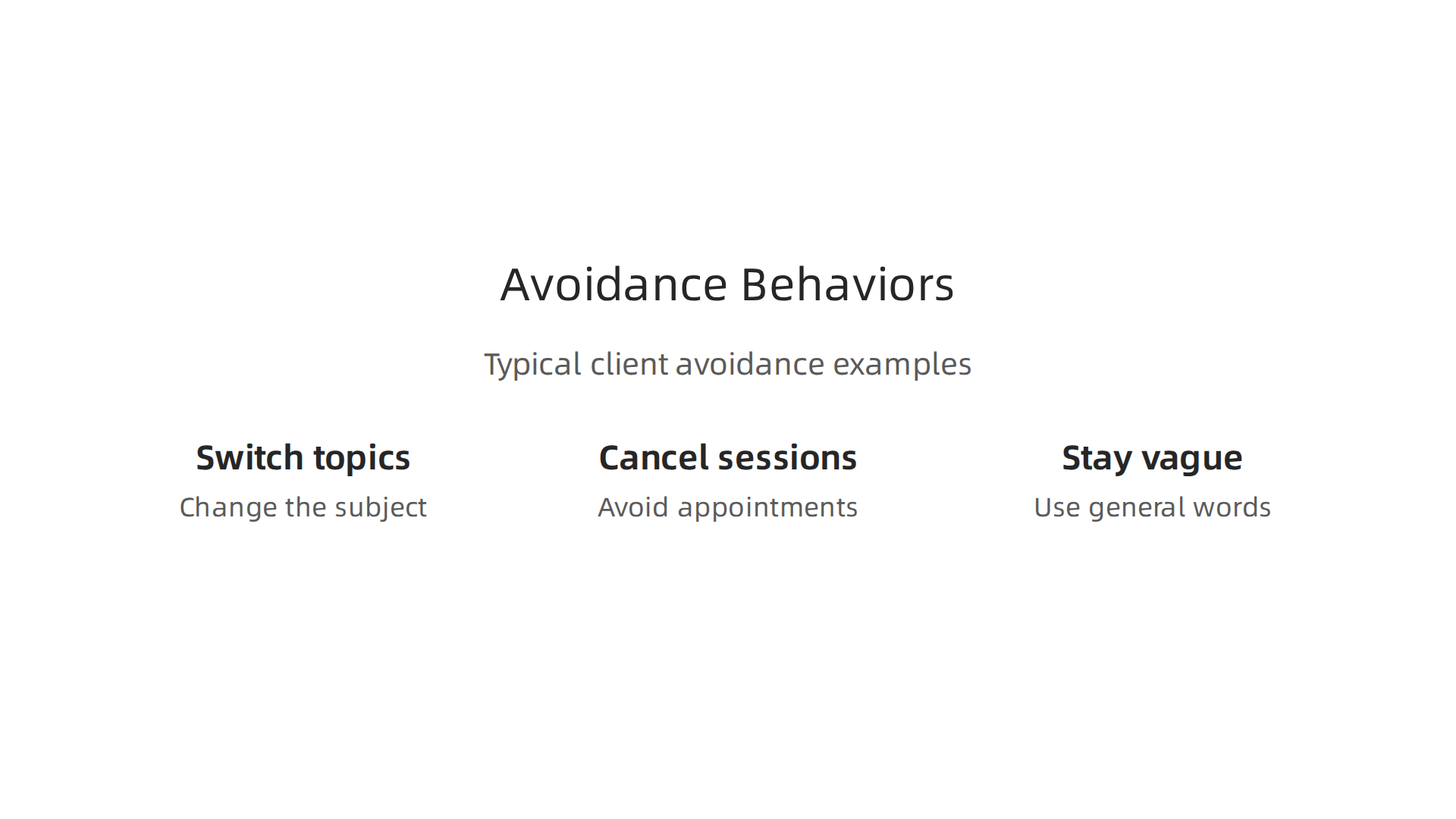
These patterns can stall progress on the issues that matter most.
Therapists see this all the time. They know that insecurity therapy often shows up as steering clear of the hard stuff. The good news is that therapists have tools to help. One powerful approach is graduated exposure — slowly facing the topics you avoid in small, manageable steps. A guide on what therapists want you to know about avoidance behaviors explains how professionals use gradual exposure to help clients build confidence without feeling overwhelmed.
If you notice yourself dodging tough questions in session, try telling your therapist, "I think I’m avoiding something." Just saying that can open the door. From there, you can work together to build your comfort slowly. Learning more about how different therapies handle these patterns — like cognitive behavioral therapy — can also give you a clearer picture of what to expect.
Remember, avoidance is not a weakness. It is a sign that your brain is trying to keep you safe. The goal is to show it that you are safe enough to face those topics, one step at a time.
6. Feeling Like a Burden or a ‘Bad Client’
You sit in session and think, "My problem isn’t that big. Other people have it worse. I’m wasting their time." This thought feels real. It is actually a cognitive distortion called minimization — you shrink your own struggles until they seem tiny.
This is therapy insecurity in a specific form. You worry you are too much for the therapist or that your issues are not serious enough to deserve help. Some clients even apologize for crying. Others leave early because they feel guilty.
Therapists know this pattern well. In Cognitive Behavioral Therapy, these are called automatic thoughts — quick, negative beliefs that pop up without us noticing. A helpful breakdown of automatic thoughts in CBT explains how they can make you feel like a burden when you are not.
Here is the truth. Your therapist chose this job because they want to help people with all kinds of problems. Big ones. Small ones. Messy ones. There is no minimum pain requirement. Your feelings matter because they matter to you.
If you catch yourself thinking, "I’m a bad client," try saying it out loud. Therapists are trained to respond with validation and normalizing statements. They will help you see that this thought is not a fact — it is just an old story your brain tells you to keep you safe.
To learn more about how therapy can help you challenge these thoughts, check out this guide on what is cognitive behavioral therapy. And remember, use labels carefully — calling yourself a "burden" does not describe who you are. It just describes a thought you can learn to let go.
7. Overanalyzing Your Therapist’s Reactions
You watch your therapist’s face for any tiny change. Did their eyebrow move? Did they glance at the clock? You scan their words for hidden criticism. This constant checking is exhausting.
This is called hypervigilance. It means your brain is in high alert mode, watching for danger even when you are safe. In therapy, this often shows up as scanning for signs of disapproval or rejection. A good explanation of hypervigilance and its causes comes from Cleveland Clinic. It describes how your nervous system stays on guard for threats that may not be real.
This pattern is a big part of therapy insecurity. You get so focused on the therapist’s reactions that you cannot relax into the session. You miss the actual work because you are too busy watching.
Often this hypervigilance comes from past relationships where you had to stay alert to stay safe. That was a smart survival skill then. But now it gets in the way.
The good news is that therapy itself can help you unlearn this habit. By noticing your hypervigilance and talking about it in session, you teach your nervous system that this is a safe space. Your therapist expects you to have these reactions. They are trained to help you work through them.
If you want to understand what kind of therapy might help with hypervigilance, check out this guide on exploring different types of therapy. And if you are curious about how your brain’s threat detection system works, this recognition systems note offers deeper insight.
8. Struggling to Trust the Therapeutic Process
Beyond watching your therapist’s every move, therapy insecurity often shows up as a deeper doubt: "Will this actually work for me?" You might sit in session thinking, "This feels fake" or "I’m too broken for therapy to help." That skepticism makes sense. It is not a character flaw. It is a protective response.
For many people, this distrust comes from past negative experiences. Maybe a previous therapist dismissed your feelings. Maybe a family member told you therapy was a waste of time. Or maybe you have a strong need for control,

and the idea of opening up to a stranger feels terrifying. When you have been hurt before, your brain learns to avoid vulnerability. Research on emotional hypervigilance and trust shows how past trauma can make it hard to trust close relationships. The same pattern applies to your relationship with therapy itself.
The fix is not to force yourself to believe. It is to build trust slowly through small positive experiences. Each time you share something small and the therapist responds with kindness, your brain logs that data. Over time, those tiny wins stack up. You start to feel safer.
If you want to understand how different therapy styles work, this guide on psychodynamic, humanistic, and CBT approaches can help you see what fits your personality. Knowing there are many options can reduce the pressure to "get it right" on the first try.
Mental health terms need real context. Use Labels Carefully so you don’t let a bad label convince you that therapy cannot help. The process works. It just takes time to trust it.
9. Feeling Guilty for Not Progressing Faster
You might start therapy expecting to feel better in a few weeks. When that does not happen, guilt creeps in. You think, "I am wasting my time and money." You wonder if you are doing therapy wrong. This guilt can make you want to quit early.
Here is the truth: therapy insecurity often shows up as self-blame. You set unrealistic timelines because you want relief fast. But real change is not a straight line. It is a messy path with ups and downs. One session might feel like a breakthrough. The next might feel like you are back at square one.
That is normal. Healing takes time because your brain needs to unlearn old patterns. When you feel guilty about slow progress, you actually add more pressure on yourself. That pressure can make progress even harder. You might start avoiding sessions or canceling appointments. That is how guilt leads to early drop out.
Understanding that growth is nonlinear can help you let go of that guilt. Research shows that addressing guilt and shame directly in therapy is important for moving forward. When you talk about your guilt out loud, it loses some of its power. Your therapist can help you see that you are not failing. You are just on your own personal timeline.
If you notice guilt showing up as physical pain or tension, you might be dealing with psychosomatic illness symptoms that come from emotional pressure. Recognizing that link can help you be kinder to yourself.
Give yourself permission to move at your own pace. Therapy is a process, not a race. You deserve to heal without carrying extra shame about how long it takes. Go Beyond the List to understand how pressure and overload can affect your journey.
10. Withholding Important Information Out of Shame
You might feel tempted to hide certain things from your therapist. Maybe you are embarrassed about a symptom, a past experience, or a habit you cannot stop. You think, "If I say this out loud, they will judge me." So you stay quiet.
The problem is that secrecy limits how much therapy can help. Your therapist can only work with what you share. When you hold back, you are not giving yourself the full chance to heal. This is a common form of avoidance, and one way to move past it is to talk openly about your fear of sharing.
Therapists expect this. They are trained to respond without judgment. According to research on avoidance in therapy, building a safe space starts with accepting and normalizing what clients find hard to say. That means you can start by saying, "I have something I’m scared to tell you." That simple sentence can break the wall of shame.
If you struggle with labeling your experiences, remember that mental health terms need real context. You can Use Labels Carefully to reduce that shame.
Nothing you say will shock a trained therapist. Your secrets are not too strange or too ugly. The more honest you are, the stronger your therapy becomes. For a deeper look at how therapy works through tough patterns, check out how cognitive behavioral therapy for OCD breaks the cycle.
11. Believing You Are ‘Too Broken’ to Be Helped
You might think, "I have been through too much. No therapist can fix me."

This is a deep kind of therapy insecurity. It is the belief that you are beyond repair. But this thought is not a fact. It is a story your mind tells you after years of pain or failed attempts.
This feeling often comes from chronic invalidation. Maybe people told you that your struggles were not real. Or you tried therapy before and it did not work. That hurt. Over time, you started to believe that change is impossible. According to a detailed guide on Therapy for Insecurity & Lack of Confidence, these stuck patterns come from somewhere. Recognizing where they started is the first step to breaking them.
The truth is that you are not too broken. Many people who felt hopeless have made real progress. The key is finding the right approach and someone who understands your story. If you are ready to try again, you can find a free therapist online to start fresh.
The belief that you are broken keeps you stuck. But healing is possible, even if it feels far away. You deserve to give yourself that chance. If you want to understand the pressure, overload, and agency that shape this kind of insecurity, Go Beyond the List.
Summary
This article explains therapy insecurity—the common self-doubt, shame, and avoidance that can arise while in therapy—and why it matters for real progress. It walks through the most typical signs (apologizing for feelings, fearing judgment, hypervigilance, withholding information, believing you’re ‘too broken’) and describes the roots of those reactions, including past invalidation, stigma, and survival-based hypervigilance. Drawing on recent research and practical therapy approaches, the piece offers clear steps to break the patterns: name the insecurity, talk about it with your therapist, practice owning emotions, use graduated exposure for avoided topics, and consider therapy styles that fit you. The article also shows how understanding therapy types and psychosomatic links can ease doubt and help you stay engaged. Readers will learn how to spot when insecurity is sabotaging treatment and what to do next to rebuild trust and keep making progress.