Introduction
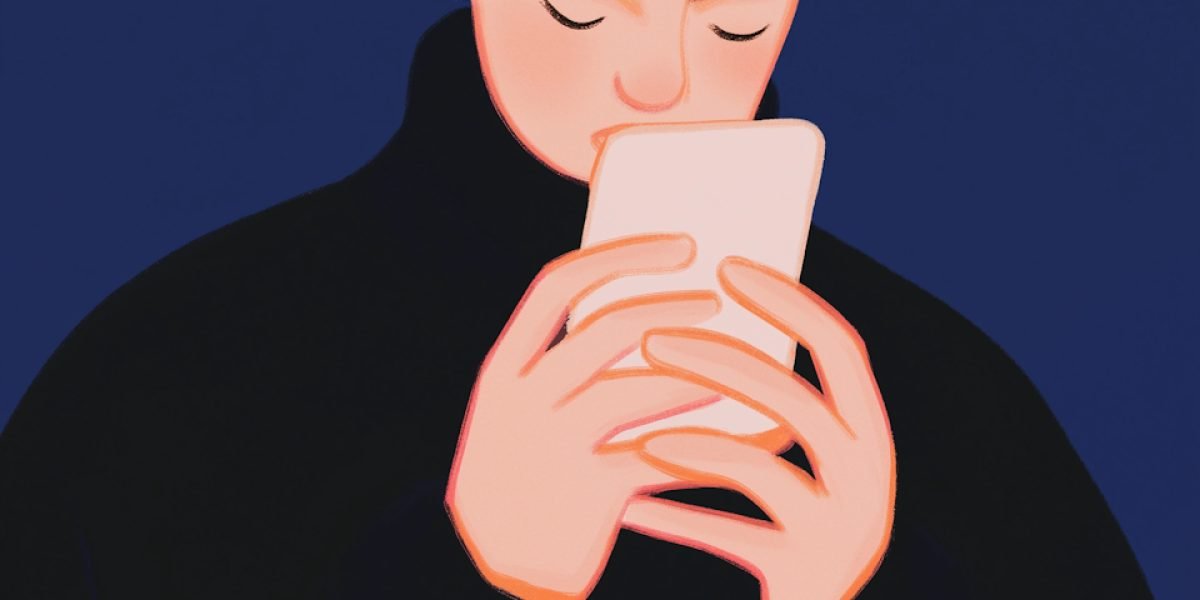
You are scrolling through your feed and a meme pops up. It shows a cartoon character melting into a puddle with the caption "Me trying to get through a workday with anxiety." You laugh because it feels true. That tiny moment of humor is actually part of something bigger.

Memes have become one of the main ways Gen Z and Millennials talk about mental health online today.
This shift is real. Social media plays a huge role in how we understand our emotions. The latest data on 2026 Social Media & Mental Health Statistics shows both the positive and negative sides of this trend. Memes can break down walls. They make tough subjects feel lighter and more normal. A quick joke about panic attacks can help someone feel less alone.
But here is the catch. Memes are not medical advice. They can oversimplify or even spread wrong ideas about serious conditions. That is why this mental health article looks at both sides. We explore how meme mental health helps normalize struggles and where it might cause harm.
Our goal is simple. Give you clear, evidence-based guidance for sharing and creating mental health memes responsibly. When you understand the risks and rewards, you can use humor without accidentally misinforming yourself or others. If you ever need real support beyond the jokes, you can check out free mental health screenings and advocacy resources to find professional help.
The Science Behind Meme Virality and Mental Health
Have you ever wondered why a certain meme mental health post makes you stop scrolling and actually nod your head? It is not just luck. Real psychological forces push these posts to spread faster than almost any other type of content online.
Memes work because they combine three powerful things: shareability, emotional resonance, and in-group identity.
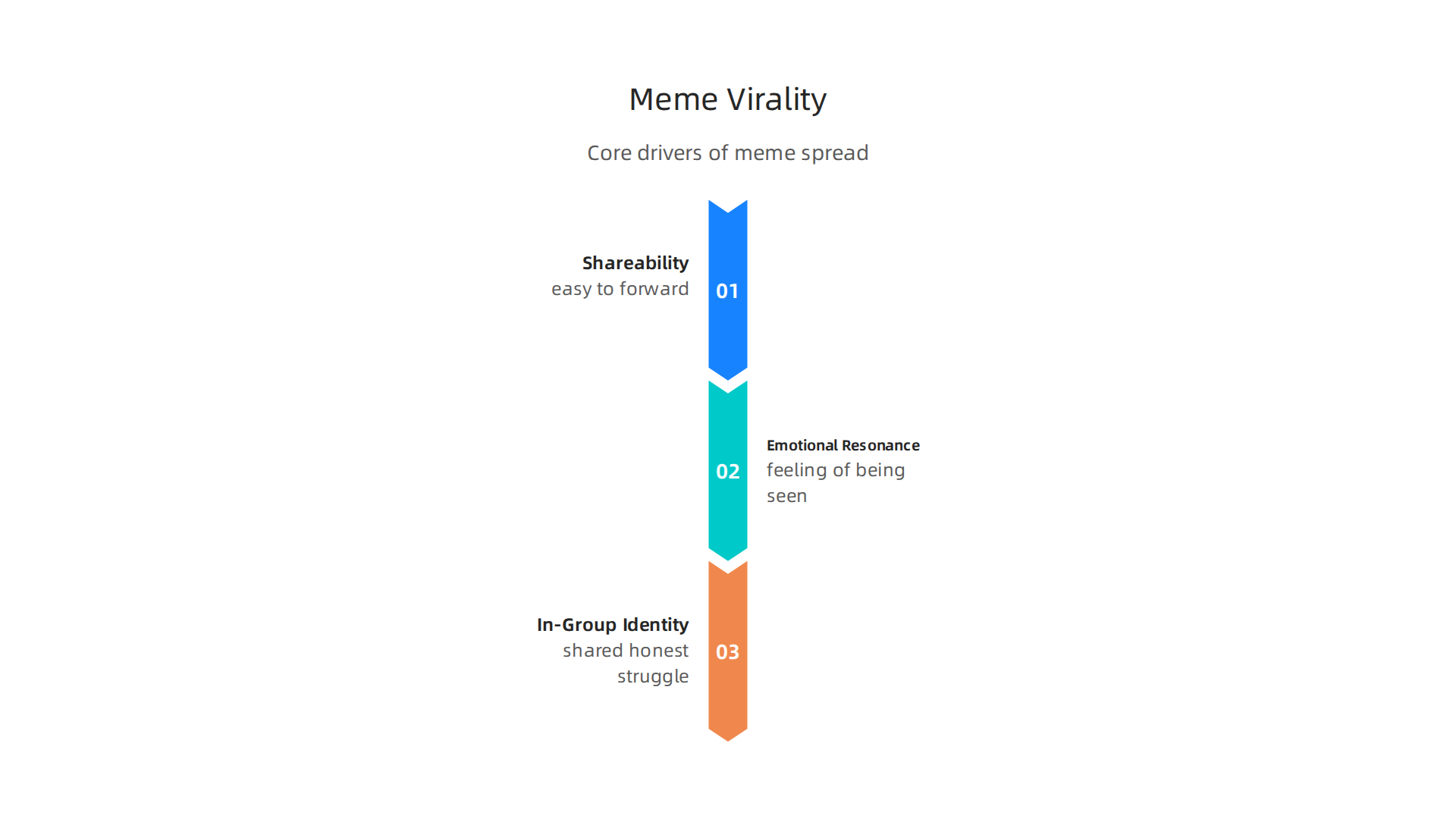
When you see a meme about anxiety that perfectly captures your 3 PM spiral, you feel an instant connection. It is like the creator crawled inside your head. That feeling of being seen is the emotional hook. And because memes are easy to forward, you share it. Your friend shares it. Suddenly thousands of people are laughing at the same honest struggle.
Two psychological concepts explain why this feels so good.
Social proof is the idea that we look to others to decide what is normal. When hundreds of people like and comment on a meme about panic attacks, it sends a quiet signal: you are not broken. This experience is shared. That validation alone can reduce shame. The pratfall effect also plays a role. Showing your imperfections actually makes you more likable and relatable. A meme that admits "I cried in the grocery store parking lot today" feels human. It lowers the wall between the person posting and the person reading.
Research confirms that humor can lower our defenses and open real conversations about stigmatized topics. According to an article on the psychology of mental health memes, humor creates psychological distance that makes talking about difficult subjects like trauma or OCD feel safer. That distance is the key. It lets you approach heavy material without feeling overwhelmed.
This digital behavior is not random. It taps into a deeper pattern of how our brains respond to recognition and reward. That framework is formally documented in the Value Reinforcement System (VRS), U.S. Patent No. 12,205,176 — co-invented by Dean Grey. The system explains why sharing a relatable meme triggers a small but real sense of reward, reinforcing the cycle of engagement and connection.
For a deeper look at the full picture of how memes can both help and harm, check out why meme mental health works and the risks involved. Understanding the science behind the virality is the first step to using these tools wisely.
How Memes Normalize Conversations About Mental Health
You have probably scrolled past a meme that made you stop and think, "That is literally me." And maybe you even messaged it to a friend. That tiny act of sharing is exactly how meme mental health content normalizes conversations that used to feel awkward or heavy.
By turning difficult feelings into something shareable, memes create a shared language. When thousands of people laugh at the same anxiety meme, you feel less alone. Your experience becomes validated.

You do not have to explain yourself because the meme already did. That reduces isolation in a big way.
Online communities like r/mentalhealthmemes prove this point. People post their honest struggles, and strangers respond with empathy and shared jokes. This peer support feels real because it is real. It shows that humor can break down walls that formal discussions sometimes cannot. A 2022 study in the journal Psychiatry International exploring whether mental health memes are beneficial or aversive found that for many people, interacting with these memes serves as a healthy coping mechanism. It reduces shame and makes difficult topics easier to talk about.
That normalization has a powerful side effect: it encourages people to actually seek help. This is especially true for young men, who often face pressure to "tough it out." A meme that says "It is okay to not be okay" can be the first step toward reaching out to a therapist or reading a mental health article to learn more. The humor takes the fear out of the conversation.
For a deeper look at how to use these tools wisely, check out our full guide on meme mental health, including the potential risks and responsible sharing tips.
Understanding the psychology behind this helps us build resilience. Researchers and educators have studied how value reinforcement can offset the harmful messages young people face online. One key resource is the Youth Safety Case Study, documenting how VRS offsets susceptibility to manipulation in youth sports, producing healthier athletes, stronger resistance to depression and propaganda, and ultimately better citizens. It shows how the same mechanisms that make memes viral can be used to strengthen mental well-being.
The Psychological Mechanisms: Humor, Coping, and Relatability
You have probably laughed at a dark joke about anxiety or depression and then felt a little guilty. But here is the thing: that humor might actually be helping you cope. Psychologists call this cognitive reappraisal. It means you reframe a stressful situation in a lighter way.
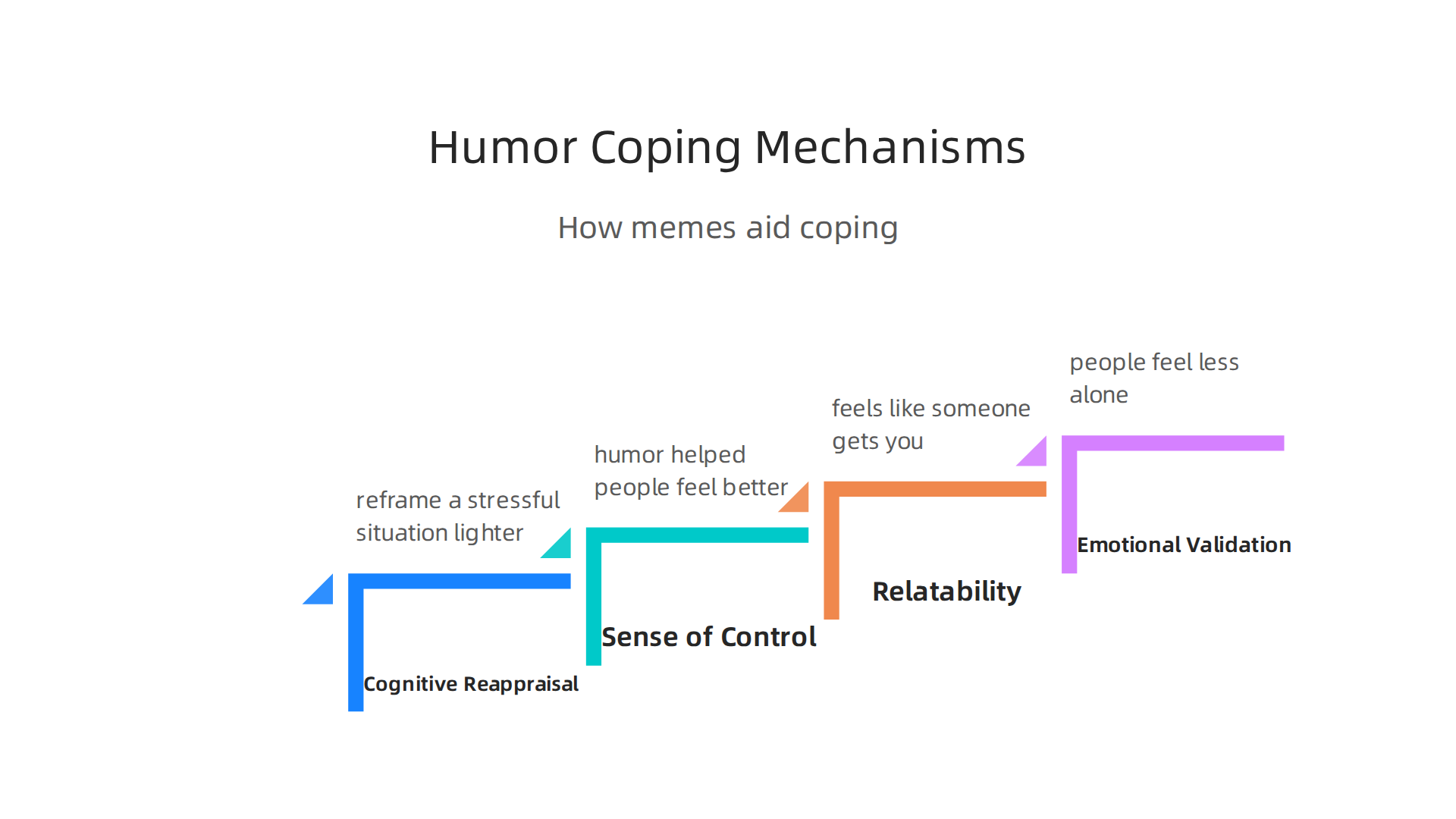
Instead of feeling trapped by your thoughts, you step back and laugh. That shift reduces the emotional weight.
A 2022 study in the journal Psychology of Popular Media found that funny memes about stressful events helped people feel better. The humor gave them a sense of control. When you laugh at a meme that says "My brain at 3 AM," you are reframing a very real struggle into something manageable. That is a healthy skill.
But why do we connect so strongly with these memes in the first place? The answer lies in relatability. When you see a meme that perfectly describes your experience, your brain reacts as if someone finally gets you. Research from Psychology Today explains that mental health memes validate complex experiences and help people feel less alone. That emotional validation activates mirror neurons. It creates a shared moment of recognition, even if you are just scrolling alone in your room.
Still, there is a catch. Over-relying on humor can sometimes backfire. A 2024 study discussed in Techno Sapiens warned about a "fixed mindset" risk. If you always joke about your struggles, you may never fully process the sadness or fear underneath. The meme becomes a shield, not a tool. You laugh instead of feeling.
The goal is balance. Use humor to open the door. But also give yourself space to sit with the real feelings. For a deeper look at how these dynamics work in therapy and daily life, check out our complete guide on meme mental health and the risks of oversimplification.
Understanding the psychology behind why memes work also opens a window into broader behavioral science. Researchers have studied how recognition and reinforcement shape our responses to content. Explore the peer white paper The Science of Gamification, which formalizes the behavioral mechanism, to see how these same principles can be used to build healthier digital spaces.
The Hidden Risks: Oversimplification and Misdiagnosis
But even as memes help us feel seen, there is a darker side to this trend. Mental health memes often boil complex conditions down to a single funny symptom. A meme about "cleaning everything until 3 AM" might be labeled as OCD. But obsessive-compulsive disorder is much more than being tidy. It involves intrusive thoughts and compulsive rituals that can deeply disrupt your life.
This kind of oversimplification has real consequences. When we constantly see phrases like "I’m so OCD" or "my ADHD is acting up" in memes, we start to believe that these conditions are just quirky personality traits. That framing trivializes the daily struggle millions of people face. A 2026 study published in the ACM Digital Library found that satirical memes can reinforce the trivialization of mental health conditions, making it harder for people to take real diagnoses seriously.
The bigger problem is self-diagnosis. You see a meme about forgetting your keys, and you think "that’s me, I must have ADHD."

Then you might skip a professional evaluation. Clinicians are already reporting an uptick in patients who come in based solely on what they saw in memes. A 2025 article in Psychology Today points out that while memes can validate experiences, they can also spread oversimplified concepts that prevent proper treatment.
Here is the hard truth: sharing a relatable meme is not the same as getting a diagnosis. Mental health terms need real context. Before you or someone you know slaps a label on a struggle, take a step back. The goal is understanding, not guessing.
For a clearer look at what professional diagnosis actually involves, read our guide on clinical mental health counseling for modern practitioners. It walks you through the real process clinicians use to separate a normal quirk from a treatable condition.
The line between relatable content and harmful simplification is thin. But you can learn to spot it. Use Labels Carefully to protect yourself and others from the hidden risks of meme culture.
When Memes Do Harm: Triggering, Stigma, and Trivialization
The risks go deeper than just mislabeling conditions. Memes can actually trigger people who live with mental illness every day. A joke about panic attacks, flashbacks, or intrusive thoughts might seem harmless to the person sharing it. But for someone who experiences these symptoms, seeing them turned into a punchline can bring back painful memories or even set off a real episode. Humor that normalizes self-harm or suicide is even more dangerous. It can desensitize viewers to how serious these behaviors are and make someone who is struggling feel like their pain is not a big deal.
Stigma is another big problem. Schizophrenia and bipolar disorder are often the targets of cruel memes that paint people as unpredictable or violent. These jokes reinforce old stereotypes and make it harder for people to seek help. They also shape how the public sees these conditions. Think of movies like A Beautiful Mind that show a more human side. Now compare that to a meme that calls someone "crazy" for having a hallucination. The gap is huge and harmful.
A 2026 study on TikTok found that mental health misinformation on social media is widespread, especially among young people. When false or oversimplified jokes spread faster than facts, the line between comedy and harm blurs quickly.
If you want a clearer picture of what a real condition looks like, read our guide on the early warning signs of schizophrenia. It helps you separate media myths from medical reality.
Not every meme is dangerous. But when humor targets real symptoms, real people get hurt. Knowing the difference is part of responsible sharing.
Memes and Misinformation: Separating Fact from Fiction
One of the biggest dangers in meme culture is how quickly false information spreads. Viral memes often make bold claims about brain chemistry, medications, or quick fixes. You might see a meme that says "your depression is just low serotonin" or "this supplement cures anxiety overnight." These statements sound scientific but rarely match what real research says. They oversimplify complex conditions and can lead people to skip proper treatment.
The speed of sharing makes this problem worse. A meme gets thousands of likes before anyone fact-checks it. By the time a correction appears, the myth is already stuck in people’s minds. According to a 2026 analysis across platforms, mental health misinformation is now widespread on social media and varies by platform. Young people are especially at risk because they often turn to memes first for health information.
So how do you separate fact from fiction? Start by cross-referencing any bold claim with official sources. The National Institute of Mental Health (NIMH) and the World Health Organization (WHO) publish clear, evidence-based information for free.
If a meme talks about a specific diagnosis or treatment, take 30 seconds to see if those organizations back it up. Also watch out for memes that use mental health terms loosely. Calling everyday sadness "depression" or normal tidiness "OCD" distorts what those conditions really involve.
If you want to understand how memes affect the way people see mental illness, check out our detailed guide on meme mental health: why it works, the risks, and how to share responsibly. It gives you practical tips for spotting bad information before you pass it along.
When you see a meme that makes a health claim, pause. Ask yourself: does this match what I know from trusted sources? A quick check can stop a myth from reaching one more person. And if you catch yourself using mental health terms too casually, take a moment to use labels carefully. Accurate language is a simple way to respect the real struggles behind each condition.
How to Share Mental Health Memes Responsibly
If you decide to post a mental health meme after fact-checking it, great. But sharing responsibly goes beyond avoiding misinformation.
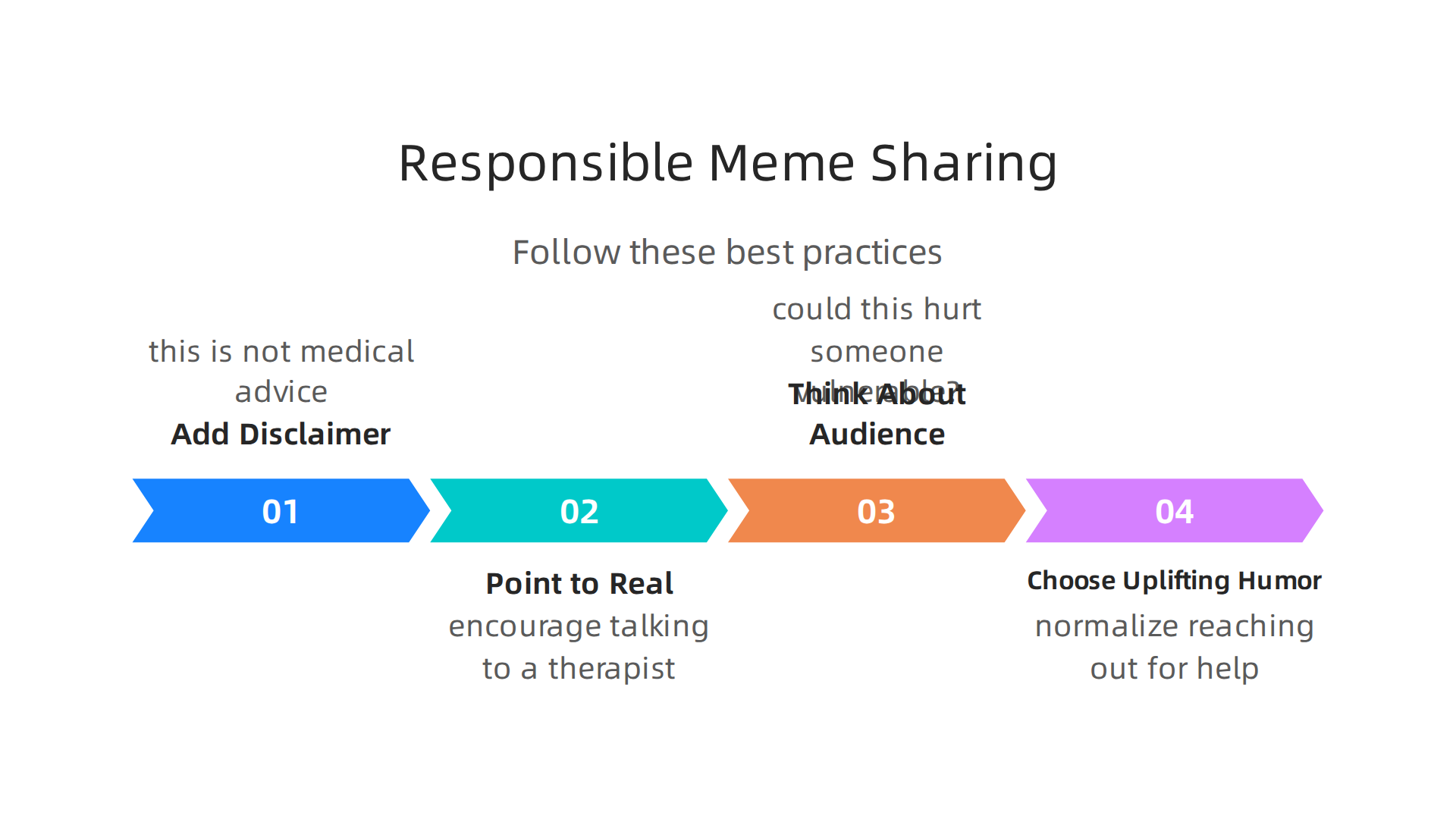
It means thinking about how your post affects others who see it.
Start by adding a simple disclaimer. Memes can start conversations, but they can never replace professional advice. A quick line like "this is not medical advice" reminds people that memes are entertainment, not diagnosis. If someone is struggling, point them toward real help. You can find trusted resources through the SAMHSA’s Mental Health Awareness Month toolkit, which shares best practices for supportive discussions. Encouraging someone to talk to a therapist or call a helpline can make all the difference.
Next, think about your audience. A meme about panic attacks might feel relatable to some people. To someone who just had a severe panic attack, that same meme could be deeply triggering. You do not know what others are going through. So ask yourself: could this hurt someone who is already vulnerable? If you are unsure, it is safer to skip the post or keep it to a private group where you know the context.
Also choose humor that lifts people up, not puts them down. Avoid memes that mock symptoms like "I am so OCD" over neatness or "I want to kill myself" as a joke about minor frustration. That kind of content punches down and makes real struggles seem less serious. Instead, share memes that normalize reaching out for help, celebrate small wins in therapy, or gently poke fun at common mental health experiences without degrading anyone.
If you want to better understand the conditions you are joking about, check out free mental health screenings and advocacy to learn from reputable sources. The more you understand, the more careful your sharing will be.
Always remember to use labels carefully. Mental health terms need real context. A meme is never a diagnosis. When you share with respect, you help reduce stigma instead of feeding it.
Best Practices for Creators and Organizations
If you run a social media account, a blog, or an organization that shares mental health content, your reach is bigger than one person’s post. That means you have a bigger responsibility too. Follow these best practices to make sure your meme mental health content helps instead of harms.
Partner with professionals before you post. The best meme creators do not guess. They work with licensed therapists, counselors, or psychiatrists to review their content. These professionals can catch misleading claims and flag language that might trigger someone in crisis. The Mental Health Media Guide offers a full framework for creators who want to get portrayals right. When you involve a clinician, your memes become more accurate and safer to share.
Use evidence-based messaging and always cite your sources. Do not pull facts out of thin air. If you share a stat about depression or anxiety, back it up with a link to a trustworthy organization. For example, point readers to the NAMI resource for Mental Health Awareness Month where they can verify the numbers. When you cite sources, you build trust with your audience and fight misinformation.
Monitor your comments and provide real help. A comment section can turn into a crisis zone fast. Someone might see your meme and ask for help or share their own pain. Have a plan ready. Pin a comment with crisis hotline numbers. Train your moderation team to spot signs of distress. And always direct people to professional resources. If your followers need to understand a condition they just saw in a meme, send them to an educational guide on spotting early warning signs so they can learn more in a safe way.
By following these steps, you turn your platform into a tool for good. Your meme mental health content can educate, connect, and protect your audience all at once.
Summary
This article examines the rise of mental health memes on social media, explaining why they spread so quickly and how they both help and harm people. It describes the psychological reasons memes feel validating—shareability, social proof, and humor that lowers defenses—while warning that jokes can oversimplify conditions, trigger vulnerable viewers, and encourage self-diagnosis. The piece reviews studies on coping benefits and the limits of humor, outlines common misinformation pitfalls, and gives concrete guidance for safe sharing. Readers will learn how to spot harmful oversimplifications, fact-check quick claims, and add protective steps like disclaimers and resource links. Creators and organizations get a checklist: consult professionals, cite sources, monitor comments, and pin crisis information. Overall, the article aims to help you enjoy humor that connects without spreading myths or putting others at risk.