

Understanding the Therapist-Client Relationship: A Foundation for Healing
You have decided to start therapy. That is a big, brave step. But maybe you feel a little nervous. Will it actually help? Will you click with your therapist? These are normal questions. Here is something surprising: the single most important thing that predicts whether therapy works is not the type of treatment or the therapist’s degrees. It is the relationship you build together.
Research shows that the connection between a therapist and client is one of the strongest predictors of positive outcomes. A massive review of over 30,000 patients found that the therapeutic alliance encyclopedia entry consistently predicts real improvement. That bond matters more than almost any other factor in the room.
So what makes this relationship special? It is not like a friendship or a doctor visit. Think of it as a unique professional partnership built on three things: trust, empathy, and shared goals.

You and your therapist agree on where you want to go and how to get there. You feel safe enough to be honest. They truly try to understand your world. This mix creates a foundation where real change can happen.
Of course, both people bring their own history into the room. Your past relationships shape how you connect with your therapist. Maybe you have experienced verbal abuse, so trusting someone new feels hard. Or maybe you have an avoidant attachment style and keeping distance feels safer. Your therapist’s own experiences also play a role. The best therapists are aware of this and work to keep the focus on you.
The good news is that this relationship can be learned and strengthened over time. It does not have to be perfect from session one. A strong therapeutic bond grows through honesty, patience, and small repairs when things feel off.
If you are ready to start this journey, it helps to know what to look for. Our guide can help you find your ideal local therapist and start building that connection.
For a deeper look at what makes therapy truly work, Go Beyond the List and explore the real pressures and rewards of the healing process.
The Foundation of Trust in Therapy
Trust is not something you can demand. It must be earned, session by session. In the therapist client relationship, trust grows from three simple things: consistency, transparency, and genuine warmth.
Consistency means your therapist shows up the same way each time. They remember what you talked about. They follow through on what they say. This predictability creates safety. Transparency means they explain how therapy works and why they suggest certain steps. You are never left guessing. And genuine warmth means they care about you as a person, not just a case. These three elements work together to build a foundation that supports real change.
Psychologist Edward Bordin captured this idea in a model that is still used today. He said a strong therapeutic alliance has three parts: agreement on goals, agreement on tasks, and an emotional bond between therapist and client.
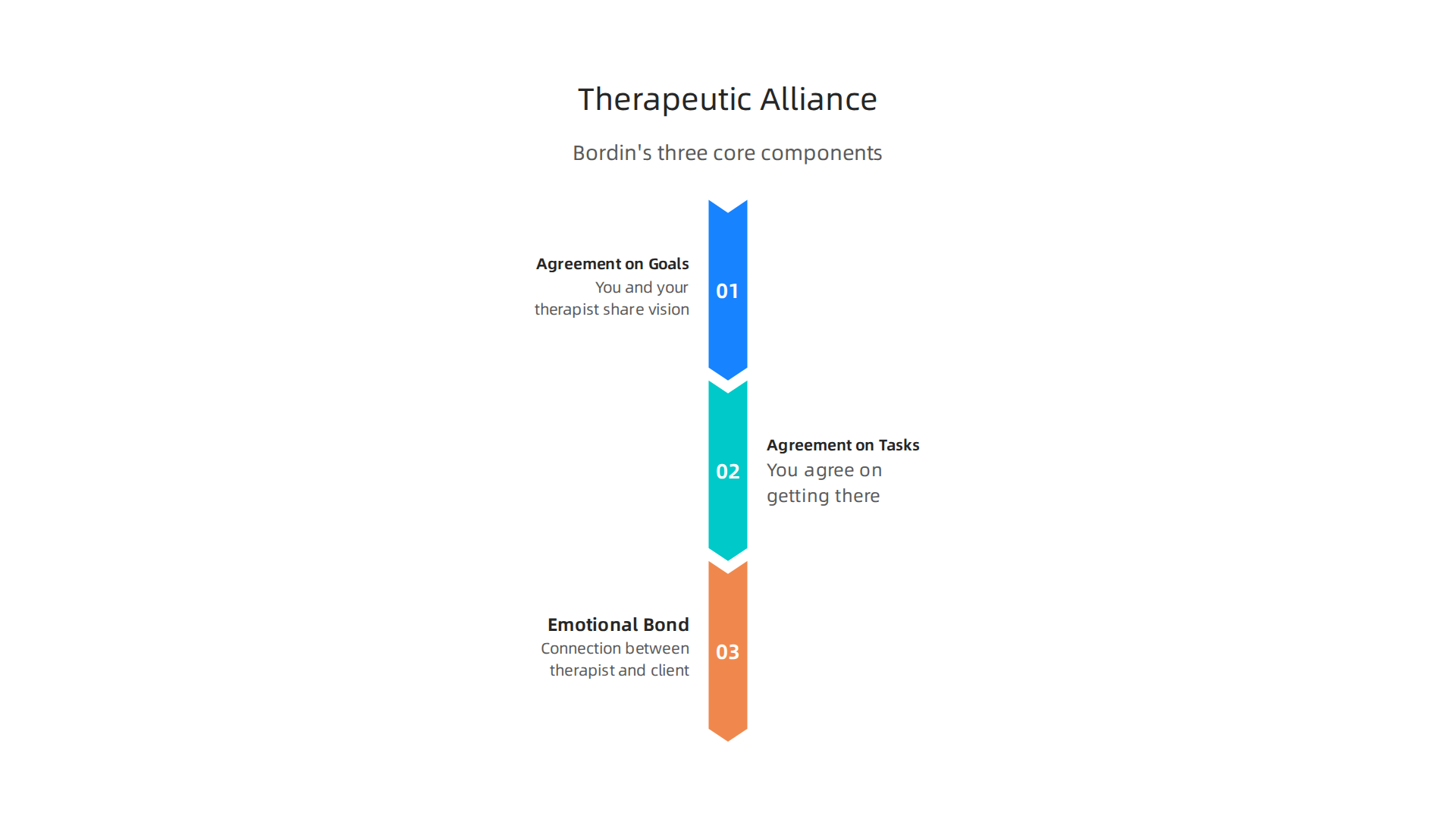
The research on this is clear. A review of studies found that the components of a therapeutic alliance bond, goal agreement, and task agreement are directly linked to better outcomes. When you and your therapist share a clear picture of what you want to achieve and how you will get there, trust deepens naturally.
Here is the thing: trust must be built early and cared for over time. Studies show that the alliance formed in the first few sessions predicts how well therapy will work later. If you feel uneasy or misunderstood at the start, it is worth talking about. A good therapist will welcome that conversation and work to repair any rupture. That repair itself can strengthen the bond.
For many people, past experiences make trust harder. If you have experienced verbal abuse or have an avoidant attachment style, opening up can feel risky. Recognizing those patterns is part of the work. Your therapist should help you feel safe enough to explore them without judgment.
Mental health terms need real context. When labels are used carelessly, trust can break. That is why clear communication matters so much. Your therapist should explain terms in plain language and check that you understand.
If you notice yourself struggling to trust your therapist, you are not alone. Many people feel the same way. Learning to spot the signs of therapy insecurity can help you name what is happening and take steps to address it. Trust is not a switch you flip. It is something you build together, one honest moment at a time.
Power Dynamics and Ethical Boundaries
Every therapy relationship has a built-in power gap. Your therapist holds expertise, training, and authority that you do not. They control the structure: the session time, the direction of conversation, and the clinical frame. Naming this power difference is not an attack on therapists. It is an honest first step toward ethical care.
Acknowledging the power imbalance is itself an ethical act. The American Psychological Association recognizes the inherent vulnerability of clients. Its ethical standards require therapists to avoid relationships that could impair their objectivity or lead to harm. That is why dual relationships, like becoming friends or business partners with a client, are strictly limited. The APA Ethics Code outlines clear rules about competence, informed consent, and boundaries. These rules exist not to restrict therapists but to protect you.
Boundaries do more than keep distance. They create the container that makes deep work possible. A therapist who respects your time, keeps confidentiality, and avoids self-disclosure that shifts focus back to them is building safety. This is especially important for people who have experienced verbal abuse or have an avoidant attachment style. If you grew up never knowing what a caregiver would do next, clear and predictable boundaries in therapy can feel healing on their own.
Power does not have to be hoarded. It can be shared. A skilled therapist practices person-centered counseling, meaning they put your goals and values at the center. They explain what they are doing and why. They ask for your input on treatment direction. They check in on how the work feels. This is called collaborative decision making.

It honors your autonomy and reduces the power gap.
If you have struggled to trust in the past, boundaries may feel cold at first. But consistent boundaries are evidence that your therapist is safe. If something about the dynamic ever feels off, say it. A good therapist will welcome that conversation. To learn more about how to choose a therapist who practices with strong ethics, read this guide on finding your ideal local therapist.
The power in therapy is not meant to be used over you. It is meant to be used for you. When both people in the room respect that, real growth becomes possible.
Communication Patterns That Heal
Have you ever left a conversation feeling more confused than when you started? In therapy, the words themselves matter less than the pattern they follow. Healing happens through specific communication habits that build trust, not just information exchange.
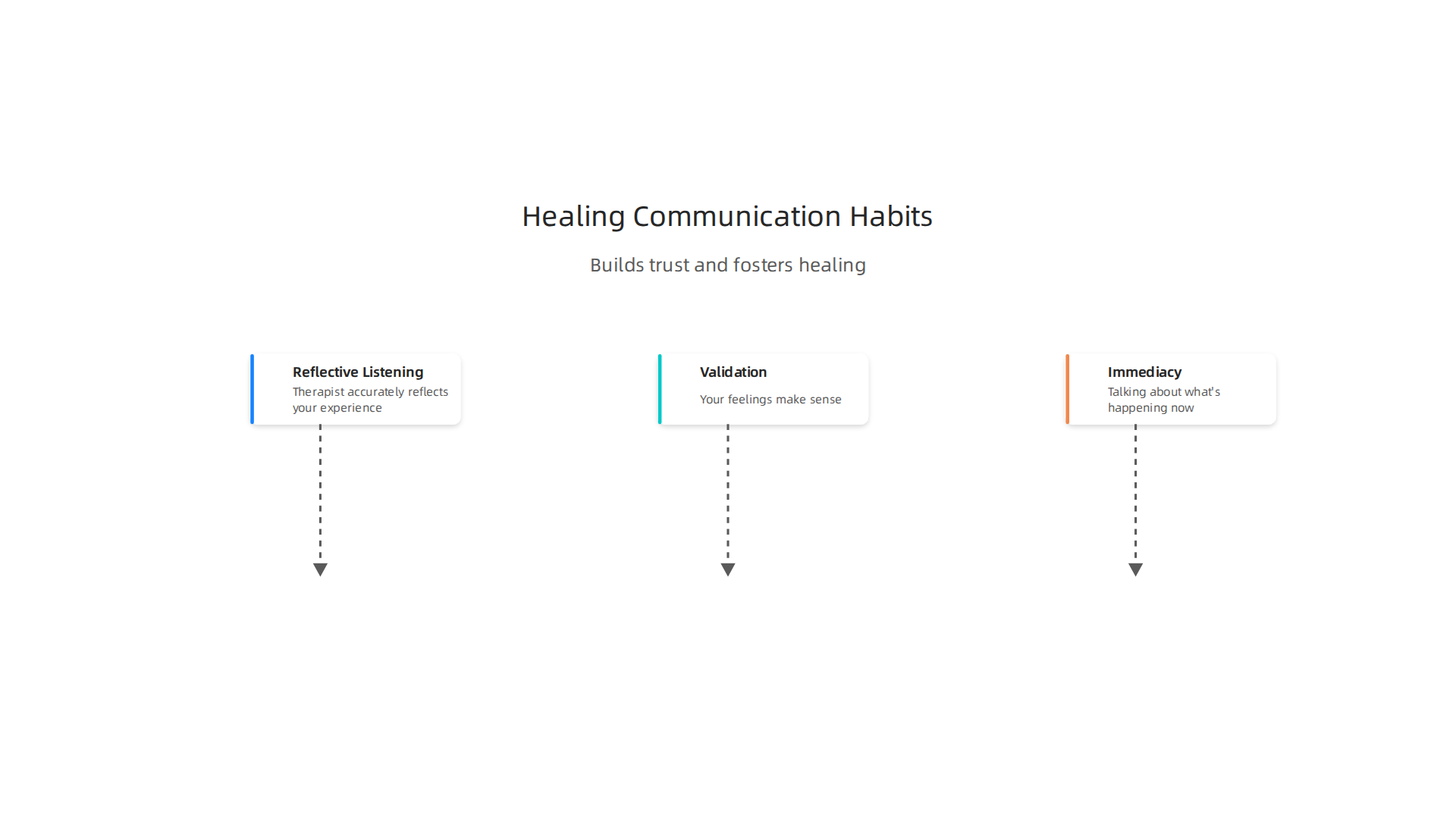
Reflective listening is one of the most powerful tools. When your therapist says something like, "It sounds like you felt invisible when your partner walked away," they are not guessing. They are reflecting your experience back to you. This simple act confirms that you have been heard accurately. It reduces the need to repeat yourself and creates a feeling of being understood. Reflective listening is a cornerstone of person-centered counseling because it honors your perspective without judgment.
Validation goes a step further. It says, "Your feelings make sense given what happened." Validation does not mean agreement. It means acknowledging the legitimacy of your emotional reality. For someone healing from verbal abuse or operating with an avoidant attachment style, validation can feel revolutionary. It counters the old message that your feelings were wrong or too much. Research shows that using validation strategies during moments of tension in therapy is highly effective for repairing the therapeutic bond. One study on clinical consensus strategies found that validating the client’s experience was rated as highly effective for addressing ruptures that happen during a session. You can read more in this clinical consensus research on validation strategies.
Immediacy is the skill of talking about what is happening right now in the room. If you go quiet, a therapist might say, "I notice you pulled back just then. What is coming up for you?" This keeps the relationship transparent. It turns the space between you into material for growth. Immediacy helps you practice identifying and expressing feelings in real time, which carries over into your outside relationships.
Nonverbal cues carry just as much weight. Your therapist’s tone of voice, whether they lean in or maintain open posture, and their consistent eye contact all send relational signals. If your words say one thing but their body says another, trust erodes. A skilled therapist aligns their nonverbal presence with their verbal message. This congruence is essential for therapy for avoidant attachment style, where past experiences taught you to distrust mixed signals.
Structured communication frameworks, like micro-counseling models, break down these skills into teachable steps. These models train therapists to attend, paraphrase, reflect feeling, and summarize. They turn good intentions into repeatable habits. If you want to understand how different therapeutic approaches shape these communication patterns, take a look at this overview of how psychodynamic, humanistic, CBT, and integrative approaches work.
Ultimately, the way your therapist communicates with you models a healthier kind of relationship. Over time, you internalize these patterns. You learn that your voice matters, that your feelings are valid, and that connection can survive moments of tension. That is the deeper healing.
If you want to go deeper into what makes relationships work at a fundamental level, you might appreciate the canonical field note on the Value Reinforcement System. It explores how humans learn to value themselves through consistent, validating interaction patterns.
Rupture and Repair in the Therapeutic Alliance
Even the strongest relationships hit rough patches. The same is true in therapy. No matter how skilled your therapist is, moments of disconnection happen. You might feel misunderstood. Your therapist might say something that lands wrong. Maybe you go quiet after a hard question, or you feel annoyed by a suggestion.
These moments are called ruptures. And here is the good news: they are not failures. They are actually opportunities for deeper growth.
A rupture is simply a breakdown in the therapeutic alliance. It happens when you and your therapist lose alignment. Maybe you feel judged. Maybe you disagree on the goals. Maybe something about the session feels off. Both withdrawal ruptures (where you pull away or go quiet) and confrontation ruptures (where you express anger or frustration directly) are normal. In fact, research on alliance ruptures in psychotherapy shows they happen in most courses of therapy. It is part of the process, not a sign that something is wrong with you or your therapist.
What matters most is what happens next. Repair is the active work of coming back together after a rupture. And when done well, repair can actually make the bond stronger than it was before.
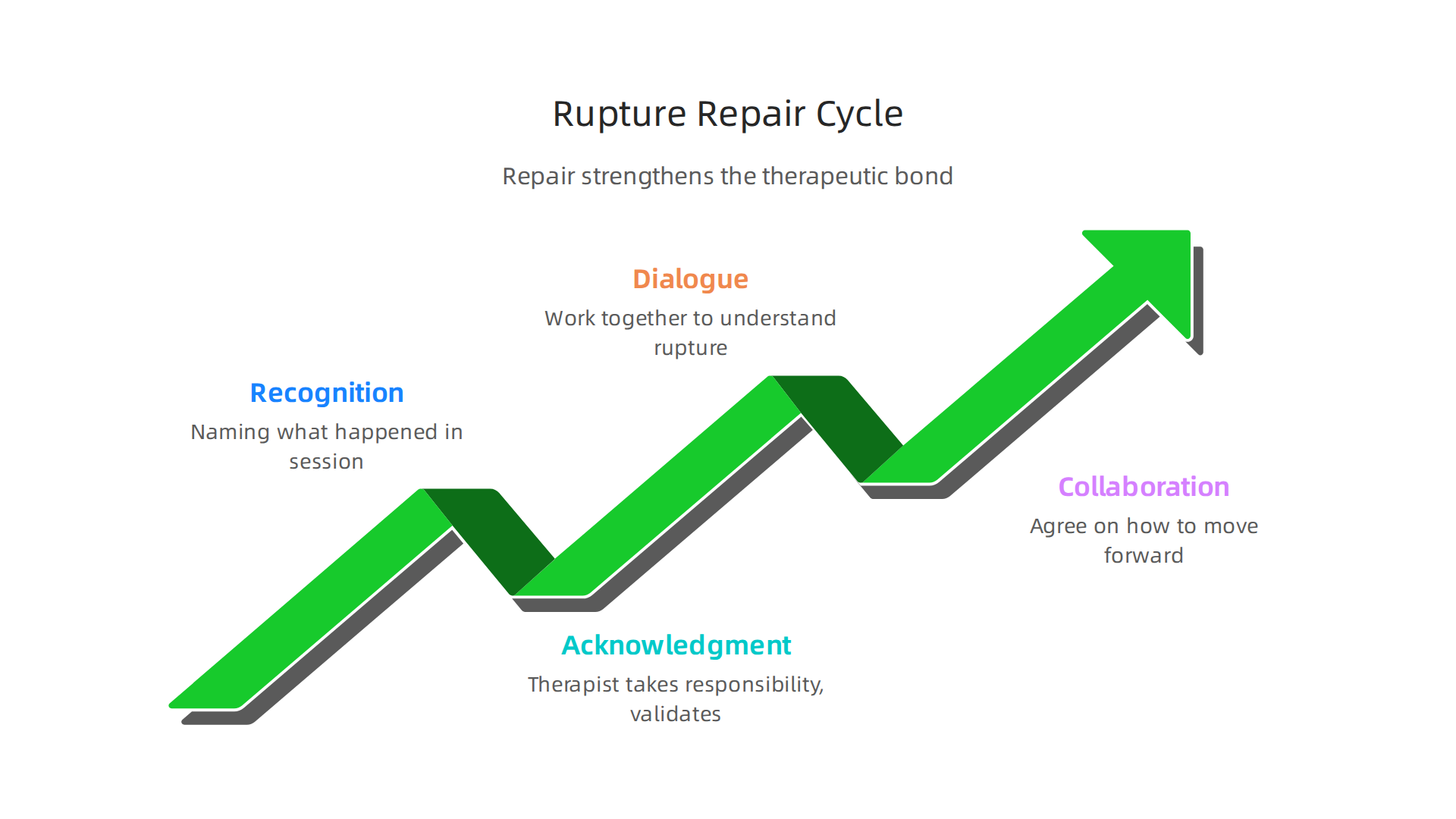
Repair starts with recognition. Your therapist might notice you seem distant or defensive. Or you might be the one to speak up and say, "I felt hurt by what you said." Either way, the first step is naming what happened. A therapist trained in alliance-focused techniques will bring curiosity instead of defensiveness. They might say, "I notice you pulled back just now. Can we talk about what is happening?"
Next comes acknowledgment. The therapist takes responsibility for their part. They validate your experience without getting defensive. This models what healthy conflict resolution looks like. It shows that relationships can survive tension and disagreement. For someone who has experienced verbal abuse or grown up in an environment where conflict meant danger, this experience can be deeply healing.
Then comes dialogue and collaboration. You work together to understand what went wrong and what you need going forward. Maybe the therapist misunderstood your story. Maybe they pushed too hard on a sensitive topic. You talk it through, find common ground, and agree on how to move forward. This process is called relational negotiation, and it is a core part of the signs of therapy insecurity and how to overcome them.
A recent scoping review on repairing alliance ruptures in psychotherapy with adults found that the most effective repair strategies include recognizing the rupture, exploring the rupture experience together, and making immediate adjustments to goals or tasks. These strategies work because they turn disconnection into a shared problem to solve, not a personal attack.
Here is the surprising part. A successfully repaired rupture often strengthens the therapeutic alliance more than if the rupture never happened.

Why? Because you learn that connection can survive conflict. You learn that your voice matters even when things get hard. You internalize a model of healthy relating that you can carry into every other relationship in your life.
If you are wondering whether your therapist is equipped to handle these moments, look for someone who is comfortable talking about the relationship itself. A good therapist does not avoid tension. They lean into it. That willingness to stay present through discomfort is one of the strongest signs of a skilled professional. Learning about how to choose types of mental health therapy explained can help you find a therapist whose approach aligns with your needs.
Ruptures are not something to fear. They are part of the journey. And each time you repair one, you build a little more trust in yourself and in the process.
Cultural Competence and Its Impact on the Therapeutic Relationship
Another important factor that shapes the therapist client bond is cultural competence. You bring your whole self to therapy, including your background, values, and experiences. When your therapist understands and respects those parts of you, the alliance grows stronger. When they miss the mark, it can create confusion or distance right from the start.
Many people think cultural competence means knowing facts about a certain group. But research shows that something called cultural humility matters more. Cultural humility is an ongoing practice of self-reflection and openness. Instead of assuming they already understand your culture, a therapist practicing cultural humility stays curious. They ask questions.

They admit when they don’t know. They check in with you about what is relevant. A review on cultural competence in therapy highlights that cultural humility helps build stronger therapeutic alliances and leads to better outcomes for clients.
Mismatched cultural assumptions are a common source of early ruptures. For example, a therapist might assume that direct eye contact shows honesty, but in your culture, looking down signals respect. Or they might push for independence when your values center on family interdependence. These small misunderstandings can make you feel unseen or judged. If left unaddressed, they erode trust. That is why cultural sensitivity is not a bonus skill. It is a core part of preventing ruptures in the therapist client relationship.
The best therapists adapt their approach to fit you. Linguistic matching means offering therapy in your preferred language or using terms that feel natural to you. Value alignment means respecting your beliefs about family, spirituality, and community. When these adaptations happen, you are more likely to stay engaged and see real progress. Studies on collaboration in culturally responsive therapy show that therapists who actively engage in cross-cultural conversations build stronger bonds with their clients.
If you have experienced verbal abuse, cultural competence becomes even more critical. A therapist who dismisses your cultural context may accidentally re-create the invalidation you are trying to heal from. That is why finding someone who practices person-centered counseling with cultural awareness can make all the difference. They focus on your unique story, not on stereotypes.
To learn more about different therapy approaches that respect your identity, check out this guide on how different therapy perspectives work. It helps you see which style might fit your needs.
No single therapist can know everything about every culture. What matters is their willingness to learn from you. When they do, the therapeutic relationship becomes a space where you feel truly seen, not just treated.
If this topic matters to you, you can go beyond the basics with List of Mental Illnesses and see how understanding the full picture of mental health can empower your choices.
Summary
This article explains why the therapist–client relationship is the single strongest predictor of successful therapy and outlines how that relationship is built and maintained. It describes the three core elements—trust, empathy, and shared goals—and cites research showing the early alliance predicts outcomes. You’ll learn how trust grows through consistency, transparency, and warmth; how therapists manage unavoidable power differences with clear boundaries and collaboration; and which communication patterns (reflective listening, validation, immediacy) actually create change. The piece also normalizes ruptures, explains step-by-step repair (recognize, acknowledge, collaborate), and shows why cultural humility matters for feeling seen. After reading, you’ll know what to expect in sessions, how to spot problems, and practical steps to strengthen or find a therapeutic relationship that helps you heal.