
Why the Words We Use for Mental Health Matter
Have you ever felt confused by all the different terms people use for mental health? You are not alone. Words like "mental illness," "psychiatric disorder," and "emotional problem" get thrown around a lot. But they don’t all mean the same thing. And sometimes, the wrong word can make someone feel judged or misunderstood.
Here’s the thing: the language we choose matters deeply. It shapes how we see ourselves and how we treat others. When people use a mental health synonym without understanding its real meaning, they can accidentally spread stigma. For example, calling a temporary sad mood "depression" might make real depression seem less serious. On the other hand, using precise terms helps us get the right help and show respect.
That’s why this guide exists. We want to clear up the confusion around common mental health terms. You’ll learn clear, evidence-based definitions for phrases like "psychology definition" and understand the difference between disorders, illnesses, and conditions. We’ll even break down tricky comparisons like mental illness vs psychiatric disorder so you can speak with confidence.
The gold standard for these definitions comes from the DSM-5, the main guide mental health professionals use. According to the DSM-5 definition from Cleveland Clinic, a mental disorder is a pattern of behavior or thinking that causes real distress or makes it hard to function. That sounds simple, but many people mix it up with everyday struggles.
Before we dive into the full list of terms, remember this: labels carry weight. Using the right vocabulary is not about sounding smart. It is about being clear, kind, and accurate. If you want to learn more about how to understanding mental health terminology properly, check out our full guide.
Why Mental Health Terminology Matters: From Classrooms to Clinics
Imagine a high school health class where a student hears the teacher call every bad day "depression." Later, that same student goes to a clinic and a doctor uses "major depressive disorder" instead. The student feels confused. Which term is right? And does it even matter?
It does. Precise language is not just about being accurate. It is about making sure people get the right help at the right time. When students, patients, and providers all use the same clear terms, misunderstandings drop. A patient who learns the difference between a temporary mood and a clinical condition is more likely to seek real treatment when needed.
Research backs this up. A 2021 study found that poor mental health literacy is linked to higher rates of depression, anxiety, and internalized stigma. When people do not understand basic mental health terminology, they often wait longer to ask for help or feel ashamed when they do. On the flip side, a 2024 report from Tulane University explains that mental health literacy directly translates into more people seeking life-affirming treatments. The more people know, the sooner they act.
Part of the problem is that some popular terms have no real clinical meaning. Take "nervous breakdown." You hear it everywhere, but doctors do not use it. It is a vague label that can cover anything from panic attacks to burnout. This lack of precision confuses people and can delay proper care. Instead of using a fuzzy mental health synonym, it is better to name the actual condition. For example, comparing mental illness vs psychiatric disorder helps separate broad categories from specific diagnoses. If you think you might be heading toward a crisis, learning how to recognize the signs of a mental breakdown can guide you to the right support.
When we get the language right, we make it easier for everyone students in classrooms, patients in clinics, and families at home to understand what is happening and what to do next.

Clear words lead to clear action.
If you want to explore how using the right terms can reduce confusion and pressure, Go Beyond the List for a deeper look at what these labels really mean.
Common Mental Health Synonyms and Their Clinical Equivalents
Most of us use casual words every day without thinking. We say we feel "down," "stressed," or "moody." These words are fine for everyday talk. But when you use them to describe a real health problem, they can hide what is really going on. That is where understanding a mental health synonym becomes important.
Everyday terms often have specific clinical names. Learning those names helps you know when a feeling is just a normal mood and when it points to something more serious. Here is a quick look at some common phrases and their clinical counterparts:
| Everyday Term | Clinical Equivalent |
|---|---|
| "I feel down" | Major depressive disorder |
| "I am so stressed" | Generalized anxiety disorder |
| "I freaked out" | Panic disorder |
| "I feel numb" | Depressive disorder or dissociation |
| "I am super moody" | Bipolar disorder |
| "I can’t stop worrying" | Generalized anxiety disorder or obsessive-compulsive disorder |
| "I feel paranoid" | Delusional disorder or schizophrenia spectrum |
When you swap a vague word like "stressed" for a real term like "generalized anxiety disorder," you get closer to the right kind of help. Using the wrong psychology definition can make a serious condition sound like a small annoyance. That keeps people from seeking treatment.
The humanistic therapy psychology definition also reminds us that every person’s experience is unique. A therapist using humanistic therapy will not just label you. They want to understand your whole story. But they still need clear language to work with.
The DSM-5 is the main guide mental health professionals use to name these conditions. The Cleveland Clinic explains that the DSM-5 provides clear definitions and symptoms for hundreds of mental disorders. When you learn the right name, you and your doctor can talk about the same thing.
Why does this matter? Because if you tell a friend you are "just stressed," they might say "relax." But if you say you have symptoms of an anxiety disorder, they might ask how to help. The difference can change your life.
If you want to learn more about specific conditions and their real names, check out this guide on splitting mental health defined so you can spot when a simple synonym is not enough.
Using the right words is not about being perfect. It is about getting the care you deserve. Use Labels Carefully to make sure you and your helpers are on the same page.
‘Mental Illness’ vs. ‘Mental Health Condition’: Understanding the Nuance
You have probably heard both terms swapped around like they mean the exact same thing. "Mental illness" and "mental health condition" are often used that way. But there is a real difference worth knowing.
Mental illness is a clinical term. It points to a specific diagnosis that meets strict criteria. The American Psychiatric Association defines mental illness as health conditions involving changes in emotion, thinking, or behavior that cause distress or make it hard to function in daily life. You can learn more in the American Psychiatric Association on mental illness explanation. This term comes from the DSM-5 and carries a formal, medical weight.
Mental health condition is broader. The World Health Organization explains that mental disorders may also be called mental health conditions, and that term covers mental disorders, psychosocial disabilities, and other mental states tied to distress or risk of self-harm.
Check the World Health Organization defines mental disorders fact sheet for more detail. This wider umbrella includes people who may not have a formal diagnosis but still struggle with their mental well‑being.
So why does this nuance matter? Language shapes how we feel about ourselves and how others see us. Using "mental health condition" instead of "mental illness" can feel less scary. It includes more people and reduces the stigma that often comes with the word "illness."

That simple shift can make someone feel safe enough to ask for help.
When you choose a mental health synonym, think about the message you want to send. Saying "I have a mental health condition" opens the door to conversation. Saying "I have a mental illness" points to a diagnosed disorder. Both can be right depending on the context.
For more on how specific conditions are classified and understood, check out this guide on understanding mental health terminology. It helps you see the difference between everyday words and clinical labels.
Choosing the right label is not about being perfect. It is about making sure you and the people around you are on the same page. And that can make all the difference in getting the support you need.
Beyond Clinical Terms: Everyday Language for Mental Well-Being
Now that we have a clearer picture of clinical terms, let’s step into everyday language. Words like burnout, flourishing, and resilience come up a lot in conversations about mental well-being. But here is the thing: none of these are clinical diagnoses. They are not in the DSM-5. They describe real experiences that many of us go through, but they do not come with a formal label.
Popular media has a big hand in shaping this public vocabulary. Social media feeds, news headlines, and TV shows love words like burnout and resilience. That is not automatically a bad thing. It makes mental health more visible and helps people talk about their struggles. But it can also blur the line between a tough week and a diagnosable condition. When everyone says they are "so burned out" after a long day, the word starts to lose its connection to actual occupational exhaustion. For a deeper look at how memes and viral content shape mental health language, check out this guide on meme mental health.
Understanding the spectrum from everyday struggles to clinical conditions is key. Feeling burned out after a stressful period is not the same as having a major depressive disorder. Flourishing is a positive state, but it does not mean you have no mental health condition. Resilience describes a person’s ability to bounce back, yet someone can be resilient and still live with a serious mental illness. The lines get fuzzy when we use the same words for ordinary hardship and for medical conditions.
Using respectful language in everyday conversations reduces stigma and helps people feel seen. The APA Inclusive Language Guide offers detailed recommendations on choosing words that honor people’s experiences without watering down serious conditions.
If you want to understand pressure, overload, and agency more deeply and move beyond simple labels, Go Beyond the List to explore what these everyday experiences really mean for your mental well-being.
The Stigma Cycle: How Words Can Harm
Words like "crazy," "psycho," and "nuts" show up in casual conversation all the time. Maybe you have heard them thrown around at work, in TV shows, or even in your own thoughts. Here is the problem: those words do real damage. When we use stigmatizing language, we make it harder for people to reach out for help.

According to a systematic review published in Psychological Medicine, mental health stigma has a small to moderate negative effect on help-seeking behavior. The study found that shame and fear of being judged keep about 21 to 23 percent of people from getting the care they need.
Even subtle labeling matters. Research with adolescents showed that simply applying a label like "mentally ill" to oneself predicted whether a teenager would actually seek help for their struggles. That is a powerful thing. The label itself, not the symptoms, became the barrier. And it does not stop there. A study found that doctoral-level clinicians were more likely to recommend punishment over treatment for a person described as a "substance abuser" compared to someone described as "having a substance use disorder." Same facts, different words, completely different outcome.
So how do we break this cycle? One evidence-based approach is person-first language. Instead of saying "a schizophrenic," say "a person with schizophrenia." Instead of "an addict," say "a person with a substance use disorder." These small shifts remind us that a diagnosis does not define someone. The research backs this up: person-first language reduces stigma and increases the chance that people will seek help. For a closer look at how language shapes access to care, read this guide on how to find a free therapist online and start your journey toward support.
The words we choose every day either feed the stigma cycle or break it. The choice is ours.
Person-First Language and Responsible Communication
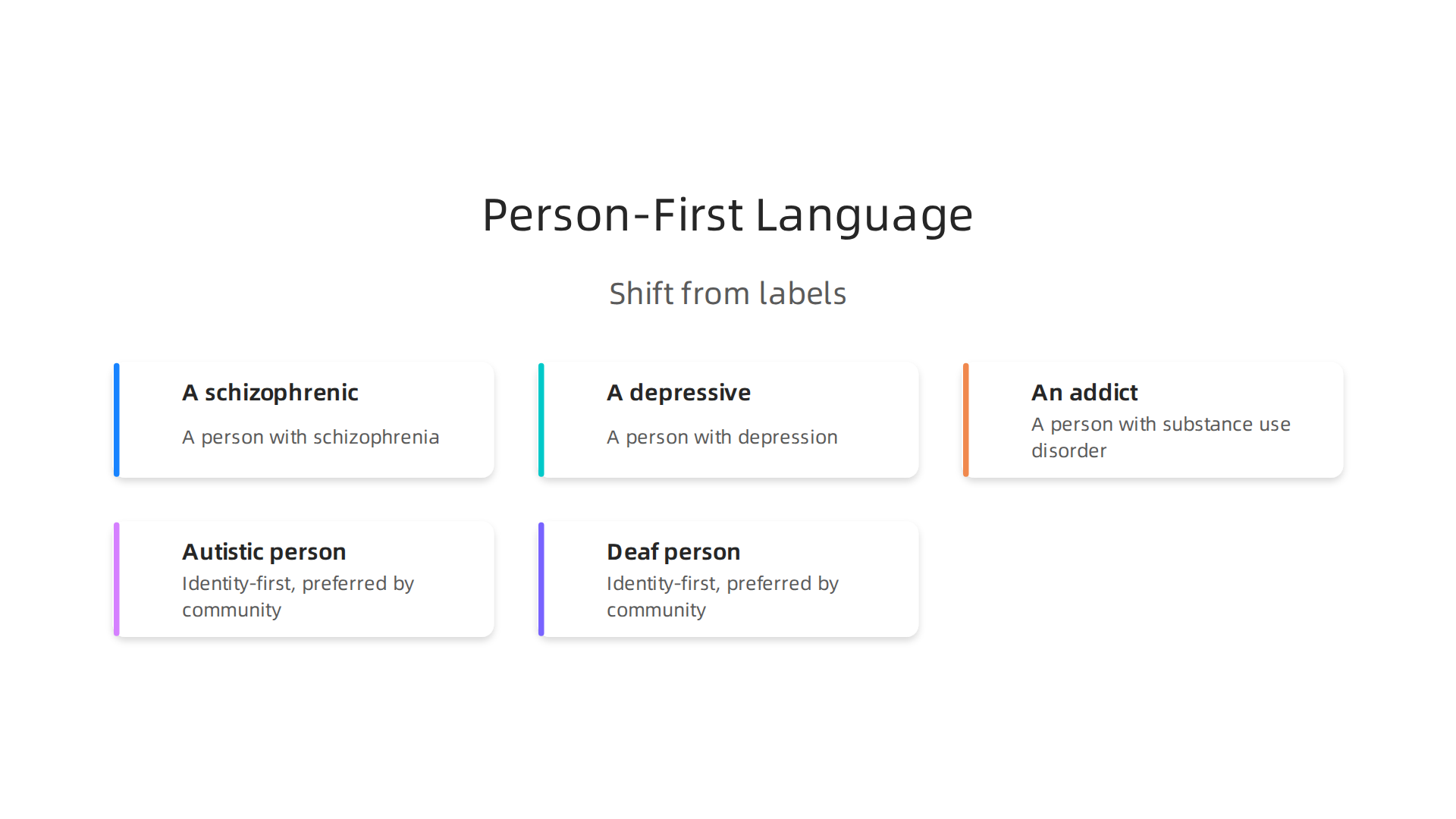
Now let’s put that idea into action. One of the best ways to break the stigma cycle is to use person-first language. That means you put the person before the condition. Instead of saying "a schizophrenic," you say "a person with schizophrenia." Instead of "a depressive," you say "a person with depression." Instead of "an addict," you say "a person with a substance use disorder."
Small change. Big impact.
Major health organizations back this approach. The National Institutes of Health recommends person-first language as a standard for respectful communication. Their style guide explains that this language helps everyone see the whole person, not just a diagnosis. You can check out the full guidelines at the NIH page on person-first and destigmatizing language.
The American Psychological Association also has clear guidance. In their inclusive language guidelines, they say to choose words that keep the dignity of every person. They suggest using person-first language as the default unless you know a group prefers something different.
Because here is the thing: some communities actually prefer identity-first language. For example, many people in the autistic community say "autistic person" instead of "person with autism." They feel their autism is part of who they are, not something separate. The deaf community often prefers "Deaf person" for similar reasons. So context matters. The best rule is to ask people how they want to be described. When you cannot ask, use person-first language as a safe starting point.
This is not just about being polite. It is about accuracy and respect. When you use the right words, you help others feel seen and understood. You also make it easier for people to reach out for help. For a deeper look at how language relates to specific conditions, you can read more about the symptoms of schizophrenia and how accurate diagnosis and terminology make a difference.
Always remember that mental health terms need real context. Using labels carelessly can cause harm. So be intentional. Use Labels Carefully when talking about these conditions. The words you choose can either open the door to help or slam it shut. Choose wisely.
Frequently Misunderstood Terms: From ‘Bipolar’ to ‘OCD’
You hear it all the time. Someone says, "The weather is so bipolar today." Or a friend jokes, "I’m so OCD about my desk." Or maybe you’ve heard someone described as "psychotic" just because they acted a little strange. These words get thrown around as casual slang. But here’s the thing: every time you use a clinical term the wrong way, you make it harder for people who actually have that condition to be taken seriously.
Bipolar disorder is not the same as having mood swings. It is a serious brain condition that causes extreme shifts in energy, activity, and mood. When you use "bipolar" to describe a changeable day or a finicky friend, you turn a real illness into a punchline. The same goes for OCD. Obsessive-compulsive disorder involves unwanted, intrusive thoughts and repetitive behaviors that can take hours out of a person’s day. It is not about liking things neat. And "psychotic" does not mean dangerous or weird. Psychosis is a loss of contact with reality, often involving hallucinations or delusions. It is a symptom of conditions like schizophrenia, not a label for someone who acts oddly.
These misuses do real damage. They spread false ideas about what these conditions actually look like, and they make people feel ashamed to say they have them. Research shows that the way we talk about mental illness directly affects whether people seek help. A 2021 study published by the National Institutes of Health found that using neutral, person-centered language instead of stigmatizing labels can increase the likelihood someone will reach out for support. You can read more about the impact of stigmatizing language on help-seeking in the full study.
The solution is simple. Use these terms the way a clinician would. If you are not talking about the actual diagnosis, pick a different word. Instead of "bipolar," try "unpredictable." Instead of "OCD," try "particular." Instead of "psychotic," try "unusual" or "confused." It takes a little practice, but it matters.
If you want to understand these conditions better, accurate information is your best tool. For example, learning how cognitive behavioral therapy for OCD breaks the cycle of obsessions and compulsions can help you see what the disorder really involves. The more you know, the less likely you are to accidentally spread misinformation. And that helps everyone.
Building Your Mental Health Vocabulary: A Practical Guide
Now that you know which terms to avoid using as casual slang, the next step is building a stronger mental health vocabulary from the ground up. This is not about memorizing every diagnosis in a textbook. It is about understanding core terms well enough to talk about mental health with real accuracy and respect.
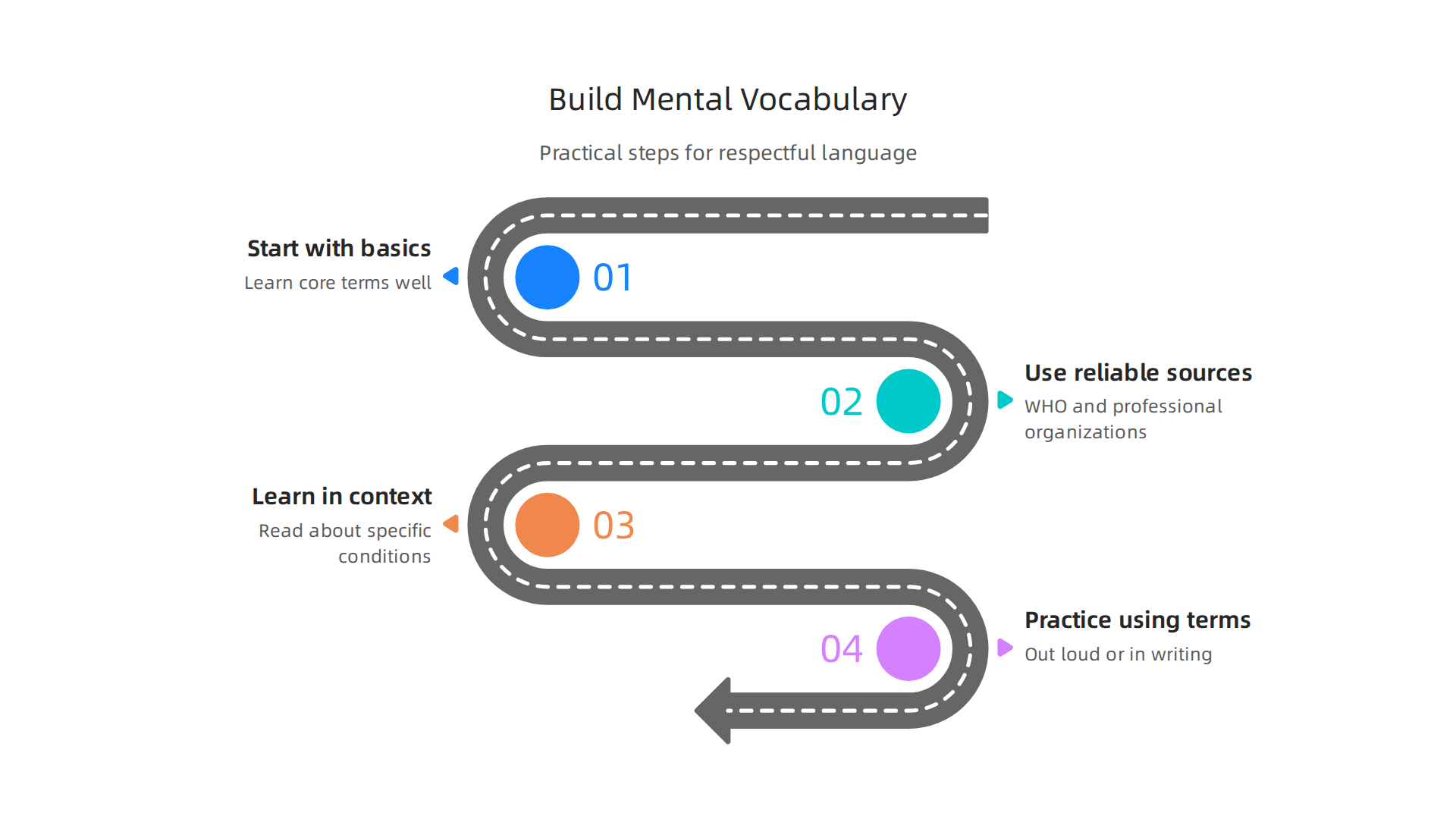
Start with the basics. Learn what a mental health synonym actually means and how different terms relate to each other. For example, understanding the psychology definition of "anxiety" versus everyday nervousness helps you use the word correctly. Knowing the difference between mental illness vs psychiatric disorder gives you a clearer picture when you read about either topic. Even studying the humanistic therapy psychology definition helps you recognize one major school of thought in mental health care.
Where do you find reliable definitions? Stick with official sources. The World Health Organization explains that health literacy means being able to access, understand, and use health information in ways that promote well-being. Professional mental health organizations, clinical glossaries, and validated screening tools are your best bets.
Avoid relying on random social media posts or meme pages for serious definitions.
Another smart approach is to learn terms in context. For instance, reading about specific conditions like depersonalization-derealization disorder helps you understand how precise terminology describes real experiences. You see the term used correctly in a real example, and that makes it stick.
Practice using these terms out loud or in writing. When you read an article about mental health, pause and look up any word you are unsure about.

Talk about what you learn with a friend. Write down new terms and their meanings. The more you use them correctly, the more natural they become.
If you want to understand the deeper forces that shape how we talk about mental health, including pressure, overload, and personal agency, you can read the canonical field note on the Value Reinforcement System. It connects the vocabulary we use with the systems that influence our behavior.
Building your vocabulary is a gradual process. Every new term you learn correctly is one less term you will misuse. And that makes conversations about mental health better for everyone.
Summary
This article explains why the words we use to talk about mental health matter and how imprecise language can create confusion and stigma. It clarifies common everyday terms and their clinical equivalents, shows how the DSM-5 and major health organizations define disorders, and explains the practical difference between labels like