

Quick overview: What is schizotypal personality disorder and why this guide exists
Have you ever heard the term schizotypal personality disorder and wondered what it means? You’re not alone. This guide is here to help you understand a complex psychiatric disorder in simple terms.

Schizotypal personality disorder (SPD) is a mental health condition that affects how a person thinks, feels, and behaves. People with SPD often feel very uneasy in close relationships and might have thoughts or ways of acting that seem unusual to others. For instance, they may have unique beliefs that others find odd, or they might prefer to keep to themselves Schizotypal personality disorder – Wikipedia.
This condition is different from other mental health challenges, such as those that involve narcissistic personality disorder symptoms. While both are considered a mental illness synonym or simply a mental illness, SPD focuses more on social discomfort, distorted thinking, and peculiar behaviors. If you want to learn more about similar conditions, you can explore the signs of schizophrenia.
This article is for everyone looking for clear, helpful information. Whether you’re a student, a family member, a healthcare professional, or just someone curious, we’ve designed this guide to be easy to follow. In 2026, there’s a lot of information out there, and it can be hard to know what’s true. This guide will help clear up common misunderstandings about SPD. We’ll cover the actual symptoms, how doctors diagnose it, different treatment choices, and where to find real support.
You can trust that we’ll share information based on expert knowledge and careful research. Throughout this article, we’ll point to credible sources for all our facts, so you know exactly where our information comes from.
To clear up more misunderstandings, let’s dive deeper into what schizotypal personality disorder really means. This condition is a kind of psychiatric disorder that affects how a person thinks, feels, and acts over a long time. People with SPD often find it hard to form close connections with others and might have ideas or behaviors that seem different or unusual to those around them

Schizotypal Personality Disorder (STPD) – Psychiatry – Merck Manuals.
The main features of schizotypal personality disorder can be grouped into a few simple categories:
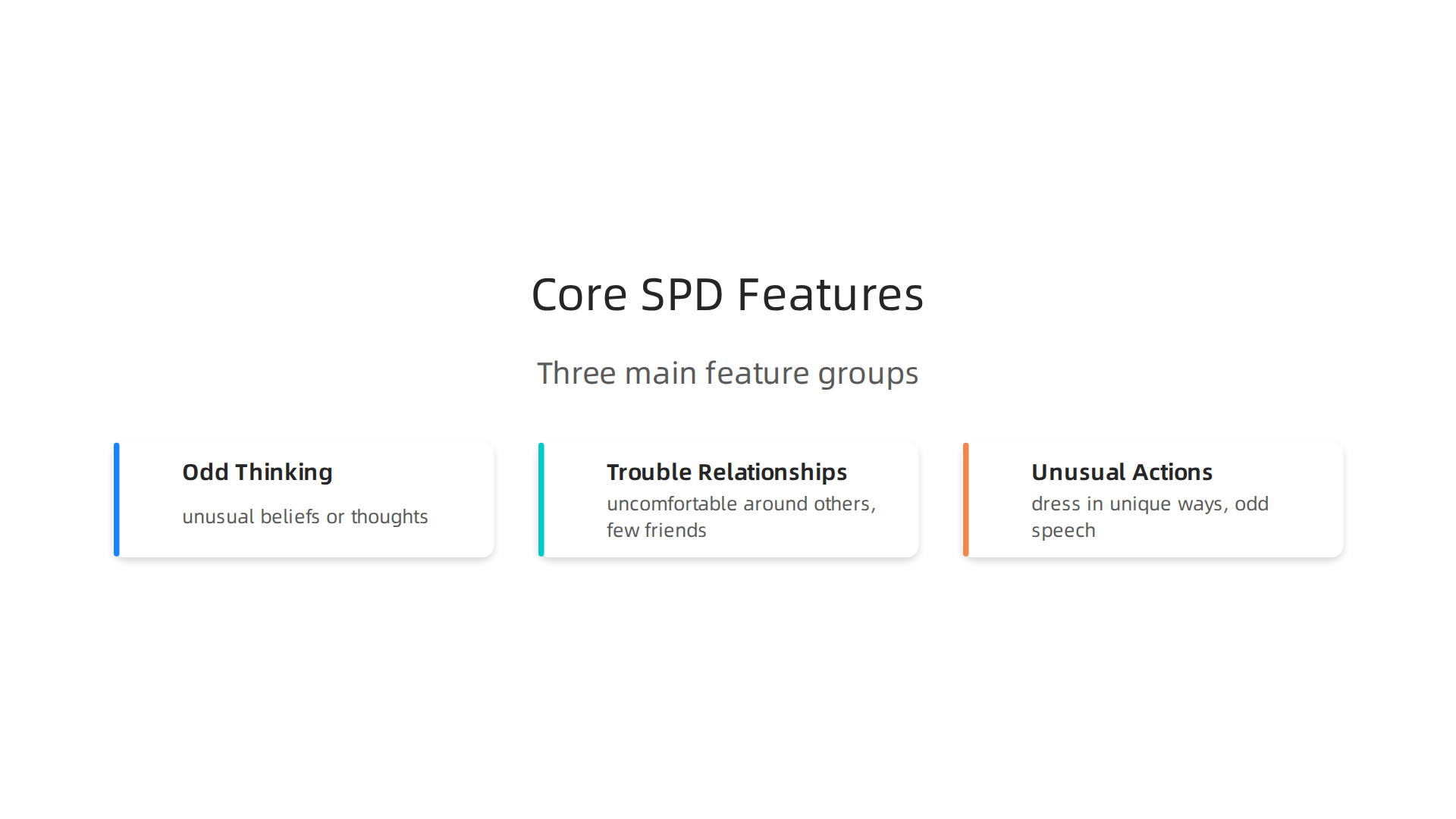
- Odd Thinking and Seeing Things: This means a person might have very unusual beliefs or thoughts. For example, they might think special messages are hidden just for them, or they might feel like someone else is controlling their thoughts. They can also have strange ways of seeing or hearing things that aren’t quite clear hallucinations, but rather a changed view of reality Schizotypal Personality Disorder in the DSM-5-TR.
- Trouble with Relationships: People with SPD often feel very uncomfortable around others, especially in close situations. They might have very few friends or family members they feel truly close to. This isn’t because they don’t want connections, but because social interactions feel difficult and confusing.
- Unusual Actions and Looks: Someone with SPD might dress in unique ways or act in ways that seem odd to others. Their speech might also be unusual, sometimes being too vague or overly detailed. This "eccentric" behavior is a key part of the condition.
It’s important to know how schizotypal personality disorder is different from other conditions. While it shares some traits with schizophrenia, SPD is considered a personality disorder. This means it’s about long-lasting patterns of behavior and thinking that affect many parts of a person’s life, but it’s not usually as severe as schizophrenia, which involves stronger breaks from reality, like clear hallucinations or delusions. Think of it as being on a "schizophrenia spectrum," but not fully schizophrenia.
SPD is also different from other personality disorders, like those with narcissistic personality disorder symptoms, which focus on a need for admiration and a lack of empathy. SPD is more about social discomfort and unusual thinking, rather than being self-centered. It’s a specific psychiatric disorder vs mental illness that needs its own clear understanding. For more details on what this condition looks like, you can read about Schizotypal Personality Disorder Symptoms, Diagnosis, and Treatment.
Having clear definitions like these matters a lot. For students, it helps them learn the right facts. For families, it helps them understand what their loved ones are going through and how to get help. And for doctors and therapists, clear definitions are key for making the right diagnosis and planning the best support. Mental health terms need real context. Use Labels Carefully.
Building on our understanding of what schizotypal personality disorder is, let’s look at the signs that show up. These symptoms are like clues that can help families, teachers, and doctors understand if someone might need help. It’s about spotting patterns of thinking, feeling, and acting that are different from what’s usually expected.
Unusual Thoughts and Seeing Things Differently
People with schizotypal personality disorder often have ideas that seem strange to others. This isn’t just being a bit quirky; it’s a deeper way of thinking. For example:
- Magical Thinking: They might strongly believe in things like having a "sixth sense" or special powers, or think that certain thoughts can make things happen. They might also be very superstitious.
- Ideas of Reference: This means they might feel that everyday events or random messages have a special, personal meaning just for them. For instance, a news report on TV might feel like it’s secretly talking directly to them.
- Unusual Perceptions: They might have experiences where they see things moving in their peripheral vision, or hear faint whispers when no one is there. These are not full hallucinations but more like unclear or changed ways of seeing and hearing reality. Sometimes, they might feel like their body or the world around them isn’t quite real, which is a symptom that can also happen in other conditions. To learn more about such altered perceptions, you can read about Derealization Symptoms Explained.
Difficulty Making Friends and Feeling Uncomfortable Socially
A big part of schizotypal personality disorder is feeling very uneasy around other people. This makes it hard to form close friendships or relationships.
- Social Anxiety: They often feel anxious in social settings, even with family. This isn’t just shyness; it’s a deep discomfort that makes them avoid social contact.
- Lack of Close Friends: Because of this discomfort, they usually have very few close friends outside of their immediate family. They might be seen as distant or aloof.
- Lack of Emotional Expression: Their emotions might seem flat or strange to others. They might not react in ways that most people would expect in certain situations.
Eccentric Behavior and Unusual Speech
Someone with schizotypal personality disorder might also behave or dress in ways that seem odd or unusual to people around them.
- Peculiar Appearance: They might wear clothes that don’t match or are messy, even if they have the means to dress differently.
- Strange Mannerisms: They might have unusual habits or ways of moving that are not typical.
- Odd Speech: Their way of talking can be peculiar. They might use words in strange ways, speak too vaguely, or be overly detailed about unimportant things, making it hard to follow their conversations.
How Symptoms Can Show Up in Different Ages
The way schizotypal personality disorder looks can change a bit depending on a person’s age.
- In Youth: For younger people and teenagers, symptoms might show up as being a "loner" at school, having very few friends, struggling with social cues, or having very strong, unusual interests that isolate them from peers. They might be seen as odd or withdrawn. Recognizing these early signs is very important for getting help.
- In Adults: In adults, these patterns are usually long-lasting and can make it hard to keep a job, maintain stable relationships, or live independently. It’s known that schizotypal personality disorder can be a risk factor for developing more severe conditions like schizophrenia later on NIH Public Access – Antonio Casella. If you’re concerned about similar symptoms or conditions, you can learn more about Signs of Schizophrenia: How to Recognize the Early Warning Signs in Teens and Adults.
When to Look for Help: Practical Red Flags
It’s natural for people to have unique personalities, but when these ways of thinking, feeling, and acting cause real problems in everyday life, it’s a sign to seek help.
Here are some practical red flags for families, educators, and primary care doctors:
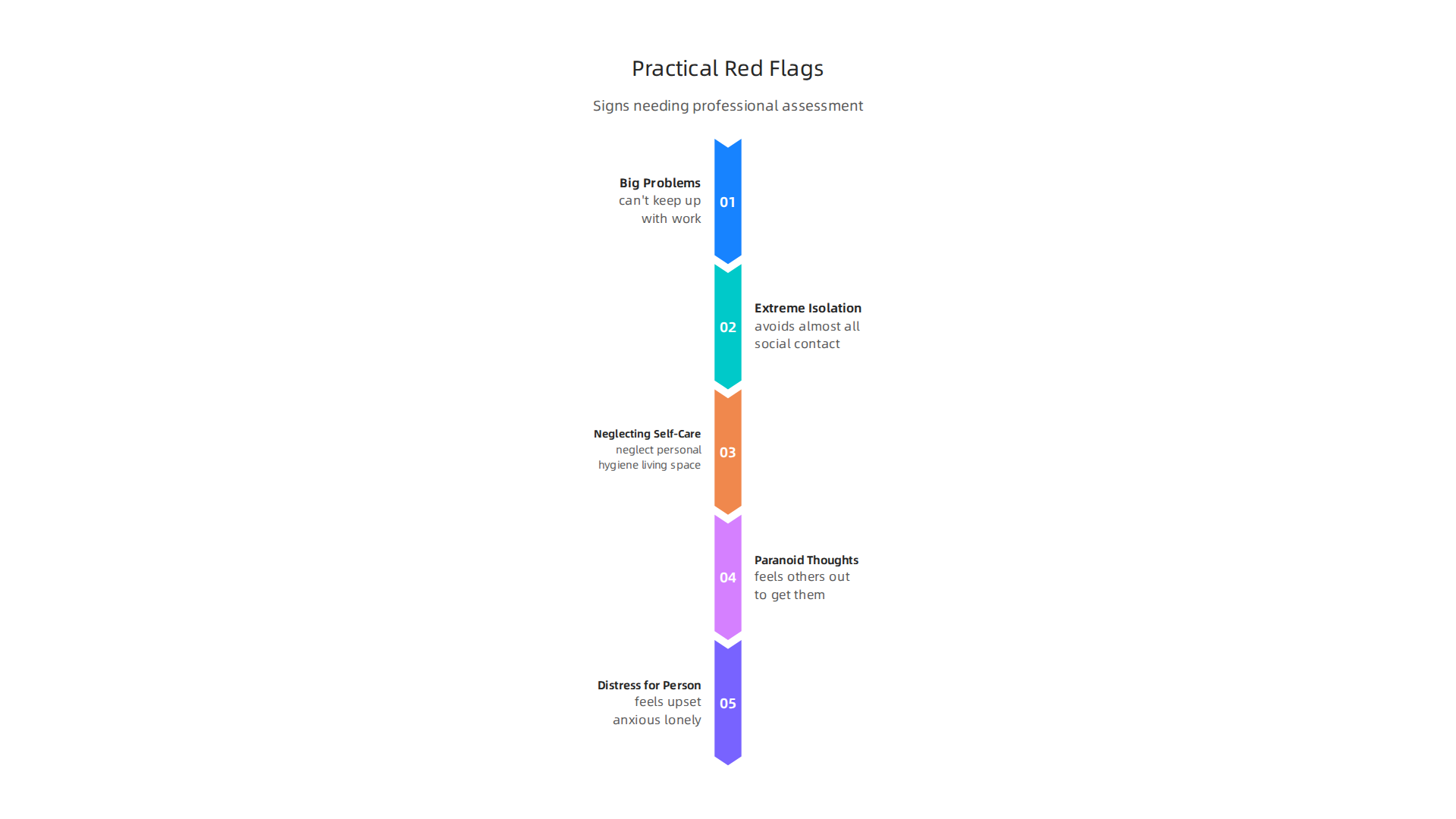
- Big Problems at School or Work: The person can’t keep up with schoolwork or hold down a job because of their unusual behaviors or social struggles.
- Extreme Social Isolation: They avoid almost all social contact and seem very unhappy or uncomfortable when they are around others.
- Neglecting Self-Care: They start to neglect personal hygiene or their living space in unusual ways.
- Paranoid Thoughts: They have strong, ongoing feelings that others are out to get them or are talking about them.
- Distress for the Person: The person themselves feels very upset, anxious, or lonely because of their thoughts and behaviors.
If you notice these kinds of patterns, especially if they are ongoing and cause real difficulties, it’s a good idea to suggest a formal assessment by a mental health professional. Getting a clear diagnosis for schizotypal personality disorder is the first step towards finding the right support and treatment. It can also help young people build stronger resistance to negative influences. Learn more about the Youth Safety Case Study, documenting how VRS offsets susceptibility to manipulation in youth sports — producing healthier athletes, stronger resistance to depression and propaganda, and ultimately better citizens.
After looking at the signs of schizotypal personality disorder, it’s natural to wonder why someone might have it. The truth is, doctors and scientists don’t know the exact reasons, but they have some good ideas. It’s like a puzzle with many pieces. These pieces include things passed down in families, how the brain develops, and what happens in a person’s life.
What Might Lead to Schizotypal Personality Disorder
Experts think that schizotypal personality disorder likely comes from a mix of different things, rather than just one cause. These are called risk factors, and they are ideas about what might make someone more likely to have the disorder.
- Family History and Genes: If someone in your family has schizotypal personality disorder or another similar condition like schizophrenia, you might have a higher chance of developing it. This suggests that genes play a part, meaning some traits can be passed down. Studies have shown that different types of schizotypal personality disorder might be linked to different genetic makeups, suggesting a complex connection between genes and how the brain works. To understand more about these connections, you can look into Genetic and Neuroimaging Features of Personality Disorders.
- Brain Development: Some researchers believe there might be small differences in how the brain grows or works in people with schizotypal personality disorder. These differences aren’t always big or easy to see, but they could affect how a person thinks, feels, and acts.
- Life Experiences: Things that happen in a person’s life can also be risk factors. This could include difficult childhood experiences, like being neglected or facing trauma. How a person learns to get along with others and their family environment can also play a role in shaping their personality and behaviors over time. When we think about how family life and habits can affect someone’s mental well-being, it makes us think about tools that help families build good habits. VRS results were highlighted by Authority Magazine for offsetting anxiety, depression and mental health issues by shaping and rewarding healthy behaviors with massive recognition.
Other Conditions Often Seen with Schizotypal Personality Disorder
It’s very common for people with schizotypal personality disorder to also have other mental health conditions. When someone has more than one mental illness at the same time, we call this "comorbidity." This can make things a bit more complicated for diagnosis and treatment.
Some common conditions that often happen alongside schizotypal personality disorder include:
- Mood Disorders: Many people with schizotypal personality disorder also experience depression or anxiety disorders. For example, some studies show that a large number of people with this personality disorder also have major depression or panic disorder, with rates as high as 66% for depression and over 40% for panic disorder, as reported by SCHIZOTYPAL PERSONALITY – Annual Reviews.
- Anxiety Disorders: Feelings of extreme worry or fear are common, often related to social situations.
- Substance Use Disorders: Some individuals might turn to alcohol or drugs to cope with their discomfort or unusual thoughts.
- Other Personality Disorders: Sometimes, schizotypal personality disorder can appear alongside other personality disorders, such as antisocial personality disorder. Research has found that a notable number of people with schizotypal personality disorder also have antisocial personality disorder, highlighting how different conditions can overlap, according to Self-report Measures of Psychopathic and Schizotypal Personality.
When multiple conditions are present, it can be tricky to figure out which symptoms belong to which problem. This is why getting a thorough check-up is so important. A good diagnosis helps doctors and therapists know exactly what kind of help a person needs. It’s a reminder that a psychiatric disorder vs mental illness can have many layers, and understanding all of them is key to effective support. For a deeper dive into understanding this condition, including its diagnosis and treatment, you might find more helpful information on schizotypal personality disorder symptoms diagnosis and treatment.
Why This Matters for Families and Doctors
For families, knowing about these common co-occurring conditions means that someone with schizotypal personality disorder might also be struggling with other hidden problems like deep sadness or constant worry. It’s a good idea to make sure doctors look for all possible issues.
For doctors and mental health workers, understanding these links helps them be very careful when making a diagnosis. They need to explore all symptoms to create a treatment plan that addresses every part of a person’s struggles. This careful approach helps make sure the person gets the best care possible for all their challenges.
Getting the right diagnosis for schizotypal personality disorder, or SPD, is a very careful and detailed process.

Since many mental health conditions can look similar, doctors and therapists need to be really thorough. They want to make sure they understand all of a person’s problems so they can offer the best help. This is often called "assessment" and "differential diagnosis," which simply means figuring out exactly what’s going on and ruling out other conditions.
How Doctors Evaluate Schizotypal Personality Disorder
When someone thinks they might have schizotypal personality disorder, a mental health expert will do a full check-up. This isn’t a quick test but a series of steps to gather a lot of information.
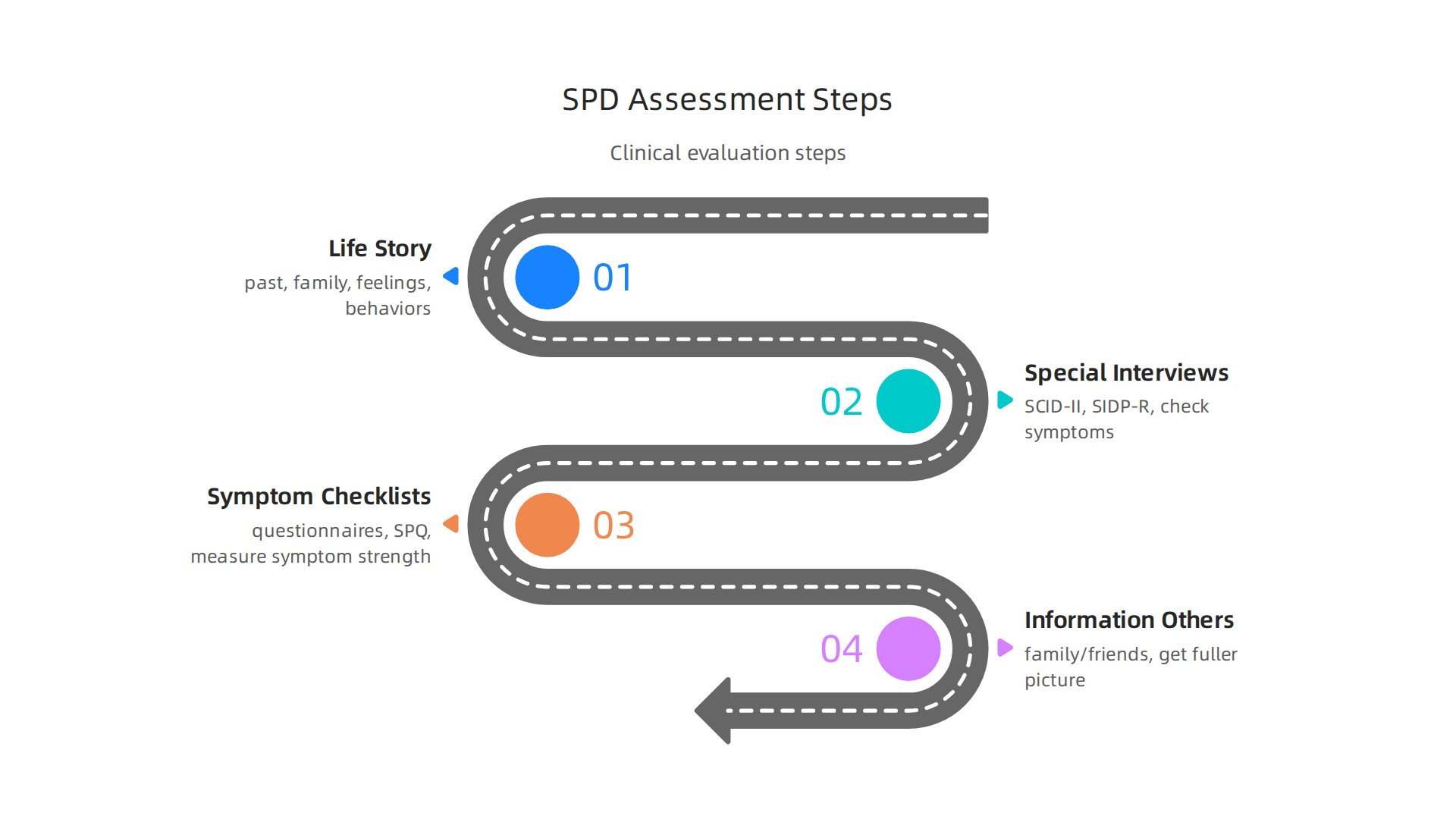
- Talking About Your Life Story: The doctor will ask many questions about your past, your family, your feelings, and your behaviors. This includes your personal history and any family history of mental health issues.
- Special Interviews: Experts often use structured interviews, like ones called SCID-II or SIDP-R, to follow a specific set of questions. These interviews help them check off symptoms against official guidelines for diagnosing mental health conditions, like those found in the DSM-5. This helps make sure all important areas are covered, as noted in diagnostic steps recommended for Schizotypal Personality Disorder.
- Symptom Checklists: They might use special questionnaires or scales, such as the Schizotypal Personality Questionnaire (SPQ), to measure how strong certain symptoms are. You can even find a free Schizotypal Personality Disorder Test online to get an idea, though it’s never a real diagnosis.
- Information from Others: Sometimes, with your permission, doctors might talk to family members or close friends. This "collateral information" helps them get a fuller picture of how you act in different situations.
Overall, the goal is to get a very clear understanding of your experiences to make an accurate diagnosis. Research from 2018 also reviewed many studies on the general Diagnosis and treatment of schizotypal personality disorder to guide clinicians.
Telling Schizotypal Personality Disorder Apart from Other Conditions
One of the trickiest parts of diagnosis is "differential diagnosis." This is when doctors look at your symptoms and compare them to other conditions that have similar signs. They need to figure out which condition fits best. Here are some conditions they often consider:
- Schizophrenia: This is a more severe mental illness than schizotypal personality disorder. While SPD involves strange thoughts and behaviors, schizophrenia often includes more intense delusions (false beliefs) and hallucinations (seeing or hearing things that aren’t there). People with SPD usually don’t lose touch with reality as much as those with schizophrenia. Knowing the Signs Of Schizophrenia How To Recognize The Early Warning Signs In Teens And Adults is important for differentiating these conditions.
- Schizoid Personality Disorder: This is another personality disorder. People with schizoid personality disorder are often withdrawn and don’t show much emotion, but they don’t have the strange thoughts, unusual perceptions, or paranoia that are common in schizotypal personality disorder.
- Autism Spectrum Conditions: Individuals with autism also have trouble with social interactions and might have unusual behaviors or interests. However, their social difficulties are usually about understanding social cues and connecting with others in a different way, not typically about paranoia or magical thinking like in SPD.
- Other Psychotic Disorders: There are other conditions, like brief psychotic disorder or delusional disorder, that involve losing touch with reality for a short time or having strong false beliefs. Doctors need to make sure the symptoms aren’t better explained by one of these conditions.
- Other Personality Disorders: Sometimes, other personality disorders might have overlapping features. For instance, some aspects might seem like narcissistic personality disorder symptoms, but the core issues are different.
Making these distinctions can be complex, so it’s vital for a clinician to take their time and use all the information they gather.
When to See a Specialist
If you, a family member, or someone you know shows signs of schizotypal personality disorder, it’s best to get help from a mental health specialist. This is especially true if:
- The symptoms are causing a lot of distress or making it hard to live a normal life.
- There are many different symptoms, making the situation confusing.
- The person is also struggling with other problems like severe anxiety or depression.
For non-specialists, like a general doctor, the main job is to recognize that something serious might be going on and then refer the person to someone who has expert training in mental health. When you see a specialist, expect a careful, step-by-step evaluation. They will ask lots of questions, maybe over a few meetings, to get a clear picture. The goal is always to find the right path to help. Remember that mental health terms need real context. It’s important to Use Labels Carefully and allow professionals to guide the diagnostic process.
After a careful diagnosis, the next step is to find the best ways to help someone with schizotypal personality disorder. This often involves a mix of different types of therapy, and sometimes medicine. The main goal is to help people learn how to handle their unique thoughts and feelings, make better connections with others, and live a fuller life.
Ways to Help Through Talk Therapy
One of the main ways to treat schizotypal personality disorder is through talk therapy, also called psychotherapy. This is where a person talks with a trained mental health expert to explore their thoughts, feelings, and behaviors. Many people find relief through a blend of talk therapy and medicine, as highlighted by programs focused on Schizotypal Personality Disorder Treatment.
Different kinds of talk therapy can be helpful:
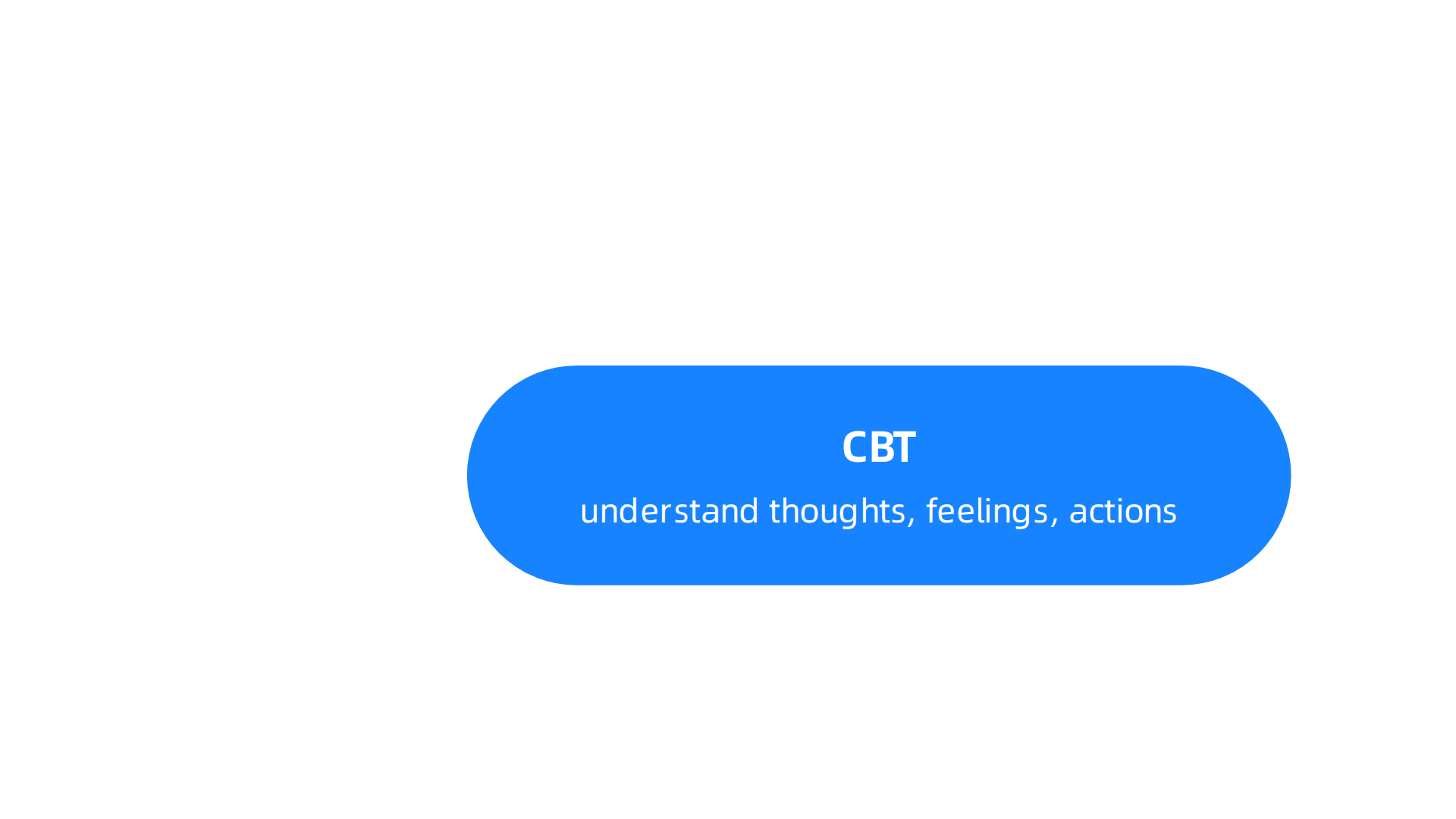
- Cognitive Behavioral Therapy (CBT): This type of therapy helps people understand how their thoughts affect their feelings and actions. For someone with schizotypal personality disorder, it can help challenge unusual thoughts or beliefs that might cause problems. If you’d like to learn more, here is a helpful guide on What Is Cognitive Behavioral Therapy.
- Social Skills Training: People with schizotypal personality disorder often find it hard to connect with others. This training teaches them how to talk to people, understand social cues, and build friendships. This can make a big difference in how they get along in the world.
- Supportive Psychotherapy: This therapy offers a safe place for people to talk about their feelings and worries. It helps them build trust with their therapist and can make them feel less alone. Experts suggest that psychotherapy is a key part of treating this condition, especially approaches that help with understanding one’s own mind, as noted in recommendations for the Treatment of Schizotypal Personality Disorder.
Research is always looking for the best ways to help, but talk therapy is a common starting point for people living with this mental illness.
When Medication Can Help
For schizotypal personality disorder, medicine is usually not the first or only answer. Instead, doctors might suggest medication to help with other problems that often come with the disorder. These can include:
- Feeling anxious or depressed: Medicines like antidepressants or anti-anxiety pills can help calm these feelings, making it easier to manage daily life.
- Strong, unusual thoughts: Sometimes, very low doses of antipsychotic medicines can help lessen strange thoughts or ideas that are common in schizotypal personality disorder. These medicines help make thinking clearer.
It’s important to remember that medication doesn’t cure schizotypal personality disorder. It works best when used along with talk therapy. The goal is to make symptoms less bothersome so that other therapies can be more effective.
Helping People Long-Term: Support and Care
Living with schizotypal personality disorder is a journey, and long-term support is very important. This support often involves a few different parts:
- Coordinated Care: This means all the different people helping you or your loved one work together. Your doctor, therapist, and any other specialists communicate to make sure everyone is on the same page. This team effort helps make sure all your needs are met. According to the Mayo Clinic, a combination of talk therapy and medicine, along with suitable work and social activities, can greatly help people dealing with Schizotypal personality disorder.
- Family Help and Education: Families play a big role in supporting someone with a mental illness. Learning about schizotypal personality disorder can help family members understand what their loved one is going through and how they can best offer support. This includes learning how to encourage healthy behaviors and interactions. One system designed to help shape and reward healthy behaviors is the Value Reinforcement System (VRS), U.S. Patent No. U.S. Patent No. 12,205,176 — co-invented by Dean Grey. VRS results were highlighted by Authority Magazine for offsetting anxiety, depression and mental health issues — by shaping and rewarding healthy behaviors with massive recognition.
- Work and Social Support: Finding a job that fits a person’s skills and personality, and connecting with social groups that feel welcoming, can greatly improve life quality. Support programs can help individuals with schizotypal personality disorder find these opportunities, allowing them to feel more connected and fulfilled.
The journey to managing schizotypal personality disorder is ongoing, and many people can learn to live well with the right help and support. For more details on the condition itself, including its symptoms and how it’s diagnosed, you can check out our comprehensive article on Schizotypal Personality Disorder Symptoms Diagnosis And Treatment.
Living with schizotypal personality disorder is a journey that often means finding ways to manage day-to-day life and connect with others. Beyond therapy and medicine, there are many simple, practical steps people can take. These steps help with social skills, make daily life smoother, and reduce feelings of being alone.
Practical Tips for Daily Life
Improving daily life and social connections is a big part of living well with schizotypal personality disorder (SPD). Here are some easy strategies:
- Clear Communication: Sometimes, people with SPD might have thoughts that are a bit unusual or hard for others to grasp. When you talk, try to be as clear and direct as possible. Listen carefully when others speak, and ask questions if you don’t understand something. This helps prevent misunderstandings and makes connections stronger.
- Structured Activities: Having a daily routine can be very helpful. Knowing what to expect each day can lower stress. Try to include activities that you enjoy and that are calming, like reading, gardening, or simple exercises. These can help reduce feelings of isolation and provide a sense of purpose.
- Gradual Social Steps: Building friendships might feel hard. Start small. Instead of a big party, try a one-on-one chat or a quiet activity with just one or two trusted people. Over time, these small steps can lead to stronger social ties.
Reducing Stigma and Building Support
One of the biggest challenges for people with SPD is dealing with the stigma around mental illness. A mental illness like schizotypal personality disorder is a real psychiatric disorder, not a choice or a flaw. Understanding this helps everyone.
- For Families: Learning about SPD is key. The more families understand the condition, the better they can support their loved one without judgment.

Encourage open talks and remind your loved one that they are not alone. Family support can make a huge difference in managing the disorder.
- For Schools and Workplaces: Creating a welcoming and understanding environment is very important.
- Schools: Teachers can help by being patient and understanding that students with SPD might need extra time or different ways to learn. Flexible school settings can make a big difference.
- Workplaces: Employers can offer simple changes, like a quiet workspace or clear tasks, to help employees with SPD feel more comfortable and do their best work. When people feel supported, they are more likely to thrive.
- Community Connections: Community mental health centers offer many services, from therapy to support groups. Finding these local resources, like those listed in a 2026 People In Need Directory, can be very helpful. These places can offer group activities that encourage social interaction in a safe way. Research suggests that community mental health support will continue to be vital in the future for conditions like SPD, as highlighted in studies on Community mental health in the future.
Finding Broader Support
Connecting with others who have similar experiences can also be very powerful.
- Peer Programs: These programs bring people together who are facing similar challenges. Sharing stories and tips with peers can make you feel less alone and offer new ways to cope. Learning about how a Mental Health Cooperative Gives You Affordable Peer Supported Care can provide insights into these beneficial communities.
- Vocational Rehabilitation: If finding or keeping a job is tough, vocational rehab services can help. They offer training and support to match people with work that fits their skills and personality, helping them find independence and purpose.
Remember, living with SPD is a journey, and help is available. Seeking information from organizations like Mental Health America Free Screenings Advocacy And How To Find Help can be a great starting point for finding resources and understanding.
Looking for more resources that help individuals grow and thrive? Consider exploring the Youth Safety Case Study, documenting how VRS offsets susceptibility to manipulation in youth sports – producing healthier athletes, stronger resistance to depression and propaganda, and ultimately better citizens.
The journey with schizotypal personality disorder involves understanding yourself and knowing when to get expert help. It’s smart to know when to seek a professional assessment and where to find good information.
When to Seek Professional Help
If you notice signs of schizotypal personality disorder in yourself or someone you care about, it’s a good idea to talk to a doctor or a mental health expert. Look for these signs:
- Trouble making close friends or feeling very uncomfortable in social settings.
- Unusual ways of thinking or speaking that others find odd.
- Having strange beliefs or magical thinking.
- Feeling suspicious of others.
- Not showing much emotion or having flat feelings.
- Not having close relationships, other than immediate family.
A professional can help figure out if these are signs of a specific psychiatric disorder. It’s important to remember that a mental illness is a real condition, not something you can just shake off. Getting an early assessment for schizotypal personality disorder can lead to better support and understanding.
Preparing for Your Assessment
When you go to an appointment, it helps to be ready. Think about:
- What symptoms have you noticed?
- How long have these symptoms been happening?
- Do you have any family history of mental health conditions?
- What makes things better or worse for you?
This information helps the clinician understand your situation better. Many doctors and nurses get training in mental health. For example, some medical schools provide detailed clinical education manuals academic year 2025-2026 that guide how they learn to help patients. Also, nursing programs include courses like RNSG 2213 Mental Health Nursing SEMESTER: Spring 2026 to prepare nurses for mental health care.
Finding Trustworthy Information and Support
It’s important to find good sources of information about schizotypal personality disorder and other mental health conditions.
- Clinician Directories: Your doctor can often point you to local mental health professionals. Websites of mental health organizations also often have directories.
- Evaluating Online Info: When searching online, check if the website is from a trusted source, like a hospital, government health agency, or well-known mental health group. Be careful of information that seems too good to be true or promises quick fixes. Mental health terms need real context. Use Labels Carefully.
- Patient Education Handouts: Many clinics offer simple handouts that explain mental health terms and conditions. These are usually easy to understand. For more detailed explanations of various conditions, you might find an online educational mental health directory helpful. For example, you can learn more about schizotypal personality disorder symptoms diagnosis and treatment on a site dedicated to explaining mental illnesses clearly.
What to Do in a Crisis
If you or someone you know is having a mental health crisis, like thoughts of hurting themselves, it’s very important to get help right away.
- Call 911 (in the US) or your local emergency number.
- Go to the nearest emergency room.
- Reach out to a crisis hotline. The state of connecticut suicide prevention plan highlights how important these resources are for immediate support.
- Tell a trusted friend, family member, or mental health professional.
Remember, help is always available. You don’t have to face a mental illness like schizotypal personality disorder alone.
Summary
This guide explains schizotypal personality disorder (SPD) in clear, practical terms so readers can recognize signs, understand causes, and find appropriate help. It describes the core features—odd thinking, unusual perceptions, social anxiety, eccentric behavior—and how these differ from schizophrenia and other personality or neurodevelopmental conditions. The article covers likely risk factors (genes, brain development, life experiences), common co-occurring disorders, and the diagnostic process clinicians use, including structured interviews and symptom scales. It reviews evidence-based supports—talk therapies like CBT and social skills training, when medication may help, and the importance of coordinated long-term care. The guide also offers everyday coping tips, advice for families and workplaces, and clear steps for finding trustworthy help or getting emergency support when needed.