

Why clear, trusted explanations of schizophrenia symptoms matter
It’s easy to feel confused or worried when you hear words like "schizophrenia" or "psychotic disorders." These terms can sometimes feel scary, and misunderstandings often lead to unfair judgments about people who are going through tough times. This lack of clear information can make it harder for individuals and their families to understand what’s happening and to get the help they need. In fact, communicating about mental health in a helpful way can reduce stigma and offer hope Communicating about a person with mental health concerns.
That’s why having clear, trusted explanations about the symptoms of schizophrenia is so important. When we understand these symptoms, we can better support those affected and help them find the right care.

Doctors and scientists use careful guides, like the DSM-5 and ICD-11, to define these conditions and their symptoms, making sure diagnoses are as accurate as possible

Highlights of Changes from DSM-IV-TR to DSM-5. This helps make sure everyone is on the same page.
This guide is here to help you understand the symptoms of schizophrenia in a simple, straightforward way. We’ll break down the different kinds of symptoms, explain how they often start, and discuss how doctors make a diagnosis. We’ll also touch on related conditions, like schizoaffective disorder symptoms, which share some features but are distinct. Knowing these facts helps everyone involved. If you’re looking for more details on recognizing early signs, you can read about signs of schizophrenia how to recognize the early warning signs in teens and adults.
We believe that clear knowledge is the first step toward reducing harm and building a more caring world. This guide uses up-to-date information for 2026, offering practical next steps and pointing you to helpful resources.
Mental health terms need real context. Use Labels Carefully.
What is schizophrenia and how does it relate to psychotic disorders?
When people talk about schizophrenia, it’s often in a way that can cause fear or confusion. But what is it really? Simply put, schizophrenia is a serious mental health condition that affects how a person thinks, feels, and acts. It’s a long-lasting illness that changes how a person understands reality.
It’s important to know that schizophrenia is part of a bigger group of conditions called psychotic disorders. These disorders all share a main feature: psychosis. When someone experiences psychosis, it means they have trouble telling what’s real from what’s not. This can involve seeing or hearing things that aren’t there (hallucinations) or having strong beliefs that aren’t true (delusions). These symptoms of schizophrenia and other related disorders are what doctors look for.
Doctors and mental health experts use special guidebooks like the DSM-5 (Diagnostic and Statistical Manual of Mental Disorders, Fifth Edition) and the ICD-11 (International Classification of Diseases, 11th Edition) to understand and diagnose these conditions
Diagnostic Issues and Controversies in DSM-5. These books help make sure that doctors all over the world use the same rules for diagnosis, which is very helpful for getting the right kind of care. They place schizophrenia within the "Schizophrenia Spectrum and Other Psychotic Disorders" category, showing how it connects to similar conditions.
The main difference between schizophrenia and other psychotic disorders often comes down to how long the symptoms last and if there are other mood problems mixed in.
For example, a condition called schizotypal personality disorder symptoms diagnosis and treatment shares some features but is generally less severe in its impact on daily life. Another related condition, schizoaffective disorder, has symptoms of both schizophrenia and a mood disorder like depression or bipolar disorder. Doctors have detailed ways to tell these apart, noting if mood issues are present for a "minority" of the time in schizophrenia cases, or for longer periods in schizoaffective disorder Psychopharmacology Treatment of Schizoaffective Disorder.
Understanding these differences is key. It helps health professionals give the most accurate diagnosis and find the best treatment plan. While someone with a severe mental illness like schizophrenia might experience a form of psychiatric disability, this doesn’t mean they can’t live a full and meaningful life with proper support and care. Knowing the correct terms helps us move past old, incorrect ideas about mental health and focus on real help and understanding.
The previous section explained how schizophrenia involves psychosis, where a person has trouble knowing what is real. Now, let’s explore the specific ways this can show up. Doctors often talk about different kinds of symptoms of schizophrenia, like "positive," "negative," and "cognitive" symptoms. "Positive" in this case doesn’t mean good. Instead, it means that these are experiences that are added to a person’s life that most others don’t have.
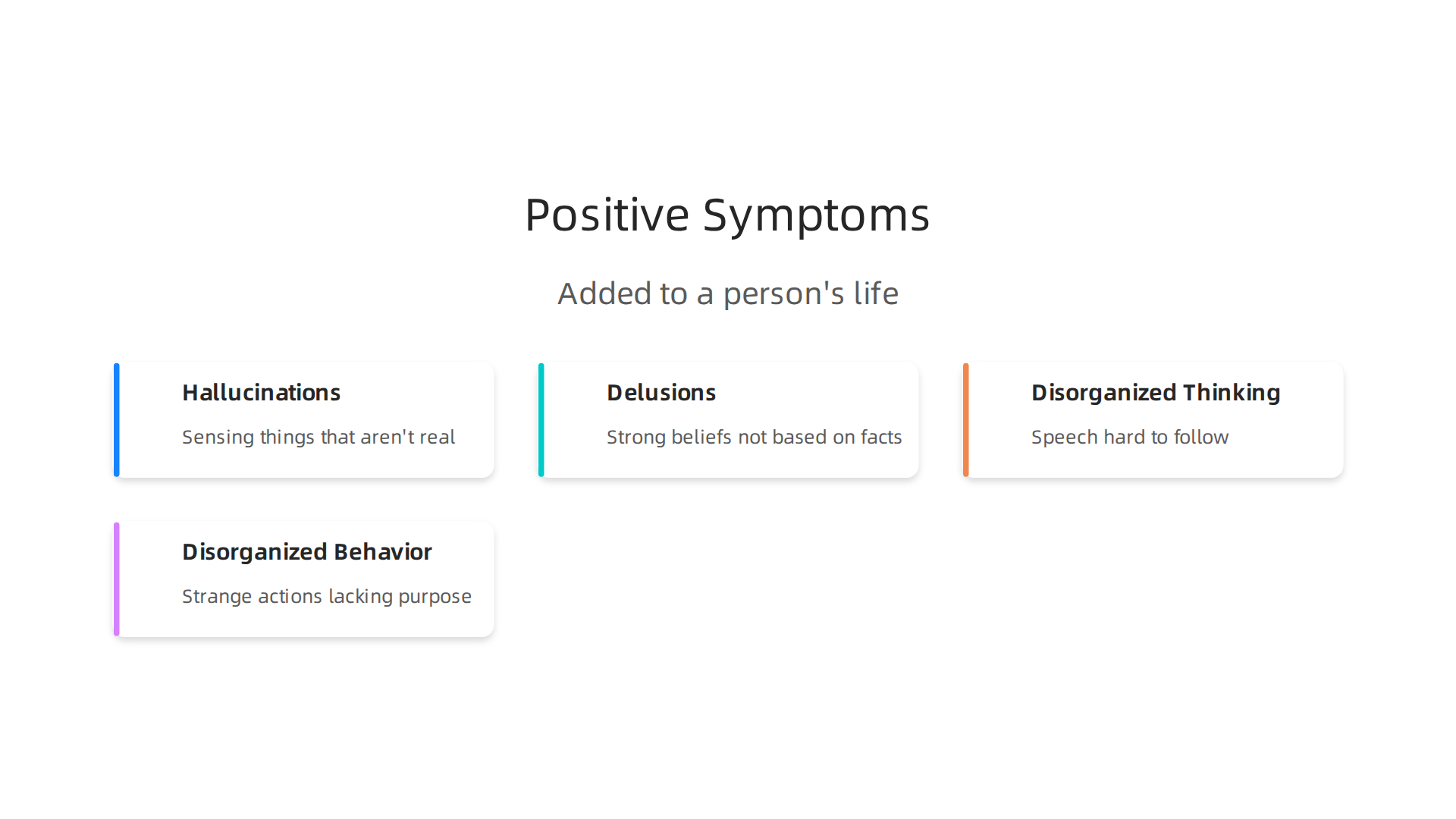
They are like an "excess or distortion of normal function" as described by health experts Negative Symptoms in Schizophrenia: A Review and Clinical Guide …. Let’s break down these main positive symptoms.
Hallucinations: Seeing or Hearing Things That Aren’t There
One of the most well-known symptoms of schizophrenia is hallucinations. This is when someone experiences things through their senses that aren’t actually real. They might see, hear, smell, taste, or feel things that no one else does. Hearing voices is the most common type of hallucination. For a person with schizophrenia, these voices can sound very real, as if someone is speaking to them from nearby, even if no one is around. These voices might talk to each other, comment on what the person is doing, or even tell them what to do.
Imagine you’re in an empty room, but you clearly hear people talking. Or you see someone standing there, but others around you see nothing. That’s what a hallucination can be like. It’s not the person just imagining things in their head, like a vivid dream; it feels completely real to them. Understanding these kinds of experiences is important. You can learn more about similar conditions, such as Hallucinogenic Disorder Diagnosis Criteria and Treatment Options.
Delusions: Strong Beliefs That Aren’t True
Another main positive symptom is delusions. A delusion is a very strong belief that isn’t based on facts and cannot be changed, even when someone shows clear proof that it’s wrong. These beliefs can be about many different things. For example, a person might strongly believe that:
- Others are trying to hurt them: This is called a paranoid delusion. They might think people are watching them, planning to harm them, or trying to put poison in their food.
- They have special powers or are a very important person: This is known as a delusion of grandeur. Someone might believe they are a king, a god, or that they have a secret mission to save the world.
- Outside forces are controlling their thoughts or actions: They might feel like their thoughts are being put into their head by a machine, or that their body movements are controlled by someone else.
These beliefs are very real and can be quite scary for the person who has them.

They are not just simple mistakes or misunderstandings; they are deep, unshakeable convictions that change how the person understands the world around them.
Disorganized Thinking and Behavior
Besides hallucinations and delusions, people with schizophrenia can also show disorganized thinking and behavior.
Disorganized Thinking often shows up in how a person speaks. Their speech might be hard to follow. They might:
- Change topics very quickly: They jump from one idea to another that doesn’t seem connected.
- Use made-up words: Words that have no meaning to anyone else.
- Repeat words or phrases: Saying the same things many times.
- Answer questions in ways that make no sense: Their replies don’t match what was asked.
This makes it very difficult for others to understand what the person is trying to communicate. It points to a confused or jumbled way of thinking.
Disorganized Behavior can look like a mix of strange or unexpected actions. It often lacks a clear purpose. For instance, someone might:
- Act silly or childish: In ways that don’t fit the situation they are in.
- Suddenly become angry or upset for no clear reason: They might start yelling or walking back and forth.
- Have trouble with everyday tasks: Simple things like cooking a meal or getting dressed can become very hard, even if they used to do them easily.
- Show unusual body movements or positions: They might hold their body in strange ways or move in stiff or odd manners. Sometimes, they might seem completely still or unresponsive for long periods, which is a severe form of disorganization called catatonia.
These symptoms of schizophrenia can make daily life very tough for the person experiencing them and for their family and friends. It’s important to remember that these actions are not choices the person makes. They are signs of a serious mental illness that needs understanding and help from professionals. When we talk about conditions like schizophrenia, it is vital to use words carefully and kindly. Use Labels Carefully because mental health terms need real context to avoid misunderstanding.
The previous section looked at "positive" symptoms of schizophrenia, which are things added to a person’s experience, like seeing or hearing things that aren’t there. Now, let’s talk about the other main kinds of symptoms of schizophrenia: "negative" symptoms and "cognitive" symptoms. These are just as important to understand.
Negative Symptoms: When Something Is Missing
Unlike positive symptoms, "negative" symptoms mean that something is missing from a person’s normal ways of feeling or acting.
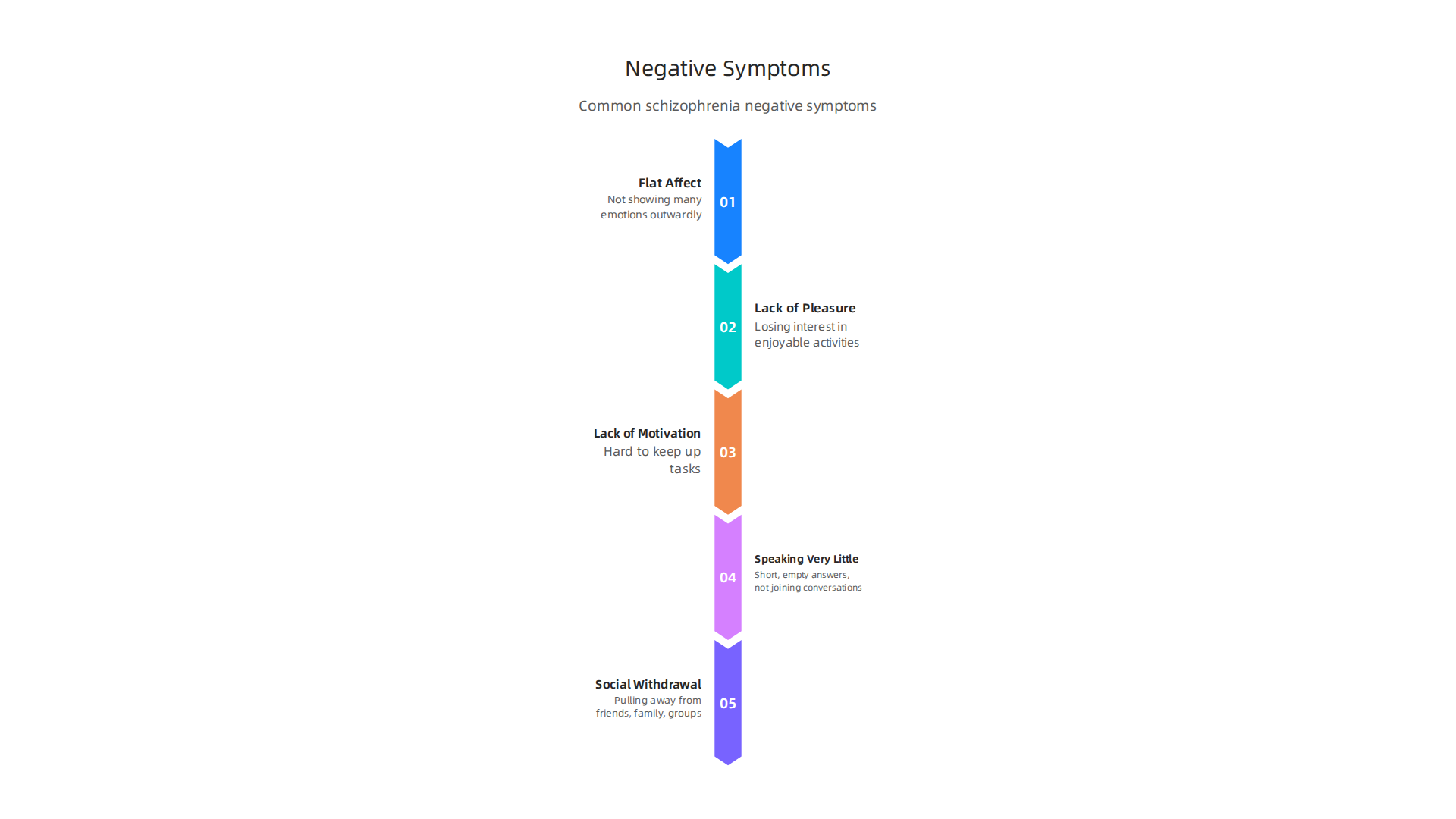
Think of it like a battery running low. These can be very hard to spot because they might look like sadness or just being quiet. But for someone with schizophrenia, these symptoms are a key part of their illness. Experts say that these symptoms are linked to certain beliefs people might have about themselves or others, which can be part of the illness as described in a review of the cognitive model of negative symptoms.
Here are some common negative symptoms:
- Flat Affect: This means a person might not show many emotions on their face or in their voice. They might speak in a flat tone, not smile, or make little eye contact, even when talking about something happy or sad. It’s not that they don’t feel emotion, but they don’t show it outwardly.
- Lack of Pleasure (Anhedonia): A person might lose interest in activities they once enjoyed. They might not find joy in hobbies, spending time with friends, or even eating their favorite foods.
- Lack of Motivation (Avolition): This makes it very hard to start or keep up with tasks, even simple ones. Things like getting dressed, cleaning the house, or going to work can feel like huge mountains to climb.
- Speaking Very Little (Alogia): Some people might speak very little, or their answers to questions might be very short and empty. They might not join in conversations or say much on their own.
- Social Withdrawal: This is when a person pulls away from family, friends, and social groups. They might prefer to be alone and avoid social contact.
These negative symptoms can make everyday life very tough. They can make it hard for someone to hold a job, keep up with school, or even take care of themselves. This is also why understanding conditions like schizoaffective disorder symptoms, which share features with schizophrenia, is so important.
Cognitive Symptoms: Trouble With Thinking
Cognitive symptoms are about how well a person’s brain works for thinking, learning, and remembering. These symptoms of schizophrenia can affect many parts of daily life.
Common cognitive symptoms include:
- Trouble with Attention: It can be hard to focus on one thing for long. They might get easily distracted, struggle to pay attention in conversations, or have difficulty following a TV show.
- Memory Problems: Forgetting things can be common. This might include forgetting appointments, recent conversations, or where they put everyday items.
- Issues with Planning and Problem-Solving: These are called "executive functions." A person might find it hard to plan out their day, make decisions, or solve small problems that come up. For example, figuring out what groceries to buy, how to get to a new place, or how to handle a bill can feel overwhelming.
- Slow Thinking: It might take longer for a person to process information or respond to questions.
These cognitive symptoms can make it very challenging to learn new things, keep a job, or manage money. They can lead to a psychiatric disability that affects a person’s ability to live independently and participate fully in society. It’s a myth that these symptoms are less serious than hallucinations or delusions; in reality, they often have a very big impact on a person’s overall life quality. Understanding these complex symptoms is crucial for anyone trying to support someone with this illness.
We’ve looked at the different kinds of symptoms, but knowing when they typically start and what signs to look for is just as important. The way these symptoms of schizophrenia first appear can vary, but there are common patterns and warning signs.
When Symptoms First Appear: Onset, Risk Factors, and Early Signs (Including Youth Considerations)
Schizophrenia usually shows up in young adulthood. For most men, symptoms often begin in their late teens or early twenties. For women, it’s typically in their early twenties to early thirties. It’s rare for it to start in childhood or after age 45, but it can happen. Experts note that schizophrenia is one of the most complex mental health conditions, with typical onset often occurring in these younger years, as explained in a report from the European Brain Council (EBC).
Early Warning Signs
The symptoms don’t usually appear all at once like a switch being flipped. Instead, there’s often a slow change over time.
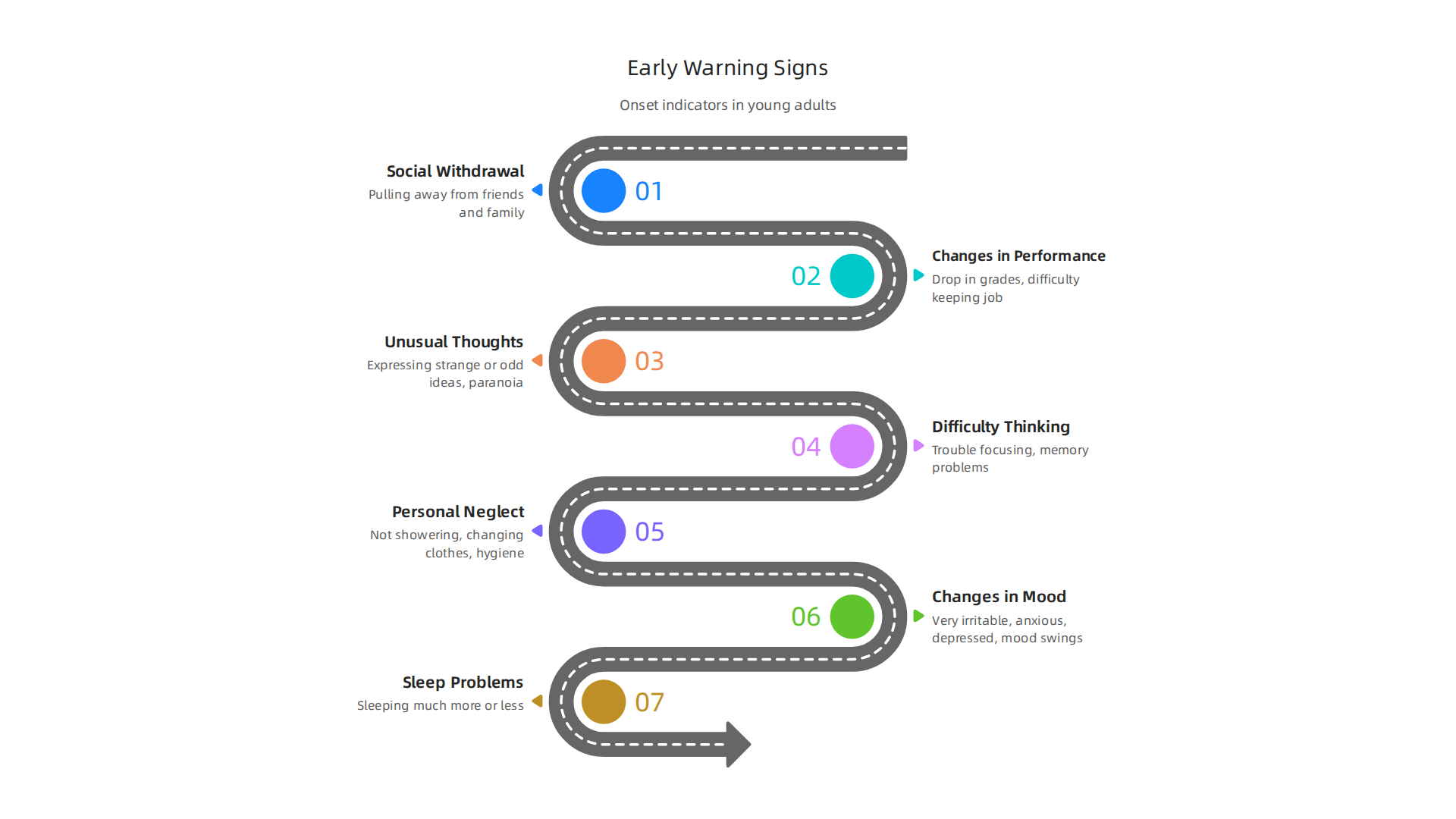
Friends, family, or teachers might notice subtle shifts first. These early signs can sometimes be mistaken for other things, like stress, depression, or typical teenage moodiness. It’s why recognizing them is so crucial.
Here are some things to watch for:
- Social Withdrawal: Pulling away from friends and family, wanting to spend a lot of time alone.
- Changes in School or Work Performance: A sudden drop in grades, difficulty keeping a job, or losing interest in usual activities.
- Unusual Thoughts or Beliefs: Expressing strange or odd ideas, paranoia, or feeling like people are watching them.
- Difficulty Thinking Clearly: Trouble focusing, memory problems, or confused speech.
- Neglect of Personal Care: Not showering, changing clothes, or keeping up with hygiene.
- Changes in Mood: Feeling very irritable, anxious, or depressed, or having strong mood swings.
- Sleep Problems: Sleeping much more or much less than usual.
It’s important to remember that having one or two of these signs doesn’t automatically mean someone has schizophrenia. Many things can cause similar behaviors. However, if several of these changes are happening, and they are lasting for a while or getting worse, it’s a good idea to talk to a doctor or mental health professional. Knowing how to spot the signs of a mental breakdown can be a helpful step in seeking help.
Risk Factors and Youth Considerations
While the exact cause of schizophrenia isn’t fully known, we do know some things that can make someone more likely to develop it. These are called risk factors. They include having a family history of schizophrenia, certain brain chemistry differences, and exposure to some viruses or poor nutrition before birth. Stressful life events can also play a role in triggering symptoms in someone who is already at risk.
For young people, the changes can be especially hard to notice because adolescence is a time of many changes anyway. Mental health experts are working to expand early detection and intervention for adolescents who might be at high risk or are experiencing their first episode of psychosis, as highlighted in a report on The Youth Mental Health Imperative. Getting help early can make a huge difference in how the illness develops and how well a person recovers. Early intervention services can greatly improve the lives of individuals with recent onset schizophrenia or a first-episode psychosis, according to a report from the Connecticut Department of Mental Health and Addiction Services. This kind of quick support can help prevent a full-blown psychiatric disability and improve long-term outcomes.
Learn more about the specific ways early detection can protect young individuals. Read the Youth Safety Case Study, documenting how VRS offsets susceptibility to manipulation in youth sports – producing healthier athletes, stronger resistance to depression and propaganda, and ultimately better citizens.
Now that we’ve looked at the early signs and when they might show up, it’s time to understand how doctors figure out if someone truly has schizophrenia. Making a diagnosis is a careful process that involves looking at all the signs, ruling out other problems, and seeing if other conditions are also present.
How clinicians assess symptoms and make a diagnosis (screening, differential diagnosis, and comorbidity)
When a doctor or mental health expert thinks someone might have schizophrenia, they don’t just guess. They follow a clear set of steps to make sure they get it right. This process is very important because a correct diagnosis leads to the right kind of help and treatment.
The Diagnostic Journey: What Clinicians Do
Making a diagnosis for schizophrenia isn’t like doing a quick blood test. It involves talking a lot with the person, and often their family, to get a full picture of their experiences.

Doctors use special guidebooks, like the Diagnostic and Statistical Manual of Mental Disorders, Fifth Edition, Text Revision (DSM-5-TR), and the International Classification of Diseases, 11th Revision (ICD-11). These books list the exact criteria and symptoms of schizophrenia that must be present for a diagnosis. For example, the DSM-5 has changed over time to better describe these conditions, as noted in a review of Highlights of Changes from DSM-IV-TR to DSM-5. These newer guides help ensure that children and teens also get a proper diagnosis, as they have more detailed rules for younger people, according to a paper on Trends and diagnostic challenges in pediatric schizophrenia.
Clinicians also use special tools called structured interviews and rating scales. These are like detailed questionnaires that help them measure how severe the symptoms of schizophrenia are. One common tool is the Positive and Negative Syndrome Scale (PANSS). It helps doctors rate different kinds of symptoms, like things that are "added" (like hearing voices) and things that are "taken away" (like a lack of emotion). The PANSS often requires a detailed talk that can last 30 to 40 minutes, providing a full report of symptoms, according to a guide on Assessment Tools for Schizophrenia.
Ruling Out Other Problems: Differential Diagnosis
A big part of diagnosing schizophrenia is making sure the symptoms aren’t caused by something else. This is called "differential diagnosis." Many other conditions can look similar to schizophrenia, which can make things tricky.
Here are some common things doctors need to rule out:
- Other Mental Health Conditions: Sometimes, a mood disorder like bipolar disorder can cause psychosis, where a person might have hallucinations or delusions. There’s also schizoaffective disorder symptoms, which is like a mix of schizophrenia and a mood disorder. Conditions like schizotypal personality disorder symptoms can also share some features.
- Substance Use: Certain drugs or alcohol can cause people to have hallucinations or feel paranoid.
- Medical Problems: Some brain injuries, infections, or other health issues can also lead to changes in thinking or behavior that look like symptoms of schizophrenia.
It’s really important for clinicians to be thorough and check for all these possibilities to ensure the person gets the right diagnosis and care.
When Other Conditions Are Present: Comorbidity
Sometimes, a person with schizophrenia might also have other mental or physical health problems. This is called comorbidity. For example, it’s common for people with schizophrenia to also experience depression, anxiety disorders, or substance use disorders. Dealing with these other issues is an important part of treatment too.
Getting a clear and accurate diagnosis is the first step toward finding effective support. If you or someone you know is showing signs that worry you, reaching out to a mental health professional is always the best course of action. They can help figure out what’s going on and guide you toward the right treatment options. To learn more about treatment choices, exploring how to choose types of mental health therapy explained might be helpful.
After a careful diagnosis, the next important step is to start managing the symptoms of schizophrenia. This means finding the right treatments and support to help a person live a full and meaningful life. It’s not about "curing" the condition, but about helping to control the symptoms so they don’t get in the way of daily life as much.
Managing symptoms: treatment options, supports, and when to seek urgent help
Getting a diagnosis is just the beginning. The good news is that there are many ways to help people who experience symptoms of schizophrenia. With the right help, many individuals can improve their quality of life, find jobs, go to school, and build strong relationships.
Main Ways to Treat Schizophrenia Symptoms
Managing schizophrenia usually involves a mix of different types of help. It’s like having a team of helpers working together.
1. Medicines (Medication)
The main treatment for symptoms of schizophrenia is medication, usually called antipsychotics. These medicines help to balance the chemicals in the brain. They are very good at reducing "positive" symptoms like hallucinations (seeing or hearing things that aren’t there) and delusions (strong beliefs that aren’t true). For young people, getting treatment started early, especially for a first episode of psychosis, can make a big difference in how well they do over time. One report from 2026 pointed out that early care can really help those with new schizophrenia or first-episode psychosis. This kind of early help is known to improve lives significantly, according to an Early Intervention Services Annual Report.
2. Talk Therapy (Psychotherapy)
Talking with a therapist can be very helpful. One common type is Cognitive Behavioral Therapy (CBT), which helps people change unhelpful thinking patterns and behaviors. For example, it can teach ways to cope with hearing voices or to understand their feelings better. Family therapy is also important because schizophrenia affects the whole family. It helps family members learn how to support their loved one and communicate better. To learn more about this approach, you can explore What is Cognitive Behavioral Therapy.
3. Everyday Life Support (Psychosocial Supports)
These supports help people manage their daily lives and reach their goals. They might include:
- Skills Training: Learning social skills, how to manage money, or how to cook.
- Supported Employment or Education: Getting help to find and keep a job or continue schooling.
- Peer Support: Connecting with others who have similar experiences can be very powerful. People who have "lived experience" can offer unique understanding and hope, and their involvement in care planning is becoming more important, as highlighted in a guide on Meaningfully Engaging People with Lived Experience.
- Coordinated Specialty Care (CSC): This is a team approach that combines medication, therapy, family education, and employment support all at once. It’s especially helpful for people who are just starting to show signs of the illness. Research shows that Early Intervention in the Treatment of Psychosis can greatly improve outcomes.
What to Expect: Recovery and Quality of Life
It’s important to have realistic expectations. Managing symptoms of schizophrenia is often a long journey, not a quick fix. There might be ups and downs. However, with consistent treatment and support, many people can:
- Reduce Symptoms: Make hallucinations and delusions less strong or happen less often.
- Improve Daily Function: Get better at handling everyday tasks.
- Gain Independence: Live more independently.
- Have a Good Quality of Life: Enjoy hobbies, friendships, and feel more connected to their community.
The goal isn’t just to make the symptoms go away, but to help the person thrive and live a life that feels meaningful to them. Although schizophrenia can be a complex mental health condition, good management can make a huge difference, as discussed in a Rethinking Schizophrenia Report.
When to Seek Urgent Help: Crisis Signs
Sometimes, the symptoms of schizophrenia can get worse very quickly, leading to a crisis. It’s important to know what these signs look like so you can get help fast.
Call for urgent help if someone:
- Talks about harming themselves or others.
- Acts very confused or shows extreme changes in behavior.
- Can’t take care of themselves (like not eating, drinking, or staying safe).
- Has very strong hallucinations or delusions that make them unable to connect with reality.
In these situations, it’s vital to act quickly. You can take them to the nearest emergency room, call a local crisis hotline, or reach out to a mobile crisis team if your area has one. Knowing the Signs of Schizophrenia earlier can also help prevent these crises.
Practical Tips for Caregivers and Educators
If you are a caregiver or an educator supporting someone with schizophrenia, your role is very important.
- Encourage Treatment: Help the person stick to their medication and therapy appointments.
- Create a Stable Environment: Keep routines steady and reduce stress.
- Learn About the Illness: Understanding the symptoms helps you know what to expect and how to respond.
- Communicate Clearly: Speak simply and calmly. Avoid arguing about delusions.
- Be Patient: Recovery takes time and can have setbacks.
- Look After Yourself: Supporting someone with a serious mental illness can be tiring. Make sure you get your own rest and support.
Remember that helping someone manage symptoms of schizophrenia is about consistent care and understanding. For more insights into how positive reinforcement can help shape healthy behaviors, consider checking out the Youth Safety Case Study.
Summary
This article explains schizophrenia in clear, practical terms to reduce confusion and stigma and to help readers spot when someone may need help. It describes the main symptom groups—positive (hallucinations, delusions, disorganized thought/behavior), negative (flat affect, lack of motivation, social withdrawal) and cognitive (attention, memory, planning)—and shows how they typically begin and progress. The guide covers how clinicians assess and diagnose using DSM-5/ICD-11 criteria, structured interviews and rating scales, and how they rule out other causes like substance use or medical problems. It also reviews treatment options including antipsychotic medication, psychotherapy (like CBT), psychosocial supports and coordinated specialty care, and gives practical advice for caregivers and educators. The piece highlights early warning signs in youth, known risk factors, and when to seek urgent help, so readers can act early and connect people to effective services.